



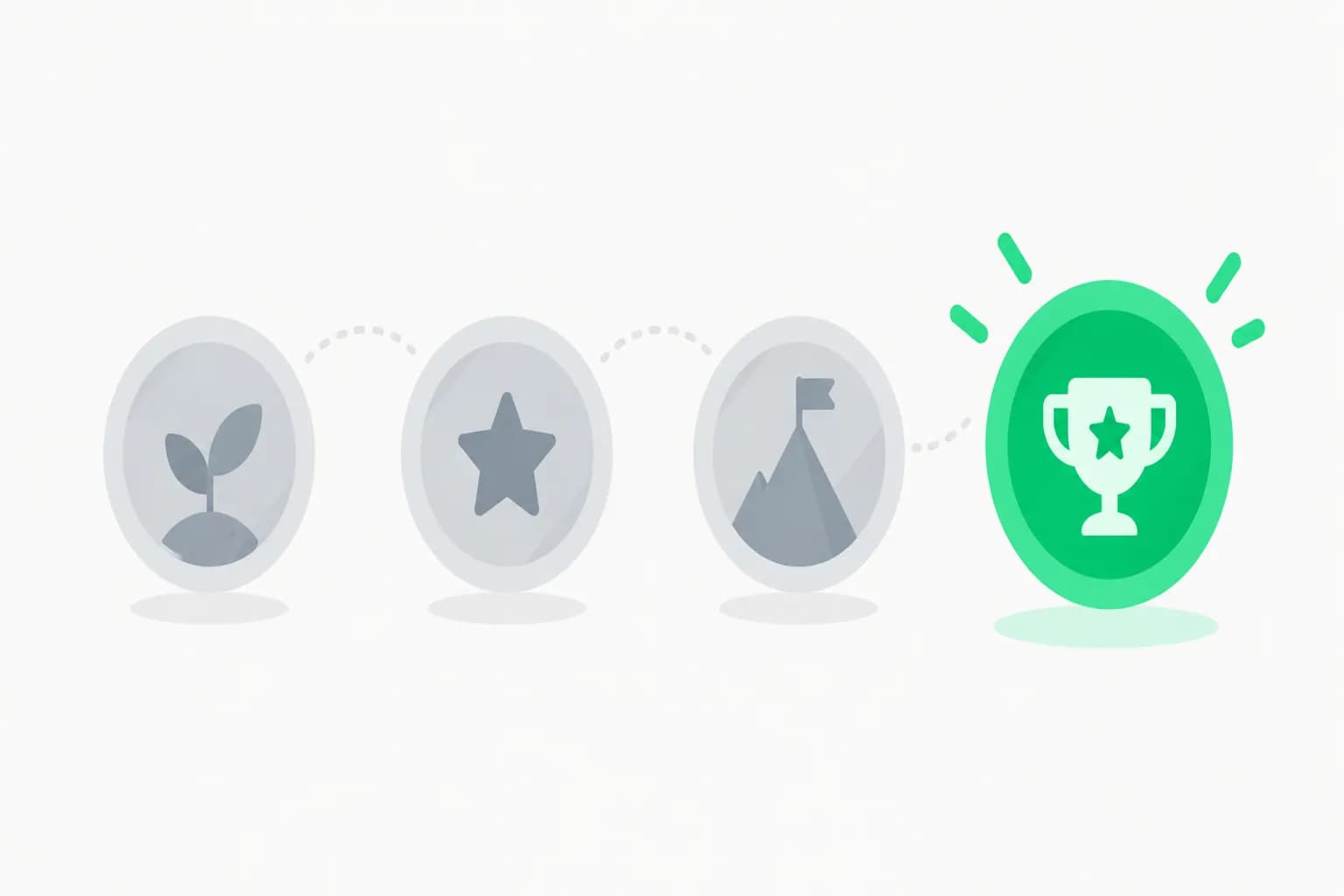
If you graduate in 2027, a hiring manager will assume you can use AI. They will not assume you can use it well. The gap between those two is a set of habits that campuses rarely teach: checking output, building reusable workflows, and showing proof of work.
This is a semester-by-semester roadmap for college students. It works for any major. It also respects academic integrity, because the fastest way to lose a scholarship is to treat AI as a shortcut.
For general learners, see the broader AI skills and learning roadmap for 2027. For degree pathways and course lists, see our AI curriculum for college students. This post is about skills you build alongside your degree.
TL;DR: the student roadmap
| Stage | Focus | Project | Academic rule |
|---|---|---|---|
| Year 1 | Study with AI, safely | A personal study workflow | Disclose use, never submit AI text as yours |
| Year 2 | Reusable workflows | A saved workflow for a club or class | Keep your own draft first |
| Year 3 | Build and connect | One working project | Credit tools in write-ups |
| Year 4 | Prove it | Portfolio plus internship story | Be honest about what AI did |
First, the rules: using AI without risking your degree
 Open book with ribbons for AI skills for college students and academic rules
Policies differ by university and by instructor. Three habits keep you safe in nearly every case.
- Read each syllabus's AI policy. If it is missing, ask by email and keep the reply.
- Draft first, then use AI to critique. Ask it to find gaps, quiz you, or explain, not to write the submission.
- Keep a log. Note which tool you used, for what, and what you changed. If a question arises, the log protects you.
Also be careful with detection tools. They produce false positives, so your own drafts and version history are your best evidence. The wider debate is covered in our post on AI watermarking and its effect on students and teachers.
Year 1: learn to study with AI
Skills: asking good questions, using AI as a tutor, and checking facts.
Habits to build:
- Ask the assistant to explain a concept three ways, then explain it back in your own words.
- Generate practice questions from your notes and answer them without help.
- Verify every fact and citation. Models invent references, so open the source.
Project: a personal study workflow. For example, paste a lecture's notes, get ten quiz questions, answer them, then ask for feedback on weak spots.
Check you are ready: you can learn a new topic faster than before and explain it without the chat open.
Year 2: build reusable workflows
 Circle of chairs around a lamp showing students sharing reusable AI workflows
Skills: context setting, templates, and saved setups.
By now you repeat tasks: literature summaries, lab write-up structure, club announcements. Save what works instead of retyping. Create a Project or equivalent per course, and an agent skill for any task with more than three steps.
Project: a workflow for a club, society or class that others use. A weekly newsletter drafter, a meeting notes summariser, or a research summary template are all good.
Check you are ready: someone else runs your workflow without asking you how.
Year 3: build and connect
Skills: coding agents, connecting AI to data, and basic verification routines.
This is when internships begin, so projects matter more. Non-CS students can build with a coding agent in plain language. Read our Claude Code course guide for free, paid and live routes, and see Claude skills to master in 2027 for the abilities that matter.
Project ideas by major:
| Major | Project |
|---|---|
| Business | A tool that turns sales data into a weekly summary |
| Biology | A paper-screening workflow with source checks |
| Law | A case-brief template with a citation checklist |
| Design | A brief-to-moodboard prompt system |
| Education | A quiz generator aligned to a syllabus |
| Any | A small web tool built with a coding agent |
Check you are ready: your project has a real user, even if it is only a friend or a professor.
If you want structure and feedback, a live workshop helps. Our Build with Claude Code workshop, with sessions in January 2027, is aimed at beginner-friendly building.
Year 4: prove it to employers
Skills: storytelling, evidence and interview readiness.
Hiring teams ask: "Show me how you used AI." Prepare a one-page portfolio with three items:
- A workflow with a before and after time.
- A project with a short write-up: problem, approach, result, what you would change.
- A verification story: one time AI was wrong, how you caught it, what you changed.
The verification story is the most convincing. It shows judgement, which is exactly what employers worry about. The broader job picture is in your job in 2027.
Internships and entry jobs: what to say
- Say what you built and the result, not "I am good with AI".
- Describe your checking habit.
- Name one tool in depth rather than ten superficially.
- Mention data rules: what you would never paste into a public tool.
For team-facing roles, ask whether the company offers training. Many do, and our corporate AI training page shows what organisations typically run.
Mistakes students make
- Outsourcing the thinking. If you cannot explain it, you did not learn it.
- Trusting citations. Always open the source.
- Using one tool for everything. Match the tool to the task.
- Hiding use. Disclosure rules exist for a reason.
- No finished project. Build one thing end to end.
What students are asking
Should I learn Python first? Not required. Start with workflows. Add Python when a project needs it.
Which tool should I pick? Use what your campus provides, then try a free tier of one more. Our top AI tools to learn in 2027 helps you choose.
Where can I find free resources? See our guide to free AI tools and courses for students in 2027.
A worked example: a study workflow that stays honest
Abstract advice is easy to nod at and hard to follow, so here is one concrete week for a second-year economics student who wants AI to help with a statistics course without crossing any lines.
On Monday, the student pastes the lecture notes they wrote themselves into an assistant and asks for ten practice questions at exam difficulty, with no answers. They answer all ten on paper first. On Tuesday, they paste their own answers back and ask the assistant to mark them against the notes, to name the two concepts they misunderstood, and to explain each one with a different example. On Wednesday, they close the chat and re-explain both concepts aloud, as if teaching a friend. If they stumble, they know the topic is not learned yet.
Nothing in that week involves the assistant producing text the student submits. Every output is a study aid, and every fact it states is checked against the textbook. The student also keeps a short log: date, tool, purpose, and what they changed. If an instructor ever asks how AI was used, the answer takes one minute and is fully documented.
The same pattern works for a literature course, where the assistant critiques an outline instead of writing an essay, and for a lab course, where it asks questions about a method section until the student can defend each choice. The principle is simple: the student does the thinking, and the assistant sharpens it.
How to talk about AI in an internship interview
Interviewers rarely ask what tools you know. They ask what you did with them. A strong answer has four parts: the task, the workflow you built, the result in numbers if you have them, and the check you ran. For example: "I built a weekly summary workflow for our club's survey data. It cut the writing time from two hours to forty minutes. I verified every figure against the raw export, and I found that it had merged two categories, so I added a rule to prevent that."
That last detail is what interviewers remember. It shows you understand the failure mode and can be trusted with real work. Prepare two stories like this before your first interview season, and practise telling each in under a minute.
What to do when your campus has no AI policy
Many students study at institutions where the rules are unclear or change between courses. In that case, protect yourself with three simple steps. Ask each instructor in writing what is allowed for each assignment type, and save the reply. Prefer uses that are easy to defend: asking for explanations, practice questions, feedback on your own drafts and help with planning. Avoid uses that are hard to defend, such as submitting generated text, generating citations you have not read, or using AI on a take-home exam. When you are unsure, disclose what you did in a short note on the submission, because a disclosed use that turns out to be disallowed is treated far more kindly than a hidden one. Clear habits now also prepare you for workplaces, where data rules and review steps are standard.
Related reading
- Free AI tools and courses for students in 2027
- AI curriculum for college students
- Top AI skills to master in 2027 and roadmap
- Claude skills to master in 2027
- Google Gemini free student plan
- College students push back on campus AI mandates
- Your job in 2027
Policies, offers and tool features change often. Check your campus policy and each provider's page. Accurate as of November 29, 2026.