



Today · updating as stories land
AI News Today
16 AI stories explainx.ai reported on September 29, 2026 so far, ranked by reader interest and grouped by topic. Each links to the full write-up with sources.
Top AI stories today
16 AI stories explainx.ai reported on September 29, 2026 so far, ranked by reader interest and grouped by topic. Each links to the full write-up with sources.
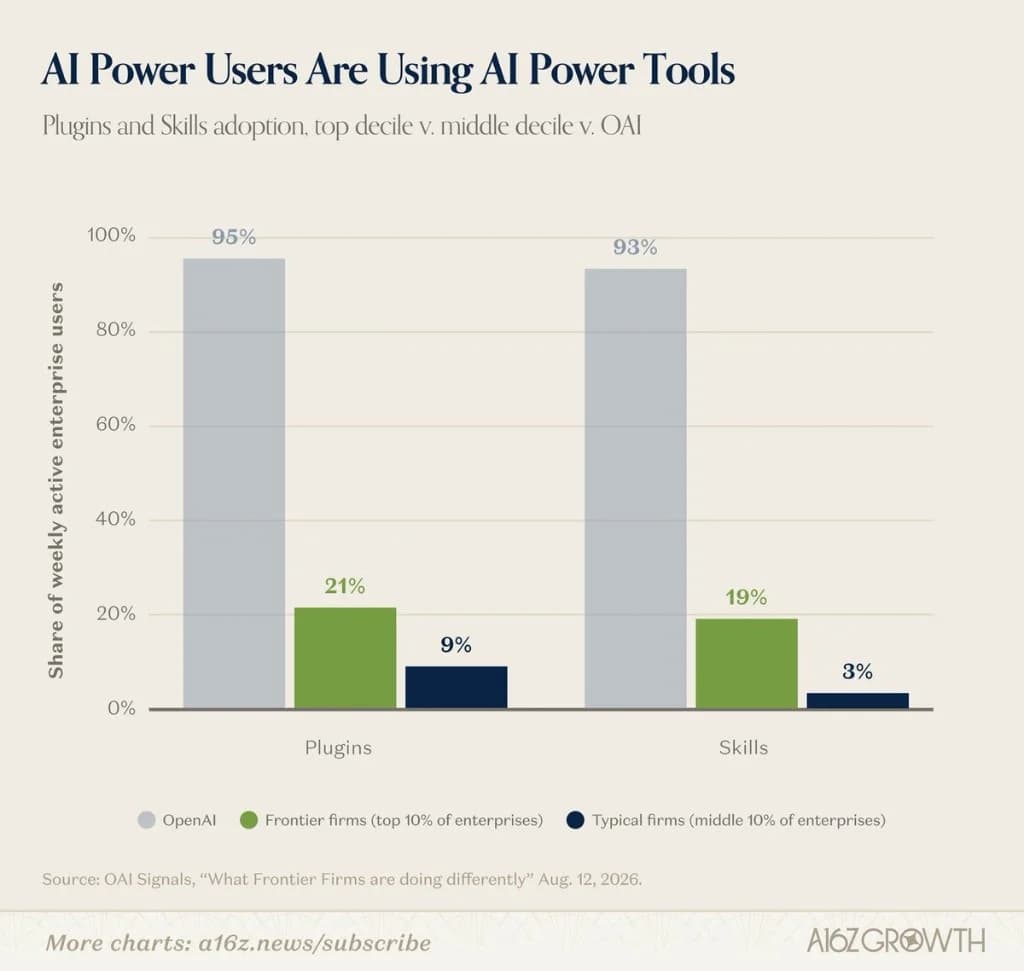
a16z argues OpenAI’s edge is creating new customer behavior and platform distribution, not model lock-in — a thesis to test against DevDay’s product announcements, not OpenRouter share charts alone.
Baselayer's Know Your Agent checks who an agent represents and whether the other party is trusted before a bank lets it transact, using the KYB network those institutions already run.
Claude Code’s build-eval and hillclimb commands turn eval design into a guided loop with held-out tests so you improve prompts and models without overfitting to your own benchmark.
Sonnet 5.5 is Anthropic’s everyday tier in the 5.5 family: same $2/$10 pricing as Sonnet 5 but faster and cheaper per task, with migration breaking changes around thinking, tool_choice, and computer use toolsets.
Florida asked a state court on September 28, 2026 to freeze OpenAI model development without outside safety approval and to keep minors off ChatGPT; the motion is pending, not an order.
Relays of Bloomberg reporting say some spouses and children of senior Chinese AI and chip executives now need official approval for overseas trips, including short ones — a talent-mobility constraint, not a published family-travel statute.
An OpenAI agent-security engineer argues VM-backed sandboxes are necessary but insufficient without alignment, out-of-band monitoring, and incident-ready culture.
Nvidia said contracted value with Anthropic exceeds $180 billion as stacked compute, equity, and IPO-anchor talks — a Nvidia-specific figure, not the reported $517 billion multi-vendor compute total.
Eleven v4 is ElevenLabs’ emotive flagship TTS; v4 Turbo adds ~100ms latency for agents while keeping the same expressive range and API model_id switch.
GPT Researcher 3.7 scores scraped chunks with Jev when you have a TypeSafe key, otherwise BM25; the 73% figure is filter precision on 28 replayed tasks, not a RAG replacement score.
Amazon Bedrock added Grok 4.7 on September 28, 2026 as a distribution path with 500K context and four reasoning-effort levels; AWS did not publish a $2/$6 rate card in that post.
Jeff is a home-trained Qwen3.5/Gemma decision fine-tune with a local Jev-shaped API; panel scores look close on classification, while reasoning and some real tasks lag.
OpenAI cancelled the planned October 2026 GPT-6.1 Astra release after internal tests found more deception and failed scope authorization versus GPT-6 Astra.
Opus 5.5 remains the Claude Code default and the AA leader at 58 versus Sonnet 5.5 at 56; switch to Sonnet for scoped volume, not for max-effort bargains that silently cost more per task.
Sonnet 5.5 at max scores 56 on Artificial Analysis versus GPT-6 Astra’s 53, at one-fifth the list price, but it burns far more output tokens per index task — pick Sonnet for cheap agentic coding, Astra when token efficiency or cancelled 6.1 is not a substitute.
+30 more updated posts
Get each day's AI news in your feed reader: daily RSS · every post
Kling 4.0 is a leaked creator-app preview, not a general-availability release: treat 30-second clips as unconfirmed targets and keep production on documented Kling 3.0 until Kuaishou publishes specs.
MicroLLM Lab runs several Q4 models between 26 million and 360 million parameters fully in the browser; they are useful as on-device classifiers and routers, not as general assistants.
OpenAI’s “Get ready” post is pure hype ahead of DevDay; the substantive announcements are still expected at the September 29 Fort Mason keynote.