



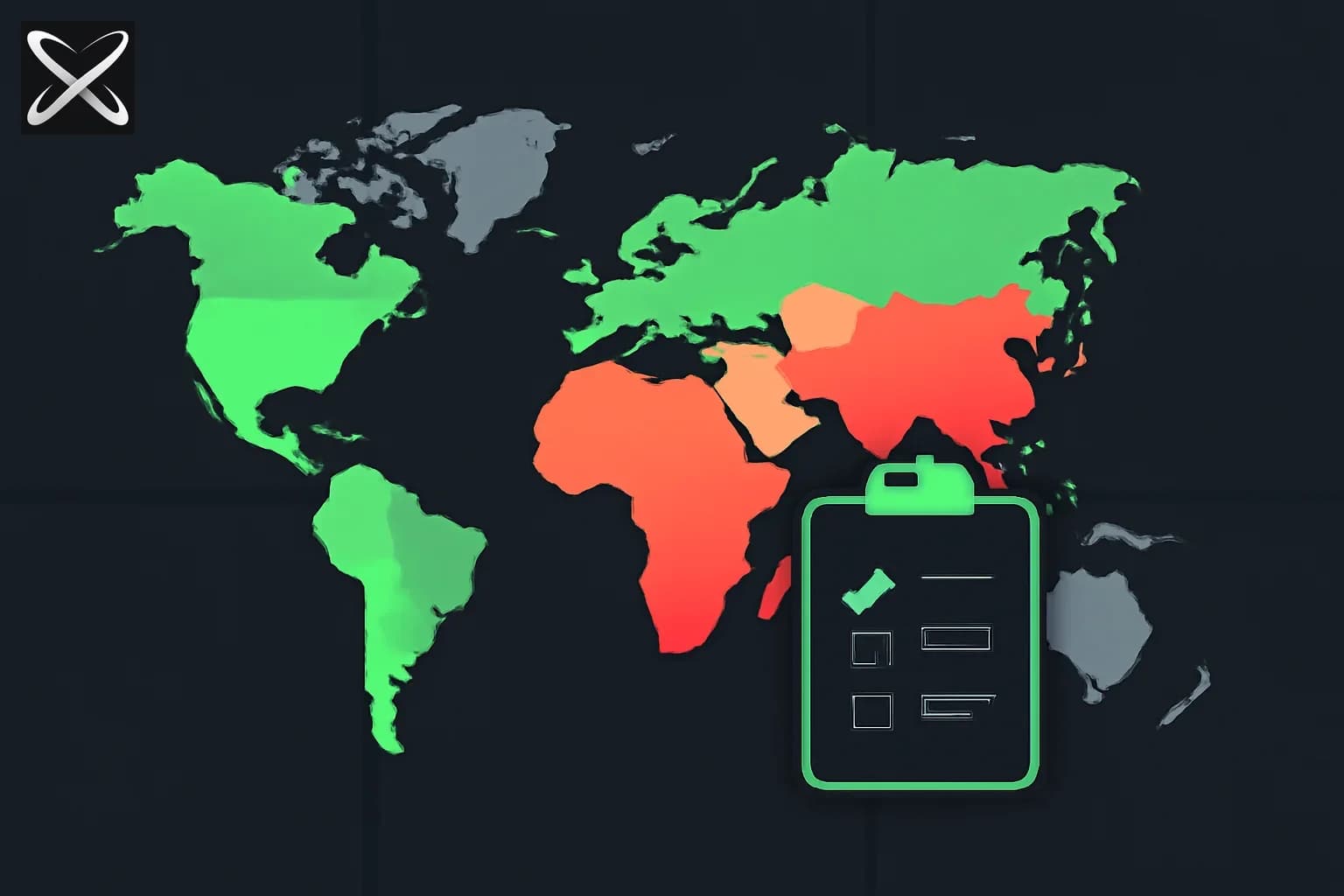
English-language relays of a paywalled Bloomberg report dated September 28, 2026 say China has widened overseas travel pre-approval so that spouses and children of some senior AI and semiconductor executives must get official clearance before going abroad — even for short trips. explainx.ai first flagged the story in the September 28 coverage-gaps digest. This post is the dedicated version: what the relays actually claim, what they do not, how that sits next to the September 15, 2026 exit-entry regulations, and what it changes for people who hire, acquire, or collaborate across the US–China model split.
Two facts belong in the first screen so they are not mashed together later. First: the family extension is sourced to unnamed people familiar with notifications, not to a public MIIT circular we can quote. Second: Human Rights Watch's September 16 analysis of Decree No. 841 covers a general expansion of administrative exit power. That decree is real, dated, and published. It is not the same document as "AI executives' kids now need trip tickets stamped."
TL;DR — questions people actually ask
| Question | Direct answer |
|---|---|
| Did Bloomberg publish this? | Yes, September 28, 2026 — paywalled. We did not read the full primary. We used English relays (Chain Catcher, The Business Times reprint of Bloomberg copy, WinBuzzer, Hong Kong Standard). |
| Is it a travel ban? | Relays describe pre-approval, not a published list of people who can never leave. |
| Who is in scope? | Selected founders and executives at strategically important private AI and chip firms, per sources. Not a public name list. |
| Did MIIT confirm? | Relays say MIIT did not respond to comment requests. |
| Same as HRW's border decree? | No. HRW is the September 15 State Council exit-entry package. Family pre-approval is a separate reported administrative practice. |
| Earlier staff curbs? | Relays point back to May 2026 Bloomberg coverage of pre-approval for some Alibaba and DeepSeek AI professionals' own trips. Family coverage of that full set is explicitly unclear. |
| Manus–Meta? | Cited as a tightening backdrop. At least one Bloomberg-sourced line says the personnel plan is not necessarily linked to that deal. |
| Builder stake? | Talent mobility is now a geopolitical variable in Chinese AI hiring and M&A — complementary to US-side distillation enforcement, not a substitute for it. |
What the relays say Bloomberg reported
Chain Catcher's English relay (same item as the Chinese-language Chain Catcher post dated 2026-09-28 17:46) summarizes Bloomberg like this: China expanded overseas travel restrictions for top private-sector AI talent to include family members. For executives of AI companies deemed critical to national security, immediate relatives such as spouses and children must obtain official approval in advance even for short-term trips. Departments have begun notifying affected people and will gradually expand the list of AI talent subject to exit restrictions. MIIT did not comment.
The Business Times ran a Bloomberg-bylined piece with more texture that matches other English summaries:
- Agencies have recently begun sharing the wider restrictions with affected people, including prominent startup founders and heads of strategically important companies in AI-related fields.
- The goal, as framed by Bloomberg, is to limit outflow of know-how and information to the United States.
- China already restricted foreign travel for some top AI professionals at private firms such as Alibaba and DeepSeek since earlier in 2026, with Bloomberg News itself having reported that in May.
- It is unclear whether all those people's families must follow the new family strictures.
- Beijing plans to add relevant individuals to the list over time; departments have already notified several people that family travel needs clearance.
- Bloomberg previously reported that family travel curbs had already reached some university researchers and state-company executives — so the private-AI extension is a widening of a known tool, not a brand-new legal category invented on September 28.
WinBuzzer's recap is useful because it states a distinction practitioners keep missing: approval is different from an exit ban. The reported family requirement is prior permission for a trip. A separate State Council regulation, effective September 15, lets commerce and other departments bar a Chinese citizen from leaving when an export-control or technology-trade violation may endanger industrial or technological security. WinBuzzer's reading — consistent with not stuffing the family practice into the decree text — is that the published rule does not set out the reported family approval practice.
That last sentence is the editorial line explainx.ai will keep: cite the decree for what it is; cite Bloomberg relays for the family notifications.
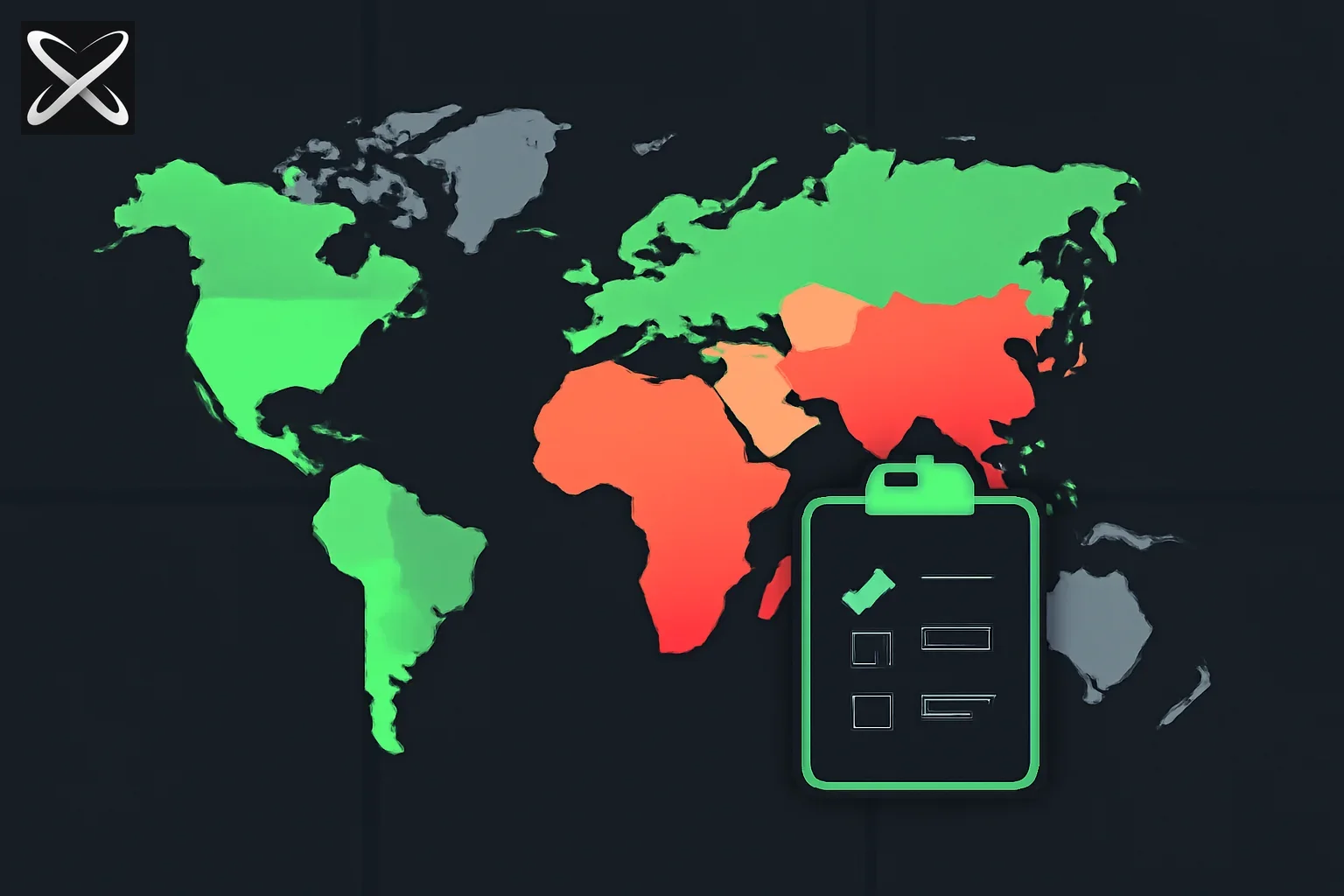 Editorial illustration of AI and semiconductor policy as layered state controls, reused as the social and in-body image for China family travel pre-approval coverage
What HRW covered on September 16 — and what it did not
Human Rights Watch described State Council Regulations on Exit-Entry Administration (Decree No. 841), 19 articles, effective September 15, 2026. HRW's argument is human-rights law: vague national-security grounds, dissuasion from travel to undefined high-risk places, truthful and lawful purpose tests, up-to-three-year exit bars for vaguely defined overseas conduct, withholding notice when disclosure might affect national security or investigations, and foreigners facing bars if they sit on countermeasures / unreliable-entity / malicious-entity lists.
Inside that package, Article 4 (as HRW quotes the policy) allows bars when someone violates export control or technology import/export administration in a way that may endanger national industrial or technological security. An official explanation, HRW says, frames this as fighting illegal transfer of technology abroad. That is the legal neighborhood of chip and model leakage. It is still not a sentence that says "spouses of DeepSeek VPs need a stamp for a weekend in Tokyo."
HRW also notes that in March 2026, Chinese authorities banned the co-founders of Manus from leaving the country, then blocked its acquisition by Facebook (Meta). That is person-level exit control on founders, reported months before the September family-extension story. It supports the pattern (AI companies as strategic objects) without proving the September family notifications.
If you only read HRW, you would correctly conclude that China expanded administrative discretion at the border. If you only read Bloomberg relays, you would correctly conclude that selected AI/chip households are being told to get trips pre-cleared. Concatenating those into "the September 15 decree put AI kids on an exit blacklist" is false precision. There is still no public MIIT statement in the relays confirming the family list.
Timeline builders should keep straight
| Date | What happened | What it is not |
|---|---|---|
| March 2026 (HRW) | Manus co-founders reportedly barred from leaving; Meta deal later blocked | Not the September family-pre-approval story |
| May 2026 (Bloomberg, via later relays) | Some top private AI staff, including at Alibaba and DeepSeek, needed approval for their own overseas travel | Not automatically the same as covering every spouse/child in September |
| July 2026 | Reuters talks on curbing overseas access to Chinese frontier models | Model export talks, not passport rules |
| August 2026 | Manus unwinds from Meta; users hit backup deadlines | Consumer data consequence of the same geopolitics |
| September 2026 | Manus resumes independent operations | Product chapter after the unwind |
| September 15, 2026 | Decree No. 841 / exit-entry regs take effect (HRW) | Broader border law, not a published AI-family schedule |
| September 16, 2026 | HRW news release on the decree | Human-rights analysis of the general rule |
| September 28, 2026 | Bloomberg family-extension story (paywalled); English relays | Source-based notifications, MIIT silent in those write-ups |
Chain Catcher's relay adds that after Meta's attempted $2 billion Manus acquisition, official concern about key technologies and talent outflow intensified, the deal was ordered cancelled, and some tech firms were told they may not take US capital without approval. That is capital-account geopolitics sitting next to people-account geopolitics. It is still a relay of Bloomberg, not a scanned ministry notice.
What people are asking (hiring, M&A, conferences, dual careers)
Does this change how I hire a Chinese AI or chip executive into a US or EU lab?
Yes, as risk and timeline, not as a moral slogan. An offer that assumes the executive can relocate in 60 days, speak at NeurIPS, or fly to SF for a closing now has a household constraint if they sit in the notified set. Relays say short trips still need approval. That hits interview loops, board meetings, customer on-sites, and family school calendars — the unglamorous reasons senior people accept or reject offers.
You cannot verify coverage from this post. There is no public list. Diligence is personal: the candidate, their counsel, and whatever written notice they received. Do not scrape social media to guess who is "strategic." Do not ask a junior recruiter to "just check if they're on the AI exit list" as if that were LinkedIn.
Does this change inbound M&A or US investment into Chinese AI startups?
Relays already describe a US-capital pre-approval overlay on some tech firms in the Manus aftermath. Family travel pre-approval is a second lock: even if money can theoretically close, key people and their families may not be able to show up for integration, earn-out negotiations, or knowledge transfer on a US timetable.
The Manus–Meta separation is the consumer-visible version of the same machinery: a deal unwound, data deleted on a clock, users told to export. Family travel rules, if the relays are accurate, are the executive-visible version: mobility as a state variable.
Bloomberg-sourced copy in The Business Times also includes a line that should stay in every diligence memo: the plan to restrict AI personnel's movements is not necessarily linked to the Manus saga, even while guarding against technology outflow remains a key policy goal. That is how you write the footnote: cited catalyst in some paragraphs, explicitly unproven causal chain in others.
What about conferences, open-source maintainers, and dual appointments?
If you run a workshop, eval consortium, or oss model release that depends on a named Chinese lab lead flying out, treat visa + employer + family clearance as three gates, not one. Relays say the list will grow over time. A speaker who traveled in April 2026 is not proof they can travel in October 2026.
This is the counterpart to inbound US controls — whether Fable 5 is available in China, why the US gated Fable and Mythos, and the July Reuters outbound-model talks. Beijing's cheap-weights playbook still ships open checkpoints; people are a different control surface than files.
How does this sit next to US distillation enforcement?
It is complementary pressure, not the same policy.
On the US side, Anthropic's September reporting on Chinese labs secretly serving Claude and large-scale distillation is about API abuse, fake accounts, and silent routing. Jensen Huang told CNBC the same week that distillation is competition, while US officials and Anthropic treat industrial-scale harvesting as theft. Garry Tan's "American distillation regime" argues the US should legalize a front-door version of the same transfer.
China locking executives' families into a pre-approval regime is a retention and leakage tool aimed at humans and tacit knowledge. US labs locking Claude outputs is a retention and leakage tool aimed at tokens. A hiring manager who only tracks one of those is reading half the board.
What this does not prove
- It does not prove a published, numbered MIIT list of AI spouses. Relays describe notifications and a list that will be filled in.
- It does not prove every Alibaba or DeepSeek AI employee from the May cohort is now family-restricted. Relays say that mapping is unclear.
- It does not prove Decree 841 created the family practice. WinBuzzer's Bloomberg-based recap says the opposite: the published September 15 rule does not spell out family pre-approval.
- It does not prove a total freeze on Chinese AI talent at NeurIPS, ICML, or US on-sites. It proves friction and discretion for a selected set, if the sources are right.
- It does not replace export-control advice. Model weights, CUDA SKUs, and API ToS remain their own stacks.
Practitioner checklist (what to do this week)
- If you are closing a senior hire from a Chinese frontier lab or chip design house, add a travel-and-household question to counsel-led diligence. Budget slippage on start dates that assume unrestricted family relocation.
- If you are an investor or corp-dev looking at a Chinese AI asset, map three overlays: (a) US capital approval as described in Manus-aftermath relays, (b) key-person exit/pre-approval, (c) family pre-approval. Any one can kill a knowledge-transfer plan even if the cap table looks clean.
- If you run a US API and compete with Chinese labs, do not treat this story as your enforcement win. Your live controls are still ToS, billing on extraction-shaped refusals, and account bans — the stack in the Claude distillation roundup and Huang's "know your customer" line.
- If you are a Chinese national reading this from a relay, this post is not legal advice. The only operative document is whatever written notice you or your family received, plus exit-entry law as applied at the border.
- If you write internal policy, keep two folders: Decree 841 / HRW (general border discretion) and Bloomberg family notifications (AI/chip household practice as reported). Merge them only when a primary Chinese government text does.
Honest limitations
- Bloomberg is paywalled. explainx.ai's account is second-hand: Chain Catcher (EN/ZH), The Business Times Bloomberg reprint, WinBuzzer, The Standard, and other English summaries. We did not independently interview the unnamed sources.
- MIIT silence in the relays means there is no official confirmation we can quote.
- Scope is intentionally fuzzy in the sourcing: "certain" executives, "several" families notified, list to be expanded.
- HRW is adjacent law, not a fact-check of Bloomberg's family claim. Using HRW to "confirm" the family extension would be a category error.
- Manus dollar figures and deal mechanics in relays should be checked against Manus's own unwind posts for user-facing facts; ministry motives remain inference.
The bottom line
If the Bloomberg sources are accurate, China has taken a tool already used on some private AI professionals' own passports (May 2026, Alibaba/DeepSeek named in later roundups) and extended pre-approval to some spouses and children of senior AI and chip executives treated as national-security relevant. That is talent lock-in by household, implemented as notifications, not as a press-conference statute.
Separately, on September 15, 2026, a State Council exit-entry decree widened administrative exit bars, including language HRW ties to industrial and technological security. That decree is everyone's border law. The family extension is selected AI/chip households, as reported.
For people who build with, hire, or buy Chinese AI capability, the usable sentence is not "China banned families from flying." It is: international mobility for a thin slice of strategic AI and chip leadership is now an approval process that may include the household — verify per person, and do not confuse that process with the general September 15 decree. Pair it with the US distillation fight rather than treating either as the whole story.
Related on explainx.ai
- September 28, 2026 AI news digest (where this story was first logged)
- Chinese labs secretly serving Claude — distillation roundup
- Jensen Huang: distillation is competition (CNBC)
- Manus–Meta separation: data deletion and backup
- Manus independent operations resumed
- China may restrict overseas access to top AI models (Reuters, July)
- Garry Tan's American distillation regime
- China's AI playbook: free models and cheap compute
Primary and relay sources: Chain Catcher English relay of Bloomberg; The Business Times / Bloomberg; WinBuzzer recap; The Standard; Human Rights Watch on Decree No. 841 (September 16, 2026). Bloomberg's own article remains paywalled; we have not treated relay wording as a substitute for the primary PDF.
Facts in this post reflect English-language relays of Bloomberg reporting dated September 28, 2026, plus HRW's September 16, 2026 decree analysis. Official Chinese government notices, list membership, and border practice can change without a matching English press cycle — verify against primary documents before making hiring or travel decisions.