



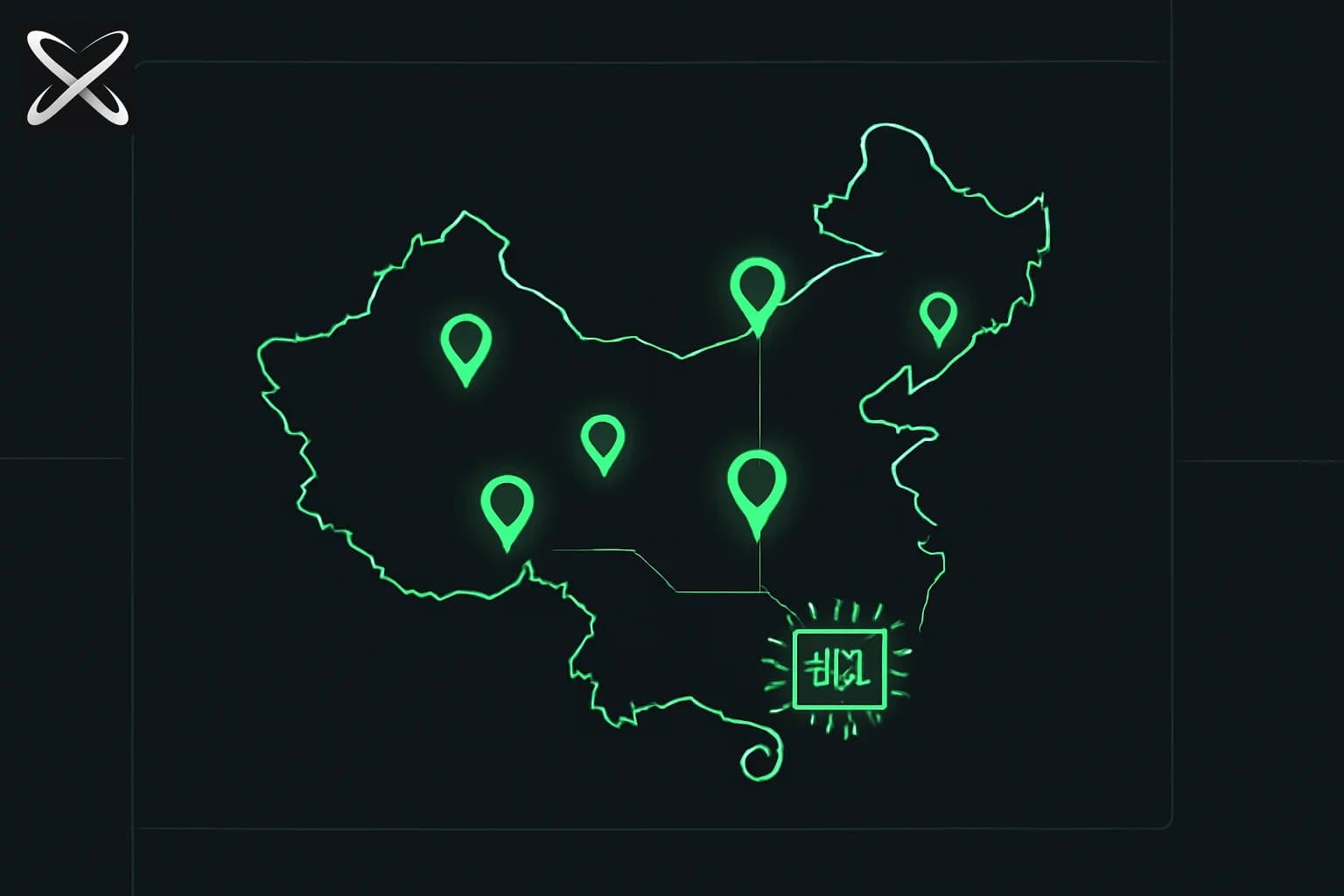
President Xi Jinping used his first trip to India in seven years to propose a BRICS AI open-source zone — a coordinated push to share open-weight models and AI infrastructure across the bloc's member states. The proposal lands at a pointed geopolitical moment: China-India relations have been historically strained over border disputes and trade friction, and it arrives the same week the US is publicly debating its own distillation and open-weight AI policy, covered in explainx.ai's report on Garry Tan's "American Distillation Regime" proposal.
TL;DR
| Question | Answer |
|---|---|
| What was proposed? | A BRICS-wide AI open-source zone for sharing open-weight models and infrastructure across member states |
| Why India, why now? | Xi's first India trip in 7 years, during a period of tense bilateral relations — signals AI cooperation as a diplomatic lever |
| How does it relate to the US debate? | Lands the same week as Garry Tan's US distillation-policy push and Anthropic's accusations against Chinese labs — a parallel, bloc-level open-weight track |
| Is it binding? | No — a proposal made during a diplomatic visit, not a signed multilateral agreement with defined governance or funding |
| Who benefits if it materializes? | Developers across BRICS and partner states, who'd gain a coordinated non-US-aligned open-weight AI option — if implementation actually follows the announcement |
| What's the biggest open question? | Whether India and other members formally engage, given historical wariness about overdependence on any single country's AI ecosystem, China included |
The diplomatic signal underneath the AI announcement
It's worth reading this proposal on two levels simultaneously, because the geopolitical framing changes what the AI announcement actually means. On the surface, it's a technical cooperation proposal — sharing open-weight models and infrastructure across a multilateral bloc. Underneath that, the timing and venue do real work: Xi hadn't visited India in seven years, a period spanning border clashes, trade tensions, and increasingly divergent technology policies between the two countries. Choosing an AI cooperation proposal as a centerpiece of this specific visit signals China is treating open-source AI as a genuine diplomatic tool for reframing the relationship — not unlike how explainx.ai has covered China using open-weight model releases and export-control responses as instruments of broader technology diplomacy in China's Countermeasures to US AI Model Theft Accusations.
What a BRICS open-source zone would actually mean, if it materializes
BRICS as a bloc — Brazil, Russia, India, China, South Africa, and an expanded membership that has grown to include several Gulf states and other emerging economies in recent years — collectively represents an enormous and fast-growing population of developers and AI users largely outside the direct commercial orbit of US frontier labs. A genuinely multilateral open-source AI zone, if it moved from proposal to actual shared infrastructure, would give that population coordinated access to open-weight models, training compute, and research collaboration without needing to route through either US closed-frontier APIs or bilateral, country-by-country technology agreements with China alone.
That's a meaningfully different structure than the current default, where most non-US, non-China AI builders either depend on US-based closed frontier labs (OpenAI, Anthropic, Google) for cutting-edge capability, or independently adopt Chinese open-weight releases (GLM, Kimi, DeepSeek, Qwen) on a model-by-model basis without any formal multilateral framework governing that relationship. A BRICS-level zone would formalize the latter path into something closer to a bloc-wide policy rather than an ad hoc pattern of individual countries and companies choosing to build on Chinese open-weight models.
Why this lands the same week as the US distillation debate
The timing overlap with Garry Tan's push for a US distillation policy is worth taking seriously as more than coincidence, even without evidence the two are formally connected. Both proposals are, at their core, responses to the same structural worry that's come up repeatedly across explainx.ai's coverage this week — that AI capability concentrating in a small number of closed frontier labs is itself the risk worth organizing policy around, echoed independently by Satya Nadella's diffusion-over-concentration principle and Notch's "mega corporation owned AI" complaint. Xi's BRICS proposal is the geopolitical-bloc-scale version of the same instinct: build a coordinated open-weight alternative rather than depend on any single country's closed frontier labs — just organized around a different axis (BRICS membership) than Tan's domestic US framing or Nadella's enterprise-level framing.
That parallel doesn't make the two proposals equivalent in substance or intent — a US domestic distillation policy and a China-led multilateral bloc initiative serve very different strategic purposes for their respective sponsors — but it's a useful lens for understanding why "who controls frontier AI capability" has become the dominant framing across nearly every major AI policy conversation this particular week, regardless of which country or bloc is making the argument.
The real uncertainty: does India actually sign on
The single biggest open question is whether India, as the specific country this proposal was made in front of, actually engages with it formally. India has pursued its own sovereign AI ambitions and has historically been cautious about overdependence on any single foreign AI ecosystem — a caution that applies to Chinese-led initiatives at least as much as US-led ones, given the broader state of China-India relations. A BRICS open-source zone that India treats as genuinely multilateral, rather than a framework China ends up dominating in practice, is a very different proposition for India's own AI strategy than one where China supplies most of the actual models, compute commitments, and technical direction.
Given how slowly BRICS initiatives have historically moved from proposal to concrete joint infrastructure, the practical signal to watch for is whether this appears as a formal agenda item at the next BRICS summit, with specific technical or funding commitments attached — rather than remaining a diplomatic talking point from a single bilateral visit.
What builders in BRICS countries should actually watch for
For developers and startups operating in BRICS member states today, the honest near-term takeaway is that nothing about the existing toolkit changes yet. Open-weight Chinese models (GLM, Kimi, DeepSeek, Qwen) already carry no formal restriction against use by developers in India, Brazil, Russia, or any other BRICS member — a proposal doesn't add or remove access to what's already freely available under each model's existing license. What a formalized BRICS zone would actually change, if it moves from proposal to implementation, is less about model access and more about coordinated infrastructure: shared compute allocation, joint research programs, and potentially preferential terms for developers and companies within member states versus outside them.
That's worth tracking specifically because it would represent a shift from the current pattern — individual companies and developers in any given country independently choosing which open-weight models to build on, with no formal government-level coordination — toward something closer to a managed, bloc-level industrial policy for AI, similar in structure to how the EU has approached joint research funding and infrastructure for its own member states. Whether that formalization actually happens, and on what timeline, depends entirely on follow-through at subsequent BRICS summits rather than anything settled by this single diplomatic announcement.
A note on sourcing and confirmation status
As of publication, details of this proposal are circulating through summarized diplomatic coverage rather than a full official transcript or joint statement explainx.ai has independently verified. That's typical for reporting on a head-of-state visit before the formal bilateral or multilateral communiqué is published, but it means specifics beyond the headline framing — exact scope, funding mechanism, and which BRICS members have actually endorsed the idea versus simply been present when it was raised — should be treated as provisional until an official joint statement or BRICS summit agenda confirms them.
Reading this alongside the same week's other AI policy moves
This proposal doesn't exist in isolation — it's one of several major AI-governance and diffusion-of-power statements made by different global actors in the same short window, each reaching for a version of "don't let capability concentrate in the wrong hands" while proposing structurally different remedies. Trump and Johnson's rejection of a domestic pause frames the risk as falling behind China specifically. Nadella's superintelligence principle frames the risk as concentration inside a handful of companies, and pitches enterprise-level diffusion as the fix. Xi's BRICS proposal frames the risk as dependence on any single country's AI ecosystem, and pitches bloc-level, multilateral open-source infrastructure as the fix. Reading all three together is more useful than reading any one in isolation, because it reveals that "who should control frontier AI capability" has become the organizing question across nearly every major AI policy conversation this week, regardless of which country, company, or bloc is doing the talking — even as each answer serves that speaker's own strategic position.
Related reading
- Garry Tan Wants an "American Distillation Regime" for AI Models
- China's Countermeasures to US AI Model Theft Accusations
- Satya Nadella's Superintelligence Principle and Microsoft's MAI Code of Conduct
- Notch: "Programming Is a Little Bit Solved" — and Why That Worries Him
- Trump and Speaker Johnson Reject an AI Pause — "Keep the China Lead" Wins
- Top Chinese AI Companies and Startups Guide
- Chinese AI Labs Secretly Serving Claude via Distillation
This post reflects reporting on Xi Jinping's proposal during his September 2026 India visit. No formal BRICS agreement, technical specification, or funding commitment had been published at time of writing — check official BRICS and Chinese government channels for developments.