



China's AI industry in mid-2026 is not one company or one model — it is a layered ecosystem of research labs, venture-backed startups, and big-tech cloud platforms that together account for roughly 45% of OpenRouter token traffic, up from under 2% a year earlier. The Stanford HAI AI Index 2026 reports the US–China top-model performance gap has collapsed to 2.7% while China spent roughly 23× less on private AI investment ($12.4B vs $285.9B in 2025).
That efficiency story is why developers, procurement teams, and founders keep asking the same question: who actually matters in Chinese AI, and which lab fits which job?
This guide answers that — company by company, with models, positioning, pricing anchors, and honest limits. It complements explainx.ai's coverage of the China AI playbook and the US vs Chinese startup comparison.
TL;DR — which company for which job?
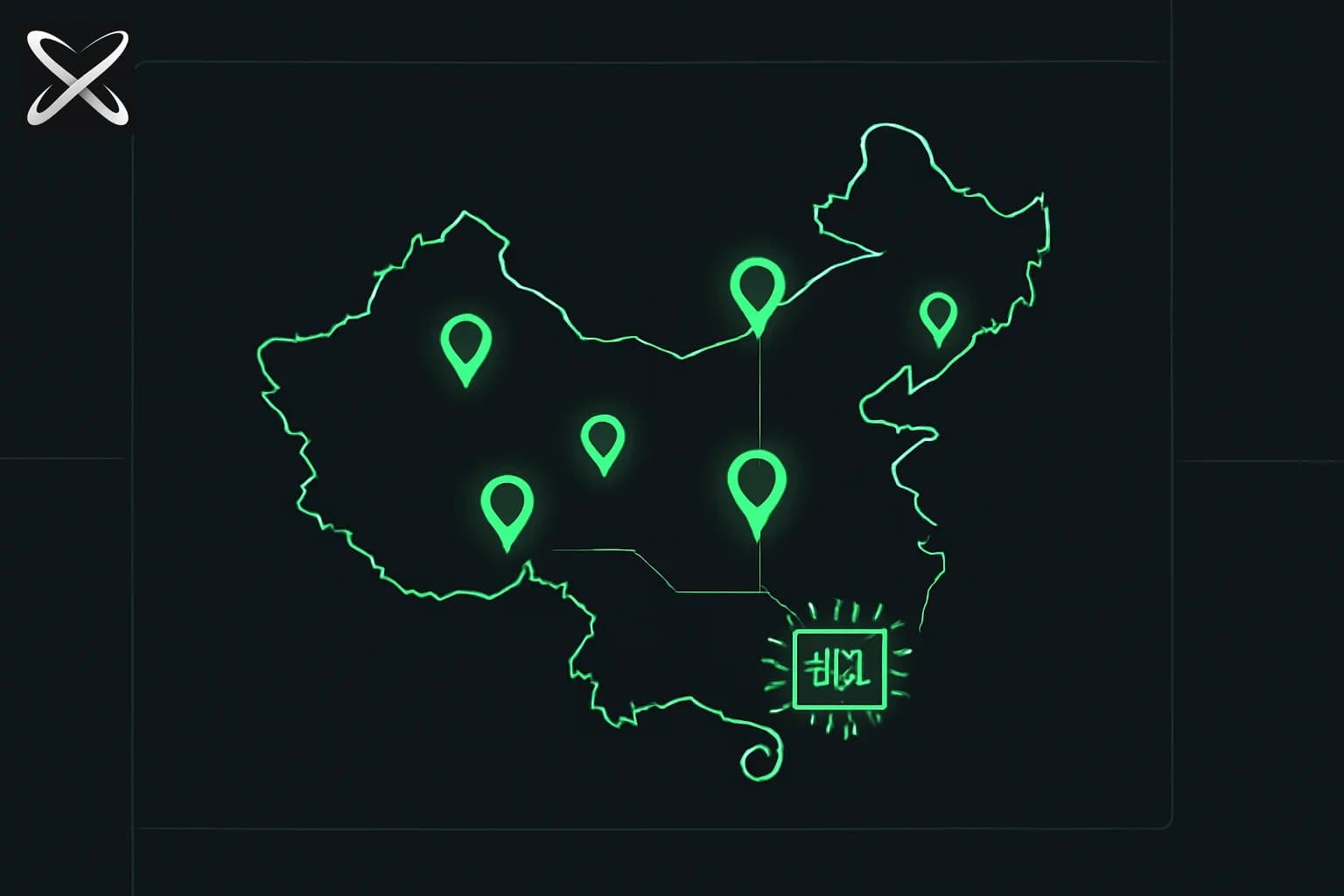
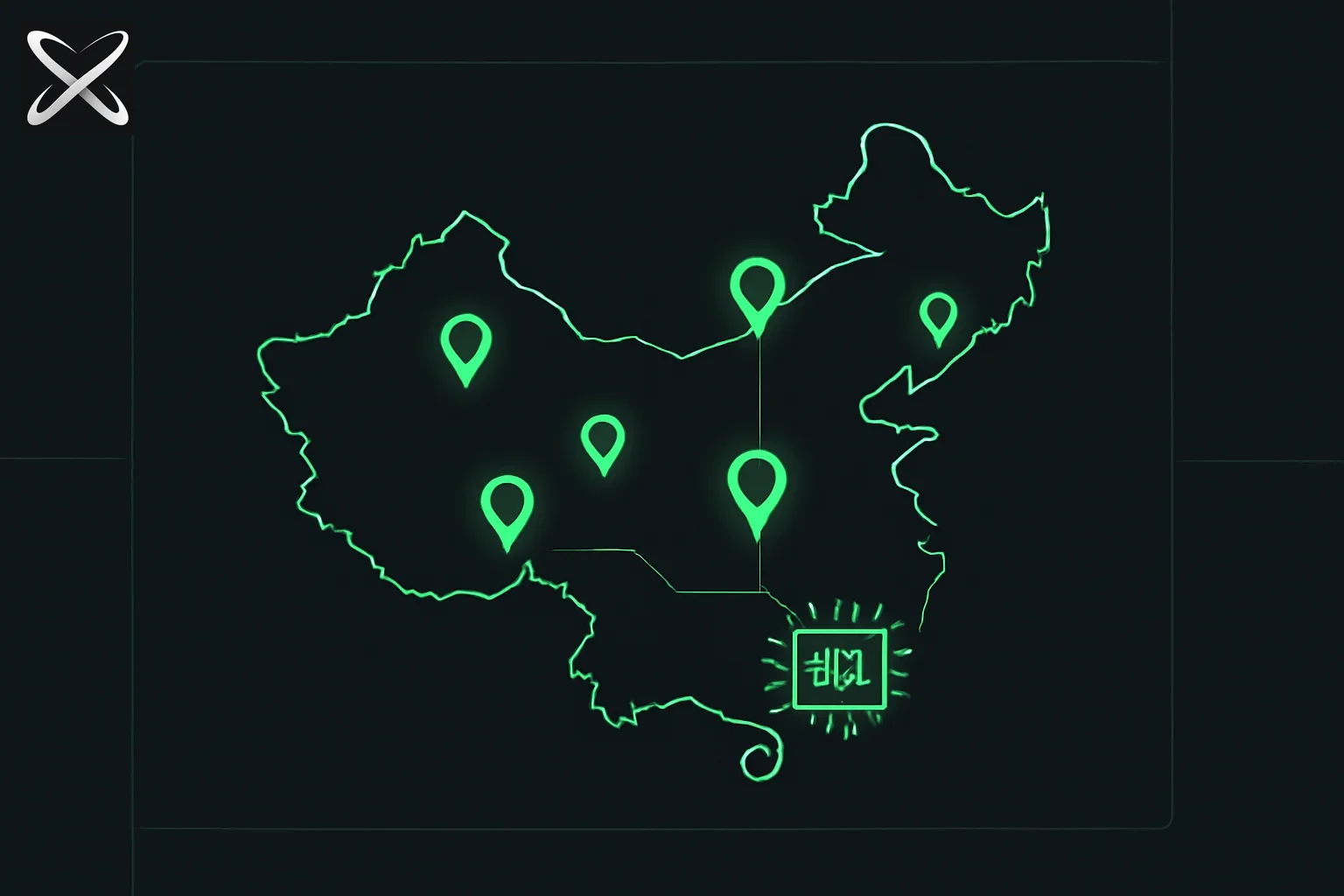 Top Chinese AI companies diagram: a China map silhouette with glowing company marker pins connected to model-chip icons
| If you need… | Start here | Flagship model (Jun 2026) | Why |
|---|---|---|---|
| Cheapest frontier coding API | MiniMax, StepFun | M2.7, Step 3.5 Flash | ~$0.10–0.30 input; strong SWE-bench scores |
| Open weights + self-host | DeepSeek, Zhipu | DeepSeek V4 Pro, GLM-5.2 | Commercial-friendly licenses; Hugging Face weights |
| Long-context agents | Moonshot | Kimi K2.7 | Agent Swarm; powers Cursor Composer integrations |
| Broadest model family | Alibaba (Qwen) | Qwen 3.7-Max, Qwen 3.6 Plus | 900M+ HF downloads; 1M context tiers |
| Enterprise MaaS in China | Zhipu (Z.ai) | GLM-5.2 | 9/10 top Chinese internet firms; Huawei Ascend stack |
| Consumer AI apps | ByteDance, MiniMax | Doubao (Seed), Talkie | 155M+ WAU on Doubao; MiniMax 70% intl revenue |
| Domestic chip independence | Zhipu, DeepSeek, Baidu | GLM-5, ERNIE 5.0 | Trained/served on Ascend or Kunlun silicon |
| Highest OpenRouter volume | Xiaomi | MiMo-V2-Pro | ~21% platform share; free preview drove IDE adoption |
How the landscape is organized
Chinese AI splits into three tiers that behave differently in procurement and developer adoption:
Tier 1 — Big Tech Labs (cloud + consumer scale)
  Alibaba (Qwen) · ByteDance (Doubao/Seed) · Baidu (ERNIE) · Tencent (Hunyuan)

Tier 2 — Independent Startups ("Six Tigers" + DeepSeek)
  Zhipu · Moonshot · MiniMax · Baichuan · StepFun · 01.AI · DeepSeek

Tier 3 — Hardware-adjacent & niche
  Xiaomi (MiMo) · Huawei (Ascend stack) · iFlytek (Spark) · Kuaishou (KwaiKAT)
Six Tigers (六小虎) is the label Chinese media and investors use for six leading independent startups. DeepSeek is almost always discussed in the same breath but sits slightly apart — a Hangzhou research lab that prioritizes open-weight efficiency over consumer apps.
Four Dragons (四小龙) is a newer investor label for the four highest-valued independents: DeepSeek, Zhipu, MiniMax, and Moonshot — combined valuations reportedly exceeded 1 trillion yuan (~$140B) by early 2026 per China Biz Insider reporting.
Tier 2 startups — the Six Tigers and DeepSeek
These are the companies most Western developers mean when they say "Chinese AI startups."
DeepSeek — open-weight efficiency leader
| Founded | 2023, Hangzhou |
| Focus | Research-first; open weights; training efficiency |
| Key models | DeepSeek V4 Pro, V4-Flash, R1 reasoning line |
| Differentiator | MoE architecture, sparse attention (DSA), reported ~$6M-class training economics |
| Try it | API docs · Hugging Face collection |
DeepSeek triggered the January 2026 market shock by demonstrating frontier-class models at a fraction of Western training cost. Its strategy aligns with the commoditization playbook: release weights, undercut API pricing, force global repricing.
Best for: Self-hosters, researchers, cost-sensitive agent pipelines, teams building on DeepSeek TUI agents.
Limits: Compliance documentation thin vs US cloud providers; geopolitical scrutiny on any China-hosted API route.
Zhipu AI (Z.ai) — China's Anthropic-shaped enterprise play
| Founded | 2019, Beijing (Tsinghua University spinout) |
| Focus | Enterprise MaaS, developer API, government-linked deployments |
| Key models | GLM-5.2, GLM-5, ChatGLM |
| Differentiator | MIT-licensed weights; Huawei Ascend end-to-end; 9/10 top Chinese internet firms as customers |
| Try it | Z.ai · How to run GLM on Ollama |
Zhipu is the most commercially mature of the independents. CEO Zhang Peng explicitly positions the company as "China's Anthropic" — base-model moat, API-first revenue, developer ecosystem flywheel. GLM-5.2 matched Claude Mythos on security benchmarks in late June 2026.
Reported scale (per 36Kr coverage of Zhipu's 2026 outlook): ~2.5B yuan ARR, 240,000+ paying developers, GLM models deployed on Google Vertex AI and AWS Bedrock.
Best for: Enterprise API buyers, self-hosters who want MIT license, security-adjacent evals, agent harness integration.
Limits: ~76× smaller ARR than Anthropic — ecosystem depth still catching up; US regulated buyers face vendor review.
Moonshot AI — long context and agent swarms
| Founded | 2023, Beijing (Tsinghua; Yang Zhilin, CMU alum) |
| Focus | Kimi chatbot, long-context reasoning, agent orchestration |
| Key models | Kimi K2.7, Kimi K2.5 |
| Differentiator | Agent Swarm (100-agent coordination); 262K–1M context; Cursor Composer 2 base model |
| Try it | kimi.com · OpenRouter · open weights on Hugging Face |
Moonshot built China's second-most-popular consumer chatbot after ByteDance's Doubao. Its K2 line targets agentic coding and long-document workflows — students, lawyers, and white-collar workers were early power users for 200K+ character inputs.
Growth has been explosive: reporting cited $100M ARR in March 2026 and $200M+ in April 2026, with month-over-month doubling after K2.5 launch. Alibaba is a major investor.
Best for: Long-context RAG, multi-agent orchestration, coding agents, teams evaluating Kimi vs Claude on planning tasks.
Limits: Some reporting suggests Moonshot scaled back pure foundation research in 2025–2026 as key talent moved; verify current model roadmap before multi-year bets.
MiniMax — consumer AI and agentic coding
| Founded | 2021, Shanghai |
| Focus | Consumer apps (Talkie/Xingye) + enterprise M2 coding models |
| Key models | MiniMax M2.7, M2.5, Hailuo video |
| Differentiator | ~70% revenue from international markets; self-evolving agent architectures |
| Try it | minimax.io · OpenRouter |
MiniMax is the consumer-facing tiger. Talkie (Glow internationally) is a character-AI chatbot with strong overseas traction. On the developer side, the M-series shipped four major releases in six months, with M2.7 hitting ~56% SWE-Pro at roughly 50× lower cost than Claude Opus on comparable agent workloads.
Listed on Hong Kong Stock Exchange alongside Zhipu — a signal Beijing wants AI startups to access public capital.
Best for: Agentic coding at low cost, consumer AI prototypes, international app builders.
Limits: Flagship weights often closed; compliance docs weaker than Alibaba Cloud or Tencent Cloud.
StepFun — the efficiency surprise
| Founded | 2023, Shanghai |
| Focus | Fast MoE inference, Step series language models |
| Key models | Step 3.5 Flash, Step-2 (1T params) |
| Differentiator | 196B MoE with 11B active; 350 tok/s on Hopper; top free-tier OpenRouter volume |
| Try it | OpenRouter · StepFun platform |
StepFun is the under-discussed performer in Western coverage. Step 3.5 Flash sits at ~$0.10/$0.30 per million tokens with a strong free preview — #3 on OpenRouter's free-model leaderboard in Q2 2026.
Talent pedigree includes researchers from Google, Microsoft, and Chinese big tech. Step-2's trillion-parameter scale ranked competitively on LiveBench against DeepSeek and OpenAI entries.
Best for: Cost-sensitive batch inference, prototyping, teams that want Hopper-trained models (not Ascend-only).
Baichuan Intelligence — enterprise open models
| Founded | March 2023, Beijing |
| Focus | Open-weight LLMs for enterprise and verticals |
| Key models | Baichuan 4, Baichuan-M2 |
| Differentiator | Microsoft SVP-level leadership; strong Chinese NLP |
| Try it | Hugging Face · Baichuan API |
Baichuan was an early Six Tigers member with talent from Microsoft, Huawei, Baidu, and Tencent. Valuation reportedly reached ~$2.8B in 2024 funding rounds.
Market share on global routers is smaller than Qwen or GLM, but Baichuan remains relevant for domestic enterprise buyers who want an alternative to Alibaba's ecosystem.
Best for: Chinese-language enterprise NLP, domestic compliance paths.
01.AI (零一万物) — Kai-Fu Lee's bet
| Founded | 2023 (Sinovation Ventures) |
| Focus | Yi model family, enterprise AI platform |
| Key models | Yi-Lightning, Yi-Large |
| Differentiator | Kai-Fu Lee founder brand; global developer outreach |
| Try it | 01.ai · Hugging Face Yi collection |
01.AI launched with significant fanfare as Lee's post-Sinovation AI venture. The Yi models competed on open-weight leaderboards in 2024–2025. By 2026, volume share has consolidated toward Qwen, DeepSeek, and GLM — but 01.AI remains in the Six Tigers conversation for brand and enterprise partnerships.
Best for: Teams already on Yi fine-tunes; Kai-Fu Lee ecosystem connections in Asia.
Tier 1 — Big Tech AI labs
These companies have distribution, cloud infrastructure, and consumer apps that startups cannot match.
Alibaba — Qwen (通义千问)
The scale leader. Qwen holds 942M+ Hugging Face downloads as of early 2026 — more than the next eight competitors combined per industry reporting.
| Model tier | Role |
|---|---|
| Qwen 3.7-Max | Long-horizon agent frontier |
| Qwen 3.6 Plus | 1M context flagship; #2 OpenRouter coding share |
| Qwen 3.5 Flash | Ultra-cheap batch ($0.065/$0.26 per M tokens) |
| Qwen 3 Coder Next | IDE-optimized coding variant |
Alibaba Cloud International gives Qwen the least painful cross-border enterprise path among Chinese providers — EU regions, established cloud certs.
Investor angle: Alibaba leads rounds in Moonshot and holds stakes across the ecosystem — the SoftBank-of-Chinese-AI pattern.
ByteDance — Doubao / Seed
ByteDance runs China's most-used AI consumer app — Doubao with 155M+ weekly active users. The Seed model family powers Doubao with pricing reportedly ~10× below GPT-5.2 on comparable tasks.
Seed 2.0 Lite and Mini extend into ultra-cheap tiers. Volcano Engine (火山引擎) is the enterprise cloud surface.
Best for: Consumer AI at Chinese scale, short-video + AI integration (TikTok/Douyin ecosystem).
Baidu — ERNIE (文心一言)
Baidu pivoted aggressively to open source in 2025 — from zero Hugging Face releases in 2024 to 100+ in 2025. ERNIE 5.0 is a 2.4T-parameter omnimodal flagship trained on Baidu Kunlun chips and integrated with China's dominant search engine.
Best for: Search-native AI, domestic cloud buyers already on Baidu AI Cloud.
Tencent — Hunyuan (混元)
Tencent keeps Hunyuan primarily inside its ecosystem — WeChat, Tencent Cloud, gaming, and enterprise SaaS. Minimal OpenRouter footprint by design; maximum leverage across Tencent's 1B+ WeChat users.
Best for: Teams already on Tencent Cloud; WeChat mini-program AI.
Tier 3 — Hardware and niche players
Xiaomi — MiMo (the volume surprise)
A smartphone company holds ~21% of OpenRouter weekly tokens — 3× OpenAI's share — because MiMo-V2-Pro shipped with free preview, 1M+ context, and IDE partnerships. Three MiMo variants (Pro, Omni, Flash) cover flagship, multimodal, and ultra-cheap tiers.
Lesson: Distribution beats benchmark rank. MiMo ranks #10 on intelligence indexes but #1 by usage.
Huawei — Ascend (infrastructure, not models)
Huawei does not ship consumer LLMs at the same tier as Qwen — but Ascend chips are the domestic silicon story. GLM-5 and upcoming DeepSeek V4 train on Ascend. For Chinese state and SOE buyers, hardware independence beats a benchmark point.
iFlytek (科大讯飞) — Spark
Dominates speech, education, and public-sector AI in China. Limited global developer relevance unless you need Chinese voice + language bundled.
Comparison matrix — startups at a glance
| Company | Valuation / scale signal | Revenue model | Open weights? | Best workload |
|---|---|---|---|---|
| DeepSeek | ~$45B reported | API + open weights | Yes (strong) | Research, self-host, cost disruption |
| Zhipu | HK-listed; ~377B yuan mkt cap reported | Enterprise MaaS | Yes (MIT) | B2B API, security, Ascend deploys |
| Moonshot | ~$20B+ reported | Kimi consumer + API | Partial (K2 line) | Long context, agents, coding |
| MiniMax | HK-listed; ~223B yuan reported | Consumer + API | Partial | Agentic coding, Talkie apps |
| StepFun | Private | API | Partial | Cheap/fast MoE inference |
| Baichuan | ~$2.8B (2024 round) | Enterprise | Yes | Chinese enterprise NLP |
| 01.AI | Private (Lee-backed) | API + Yi weights | Yes | Yi ecosystem, Asia enterprise |
| Alibaba/Qwen | Public parent | Cloud + API | Yes (broad) | Scale, downloads, cloud certs |
| ByteDance | Private giant | Consumer + Volcano | Mixed | Doubao consumer scale |
| Xiaomi/MiMo | Public parent | API | Mixed | IDE volume, cheap coding |
Valuation figures from public reporting and investor materials; treat as directional, not audited.
What people are asking
"Is DeepSeek part of the Six Tigers?"
No — officially the Six Tigers are Zhipu, Moonshot, MiniMax, Baichuan, StepFun, and 01.AI. DeepSeek is a separate Hangzhou lab that outgrew the label on global impact. In practice, every "Chinese AI startups" list includes DeepSeek first.
"Which Chinese model should I use in Claude Code or Cursor?"
For Claude Code replacements during the Fable export ban, teams benchmarked GLM-5.2, Kimi K2.7, and OpenRouter Fusion. Cursor integrated Kimi K2.5 as Composer 2's base. There is no universal winner — run your task suite.
"Are Chinese models safe for production?"
Self-hosted open weights: manageable risk with standard security review.
Chinese-hosted APIs with sensitive data: hard no for most regulated US/EU buyers. NIST and USCC reports flag higher cyber-risk scores and content-policy filtering on some Chinese models vs US counterparts.
Pragmatic middle path: Route non-sensitive coding and batch work to Chinese APIs; keep customer PII on US frontier stacks. See enterprise open-source alternatives guide.
How to evaluate any Chinese AI vendor
Use this checklist before production routing:
- License — MIT (GLM-5), Apache-style (Qwen), or custom commercial terms?
- Hosting — Self-host weights vs API? Which cloud region?
- Hardware — NVIDIA, Ascend, or Kunlun? Matters for compliance narratives.
- Benchmark on your tasks — Leaderboards lie; your codebase doesn't.
- English tone quality — Strong on benchmarks, weak on brand voice for US consumers.
- Export path — Can you leave if geopolitics shift again?
# Quick eval pattern — swap model ID per vendor
curl https://openrouter.ai/api/v1/chat/completions \
  -H "Authorization: Bearer $OPENROUTER_API_KEY" \
  -H "Content-Type: application/json" \
  -d '{
    "model": "deepseek/deepseek-v3.2",
    "messages": [{"role": "user", "content": "Your real production prompt here"}]
  }'
Run the same prompt across GLM, Kimi, Qwen, and your US baseline. Compare latency, cost, and output quality — not marketing tables.
Bottom line
Chinese AI in 2026 is a mature, consolidated market — not a single DeepSeek surprise. Ten providers matter for production; six startups carry the independent innovation label; four big-tech clouds own distribution.
The right choice is almost never "pick one Chinese model." It is tier by workload: Qwen or MiMo for cheap coding volume, GLM or DeepSeek for self-hosted enterprise, Kimi for long-context agents, MiniMax for agentic price-performance, Alibaba or Tencent cloud if you need compliance documentation.
The performance gap with the US is measured in percentage points. The price gap is measured in multiples. That is why 45% of OpenRouter traffic already routes through Chinese providers — and why every serious AI stack in 2026 needs a China-aware routing layer.
Related reading
- Update — September 8, 2026: China's top court rules AI clones violate personality rights — the country's first formal judicial stance on AI voice and likeness cloning.
- Mind Lab Macaron-V1 — LoRA continual learning startup backed by Meituan
- Apodex-1.0-mini — #1 FutureX, beats Sonnet 4.6 and GPT-5.5 (Jun 29)
- Agents-A1 — InternScience 35B MoE long-horizon agent (GAIA 96, BrowseComp 75.5)
- Qwen 3.6 27B local development guide — llama.cpp, OpenCode, HN benchmarks
- Run open-source models locally in OpenCode — Ollama, llama.cpp pillar guide
- China's AI playbook: free models and cheap compute
- US vs Chinese AI startups — funding, strategy, and who wins what
- GLM-5.2 launches as Fable ban response
- DeepSeek V4 Pro disrupts AI pricing
- Kimi K2.7 open-source coding model
- China's AI token economy: credit cards, bank loans, and a reported 500T tokens/day — Moonshot AI reportedly rewarding spend in tokens, plus the loan-sizing claim
- Stanford AI Index 2026 takeaways
- Interconnects.ai: ranking 19 Chinese open model labs
- MIT Technology Review: four Chinese startups beyond DeepSeek
Company valuations, ARR figures, and OpenRouter share data reflect public reporting and platform statistics as of June 29, 2026. Verify live pricing and terms on each vendor's site before procurement decisions.