



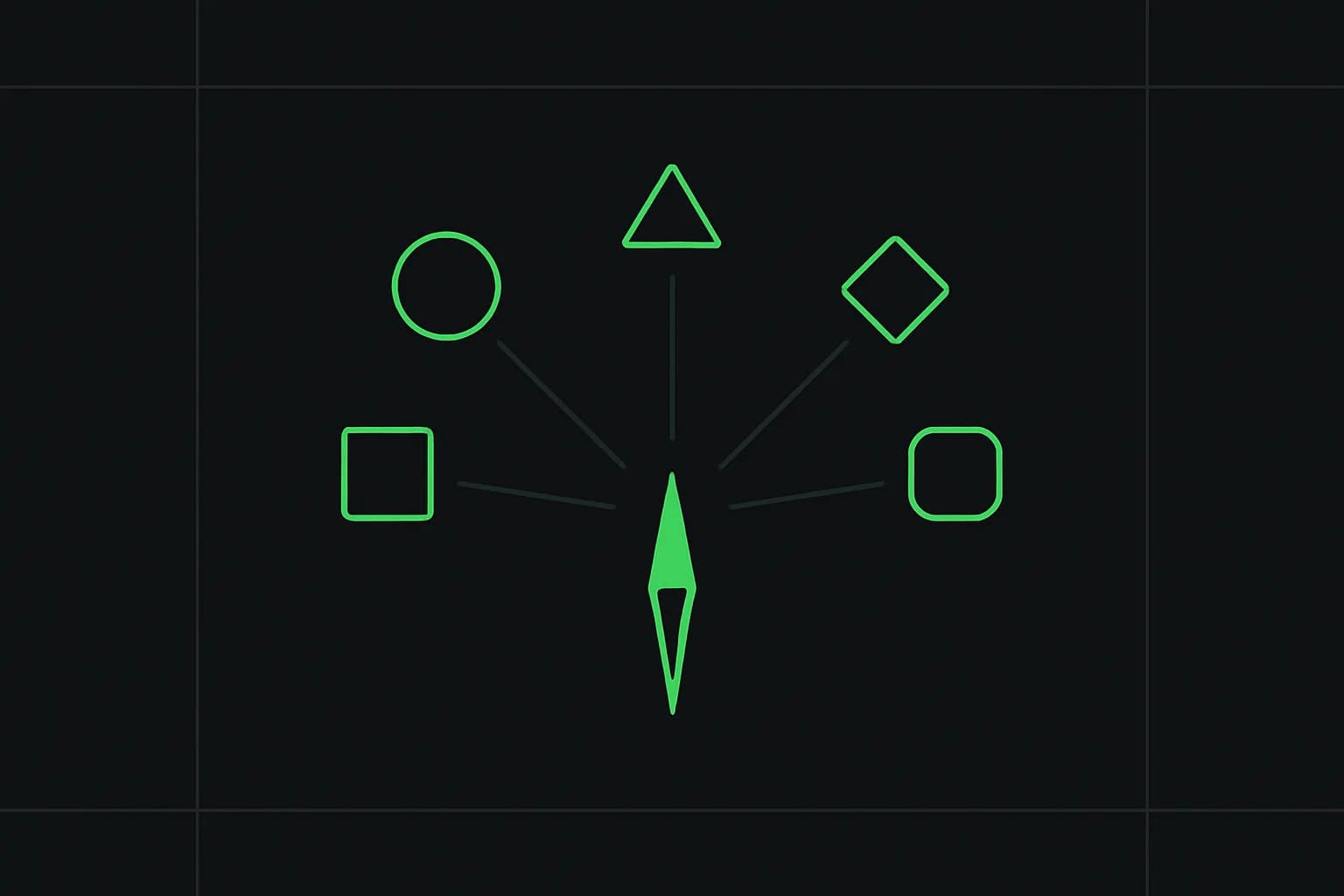
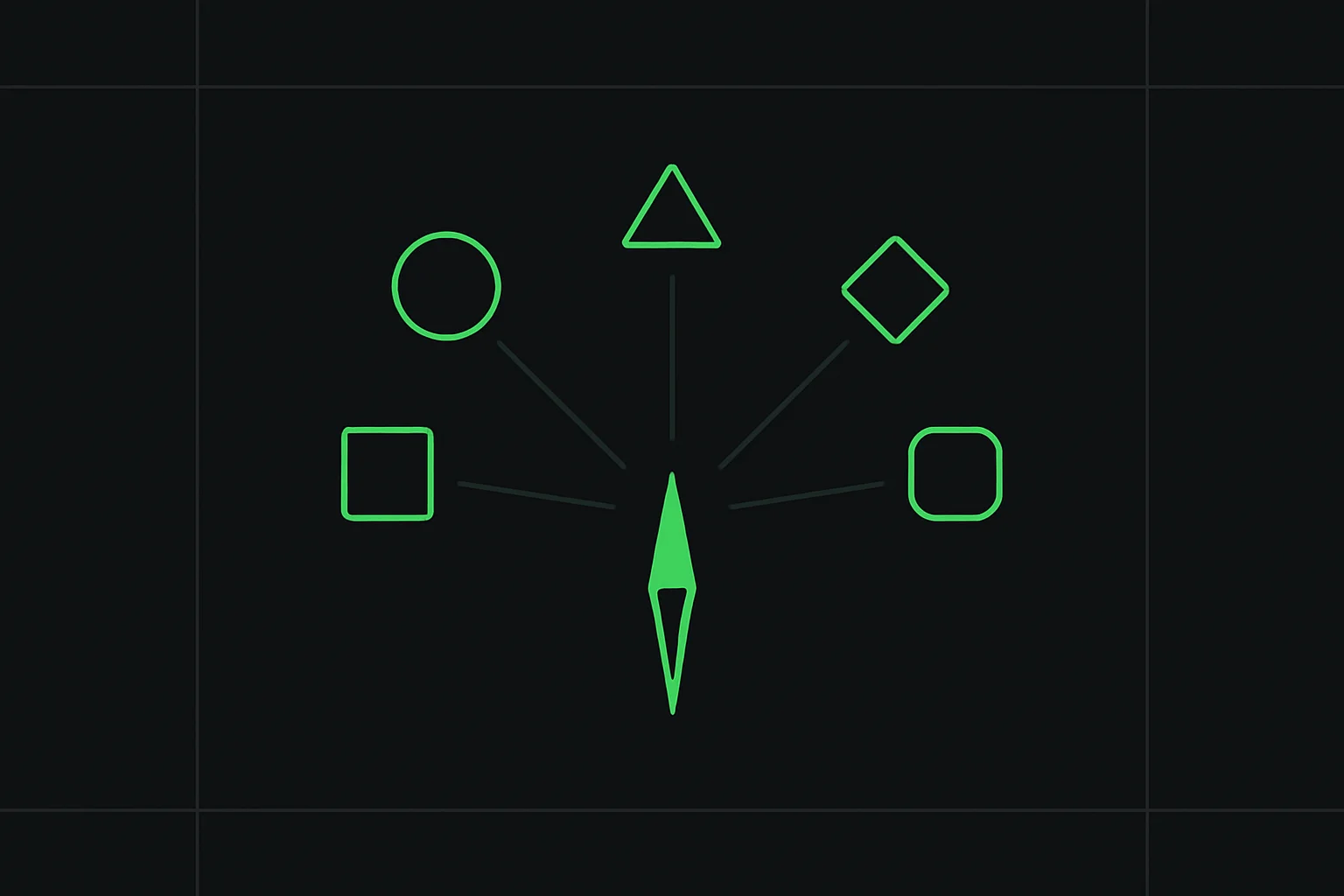
 Five small geometric icons arranged around a central compass needle, symbolizing the five pillars of responsible AI converging into one decision framework
"Use AI responsibly" is not a rule. It's a slogan that tells people almost nothing useful right before they open a chatbot and make a judgment call alone. These 10 rules exist to fix that — each one grounded in a documented case, not a hypothetical, and built around a framework simple enough to run through in your head in under thirty seconds.
This post distills the core of an upcoming AI Ethics & Responsible Use course from explainx.ai, taught by Yash Thakker — details at the bottom.
TL;DR — the 10 rules
| # | Rule | Pillar |
|---|---|---|
| 1 | Verify every specific, checkable AI claim before it leaves your hands | Accountability |
| 2 | Treat "the algorithm decided" as never an acceptable answer | Accountability |
| 3 | Run the gut-check before pasting anything into an AI tool | Privacy |
| 4 | Default to organization-approved tools, not personal accounts | Privacy / Security |
| 5 | Audit AI decision tools for bias — patterns, not single outcomes | Fairness |
| 6 | Disclose meaningfully when AI did the heavy lifting | Transparency |
| 7 | Verify identity out-of-band before acting on urgency | Security |
| 8 | Own the output the moment you hit send | Accountability |
| 9 | Own the mistake immediately if you catch one | Accountability |
| 10 | Treat AI literacy as ongoing, not a box you check once | All five |
The five pillars underneath every rule on this list
Nearly every responsible AI framework in the world — a global regulation, a Fortune 500 internal policy, or a technical standard like NIST's AI Risk Management Framework or ISO 42001 — collapses down to the same five ideas:
- Fairness — outputs shouldn't systematically disadvantage people based on race, gender, age, or disability, regardless of intent.
- Transparency — being honest about when AI is involved, and why it produced a given output.
- Accountability — a human, not "the algorithm," owns the outcome of using an AI tool.
- Privacy — respecting what happens to data once it goes into an AI system.
- Security — protecting AI systems and the data flowing through them from being manipulated, stolen, or abused.
These pillars aren't independent checkboxes — they interact constantly. A hiring tool that isn't transparent about how it screens candidates makes a fairness problem much harder to catch before it becomes a lawsuit. A privacy failure, like pasting sensitive data into an unapproved tool, is often also a security failure, because that data now sits somewhere your security team can't see. Every rule below maps back to one or more of these five.
1. Verify every specific, checkable claim before it leaves your hands
A public tracker documents 1,500+ court cases where AI-hallucinated citations, quotes, or case numbers reached a judge — starting with the 2023 case that made this a household legal-tech story. Verification doesn't mean redoing the AI's work by hand. It means spot-checking the parts that would actually hurt you if wrong: names, numbers, quotes, citations, anything you're about to put your name behind.
2. Treat "the algorithm decided" as never an acceptable answer
Courts and regulators worldwide have converged hard on one point: a human is always accountable for an AI-assisted decision. Not the AI, not the vendor, not "the algorithm." This is the accountability pillar in its most literal form — someone with a name and a job title owns the outcome, and that person can't outsource their judgment to the tool.
3. Run the gut-check before pasting anything into an AI tool
Before you type anything into an AI tool, ask: would the person this data belongs to be comfortable knowing it's sitting inside this tool right now? If the answer is no, or you're not sure, don't paste it. This single question catches the overwhelming majority of shadow AI privacy failures before they happen.
4. Default to organization-approved tools, not personal accounts
Nearly half of workplace AI use reportedly happens on personal accounts an employer has zero visibility into. Enterprise agreements typically come with contractual protections a free consumer account doesn't have — using a personal account for work data routes around exactly the safeguard organizational approval was meant to provide.
5. Audit AI decision tools for bias — patterns, not single outcomes
Documented cases — an automated hiring tool settling an EEOC age-discrimination case for $365,000, and a separate collective-action lawsuit covering applicants screened out since 2020 — show bias emerging from historical training data, not anyone's stated intent. One rejection tells you nothing; a pattern across many is worth documenting and escalating. If you're buying or deploying a hiring tool, ask the vendor directly whether it's been independently bias-audited — several US cities and states already require exactly this for automated hiring systems.
6. Disclose meaningfully when AI did the heavy lifting
This isn't about confessing every use of autocomplete. It's about cases where honesty genuinely matters: a report presented as pure independent analysis, writing submitted as unaided original work, a decision explained as entirely human judgment when AI actually did most of the work. A useful test: if the people affected would feel misled by not knowing AI was involved, that's a transparency problem.
7. Verify identity out-of-band before acting on urgency
A $25.6 million fraud happened because someone acted on a video call without independently confirming the identities on it. A near-identical attempt on another company failed for one reason: someone paused and verified through a separate channel first. If a request to move money or share sensitive data arrives with urgency, apparent authority, and a hard-to-verify channel, hang up and call back on a number you already had on file.
8. Own the output the moment you hit send
Whatever you send, submit, publish, or act on is yours, not the AI's. If it's wrong, you're accountable — not "the algorithm." This mindset shift is what turns verification from an annoying extra step into the obvious thing to do.
9. Own the mistake immediately if you catch one
Across the legal hallucination cases, the harshest penalties consistently went to the cover-up, not the original error — attorneys who denied using AI, blamed an unnamed staffer, or repeated the mistake after being warned. Candor after a mistake surfaces is the one thing an AI tool can never do for you, and it's entirely within your control.
10. Treat AI literacy as ongoing, not a box you check once
The specific tools, the specific regulations, even the specific scam patterns will keep shifting — the EU AI Act alone has already seen deadlines renegotiated once. What won't shift is the underlying discipline. That's the whole point of the framework below.
The four-word framework: Verify, Protect, Disclose, Own
If you remember nothing else from this list, remember these four words — simple enough to run through in your head in under thirty seconds before using AI for anything that matters:
| Step | Ask yourself |
|---|---|
| Verify | What specific, checkable claims does this contain, and have I actually checked them? |
| Protect | Would the person this data belongs to be comfortable knowing it's in here? |
| Disclose | Does anyone receiving this deserve to know AI was involved? |
| Own | If something here turns out to be wrong, whose name is attached to it? |
None of these four steps require technical knowledge about how AI models work. That's deliberate — responsible AI use is fundamentally a judgment skill, not a technical one, and judgment is something you already have.
Coming soon from explainx.ai: AI Ethics & Responsible Use
These 10 rules are the core of an upcoming course from explainx.ai, AI Ethics & Responsible Use, taught by Yash Thakker. It's built to be practical rather than a compliance lecture — real, documented cases (hiring-bias settlements, hallucination sanctions, deepfake fraud, shadow AI incidents) mapped to the five pillars above, then hands-on practice applying the Verify, Protect, Disclose, Own framework to real scenarios. No release date has been announced yet — subscribe to explainx.ai's newsletter to hear when it drops.
Related reading
- What Is AI Ethics? A Complete Guide — the foundational pillar post these 10 rules apply, covering all six core dimensions.
- AI Hallucination Legal Cases: Why Lawyers Keep Getting Sanctioned — the accountability pillar in 1,500+ documented court cases.
- Deepfake Fraud: Inside the $25.6 Million Video Call Scam — transparency and security failing together, and the habit that beats it.
- Shadow AI: The Silent Privacy Risk in Every Workplace — the pillar that fails the most quietly.
- What does redact mean? Redaction types and the AI angle — the privacy pillar applied to documents, video, and agent pipelines.
- AI and the Law: What AI Can and Can't Do for Legal Help — the original Mata v. Avianca case behind rule #1.
- What Is an AI Jailbreak? — a related security concept underneath the fifth pillar.
- What Is Bias in AI? Types, Examples, and Mitigation — a deeper dive on the fairness pillar behind rule #5.
- Top 50 AI Concepts for Business Professionals — broader AI governance vocabulary, including shadow AI and TCO.
- Why AI Watermarks Are Good: The Case for Provenance — the transparency pillar applied to synthetic media specifically.
- AI watermark removal: right vs. wrong (2026 guide) — when visible stamp removal is legitimate vs. when provenance stripping crosses the line.
- Smart glasses misuse, venue bans, and how to protest — ambient capture, venue bans, and the Protect pillar in public spaces.
This article is for general education, not legal or compliance advice. Regulatory details move quickly — verify current requirements in your jurisdiction through official sources rather than this post alone.