



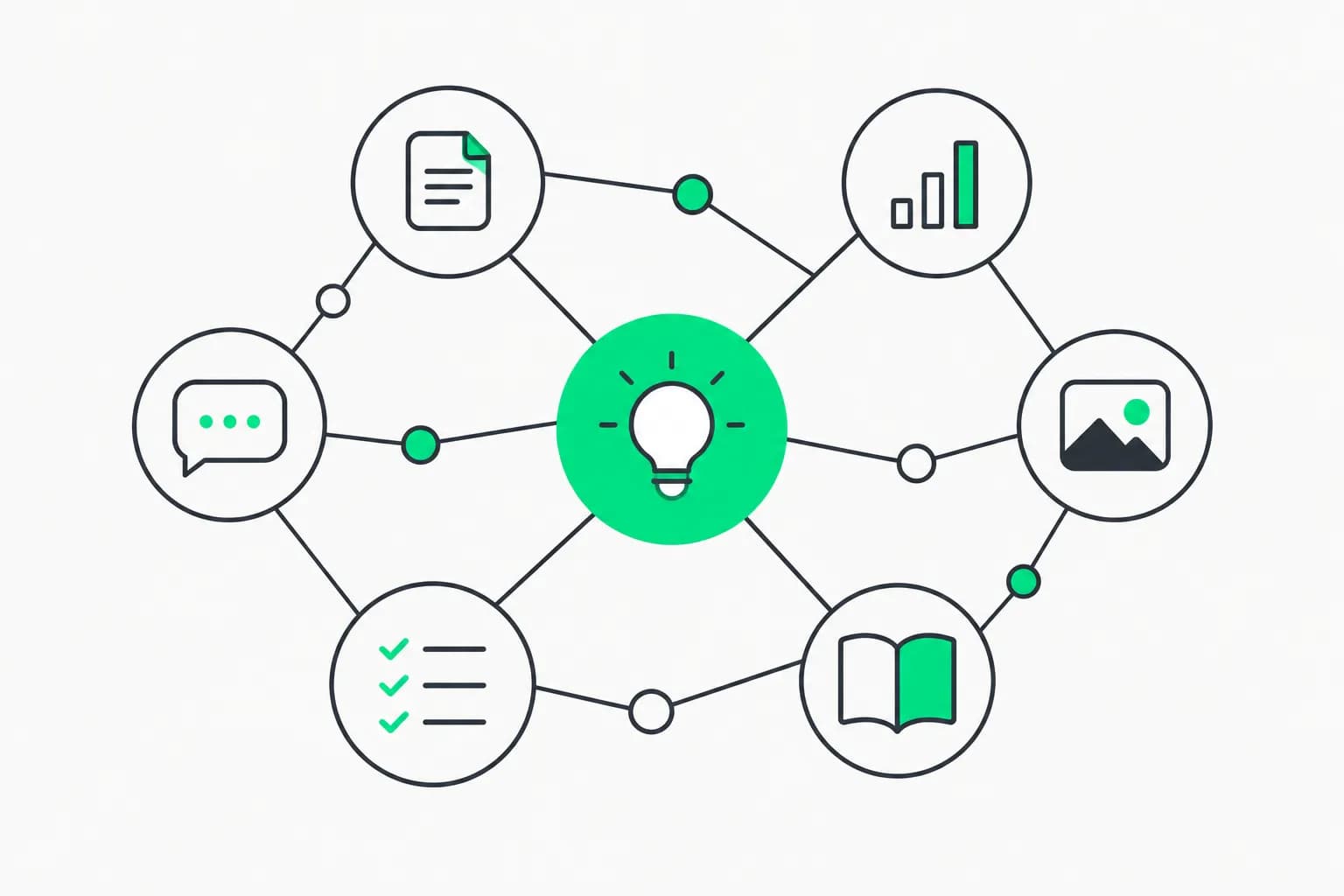
Sakana AI has announced Sakana Aquarium, an AI agent platform that uses an ontology as its foundation to help organizations make decisions and carry them out. The announcement, published October 23, 2026 in Japanese, describes it as a platform for efficiently building agents that fit an organization and keeping them running safely. It is the Tokyo lab's most direct move yet from research into enterprise software.
Sakana AI is better known on explainx.ai for research, such as the Agentic Scientist v3 and mass multi-agent self-supervision work, and for its Japanese medical tool Namazu. Aquarium is a different kind of release: a product aimed at banks and other regulated organizations that need agents they can audit.
TL;DR: what Sakana says Aquarium is
| Question | Answer from Sakana's announcement |
|---|---|
| What is it? | A platform to build, run and manage AI agents on an ontology |
| Core layers | Ontology, governance, managed agents |
| Do I move my data? | No: it links tables and documents across existing storage |
| Who approves actions? | Humans at key points, within set permissions |
| Is there an audit record? | Yes: inputs, judgments, approvals and results are recorded |
| Pricing and release date | Not stated; Sakana consults on adoption case by case |
| Prior work behind it | Finance projects with MUFG, SMBC Group and Daiwa Securities Group |
What does the ontology layer do?
Video: Sakana AI
An ontology is a structured map of what exists in a business and how it relates: customers, contracts, products, rules, the documents that govern them. Sakana says Aquarium's ontology organizes an organization's knowledge, rules and data by meaning and relationships, and links tables and documents that already live in different systems without migrating them. When the underlying data changes, the ontology reflects it, so agents work from current information instead of a stale export.
The practical difference from plain retrieval is explicitness. A vector search finds passages that resemble a question. An ontology tells an agent that a given account belongs to a given customer, that a certain rule applies to that account type, and which document states the rule. For decisions in finance, where the answer must be traceable, that explicit structure matters. Ontology-first platforms are not new in the enterprise world, but pairing one with LLM agents is now a crowded race, as the Walmart agent gateway and Microsoft Flint stories show from different angles.
Sakana also says data connections and ontologies are reusable across multiple agents. That is the main economic claim: the expensive part of an agent project is usually connecting data and agreeing on terminology, and Aquarium wants to pay that cost once.
How does governance work?
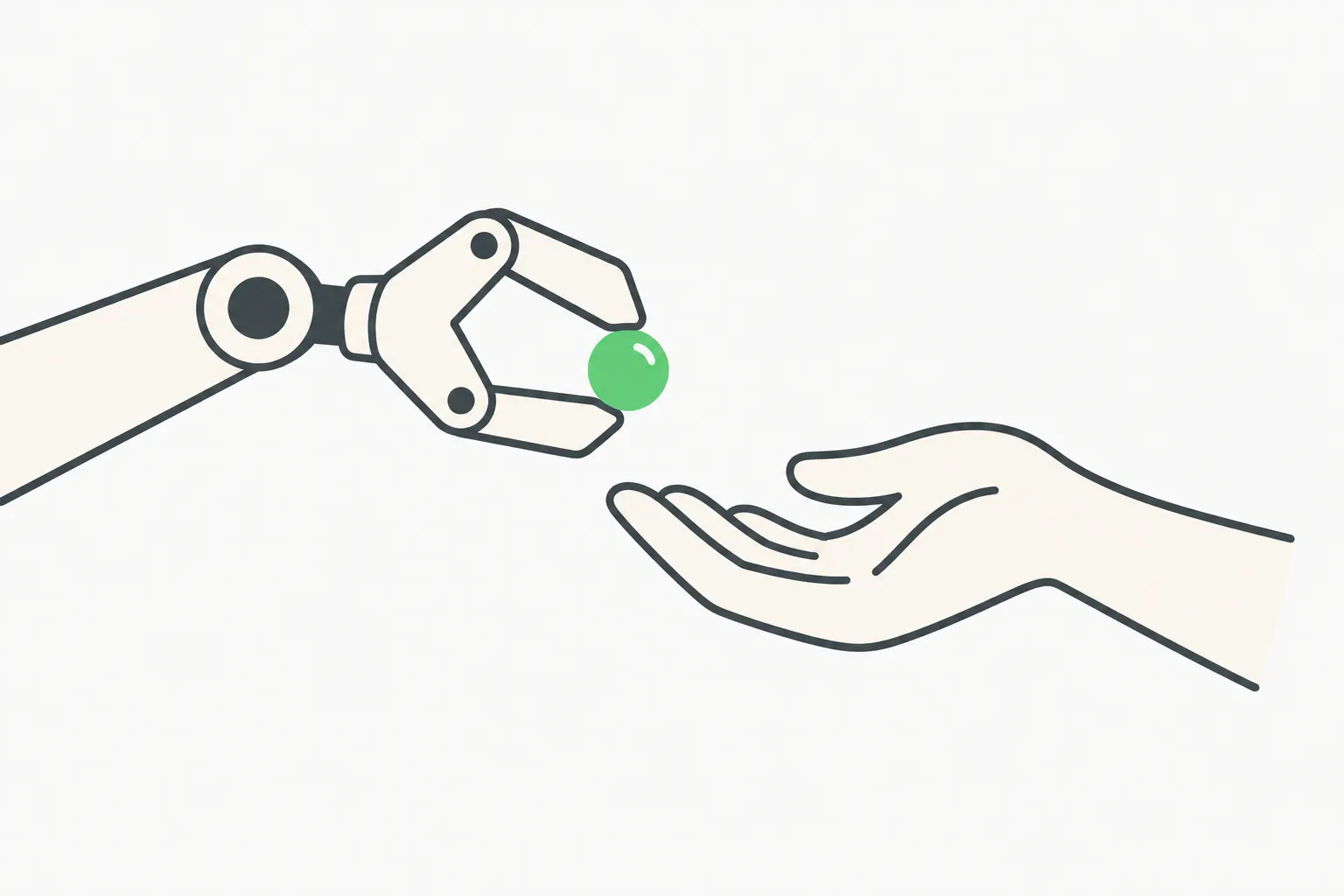 Agent proposing an action to a human approver, illustrating Sakana Aquarium governance approvals
Sakana describes governance as controlling data, ontologies and agents together. It sets access permissions and approvals required before execution, records everything from the basis of a decision to its result, and tracks speed, accuracy and model usage. The stated goal is to let AI handle work from information checks through execution inside set permissions, with humans approving at key points.
This lines up with where security guidance is heading. The joint NIST, NSA and CISA practices for agents stress scoped permissions and evidence, and credential tools such as 1Password for agents tackle the same least-privilege problem from the secrets side. A platform that bakes approvals and logging into the runtime saves each team from rebuilding them.
What are managed agents?
The third layer runs agents on top of the ontology data. Sakana says workflows can combine information retrieval, AI judgment, function execution and human approval, and that the platform manages the full lifecycle of an agent. In plain terms, you define a workflow such as "gather the facts, judge whether a case meets a threshold, call a function, ask a person to approve", and the platform handles hosting, permissions and records.
A worked example: a loan-review workflow
Sakana does not publish a sample workflow, so this is our illustration of how the three layers would fit together in a finance setting, not a description of a real deployment.
- Trigger. A new loan application arrives in an existing document store. The ontology already knows that applications link to a customer record, a credit policy and prior correspondence, because those sources were connected once and reused.
- Retrieval. A managed agent pulls the linked records through the ontology instead of searching every system separately. Because relationships are explicit, it can tell which policy version applies to this customer type.
- Judgment. The agent drafts an assessment and cites the records it used. Governance logs the inputs and the model used for the judgment step.
- Approval. Before any function writes to a system, a person with the right permission reviews the draft. Governance records who approved and when.
- Execution and review. The approved action runs, the result is logged, and a later review can replay the whole chain from decision basis to outcome.
The value is in steps 3 to 5. The record turns an opaque model call into something an auditor or a risk team can inspect, which is the thing regulated buyers have been asking for since agents moved from demos to production.
Why ontologies are back in fashion for agents
For years, enterprise knowledge graphs were a niche investment: powerful but expensive to build, and hard to keep in sync with messy source systems. Large language models changed the calculation in two ways. First, models can help draft and maintain the ontology, which Sakana lists as a future direction when it says it will use AI to help build agents. Second, agents fail in predictable ways when they only have loose retrieval: they cite the wrong policy version, confuse similarly named entities, or act on stale data. An explicit structure narrows those failure modes.
The trade-off is rigidity. An ontology encodes a particular view of the business, and when the business changes faster than the model of it, agents inherit the gap. Sakana says Aquarium will update ontologies and agents continuously from operational feedback, which is the right instinct, but the announcement does not explain the mechanism or who signs off on changes.
Reading the announcement as a builder
If you build agents yourself, three takeaways stand out even without access to the product.
- Separate data meaning from agent logic. Keeping business definitions in one reusable layer means a second or third agent costs far less than the first.
- Treat approvals as part of the workflow, not an afterthought. Sakana lists human approval as a workflow step alongside retrieval and execution, which is a pattern you can copy in any framework.
- Log decision basis, not just outputs. The record Sakana describes includes the inputs and judgments, not only the final action. That is what makes post-incident review possible.
For teams outside Japan, note that the announcement is in Japanese and the company points readers to consultation rather than self-serve signup, so this is currently an enterprise engagement, not a product you can try this afternoon.
What people will ask next
Readers following Sakana will want to know whether Aquarium uses the company's own research models, such as its multi-agent and evolutionary work, or leans on third-party frontier models. The announcement does not say. They will also ask how it differs from existing ontology-driven platforms, and the honest answer today is that nothing public lets you compare. We will add an update here if Sakana publishes pricing, a model list, or customer results.
What gets recorded and why it matters
 Trail of footprints representing the audit record of agent inputs, judgments and approvals in Aquarium
Sakana lists the benefits as: AI can use a wide range of internal data and documents in decisions; staff spend less effort gathering information by hand when situations change; and the record of inputs, judgments, approvals and results lets operations be reviewed and improved. That last point is the one regulators care about. A survey covered in our Monday and Nielsen report found managers say AI work is harder to evaluate; a built-in decision record is one answer to that verification burden.
Where it comes from: Japanese finance projects
Sakana says it previously deployed AI in finance and other areas that demand accuracy and accountability, including projects with MUFG, SMBC Group and Daiwa Securities Group. Aquarium packages the repeated work from those projects, namely data connection and terminology setup, into a shared foundation. Planned directions are continuously updating ontologies and agents from operational feedback, and using AI to help build agents.
It is worth being careful here. The announcement names the clients as past project partners, not as Aquarium customers in production, and gives no performance numbers. We treat the finance lineage as context for the design, not as proof of results.
What is still unknown
| Gap | Why it matters |
|---|---|
| Pricing | Cannot compare cost against building in-house |
| General availability and regions | Sakana points to case-by-case consultation |
| Which models power the agents | Unclear whether Sakana's own models, third-party frontier models or both |
| Deployment model | No statement on cloud versus on-premises in the announcement |
| Independent evaluation | No benchmarks or customer-reported metrics yet |
How it compares with other approaches
Aquarium sits between two things teams already use. At one end, general agent frameworks give flexibility but leave governance to you. At the other, large data platforms with ontologies bring structure but are heavy to adopt. Sakana's pitch is a lighter, agent-first layer that connects to data in place. Whether that holds up depends on how well the ontology can be built and maintained, which is where most knowledge-graph projects have historically struggled. The political side of enterprise AI is also shifting, as with Palantir's no-kill-switch stance with NATO, so buyers increasingly ask who controls the runtime.
What to ask before you evaluate it
- Who builds and maintains the ontology, Sakana or your team, and how are changes reviewed?
- Can approvals be set per action type, not only per agent?
- Is the decision log exportable to your existing audit tooling?
- Which model handles judgment steps, and can you swap it?
- What happens when source systems disagree with the ontology?
- How is data residency handled for regulated workloads?
These questions are ours, not Sakana's. They are the checks we would run on any ontology-plus-agent product.
Bottom line
Aquarium is a credible, well-scoped enterprise pitch: put meaning and rules in an ontology, put permissions and records in a governance layer, and let agents act with a human in the loop. The announcement is light on numbers, so treat it as a direction to watch, and read Sakana's platform page for updates as availability and pricing arrive.
Related reading
- Sakana Agentic Scientist v3
- Sakana mass multi-agent self-supervision
- Sakana Namazu medical LLM
- Walmart agent gateway
- NIST, NSA and CISA agent practices
- Microsoft Flint
Details reflect Sakana AI's announcement of October 23, 2026 and may change as the product rolls out.