




Citigroup CEO Jane Fraser put a number on enterprise agentic coding on the third-quarter 2026 earnings call: 14,000 engineers use Devin, launches run about 30–40% faster, and technology vendor spending fell 30% year over year as work moved in-house. Days later, Cognition CEO Scott Wu said Citi expects to save about $1.5 billion in 2026 from Devin alone in a public interview. Only the first set is Citigroup on the record; the billion figure is Wu''s attribution, not a line item in the bank''s published guidance.
This post answers searchers asking how Citi uses Devin, whether the $1.5B savings is real, and what changed in vendor spend. It links to our Devin Apps launch, Corridor security acquisition, and bank agent-account restrictions.
TL;DR: claimed vs verified
| Statement | Who said it | Verified? |
|---|---|---|
| 14,000 engineers use Devin | Jane Fraser, Q3 2026 call | Yes — Citi transcript PDF / Banking Dive summary |
| 30% YoY drop in technology vendor spend | Fraser | Yes — same call |
| Product launches 30–40% faster | Fraser | Yes — same call |
| ~100 manual processes re-engineered with AI | Fraser | Yes — same call |
| AI benefits outweigh investments YTD, accelerating | Fraser | Yes — qualitative on call |
| ~$1.5B savings in 2026 from Devin alone | Scott Wu | Attributed — TomorrowX on YouTube; Dealroom session recap |
| 6x–15x ROI, ~12x typical | Wu | Vendor-reported customer analyses |
| 30 years of legacy code remapped in two days | Trade press | Unverified here — not in Fraser excerpt |
 Coding assistant workflow for bank engineers using agentic coding tools like Devin
What Jane Fraser said on the Q3 2026 call
Responding to analyst questions on AI, Fraser described measurable bank-wide deployment:
- Client-facing AI helping capture activity as clients transform.
- Internal AI both earning and saving money.
- 14,000 engineers on Devin, making in-house work more efficient.
- Insourcing that contributed to 30% lower tech vendor spend YoY, with more to go.
- ~100 of the most manual processes rebuilt end-to-end with AI plus automation, tied to Citi''s structural efficiency program (the 100+ end-to-end processes reviewed weekly that CFO Gonzalo Luchetti also referenced).
She added that financial benefits from AI and automation already outweigh investments year-to-date and will accelerate because recurring benefits stack after upfront spend.
Those quotes are the anchor for any Citi Devin story. They do not break out Devin license dollars versus other automation, and they do not give a 2026 savings dollar target.
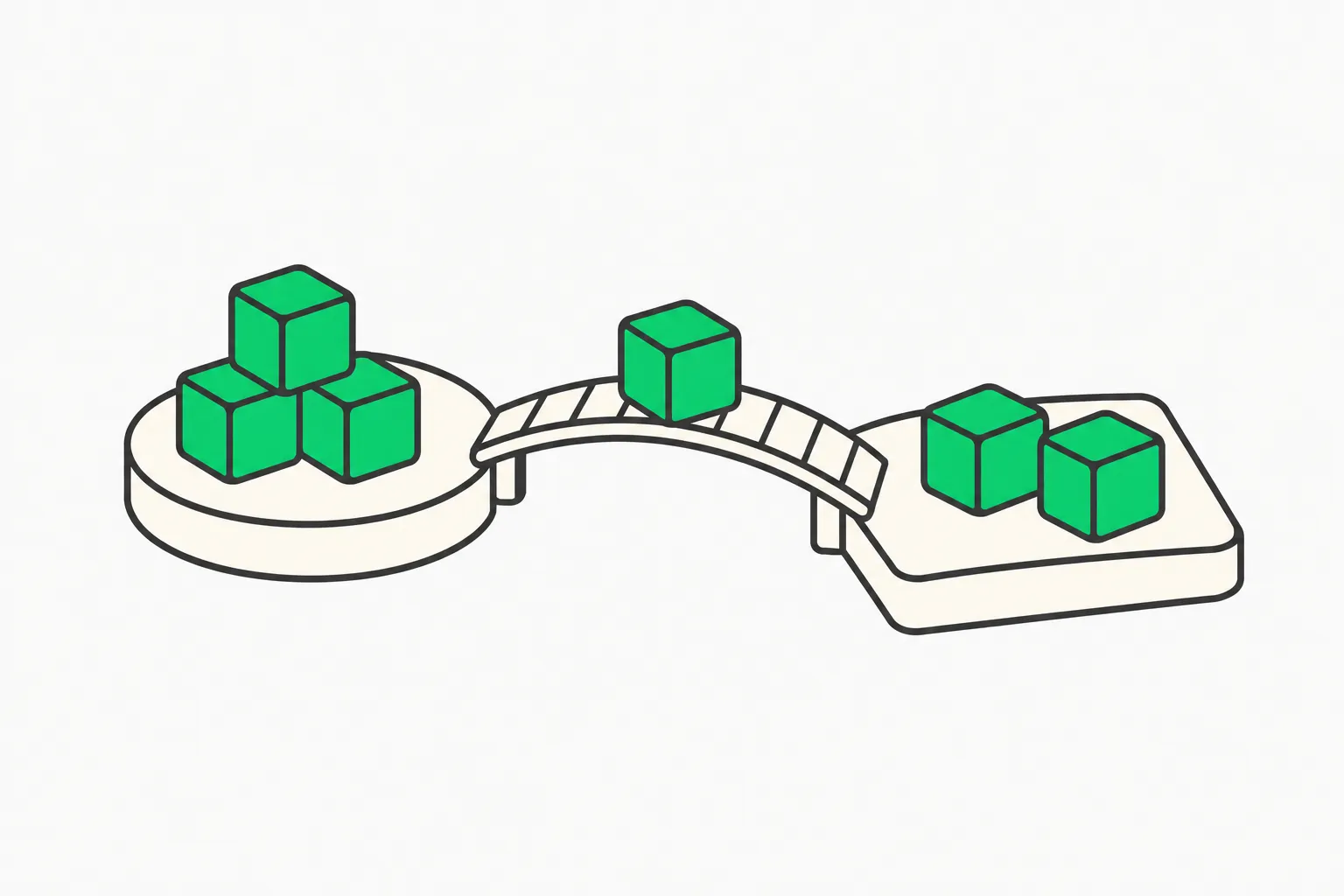 Code migration blocks illustrating legacy replatform work Devin targets at Citi
What Scott Wu added later
In a late-November 2026 TomorrowX Summit session with Gavin Baker, Wu named Citibank and said Jane Fraser, on the Q3 earnings call, described broader Devin adoption and that Citi expects about $1.5 billion in savings in 2026 just from Devin (YouTube session; Dealroom recap). Citigroup's published transcript does not state that dollar figure — only Wu does in the interview.
Wu''s mechanism matches Fraser''s themes: version upgrades, modernizations, migrations, and replatforms on decades-old code that banks historically sent to outsourcers — now pulled in-house because teams build faster with agents.
He also cited 6x to 15x ROI from customer internal analyses, with ~12x as a typical shorthand — standard vendor economics talk, not Citi audited results.
Digg and others correctly note Wu''s $1.5B line is a projection for the broader in-house effort, easy to misquote as “Devin prints $1.5B.” Headline writers should keep Fraser and Wu separate.
Why the vendor-spend cut is the verified headline
For enterprise buyers, 30% lower technology vendor spend year over year is the hardest number in Fraser''s remarks. It ties agents to P&L categories banks already report, not to model benchmarks.
That is different from AI scare-trade narratives Fraser was asked to rebut — deposits leaving for smarter cash sorting. Her answer emphasized cybersecurity spend and client transformation alongside internal efficiency.
Regulated environments also show up in our agent access to customer accounts coverage: Citi''s ARC platform and identity controls matter as much as token throughput.
How this compares to other agent-at-bank stories
| Theme | Citi (this story) | Related explainx.ai coverage |
|---|---|---|
| Coding agents | 14k engineers on Devin | Goldman-style agent stacks vary by bank |
| Guardrails | Human oversight emphasized in trade press | Cognition buys Corridor |
| Hosted tools | Separate product | Devin Apps November launch |
| Survey data | Enterprise AI at work | Verification tax surveys if you measure rework |
What teams should copy (and what to skip)
Copy:
- Measure vendor spend and insourcing — not just “developer happiness.”
- Tie agents to end-to-end processes, not isolated autocomplete.
- Report on earnings calls only what finance can defend.
Skip:
- Treating Wu''s $1.5B as Fraser guidance.
- Ignoring oversight on legacy migrations — speed without tests is operational debt.
- Assuming 12x ROI transfers to a 200-person startup with different outsourcing baseline.
Teams rolling out Claude Code or Cursor alongside Devin should align skills via workshop training where it fits your stack — one link for managers scoping 2026 agent budgets.
Reading the earnings transcript: Fraser's exact deployment claims
The Citigroup Q3 2026 transcript PDF is the primary source for everything verified in this post. In the AI section, Fraser connects three programs that often get collapsed into one "Devin saved billions" headline:
- Agentic coding at scale — 14,000 engineers on Devin as the main tool (not the only IDE assistance).
- Product velocity — 30–40% faster launches, which includes design, compliance, and marketing cycles outside the IDE.
- Structural efficiency — ~100 end-to-end processes rebuilt with AI and automation, the same pillar CFO Gonzalo Luchetti tied to ~$200M severance and pulled-forward investment in the quarter.
She explicitly said benefits from AI and automation already outweigh investments year-to-date and will accelerate — language that supports positive ROI without naming Devin ARR or 2026 savings dollars.
That distinction matters when Cognition sells seat-based or consumption-based Devin contracts: Fraser is describing bank-wide productivity and vendor strategy; Wu compresses it into a single-tool savings line for interview audiences.
Outsourcing, Infosys, and what "30% vendor spend" might exclude
Wu noted Cognition works with Infosys while also saying banks insource work that used to go to contractors — not a contradiction. Large banks often shift work between global system integrators, captive centers, and onshore engineers while net vendor spend falls.
30% year-over-year technology vendor spend reduction is still a strong figure because it is comparable period language on an earnings call, not a case study footnote. It does not tell you which vendors lost share, whether cloud IaaS rose while body-shop SOWs fell, or how much Devin licenses cost versus saved SOW dollars.
Crypto Briefing's November 27 summary adds unverified color — e.g. legacy code remapped in two days — that Fraser did not say in the excerpts we used. Keep that in the trade-press bucket.
Enterprise coding agents: how Citi fits the 2026 pattern
Citi is not the only regulated institution leaning on agents, but it is one of the few where the CEO named the vendor on a quarterly call:
| Signal | Citi Q3 2026 | Builder interpretation |
|---|---|---|
| Named tool | Devin | Procurement is past pilot |
| Engineer count | 14,000 | Rollout, not skunkworks |
| Vendor spend | -30% YoY | Budget line moved |
| Process count | ~100 E2E | Agents + workflow, not autocomplete only |
| Savings $ | Not stated by Fraser | Wu''s $1.5B is downstream marketing |
Compare JPMorgan / BofA agent account blocks — customer-facing agents face harder gates than internal coding agents. Citi's ARC gate for internal agents still applies to anything that touches money movement.
For security, Cognition's Corridor acquisition is the vendor's answer to "who reviews agent commits?" — banks still own SOX liability.
Questions security and risk teams should ask vendors
Before your bank copies a Devin-at-Citi slide:
- Where does generated code land? Fraser emphasized in-house delivery — your SDLC must show branch protections, secret scanning, and change advisory for agent commits.
- What gets logged for regulators? Model prompts and outputs on legacy migrations may touch PII or market data classifications.
- Who owns a bad migration? Speed without rollback is how COBOL-to-Java programs failed for decades — agents reduce typing, not domain risk.
- Is ROI measured net of review? Pair Fraser's 30–40% faster launches with our verification tax data so QA headcount does not surprise you.
Devin Apps — Cognition's hosted private tools product — is a different SKU from IDE agents; see the November launch post before you mix internal dashboards and core banking repos in one contract.
What to watch next
- Q4 2026 / FY results: does management repeat vendor spend declines or quantify Devin?
- Realized vs projected savings: Wu''s 2026 figure is forward-looking as of late November.
- Outsourcer revenue: names like Infosys appear in Wu''s interview as partners and displaced spend — relationships may be mixed, not binary.
Related reading
- Cognition Devin Apps private hosted tools
- Cognition acquires Corridor for agent-written code security
- Big banks and AI agents on customer accounts
- Mobile agent testers for CI
- Loop engineering for coding agents
- Corporate AI training for teams
Earnings remarks are from Citigroup''s published third-quarter 2026 transcript; Cognition quotes are from the late-November 2026 TomorrowX session as summarized by third-party transcript sites.