



Sakana AI opened an independent Security Research Group on November 20, 2026. Its job is AI-driven collective cyber defense and the security of AI systems themselves. The scores it cites for its own Fugu-Cyber model are Sakana's numbers, and its announcement gives no baseline table for them.
The details come from Sakana's official announcement. This post sets out what the group says it will do, which research it builds on, and what a reader should and should not take as settled. It also connects the launch to the AI-assisted attack and patching trends we have covered this month.
TL;DR: Sakana's Security Research Group at a glance
| Question | Answer |
|---|---|
| What is it? | An independent R&D team inside Sakana AI, separate from the commercial business |
| Announced | November 20, 2026 |
| Who leads it? | Akihiro Umegai (Chief of Security Research) and CEO David Ha |
| Research areas | Prevention by design, collective defense with agents, securing defenders' own agents |
| Outputs promised | Research, reproducible benchmarks, practical guidelines, defensive playbooks |
| Exploit code? | Withheld; the release policy is still being defined |
| Fugu-Cyber scores | 86.9% CyberGym, 72.1% CTI-REALM, reported by Sakana, no baselines given |
| Is it verified? | The launch is real; the benchmark comparison is not independently checked |
What did Sakana AI announce?
The announcement describes the group as an independent R&D team focused on two connected problems. One is using AI agents for collective cyber defense. The other is the security and safety of AI systems, including the agents defenders will rely on.
Sakana says the group serves the public interest. It plans to publish research, reproducible benchmarks and practical guidelines, and to work with government, industry and academia. The page is available in English and Japanese.
Two people lead the group, according to the page: Akihiro Umegai, Chief of Security Research, and David Ha. Umegai is quoted: "I believe security and safety are not a brake on AI's progress but the condition for sustaining it." David Ha, Sakana's co-founder and CEO, says: "Security is an adversarial environment that never stops changing." Sakana ties that adversarial quality to its long-running work on evolution, collective intelligence and multi-agent systems.
The group is also hiring a Member of Technical Staff for security research. The page invites collaboration from policymakers, enterprises and researchers in Japan and abroad.
Why now? The numbers Sakana cites
The announcement opens with a market argument. Frontier AI is getting better at finding software flaws, and disclosed vulnerabilities are rising. Sakana links that partly to AI-assisted discovery, though it notes that administrative factors also play a part.
The figures it lists:
- CVE submissions rose 263% from 2020 to 2025, according to NIST, and early 2026 submissions ran nearly one-third above the prior year.
- JVN iPedia registered 20,073 entries in Q3 2026, against 10,869 a year earlier. Of those, 19,913 came from the U.S. National Vulnerability Database, 147 from JVN and 13 from Japanese developers.
- The NVD stopped routine enrichment of unenriched records published before March 1, 2026.
- The FBI reported ARTEX, an LLM-driven multi-agent penetration testing framework, in use since at least August 2026. The FBI flash cites Microsoft Threat Intelligence for intrusions reaching privileged access in under three hours.
The ARTEX point matches our own reporting. See the FBI ARTEX flash warning, the Amazon MadPot decoy findings and the Censys scan of exposed ARTEX consoles. Together they show attackers already running agents against many targets at once.
Sakana also lists Japanese policy markers: Project YATA-Shield, issued May 18, 2026, and a request from the FSA and the Bank of Japan to financial institutions on May 22, 2026. It cites CISA's Vulnerability Review of August 26, 2026, and an NICT alert on app-to-backend attacks of October 13, 2026.
The three research areas
1. Prevention by design
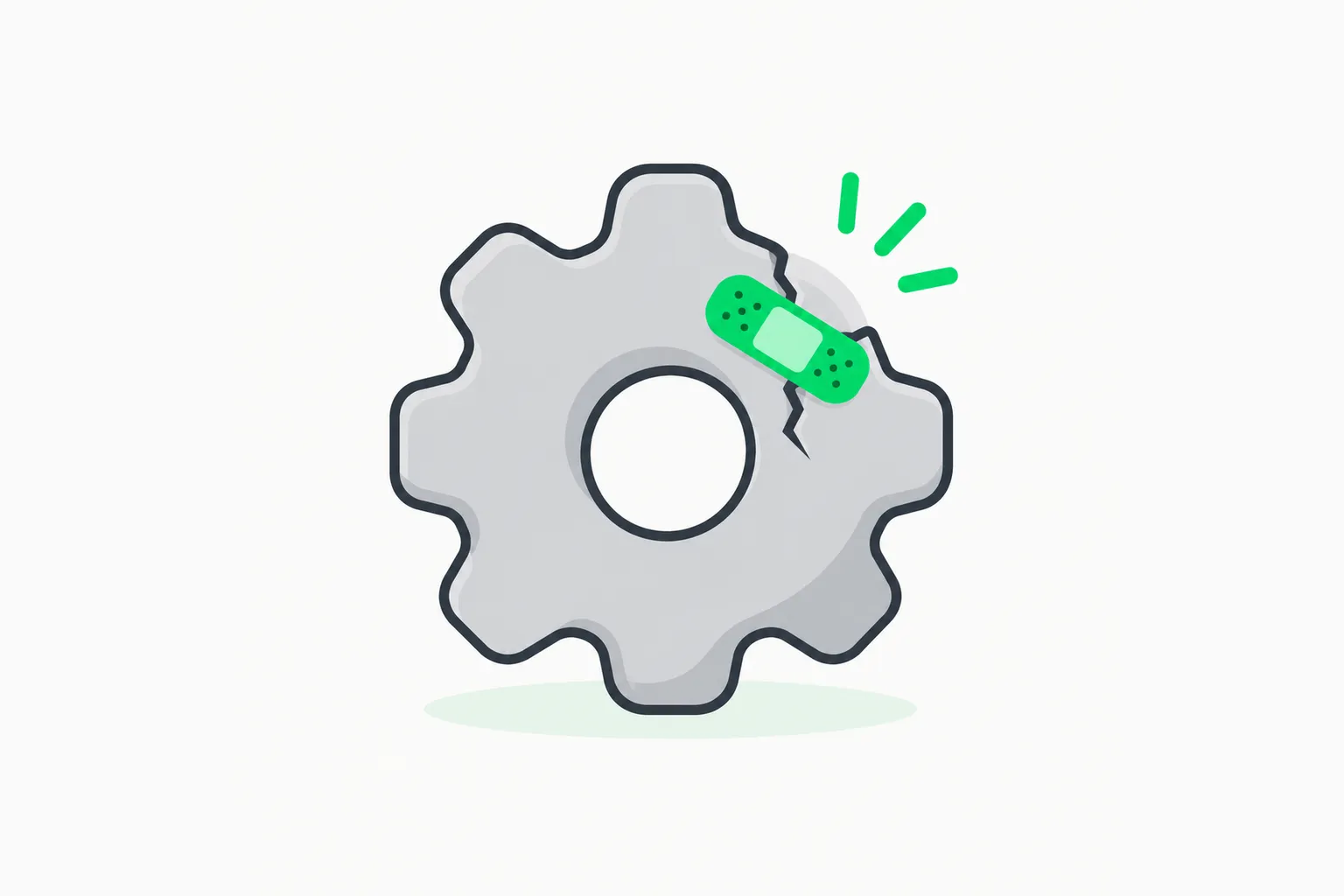 A cracked gear with a green bandage, showing a verified fix in the Sakana AI Security Research Group's prevention by design plan
Sakana's argument: faster patching alone is not enough. Most attacks exploit well-known, basic weaknesses such as input validation and memory safety flaws. So the group wants to define required product qualities before building, keep whole classes of flaws unreachable, and verify automated fixes with safeguards that can be reversed quickly.
This matches a worry in our coverage of the AI patch rush and outages: when AI finds bugs faster than teams can fix them safely, rushed patches themselves cause incidents. A reversible, verified fix is the practical answer to that.
2. Collective defense with AI agents
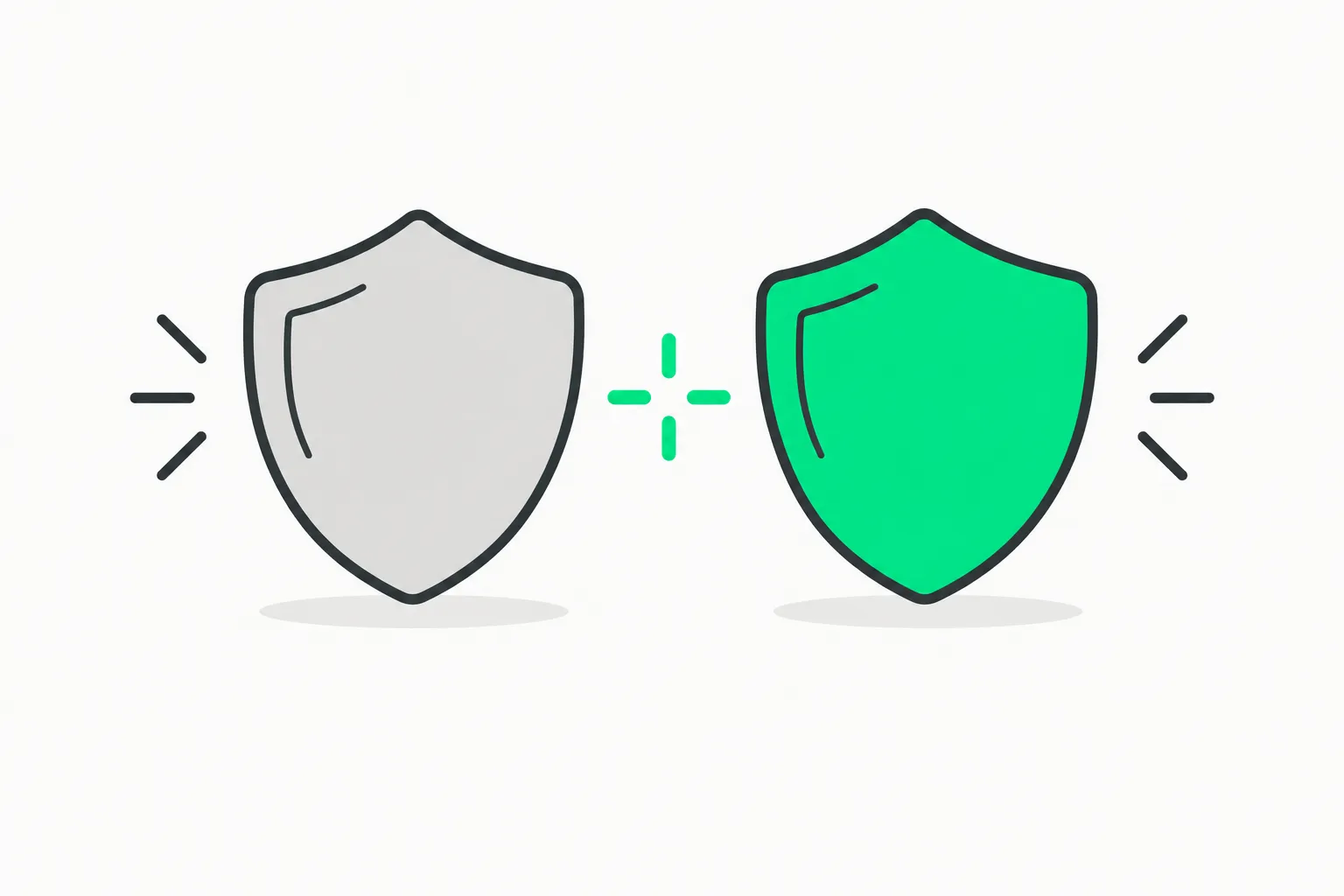 Two paired shields, one grey and one green, standing for defenders pooling signals in collective cyber defense
The idea is to coordinate defensive agents across organizations, so that an attack one participant observes strengthens all of them. Sakana openly lists the hard parts: consent for sharing data, trust across organizational boundaries, and accountability when an agent acts.
Attackers share tooling freely. Defenders usually share slowly, through advisories and human channels. The group's bet is that agents can close part of that gap, but the announcement offers no design or pilot yet.
3. Securing AI itself, starting with defenders' agents
Here the plan is to limit each agent's authority to its task, make its actions traceable, and prevent defensive tools from being repurposed. This is the least glamorous area and likely the most useful for builders. A defender agent with broad credentials is a target. If someone hijacks it, the attacker inherits those credentials.
Sakana frames security as a "must-be quality" in the Kano model. In that model, users do not praise a must-be feature when it works, but they leave when it is missing. The conclusion for engineering is to build it in from the start.
What research does the group build on?
The announcement names three foundations. Two are open research projects and one is a commercial model.
Digital Red Queen. Sakana's Digital Red Queen work studies adversarial co-evolution in Core War, the old programming game where small programs fight for control of a virtual machine. LLM-written programs were evolved against their predecessors and tended to become more general against unseen human-written programs. The security reading: continuous adversarial pressure can produce defenses that generalize.
ShinkaEvolve. ShinkaEvolve is Sakana's sample-efficient code evolution method. The announcement says it suits detection rules and candidate patches, where real-world testing is costly, because it needs fewer evaluations to find a good candidate.
Fugu-Cyber. This is Sakana's cyber model, released on July 21, 2026. It orchestrates specialized models collectively. Sakana reports 86.9% on CyberGym and 72.1% on CTI-REALM, which it calls comparable to leading cyber-focused frontier models. Our earlier Fugu-Cyber analysis covers the launch, the Token Plan and the gating. Sakana's Fugu-Cyber release post is the primary source. For the wider field, see cyber AI models compared.
Claimed versus verified
Readers should keep these apart.
| Claim | Status |
|---|---|
| Sakana launched the group, led by Umegai and Ha | Stated on Sakana's own page |
| Fugu-Cyber scores 86.9% on CyberGym and 72.1% on CTI-REALM | Sakana-reported; the page itself says no baselines or evaluation setup are given |
| Fugu-Cyber is comparable to leading cyber frontier models | Sakana's characterization; no outside comparison table in the announcement |
| Results may carry to enterprise environments | Sakana warns they may not transfer |
| The group is vendor-neutral | A stated principle; it needs published methods to confirm |
| A release policy exists | Not yet; Sakana says it is still being defined |
To its credit, Sakana flags the benchmark caveat itself. Few vendors write that a score may not transfer to real environments. Still, a reader should treat the figures as a starting claim. The comparison to leading models, for example Claude Mythos Preview in Project Glasswing, needs the same tasks, the same harness and the same budget on both sides before it means anything.
Does the vendor-neutral pledge hold?
The announcement makes a specific promise: research stays apart from product promotion, and Sakana's own systems are evaluated under the same transparent, reproducible conditions as outside tools. That sets a test the group can be held to.
When the first benchmark appears, check four things:
- Does it include outside baselines, not only Sakana's models?
- Is the harness, prompt set and budget published so others can rerun it?
- Are failures and weak spots reported, not only the best run?
- Is Fugu-Cyber compared on equal terms with other cyber models?
An in-house group at an AI vendor has an obvious conflict. The pledge does not remove it. Reproducible artifacts are what turn the pledge into evidence.
What the announcement leaves out
Several things are not in the page:
- No budget, headcount or publication schedule.
- No named partner from government, industry or academia.
- No design for cross-organization agent sharing, and no pilot.
- No release policy. Sakana says it is being defined.
- No baseline scores for Fugu-Cyber.
None of this is unusual for a launch post. It does mean the near-term news value is the commitment, not results.
Why Japan's setting matters
Sakana explains that Japan faces specific constraints: outsourced system maintenance, technical debt and incomplete asset inventories, and limited IT staff. Those are exactly the conditions where AI-found vulnerabilities pile up faster than teams can triage them.
That gives the group a concrete target audience. A bridge from Japan's security frameworks to day-to-day operations is one of its stated goals. If it produces playbooks for small IT teams that depend on outside maintainers, that would be useful far beyond Japan. The same pressure appears in the US, as we covered in Alex Stamos on an AI cybersecurity dark age.
What this means for people who build or buy
If you build agents. Take the third research area as a checklist now. Give each agent the narrowest authority that fits its task. Log every action so it can be traced. Treat a defensive agent as a high-value credential holder. The idea does not depend on Sakana shipping anything.
If you run security or IT. Watch for the first published benchmark and playbook. Ask whether a collective-defense scheme needs you to share logs, and who is accountable when a shared agent errs.
If you buy security tools. Ask any vendor, Sakana included, for baselines, the evaluation setup and a statement of where the score does not transfer. Sakana's page sets that standard itself.
If you follow the company. Sakana has moved from orchestration research to products to now a security lab. For earlier steps, see the Fugu multi-agent orchestration model and the Sakana Chat update. The pattern is a research lab that keeps adding applied lines.
What to watch next
- The first white paper or benchmark from the group, and whether it lists outside baselines.
- The formal release policy, especially how it treats exploit material and vulnerability reports.
- Any named partner for collective defense, since that is the hardest part to build.
- Whether Fugu-Cyber gets an independent comparison on CyberGym or CTI-REALM.
This post will be updated if Sakana publishes any of these.
Related reading
- Sakana Fugu-Cyber and the cybersecurity benchmarks
- Cyber AI models compared: GPT-6 Cyber, MAI-Cyber-1, Fugu-Cyber, Gemini Cyber
- FBI ARTEX flash warning on agentic AI cyberattacks
- AI vulnerability patch rush, outages and Congress
- Amazon MadPot decoys and ARTEX agent memory
- Sakana Fugu multi-agent orchestration model
- Official: Sakana AI Security Research Group announcement · Fugu-Cyber release
Details are accurate as of November 20, 2026. Sakana may revise the group's scope or release policy.