



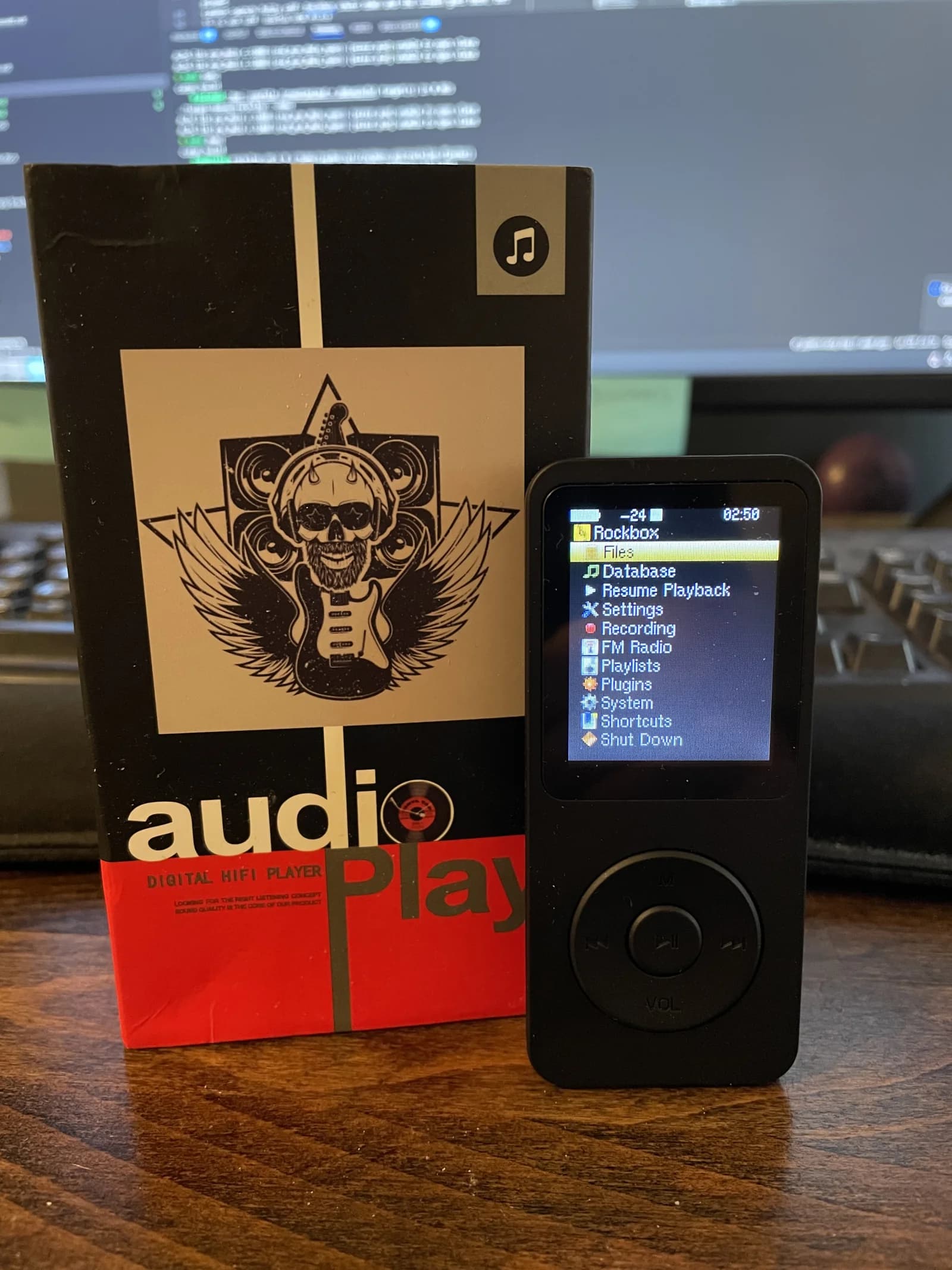
Jayden Milne used Claude to port Rockbox onto a nine-dollar Aliexpress YP3 MP3 player with 512 KiB of RAM and an undocumented SL6801 SoC. He published the full story on November 14, 2026 and hosts builds at rockslop.jayd.ml.
TL;DR
| Question | Answer |
|---|---|
| Hardware cost | About $9.71 shipped on Milne's unit |
| SoC | Smartlink SL6801 / Jointbees — dual Cortex-M4, 192 MHz, 512 KiB SRAM, 2 MiB flash |
| Human role | PM, QA, and reboot monkey; models wrote most C and tooling |
| Flash path | ROM DFU (hold down + USB reset); credits ilyakurdyukov for dump utilities |
| Second port | ~4 hours from cable-in to alpha on another player with auto-rockbox skills |
| Battery | ~20 h wired, ~19 h Bluetooth on Rockbox versus stock in one bench run |
Why this player matters for AI builders
Rockbox is a community firmware line famous for turning iPods and Sandisk players into open music boxes. In 2026 almost no cheap new hardware still sits on Rockbox's supported list, yet Aliexpress MP3 boards keep selling with closed firmware.
Milne's project is a template for what Claude Code-style agents can do when you give them:
- Deterministic reboot and flash scripts instead of handwritten C only.
- Sensors (webcam on the LCD, line-in on the headphone jack).
- Hours-long unattended tests like the mobile agent testers pattern but aimed at bare metal.
It is not a toy demo. Milne reports weeks of polishing after first boot, codec hot-loop surgery for execute-in-place flash, and Bluetooth HAL work with no binary blobs because the stack lives in ROM.
YP3 hardware: what you are buying
Milne's listing photo shows a 128×160 RGB565 LCD, five buttons (D-pad plus center power), USB-C, Bluetooth, and a physical reset pinhole.
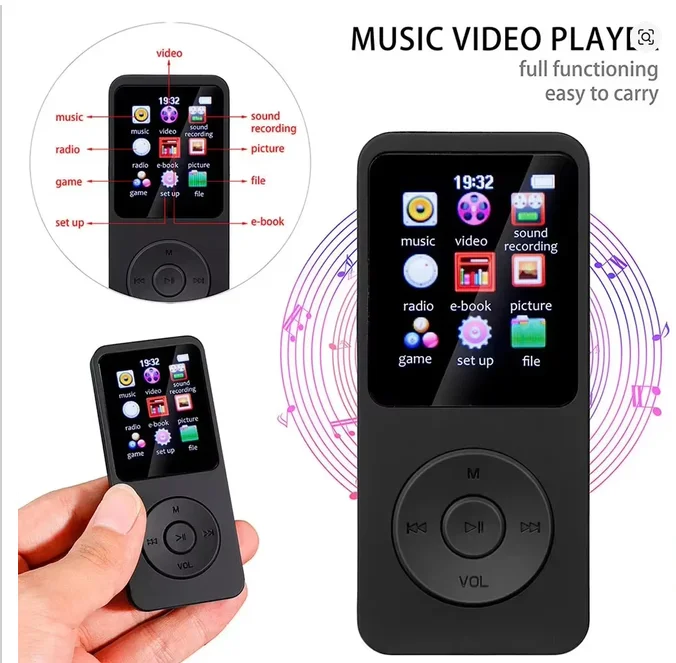 YP3 budget MP3 player hardware used for LLM-assisted Rockbox porting
Image: Jayden Milne
The good news for agents:
- Unbrickable path via ROM download mode (down + USB).
- ilyakurdyukov already published flash and dump tools Milne could script against.
- USB-C and Bluetooth on a sub-ten-dollar board.
The bad news:
- 512 KiB SRAM when the previous smallest Rockbox target had 2 MiB.
- No flash cache for XIP code — CPU1 can deadlock behind CPU0 instruction fetch.
- Mystery meat SoC documentation — discovery happens through Ghidra, not PDFs.
Milne notes a similar player with 4 MiB PSRAM was on sale for about $20 and may be a less compromised next port on rockslop.jayd.ml.
What shipped on Rockbox
After roughly one week to boot and another month to stabilize, Milne's build plays MP3, FLAC, Opus, and many chiptune formats while cutting features that need RAM.
Major compromises per his write-up:
- One shared 128 KiB arena for codecs and plugins — starting a plugin stops music.
- Disk-only database with blocking refresh screens.
- Folder lists capped at 256 entries by default (tunable up to 512).
- No album art, crossfade, or pitch shift on this SKU.
Major wins:
- Bluetooth with a from-scratch HAL.
- 20+ hour battery life within about one hour of stock in a Random Access Memories loop test.
- Hundreds of hours of monkey-test logs via Python.
Milne also let Claude port 357 plugin games and experiments such as RockGPT (a ~1M parameter on-device model streamed from SD). Treat those extras as lower QA than the music player core.
Agent workflow: from Ghidra to overnight Bluetooth
 Open SDK toolkit box icon for the auto-rockbox agent porting skill set
Milne describes the effort as 100% vibecoded from his perspective: he did not solder and barely reviewed generated C.
Tooling stack
- Ghidra MCP to parse stock firmware and inject FreeRTOS tasks from bootloader mode for probing.
- Cleanroom split — one dirty reverse-engineering agent, a referee, then a second implementation agent so register facts stay separate from driver code.
- Bidirectional Rockbox USB shell extending the upstream serial driver with dozens of commands (screenshots, injected keypresses, Bluetooth debug).
- Webcam plus line-in plus Bluetooth adapter on the host so the model sees the UI and hears output.
That is closer to Greptile Trex computer-use than to a single copilot autocomplete — the agent closed the loop on hardware.
Codex versus Claude on the same port
Milne started on Codex / GPT-5.6 Sol and reports extreme risk aversion: five days, dozens of manual resets, and 3.87 million files across 55 GB before a logo boot with stub drivers.
Switching to Claude Code with auto mode, he deleted the ceremony MCP servers, replaced them with small Python flashers, and reached usable Rockbox faster. Milne’s TS17 follow-on reached alpha in ~4 hours with Opus 5.5 and the distilled auto-rockbox skills.
The lesson for teams running verified replay for hot functions on servers: agent file explosion is a failure mode on embedded trees too. Throw away frameworks that agents invent to satisfy memory limits but humans will not operate.
What developers are saying on Hacker News
The Hacker News thread on this story had no substantive comments at crawl time — the discussion is still young. When hands-on reports appear, the useful signal will be independent flash attempts, battery measurements, and comparisons to ilyakurdyukov's stock-ROM tools, not generic vibecoding jokes.
How to try it without bricking your player
Milne's guidance and rockslop.jayd.ml remain the primary install path. Practical checklist:
- Identify hardware using the five-button layout and reset pinhole in Milne's appendix — clones look similar but differ inside.
- Enter ROM DFU with down + reset + USB before first flash.
- Keep stock bootloader until you trust recovery scripts.
- Expect compromises — this is 512 KiB SRAM Rockbox, not a Sansa E200 experience.
If you only want software agents on desktop OSes, see Liberux ReactOS agents for a different OS reconstruction axis. The YP3 story is for builders who need physical I/O proof.
Limits and risks
- Screen and codec tuning still required human presence for power-off sequences and an FM radio clock bug Milne spotted by ear.
- 357 plugins are not uniformly QA'd.
- Aliexpress supply means silent PCB revisions — verify against rockslop before mass-flashing a classroom set.
- Agent-written drivers demand the same supply-chain skepticism as any unreviewed agent publish — flash only artifacts you fetched from Milne's repos, not random reposts.
YP3 versus other agent-hardware projects
| Project axis | YP3 Rockbox port | LiberNT ReactOS fork |
|---|---|---|
| Target | Bare-metal MP3 SoC | Desktop kernel compatibility |
| Recovery | ROM DFU USB | VM snapshots and ISO rebuilds |
| Agent sensors | Webcam, line-in, BT sniffer | Screen OCR and filesystem diffs |
| Artifact size | 2 MiB flash | Gigabyte-scale tree |
Neither replaces the other. YP3 proves agents can own the flash cycle on toy silicon; LiberNT proves they can sustain multi-month OS ports. Together they argue for different test harnesses: hardware-in-the-loop versus parity replay.
Audio, FM radio, and the clock bug Milne caught
Milne’s audio bench used a 3.5 mm splitter into line-in plus real headphones as load. Claude generated sweeps; Milne used an Apple Lightning dongle as a reference path. The write-up publishes frequency response and THD charts showing Rockbox near stock performance.
The FM radio distortion story is the cautionary tale: the model chased DSP bugs while the real fault was a ~4 MHz clock offset on the tuner. Only a human who knew the station call letters noticed the mismatch. Agents excel at iterating drivers; physical calibration still needs a ground-truth ear or instrument.
Battery testing repeated Random Access Memories for ~20 hours wired and ~19 hours on Bluetooth — within about one hour of stock in a single run. Treat that as directional, not a warranty claim.
Plugin explosion and RockGPT
Milne asked Claude to port games aggressively. The release adds 357 plugins, including ports through Arduboy, Pokitto, and Flipper Zero compatibility shims. He flags RockGPT, a ~1M-parameter chat model whose weights stream from SD, as a separate blog-worthy experiment with aloof fine-tuning.
For classroom or museum installs, disable plugin packs until you smoke-test each category. The music player core received the monkey-test hours; minigame ports did not.
Skills and workshops for embedded agent teams
If your team already books Claude Code workshops, use the YP3 story as a lab narrative: students see DFU recovery, agent file explosion failure, and cleanroom RE in one arc. The auto-rockbox repo is the takeaway asset — skills distilled after the TS17 four-hour repeat.
Security reviewers should still ask who signed flashed binaries. This port is hobby-grade; do not ship it in regulated devices without independent code review, even if agents wrote most of the C.
Related reading
- Satya Nadella on Claude Code fading into the IDE — why IDE-embedded agents matter.
- Mobile agent testers in GitHub Actions — parallel QA patterns agents can borrow.
- Fast Anything verified replay — determinism lessons for agent-written code.
- Greptile Trex OSWorld computer use — closing the loop on non-text UIs.
- Fixer-Guided Localization for coding agents — another November 2026 harness research release with public repos.