



Fixer-Guided Localization (FGL) trains a code localizer from how likely a frozen fixer is to write a verified patch, not from which files a teacher patch touched. The method appears in arXiv:2611.12164, submitted November 9, 2026, with public code on GitHub (misraj-ai/locfix) and adapters on Hugging Face (Hennara/locfix-e4b-runs_p).
TL;DR
| Question | Answer |
|---|---|
| Problem | Localizers trained on reference patch files show code the fixer never needs |
| Idea | Let the fixer’s patch likelihood score each candidate localization |
| Base model | Gemma 4 E4B with dual LoRA (localizer + fixer) |
| Data | 1,629 test-verified Kimi K3 trajectories for Kaggle’s Gemma-4 agent track |
| Efficiency | Fixer finds bugs as often as teacher locations with 27.5% less code shown |
| Dev-set EM round | 53 vs 46 tasks reach a patch; 8 vs 6 solved |
| Behavior | Trained agents explore ~3× more and write fewer wrong patches |
Why file-matching localizers miss the point
Most agent harnesses split work into find and fix. A localizer proposes paths and symbols; a fixer reads context, edits, and runs tests. Industrial stacks such as Cisco Antares SLMs for vulnerability localization treat localization as its own model skill.
Supervised localizers often imitate files touched by a reference patch. The authors of 2611.12164 argue that set is biased toward edits, not toward what the fixer must read. A minimal read set can sit strictly inside a large patch diff.
That mismatch shows up in Greptile Trex-style agents too: retrieval that chases diff statistics wastes context window on irrelevant modules, exactly the failure mode mobile agent testers hunt in CI.
FGL reframes localization as a hidden variable. For a task issue, repository, and verified patch, the training objective marginalizes over localizations the fixer could have used.
The localizer proposes a localization; the fixer assigns likelihood to the verified patch given that context. Gradients push probability mass toward localizations that make the verified patch likely.
How FGL scores a localization without running tests
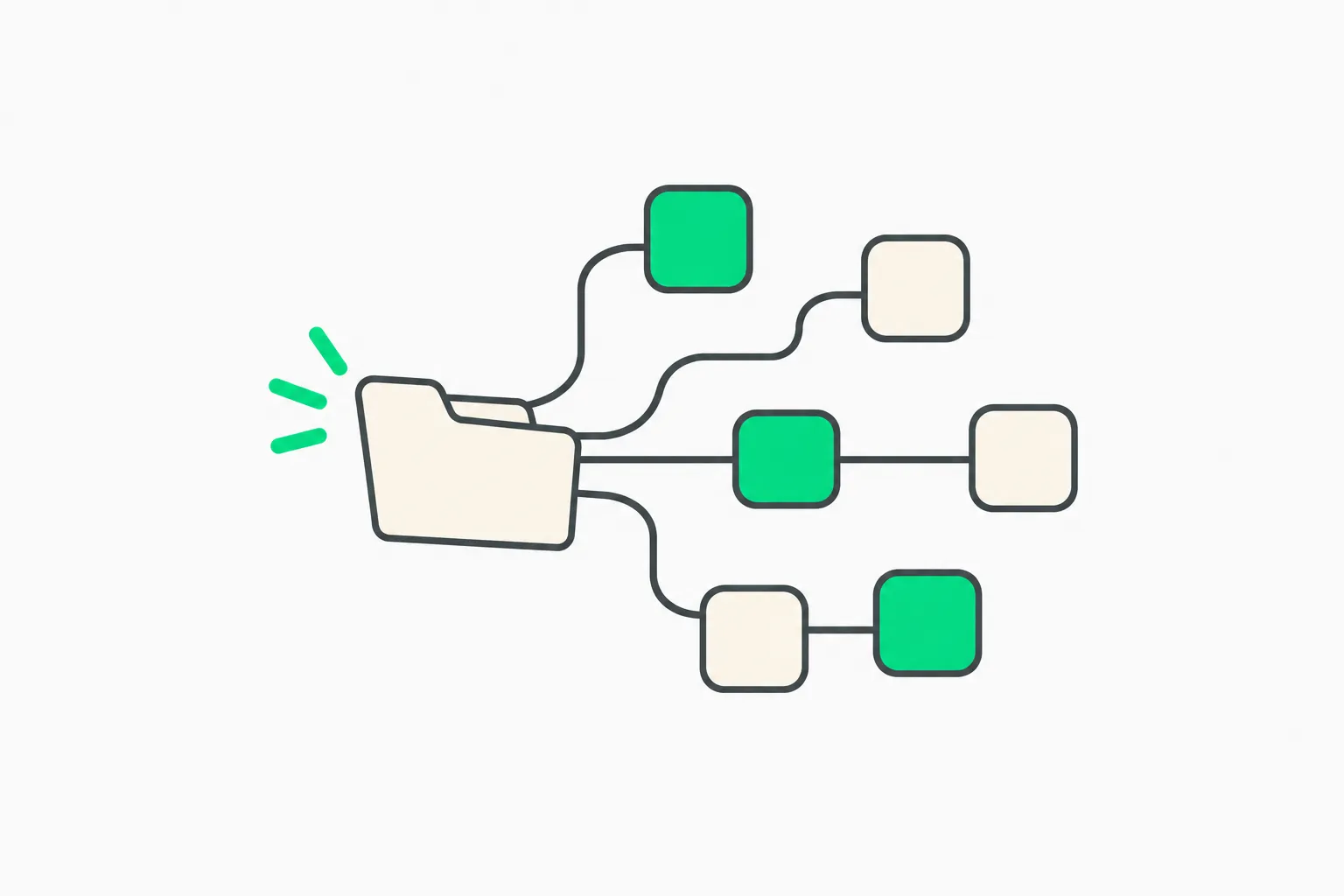 Coding agent repository map linking issues to localized files for patch workflows
The pipeline draws K candidate localizations from the current localizer, then asks a frozen fixer to score each.
Three design choices keep scores stable in the paper:
- Score only new-line tokens in the verified patch, so the fixer cannot cheat by copying unchanged context.
- Penalize size and extra read requests, because without a cost the best localization is “show the whole tree.”
- Target an effective sample size via temperature τ, so weights do not collapse to a single candidate every step.
The fixer never updates during this phase. The localizer receives weighted supervised fine-tuning on its own proposals.
 LoRA adapters on a shared base model for separate localizer and fixer roles in FGL training
The authors stress no reinforcement learning and no test-suite execution inside the training loop, unlike some agent evaluation harnesses that bake CI into reward models.
For practitioners comparing AWS Strands Decider v2-style routing to full coding stacks, FGL is the opposite move: improve context choice before you spend tokens on frontier fixers.
Reported numbers on Gemma 4 E4B
The competition setup fixes Gemma 4 E4B as the shared trunk. Training consumes 1,629 trajectories where Kimi K3 already produced test-verified patches.
| Metric | FGL localizer + fixer | Teacher file match (paper baseline) |
|---|---|---|
| Fixer finds bug at same rate as teacher localization | Yes | Reference |
| Code volume shown to fixer | −27.5% | Baseline |
| Tasks reaching any patch after 1 EM round (dev) | 53 | 46 control |
| Tasks stuck on nonexistent paths (dev) | 43 | 54 control |
| Tasks fully solved after 1 EM round (dev) | 8 | 6 control |
| Best single-agent solves (78 tasks, 8 min) | 11 | 8 base |
After training, agents explore about three times more and emit far fewer incorrect patches, which matches the intuition that better localization widens search instead of locking onto wrong files.
The paper’s thirteen-run postmortem on 4B agents under an eight-minute cap names time, repetition loops, and edit quality as ceilings. That aligns with explainx.ai’s broader warning that small-model agent demos live or die on harness economics, not leaderboard trivia.
How to try the released artifacts
The authors published three touchpoints builders can clone today:
misraj-ai/locfix— training and expectation-maximization code for FGL.khalil-Hennara/codeagent-validate— validation utilities referenced in the PDF.Hennara/locfix-e4b-runs_p— adapter weights for the E4B localizer run described in the paper.
The arXiv abstract states all data, code and adapters are publicly available, though you should read each repo’s license before shipping in production.
A practical integration pattern for teams already running Amazon’s Sonnet swap experiments:
- Keep your fixer frozen while you iterate localization.
- Log fixer likelihood on candidate z during shadow traffic before EM rounds.
- Treat 27.5% less context as a latency and cost lever, not only an accuracy chart.
What FGL does not solve
FGL assumes you already have verified teacher patches (here from Kimi K3). It does not replace sandboxed test execution at deployment time, verified replay tooling, or security review before merge.
The paper also studies one architecture family on one competition corpus. Porting FGL to Claude Code-scale repositories may need different K and τ schedules.
Kaggle Gemma-4 Developer Agent context
The authors built FGL for Kaggle’s Gemma-4 Developer Agent competition, where teams ship two-role agents on a fixed parameter budget. Localization quality is often the hidden multiplier: a fixer with frontier potential still fails when it reads ghost paths or giant folders.
Their 1,629 Kimi K3 trajectories are valuable because every trajectory already passed hidden tests. That gives a verified patch label without leaking the test suite into training rewards. Teams reimplementing FGL on private repos should mirror that discipline: teacher patches must be CI-green, not merely human-approved.
Expectation-maximization in the paper is intentionally lightweight: one round already moves dev-set solve counts. Full EM schedules may help, but the authors focus on proving the fixer-likelihood target beats file overlap as a training signal.
Comparison with other localization stacks
| Approach | Training target | Needs test runs in training? |
|---|---|---|
| Reference patch files | Files the teacher edited | No, but misaligns read vs edit sets |
| FGL (this paper) | Fixer likelihood of verified patch | No |
| RL with unit tests | Reward from pass/fail | Yes, expensive |
| Cisco Antares SLM | Security-specific file ranking | Inference-time only |
If you already run Harbor-style evals, treat FGL as a pre-training hook that reduces context tokens per task, which lowers eval cost before you chase leaderboard points.
Rolling FGL into your agent harness
A minimal integration plan:
- Fork
misraj-ai/locfixand point it at your Gemma 4 or compatible base with dual LoRA. - Collect verified patches from an existing teacher agent run log (not from human diffs alone).
- Run soft EM with effective sample size ≈ 2 unless you have compute for fuller schedules.
- Shadow-deploy the localizer: log proposed z and fixer scores before enabling tool calls in production.
Pair that rollout with Strands Decider v2 on routing and a heavier fixer only when localization confidence is low — the same split-brain economics Amazon described for ticketing.
What to watch on Hugging Face daily papers
2611.12164 trended on Hugging Face papers in early November with modest upvotes, but the release of weights is what makes it actionable today. Watch for follow-on adapters on other Gemma 4 sizes and independent replication runs on non-Kaggle repos.
If independent teams cannot reproduce the 11-of-78 single-agent peak, the bottleneck is likely harness timing (the paper’s eight-minute cap) rather than the FGL objective itself — tune budgets before you discard the method.
FAQ-style checks before you trust the numbers
Builders auditing 2611.12164 should reproduce three claims locally:
- Context shrink: Does your fixer still succeed when the FGL localizer removes roughly a quarter of shown code versus teacher-file training?
- Ghost paths: Does the 43 vs 54 missing-file failure rate improve on your repo layout, especially monorepos with generated folders?
- Exploration: Do trajectories show wider search without a spike in bad patches?
Log those three metrics in Harbor or your internal agent bench before you merge adapters from Hennara/locfix-e4b-runs_p. The Misraj team tied results to competition tasks, not your production issue tracker.
For security-sensitive repos, remember localization is information disclosure: a localizer that over-reads secrets teaches the fixer to request credential files. Pair FGL with Corridor-style guardrails the same way you would any new retrieval tool.
Bottom line: FGL is a public, test-free way to align localizers with fixers on small Gemma 4 stacks. Clone locfix, verify the dev-set deltas on your trajectories, then decide whether one EM round is enough or your harness needs deeper schedules.
Related reading
- AWS Strands Decider v2 on Gemma 4 — cheap routing beside heavy fixers.
- Hugging Face Harbor agent evaluation guide — how to score agents once localization changes.
- Cisco Antares vulnerability localization — another SLM-first localization story.
- Mobile agent testers in GitHub Actions — parallel QA patterns for agent regressions.
- Fast Anything verified replay for coding agents — determinism after agent edits.