



Update — August 21, 2026: Anthropic-side companion — Claude 30-day retention on Fable 5 (what enterprise ZDR customers lose on covered models).
If you build on OpenAI's API and you've been relying on Zero Data Retention (ZDR) to keep customer prompts out of anyone's hands but your own, the question that matters after seeing "OpenAI announces new safety processing feature" isn't "what did they build" — it's "did they just quietly walk back the one guarantee I signed up for." They didn't. But the announcement is precise enough that it's worth reading exactly what changes and what doesn't before you decide whether it affects your compliance posture.
On August 19, 2026, OpenAI published an update on its safety blog titled "Offering Zero Data Retention for frontier models," previewing a feature called Private Safety Processing. The short version: OpenAI keeps its no-retention promise for eligible API customers, and adds an automated way to catch abuse patterns that only become visible across multiple related interactions — without OpenAI personnel gaining default access to your content. It's a genuine architecture change to how safety monitoring works under ZDR, not a rebrand of monitoring that was already happening. This is also a live entry in the same story we covered in OpenAI's leadership and safety-team exodus — a company that lost several safety leaders this year is now trying to prove its safety architecture doesn't depend on those people reading your prompts.
TL;DR: what people are actually asking
| Question | Answer |
|---|---|
| Does OpenAI now see my API prompts by default? | No. Content stays on customer-controlled infrastructure or is encrypted with customer-held keys; OpenAI gets only a narrow flagged-signal, not the text. |
| Is this available today? | No — preview, "currently being tested with early customers." Broader rollout plus a technical white paper are planned for September 2026. |
| Does it apply to ChatGPT Enterprise? | No — this is scoped to the API and frontier-model ZDR eligibility, not ChatGPT consumer or Enterprise seats. |
| What problem does it actually solve? | Existing ZDR-safe checks evaluate one interaction at a time. Some risks — coordinated abuse across accounts, safeguard-probing spread across sessions, an agent ignoring a stop instruction over a long task — only show up when you look across multiple related interactions. |
| Does the CSAM exception still apply? | Yes, unchanged. Apparent CSAM images are still retained for manual review and legally required reporting, ZDR or not. |
| Who's already testing it? | OpenAI named Glean, Databricks, Abridge, and Microsoft as customers supporting the direction. |
What Zero Data Retention already promised — and its one carve-out
ZDR is an existing eligibility program: qualifying API customers get a guarantee that OpenAI does not retain prompts or model responses once a request finishes processing. Content isn't held for OpenAI staff to review, and it isn't used to train future models unless the customer separately opts in. For regulated industries handling financial records, health data, or confidential business plans, that guarantee is often the difference between "we can build on this API" and "legal won't sign off."
The one carve-out that predates this announcement: OpenAI is legally required to detect and report apparent CSAM. Images flagged as apparent CSAM get retained for manual review and reporting regardless of ZDR status. That exception is narrow, unrelated to text-based abuse patterns, and doesn't change with Private Safety Processing.
The gap: single-interaction checks miss multi-interaction risk
The problem OpenAI is naming directly is that most ZDR-compatible safety systems evaluate each interaction in isolation — one prompt, one response, checked, then discarded. That works fine for a single toxic message. It stops working once a model is doing longer, more autonomous, multi-step work, because some of the most serious risks only surface as a pattern across several related interactions:
- Coordinated abuse spread across multiple accounts that each look benign individually
- Safeguard-probing disguised as research — testing where a refusal boundary sits across a string of reworded requests
- An agent that keeps acting after being told to stop, or that drifts from the user's actual intent over a long autonomous task
None of those show up if the safety system only ever gets to look at one interaction at a time with no memory of the others. That's the actual design constraint Private Safety Processing is built to solve — not a general expansion of monitoring, a specific fix for a blind spot that gets bigger as models take on longer-horizon agentic work.
How it actually works — the mechanism, not the marketing
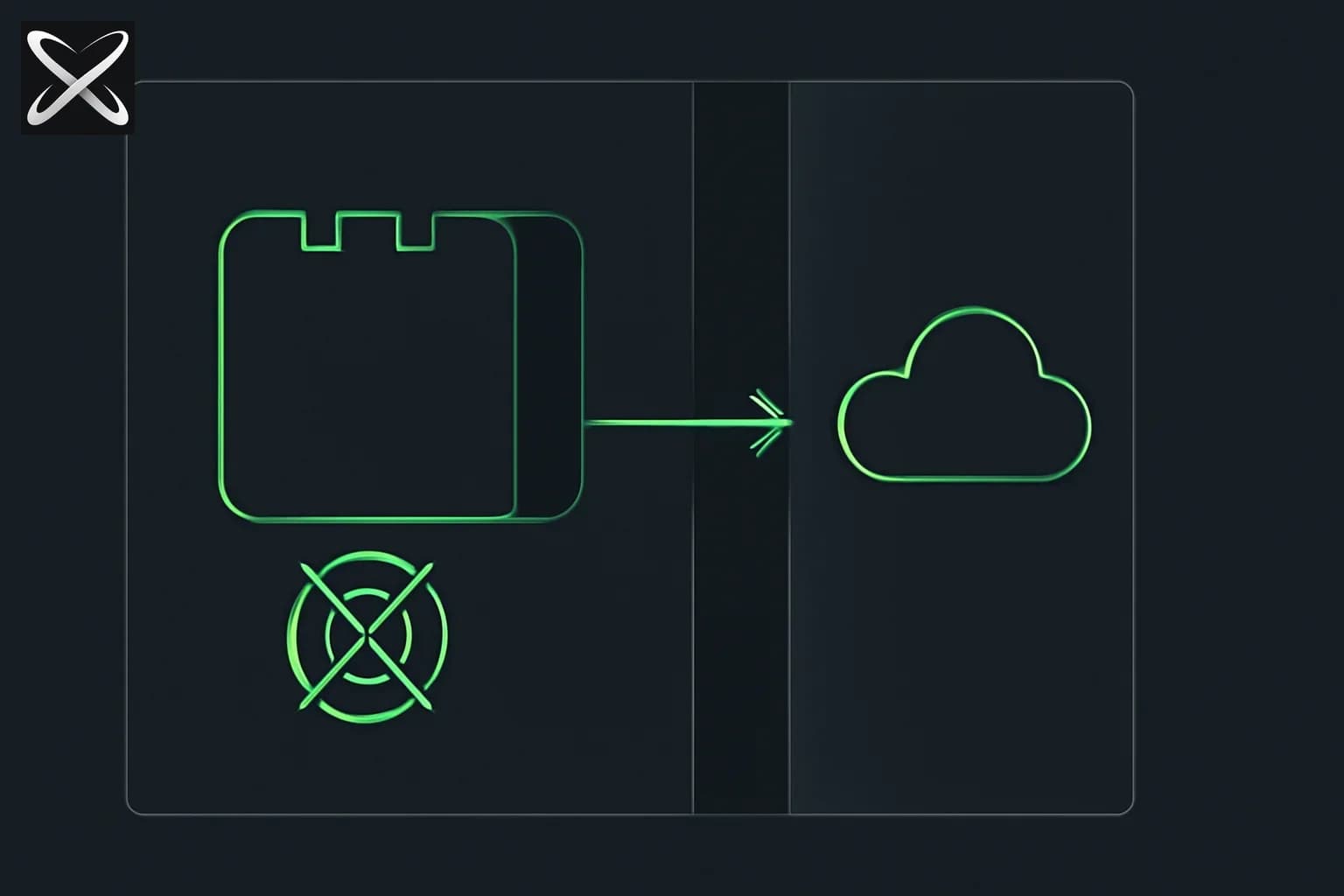
For ZDR deployments, customer content stays on infrastructure the customer controls. OpenAI is also developing a second configuration where content lives on OpenAI's own infrastructure but is encrypted with keys the customer holds — OpenAI's own personnel don't have the keys, so they can't decrypt the content even if they wanted to. This is the same category of idea explored in Google's HEIR compiler for running inference on encrypted data, though OpenAI's approach uses customer-held encryption keys rather than fully homomorphic encryption — the content is decryptable in principle, just not by OpenAI.
In both configurations, the flow is:
| Step | What happens | Who can see the content |
|---|---|---|
| 1. Interaction occurs | Prompt and response processed normally | Customer's own systems only |
| 2. Pattern analysis | Automated system scans for cross-interaction risk signatures | Runs on customer-controlled infra or customer-encrypted data — not OpenAI staff |
| 3. Signal generation | If a pattern matches, a narrow categorized alert (type + severity) is produced | — |
| 4. Signal reaches OpenAI | Only the alert category and severity are sent, not the underlying text | OpenAI sees the signal, not the content |
| 5. Customer response | Customer investigates using its own systems; can voluntarily share content to appeal or support the investigation | Customer chooses what, if anything, to share |
The critical design choice is step 4: the thing that crosses the boundary from customer infrastructure to OpenAI is a categorized alert, not a transcript. If nothing is shared voluntarily by the customer, OpenAI personnel never see the flagged content by default — the automated system did the looking, and only its conclusion travels.
That's a meaningfully different shape than "OpenAI's safety team reviews suspicious conversations." It's closer to a smoke detector than a security camera: it reports that something matched a known-bad pattern, not what the room actually contained.
What it is not
Worth stating plainly, because the framing "safety processing across your data" invites the wrong read: this is not OpenAI regaining standing access to your prompts. It's not a rollback of ZDR, and it's not a new default where flagged conversations get forwarded to a human reviewer automatically. The customer stays in control of whether any actual content ever leaves their infrastructure — sharing content with OpenAI to support an investigation is described as something the customer chooses to do, not something that happens to them.
Status: preview only, white paper due September 2026
OpenAI is explicit that this is not generally available. The company describes it as "currently being tested with early customers," with plans to start a broader rollout and publish a technical white paper in September 2026. Until that white paper lands, the architecture is described in prose, not proven with public technical detail — which is a reasonable thing for a security-conscious buyer to flag internally even while the direction looks right.
If you're evaluating whether to wait for general availability or keep relying on today's single-interaction ZDR-safe checks, the honest answer is: today's checks are what's actually protecting your API traffic right now. Private Safety Processing is the roadmap, not the current state.
Who's already on board
OpenAI named several enterprise customers supporting the direction: Glean, Databricks, Abridge, and Microsoft. Sunil Agrawal, CISO at Glean, put the underlying tension plainly — enterprise AI adoption depends on customers keeping control of their data, with no direct or derivative use beyond the service they chose. He credited OpenAI's no-training commitment plus ZDR with giving Glean the confidence to build on the platform, and framed Private Safety Processing as evidence that safety can advance without trading away the privacy and control that sustains enterprise trust in the first place.
How this compares to other frontier labs' data-retention tradeoffs
OpenAI is positioning this partly as a differentiator: some frontier-model providers have required customers to accept content retention specifically so their safety teams can monitor for abuse, which conflicts with the data-handling obligations some regulated organizations are under. The clearest comparison point is Anthropic, whose Claude API retains content from covered models for a defined window so a small set of approved reviewers can inspect flagged sessions through a controlled, logged access path — a retain-then-review model. OpenAI's ZDR-plus-Private-Safety-Processing approach starts from the opposite default: no retained content, with automated pattern detection standing in for human review, and a human only entering the loop if the customer chooses to escalate. If you're evaluating Claude's own sandboxing and access-control model or how Claude Managed Agents get run inside regulated companies, this retain-vs-don't-retain distinction is the actual axis worth comparing labs on — not marketing language about "safety-first" in the abstract.
Neither model eliminates safety monitoring; they trade off differently between retained-content-plus-human-review and zero-retention-plus-automated-signal. Which one fits your compliance posture depends on whether your obligations are more concerned with "no human at the vendor ever sees our data" or "someone accountable reviews genuinely suspicious activity, under audit."
What builders should actually do right now
- Don't change anything yet. Private Safety Processing is a preview with early customers — it isn't a switch you can flip on your account today.
- If you're ZDR-eligible today, your existing guarantee is unchanged. Single-interaction safety checks are still what's running; this doesn't reduce your current protection.
- Watch for the September 2026 white paper before making any compliance representations that reference Private Safety Processing specifically — the public technical detail doesn't exist yet.
- If cross-interaction abuse risk (agents that ignore stop instructions, coordinated multi-account misuse) is a live concern for your deployment, this is the mechanism to track, not build against yet.
Related reading
- OpenAI's leadership and safety-team exodus, explained
- OpenAI Secure MCP Tunnel: enterprise integration guide
- Google HEIR: running AI inference on encrypted data
- How to restrict what Claude Desktop can access
- ABC Legal's 50+ Claude Managed Agents case study
- Stealing reasoning traces: the encrypted chain-of-thought flaw
- What are agent skills? Complete guide
- Official source: OpenAI, "Offering Zero Data Retention for frontier models" (August 19, 2026)
Details reflect OpenAI's August 19, 2026 announcement and preview status. Private Safety Processing is not generally available; specifics may change before the planned September 2026 white paper and rollout.