



Update — September 9, 2026: OpenAI’s governance crisis is now the subject of Luca Guadagnino’s Artificial, starring Andrew Garfield as Sam Altman. Read explainx.ai’s analysis of the teaser and release timeline.
Update — August 14, 2026: Two days after Lightcap, Chief Revenue Officer Denise Dresser announced she is also leaving — after roughly eight months on the job. OpenAI named Dali Rajic, former Wiz president and COO, as her replacement. See the new section below for what changed and what didn't.
Brad Lightcap leaving OpenAI after eight years is the headline. It is not the story.
On August 11, 2026, Lightcap — who joined in 2018, spent four years as CFO, became COO in 2022, and moved to lead special projects earlier this year — told staff he is departing. His words: "I'll be moving on from OpenAI to start something new." He said he would stay a few weeks and is "not going far."
Executives leave large companies. What makes this worth a post is the company he leaves in: within roughly a year, OpenAI has lost its only dedicated AI ethicist, the head of Safety Systems, and the former head of Mission Alignment — a team the company disbanded in February.
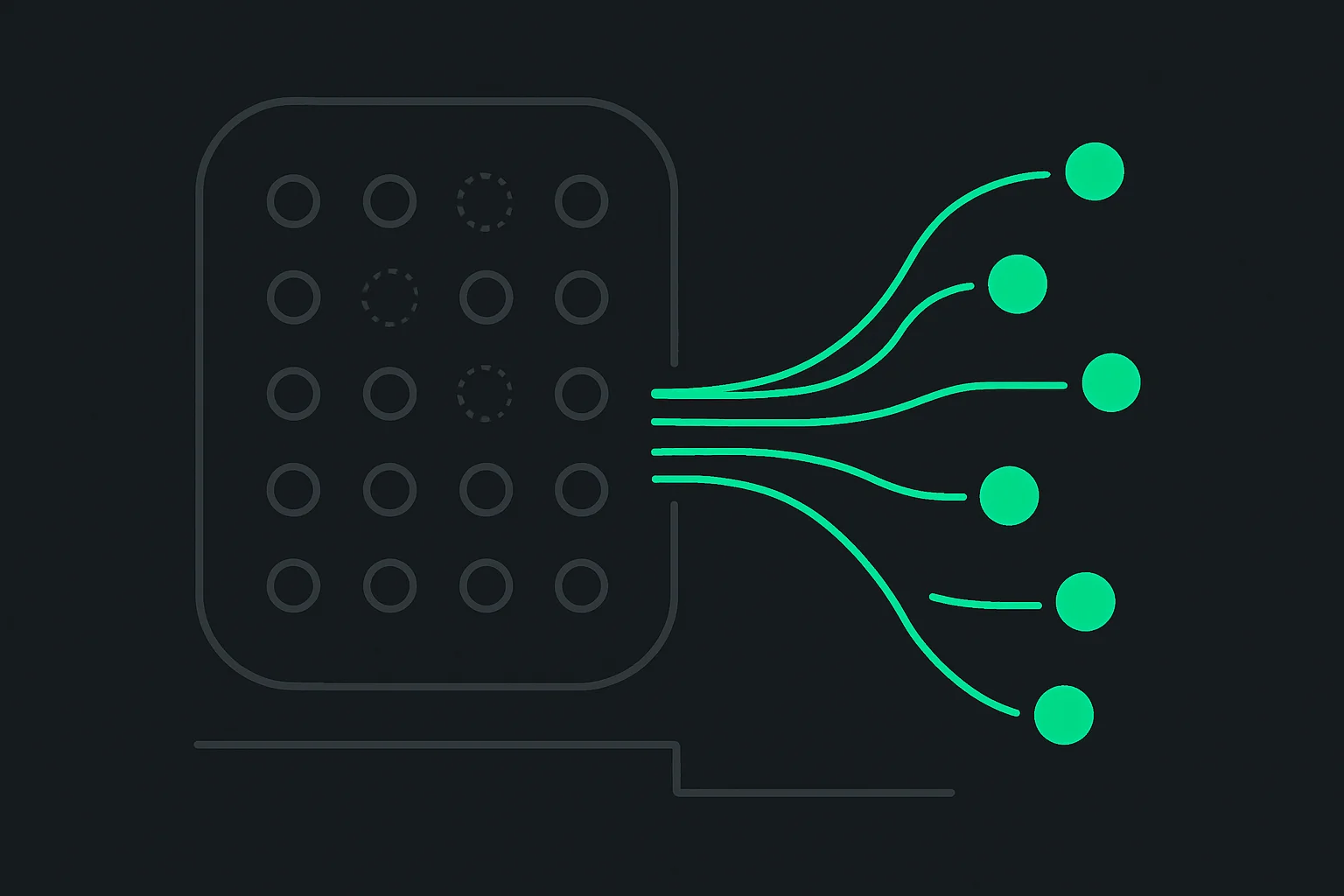 Diagram showing multiple leadership and safety roles departing an AI organisation leaving vacant positions behind
TL;DR
| Person | Role | Status |
|---|---|---|
| Denise Dresser | Chief Revenue Officer since Dec 2025 (ex-Salesforce) | Departing, announced Aug 13, 2026 — ~8 months in role |
| Brad Lightcap | COO 2022-2026, then special projects | Departing, announced Aug 11, 2026 |
| Chloé Bakalar | Only dedicated AI ethicist | Left July 2026; no replacement named |
| Johannes Heidecke | Led Safety Systems | Announced departure July 2026 |
| Josh Achiam | Head of Mission Alignment → chief futurist | Reportedly left |
| Fidji Simo | No. 2 exec, led AGI development | Stepped down July 2026 (health) |
| Bill Peebles | Led Sora (discontinued) | Departed |
| Kevin Weil | VP, Science vertical | Departed |
| Mission Alignment team | ~6-7 people, formed Sept 2024 | Disbanded Feb 2026 |
Aggregate press estimates put roughly 50% of OpenAI's safety researchers as having left since 2023-2024. Achiam's exit reportedly makes him at least the fifth senior safety-focused leader to depart in about two years.
And then the revenue chief left too
Two days after Lightcap's announcement, Chief Revenue Officer Denise Dresser told OpenAI she is leaving. Dresser joined in December 2025 after more than a decade at Salesforce — roughly eight months in the CRO seat. OpenAI's stated reason is that she is leaving "to pursue other opportunities." Her replacement is already named: Dali Rajic, former president and COO of cybersecurity firm Wiz.
The departures are also landing against a growth headline, not a struggling one: reporting around the same week put OpenAI's annualized revenue above $40 billion. That combination — record revenue, record executive churn, in the same 72 hours — is why this week's exits generated more attention than any single departure would on its own.
Dresser's exit is a third category, distinct from both Lightcap's routine long-tenure departure and the structural safety-leadership drain above. A revenue chief leaving after eight months, with a named successor in place the same week, reads as an execution or fit problem more than a mission signal — closer to normal C-suite churn ahead of a contemplated IPO than to the unfilled ethicist role. But the sequencing is what widened the story: two of the company's most senior operating executives announced departures within 48 hours of each other, on top of the safety exits already documented below, leaving — as one widely shared post put it — "no major executive left to quit besides Sam Altman." That framing overstates it (OpenAI has more than two other C-suite roles), but the underlying observation, that the company's non-Altman senior bench has thinned unusually fast in a single week, holds up.
The two departures are different things
It is worth separating them cleanly, because collapsing them produces bad analysis.
Lightcap's exit is ordinary. An eight-year operator who had already been moved out of the COO seat leaves to found something. That is the standard end of a long tenure, and his Y Combinator history with Sam Altman makes a founder move unsurprising. It sits alongside Fidji Simo's July health-related step-down, Bill Peebles' departure after Sora's discontinuation, and Kevin Weil's exit from the Science vertical — a leadership reshuffle happening while the company prepares for a possible public listing.
The safety exits are structural. Bakalar left in July 2026, less than a year after joining, and — the detail that matters — OpenAI did not announce it, and no one has replaced her. A role that goes unfilled and unannounced is a role the organisation has decided it can operate without.
The Mission Alignment disbandment follows the same shape. Formed September 2024, disbanded February 2026 after about 17 months, its six or seven members reassigned. OpenAI's characterisation: "The Mission Alignment project was a support function to help employees and the public understand our mission and the impact of AI." Framing it as a support function is the argument for why dissolving it was routine. It is also, read another way, an accurate description of how much authority the function had.
Why the pattern matters more than any individual
Safety leadership is not primarily a research function. It is a challenge function — its value is the capacity to say no, or not yet, to a shipping decision, and to have that carry weight.
Challenge functions depend on things individuals accumulate and take with them: standing with leadership, institutional memory of past near-misses, and the political capital to escalate. A team can lose five senior safety leaders in two years while every individual replacement is technically excellent, and still lose most of its actual ability to slow anything down.
This is the concrete reason the departures matter for people outside OpenAI. It is not that the company has stopped doing safety work — it plainly has not. OpenAI's Preparedness Framework work on critical cyber capability is substantive, its GPT-5.6 Cyber red-team disclosures were unusually detailed, and it published a written account of the agent-swarm evaluation incident it could easily have kept quiet.
The question is whether the internal brake still works when a launch is at stake, and turnover at this rate is genuine evidence against it. That the AISI Mythos-5 cyber eval incident surfaced through an external evaluator rather than internally is the kind of signal to watch.
The IPO context, handled carefully
Reporting consistently frames the reshuffle against a possible listing. OpenAI has been reported as confidentially filing with Goldman Sachs and Morgan Stanley at a valuation in the $730-850 billion range, with talk of raising up to $60 billion — which would be the largest IPO on record. Anthropic and SpaceX are reported to be on similar paths.
Two cautions before drawing conclusions. First, the timeline is unsettled: Reuters reported in late June 2026 that OpenAI may wait until 2027, so any specific date is provisional. Second, correlation is not motive — executives leave before IPOs for entirely mundane reasons, chiefly that vesting schedules and lockups make the pre-listing window a natural exit point.
What is defensible to say is narrower and more useful: a company approaching public markets faces structural pressure toward predictable shipping cadence and revenue growth, and a safety function whose job is to introduce delay is structurally disadvantaged in that environment. That is a claim about incentives, not about anyone's intent.
What people are asking
Is OpenAI abandoning safety? No, and claiming so overstates the evidence. What is documented is that specific senior safety roles have been vacated and not refilled, a dedicated team was dissolved, and about half the safety research staff has turned over since 2023-24. That is a real reduction in dedicated safety-leadership capacity. It is not abandonment, and treating it as such makes the actual concern easier to dismiss.
How does this compare to Anthropic? The contrast that keeps getting drawn is governance structure rather than headcount — Anthropic's public position ties safety commitments to its corporate structure rather than to individual leaders, which is more resilient to turnover by design. Its own hiring tension between pay and mission shows the same underlying pressure exists everywhere; the difference is how much of the safeguard depends on specific people staying.
Where are these people going? Largely into new ventures and other labs — the same AI talent-movement churn reshaping the whole sector. Notably, Andrew Ho's departure over RSI and RL datasets came with a substantive technical disagreement attached, which is more informative than a generic exit.
What should I actually do differently? Weight independent third-party evaluations more heavily than first-party safety claims, from every lab. That was already good practice. The turnover pattern raises how much it matters, because internal review capacity is exactly what is thinning.
Is this normal for a fast-growing company? Executive turnover at this pace is common in hypergrowth. What is not common is a specific function — ethics — being vacated without replacement or announcement. That is the detail that distinguishes ordinary churn from a signal about priorities.
The takeaway
Lightcap's departure closes an eight-year chapter and will produce a well-funded startup. It is legitimately routine.
The safety-leadership drain is not routine, and it is measured in structures rather than people: a dissolved team, an unfilled ethicist role, five senior departures, roughly half the safety research staff turned over. OpenAI still publishes serious safety work. Whether it still has the internal standing to stop a launch is a different question, and the evidence available from outside points the wrong way.
For anyone building on these models, the practical response is unchanged in kind but larger in degree: verify with independent evaluations, and treat first-party safety assurances from any lab as a starting point rather than a conclusion.
Update — September 12, 2026: Two more named researchers — one from Anthropic, one from Google DeepMind — resigned days after Jacob Coxon, both citing safety concerns and both joining independent evaluator METR: Two More Researchers Quit Anthropic and Google Over AI Safety Fears.
Update — September 9, 2026: This exodus is one of the dated case studies in a broader look at the industry's safety-talk-vs-safety-cuts pattern — see AI Safety Is Our Top Priority (Ask the Org Chart).
Related on explainx.ai:
- AI Safety Is Our Top Priority (Ask the Org Chart) — how this exodus fits a wider, sourced pattern across OpenAI, Anthropic, xAI, and Meta
- Anthropic Researcher Jacob Coxon Resigns Over AI Safety Fears — September 2026: a resignation from inside Anthropic itself, framed around race dynamics rather than a leadership reshuffle
- Tim Cook Steps Down: John Ternus Is Apple CEO — AI Strategy Implications — a contrasting leadership transition: an orderly internal succession vs. OpenAI's compressed exit wave
- OpenAI Private Safety Processing: Does It End Zero Data Retention?
- Andrew Ho Leaves OpenAI Over RSI and RL Datasets
- OpenAI's Preparedness Framework and Critical Cyber Capability
- GPT-5.6 Cyber: Daybreak Red-Team and Blue-Team Results
- The OpenAI Agent Swarm Incident at Black Hat
- AISI, Mythos-5 and the GPT-5.6 Sol Cyber Eval Incident
- Anthropic's September Update: Securing Evals After the Cyber Incidents — a compare/contrast in safety communications: dated technical follow-up vs. leadership exits
- Anthropic Hiring: Pay vs Mission
- OpenAI fires three safety researchers (October 2026) — the next chapter: dismissals over sharing information with an outside safety group
- AI Talent Moves: Conduit, Telepathy and Hark
Departure details reflect reporting as of August 11-12, 2026. Josh Achiam's exit and the ~50% safety-researcher turnover figure are press estimates rather than OpenAI disclosures. IPO timing reporting is unsettled and has been revised more than once.