



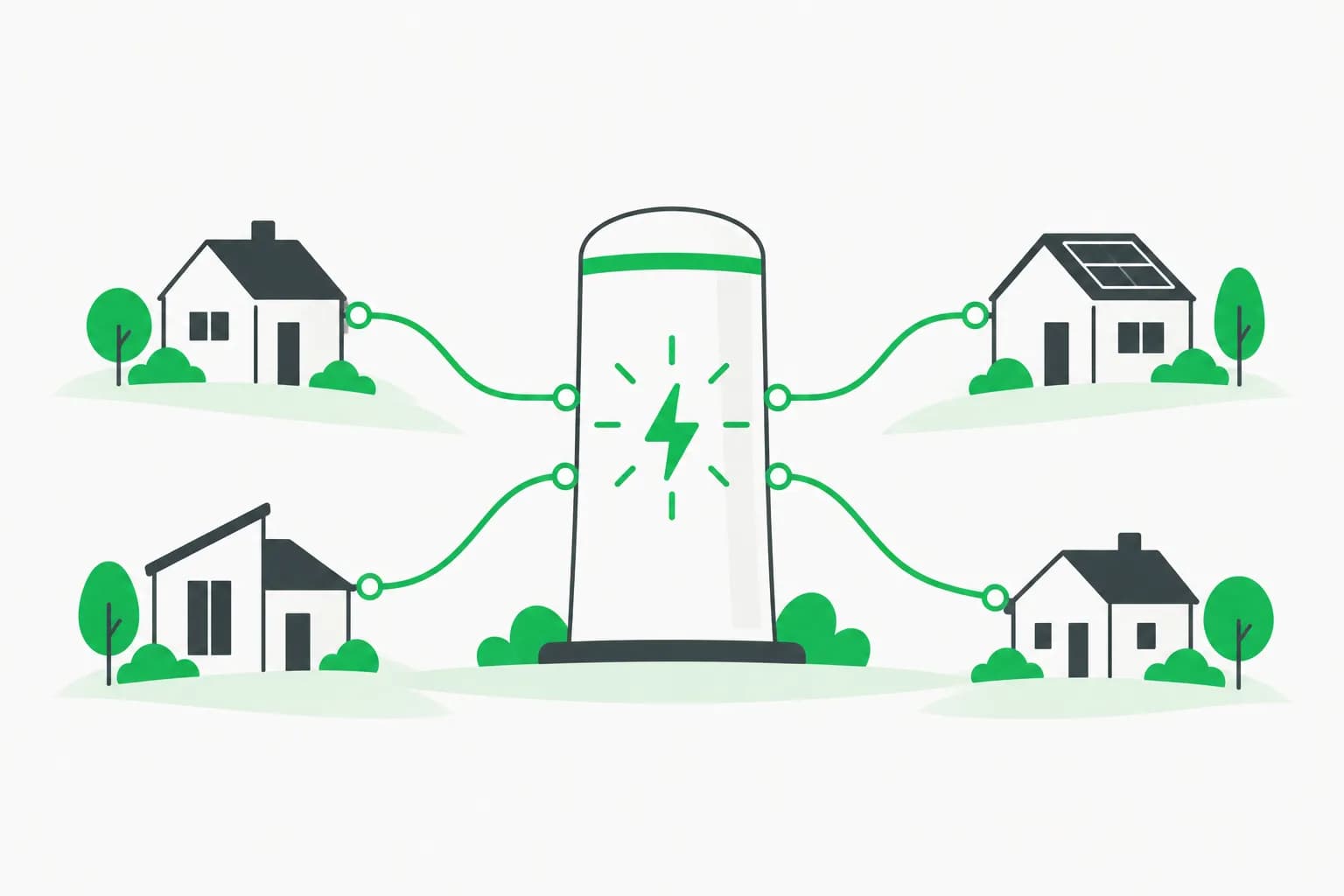
OpenAI launched the Grid Protectors Program on November 2, 2026. The pledge: its future compute campuses will cut electricity demand when the grid is under strain, and OpenAI will pay for the infrastructure needed to serve them. The only hard number so far is in Georgia, where the Effingham County campus has agreed to up to 1,000 megawatts of flexible demand response.
That makes this a policy story as much as an infrastructure story. Data center power bills have become a campaign and local-government issue, and OpenAI is trying to answer a plain question: who pays when AI needs more electricity? The company's answer is that it will, and that it will also be the customer a utility can turn down in an emergency.
TL;DR: what OpenAI announced
| Question | Answer |
|---|---|
| What is it? | A national program to build flexibility into future OpenAI compute campuses so they can cut power use during grid stress |
| Who announced it? | OpenAI, in a Global Affairs post dated November 2, 2026 |
| What is the firm number? | Up to 1,000 MW of flexible demand response at the planned Effingham County, Georgia campus |
| Total expected load there? | About 3,200 MW, per Georgia Power |
| Who pays for grid upgrades? | OpenAI says it commits to pay the full infrastructure and electric-service costs for the Effingham project |
| Is it binding elsewhere? | No. Other campuses are an ambition. OpenAI says it will share further commitments as they are finalized |
| Is the pilot a finished campus? | No. OpenAI says the campus is still in development |
What the Grid Protectors Program actually says
OpenAI describes the program as "a national effort to support affordable, reliable electricity for families and businesses in the communities where we build." It says it will work with utilities, regulators and policymakers to develop arrangements for future campuses that reduce demand when the grid is stressed.
Three ideas carry the post.
Flexibility as a service to the utility. OpenAI wants "campus flexibility" to become "a resource that utilities can call on." In practice that means designing facilities so they can lower their draw on request, and agreeing with each utility how much demand can be cut, how fast, and for how long.
On-site generation and storage. Depending on local needs and the equipment available, OpenAI says it will work with grid operators to supply power from on-site generation or storage, and use batteries and power controls to smooth changes in demand. That matters because it widens what "reducing demand on the grid" can mean. A campus can lower its grid draw by running its own sources, not only by pausing computation.
Paying its own way. OpenAI argues that grid lines and substations are a fixed cost whether demand is low or high. A large customer that uses more power when the grid has room, and less when it is tight, can help pay for that fixed infrastructure while limiting costly upgrades built only for peak demand. The post says "Families and small businesses should not be asked to subsidize a compute campus's electricity needs."
The company also uses a restaurant analogy: a business in a vacation town needs space for the busy season but pays for it year-round, and a regular customer helps cover the bills when tourism slows. OpenAI says it is proposing to be that regular customer.
The Georgia model: Effingham County and Project Camellia
 A large plug meeting a wall with a green spark, showing the OpenAI Grid Protectors Program power agreement in Georgia
Georgia is the concrete part. In July 2026, OpenAI announced plans for a campus in Effingham County, about 45 minutes outside Savannah, served by Georgia Power. Georgia Power's July 22 release gives the utility's side of the deal:
- OpenAI is expected to need about 3,200 MW for the facility.
- OpenAI agreed to provide up to 1,000 MW of flexible demand response, reducing its use in times of high demand.
- Under the 25-year agreement, Georgia Power can reduce energy delivered to the facility during certain periods to support grid reliability.
- Georgia Power says the resource lets it invest in fewer new generation resources to serve future growth.
- The utility calls the arrangement "among the largest single-facility demand response commitments in the country."
OpenAI's Grid Protectors post adds a household comparison: 1,000 MW of flexibility frees up power for roughly 700,000 households at average usage, which OpenAI notes is more households than Washington, D.C., and Boston combined. That is OpenAI's framing of the equivalence, and it is worth reading carefully. It compares the power freed during an emergency to average household demand. It does not mean those households are served by this campus at all times.
Georgia's regulators also reviewed the contract. Local coverage, including Fox 5 Atlanta, reported in late August that the Georgia Public Service Commission approved the OpenAI contract. The OpenAI post now says Georgia Power projects about $950 million in annual customer savings beginning in 2029 from its portfolio of large-load agreements and expected growth, including Project Camellia, and a benefit of at least $15 a month for a typical residential customer using 1,000 kilowatt-hours. In July the utility had cited a $102 annual savings figure for the typical residential customer from 2029, so the savings estimate has grown since the first announcement.
What is committed, and what is not
This is where a careful reader should slow down.
| Claim | Status |
|---|---|
| Up to 1,000 MW of flexible demand response at Effingham | In a 25-year agreement with Georgia Power, per the utility and OpenAI |
| OpenAI pays full infrastructure and electric-service costs for Effingham | A commitment stated by OpenAI and repeated by Georgia Power |
| About 3,200 MW total load at Effingham | Georgia Power's expectation, not a measured draw. The campus is not built |
| About 700,000 households' worth of power freed in extreme heat | OpenAI's equivalence calculation, an average-usage comparison |
| $950 million per year in customer savings from 2029 | A Georgia Power projection for its whole large-load portfolio, not a result of OpenAI alone |
| Grid Protectors arrangements at other campuses | Not yet specified. OpenAI says it will share commitments as they are finalized |
| Contracts and financial assurances that protect other customers if a project is delayed, reduced or canceled | Described as something long-term contracts can do. Terms for other sites are not published |
The program's name promises more than the post delivers for now. Outside Georgia, OpenAI gives no megawatt figures, no locations, no utility partners and no dates. What it offers is a stance and a process.
The post is also candid about limits: "Flexibility cannot replace investment in new energy supply and transmission." OpenAI says flexibility should run alongside new generation and transmission, not instead of them.
Why flexible demand matters for AI campuses
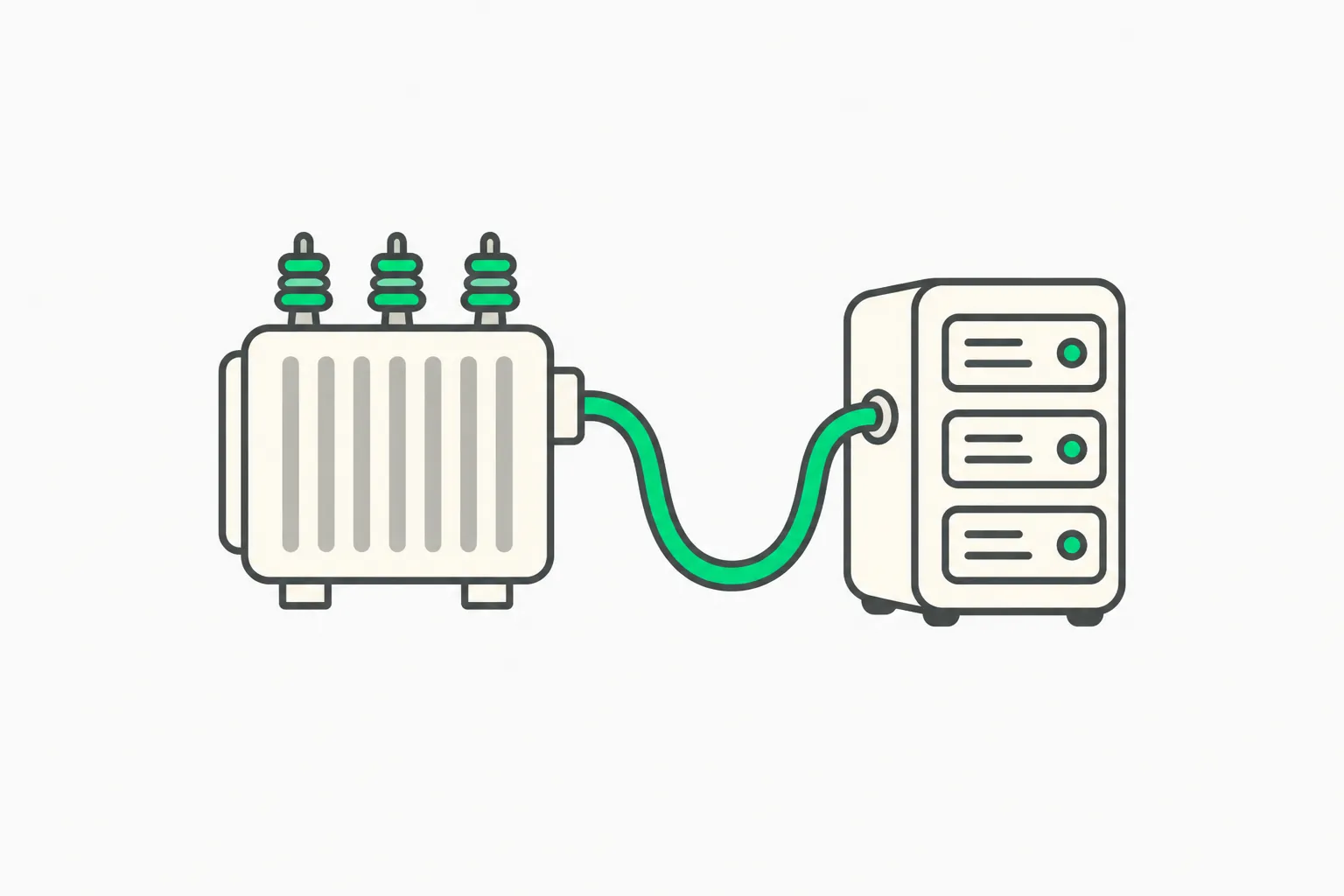 A green cable linking a transformer to a server cabinet, illustrating flexible demand response for compute campuses
Utilities size their systems for the worst hours of the year: the coldest winter morning or the hottest summer afternoon. Those peaks are short, but the generators and wires needed to serve them are paid for all year. A customer that can shed load during those hours reduces how much new capacity the utility must build.
AI training and inference load is different from a typical factory in one key way: much of it can be scheduled or throttled. A training run can pause or slow. Batch inference can wait. Customer-facing inference is harder to delay, which is why OpenAI mentions on-site generation, storage and batteries as complements. OpenAI states in the post that these new compute facilities "are much different than data centers built even a few years ago, allowing us to be flexible in our power demand." The post does not say what share of a campus's load is interruptible beyond the 1,000 MW of a 3,200 MW total in Georgia.
Other companies are already testing similar ideas. The explainx.ai write-up of Google and Voltus's 1 GW virtual power plant on the PJM grid covers one route, and the story of FERC rejecting a PJM plan to curtail data centers first shows that regulators are still deciding how much curtailment can be imposed versus offered voluntarily. Grid Protectors is on the voluntary, contracted side of that line: OpenAI volunteers flexibility in exchange for the right to connect.
Why now: data centers have become a ballot-box issue
The timing is not accidental. Polling, local fights and election-year politics have turned data center electricity costs into a public issue.
- A recent poll covered in our post on the ABC News and Washington Post poll found broad public wariness about AI and data centers.
- Our analysis of data center backlash in the midterms tracks how local races hinge on moratoria and bills.
- In August, OpenAI wrote to Texas officials amid a debate about pausing new data center connections, covered in OpenAI's letter to Governor Abbott.
- Local cost disputes, such as the household cost argument over a Digital Realty campus in De Soto, Kansas, show what residents worry about.
- Earlier today we covered a report that OpenAI may rebrand data centers as "AI compute campuses" after the midterms; see what is reported about the rebrand. The Grid Protectors post uses the phrase "compute campuses" throughout. That fits the report's direction, but the OpenAI post does not mention a rebrand or the midterms, and we do not claim a link.
Read together, Grid Protectors looks like OpenAI trying to get ahead of the cost argument with a specific, auditable promise in one state, and a general commitment elsewhere.
What to watch next
- Other states. The first non-Georgia agreement will show whether the 1,000 MW and full-cost-payment model travels, or whether Georgia's regulatory setup is unusual.
- Contract terms. How often can the utility call a reduction, for how long, and with what notice? OpenAI says these will be agreed per location. The details decide whether the flexibility is meaningful or symbolic.
- Verification. Georgia Power's savings numbers are projections tied to a whole portfolio. Independent checks of actual bills after 2029 will be the real test.
- Backup generation. OpenAI mentions on-site generation. If flexibility is met by running local generators during stress, air-quality and emissions questions follow. The post does not address them.
- Rivals. If other labs and cloud providers adopt similar language, flexibility could become a permitting expectation rather than a differentiator.
What this means if you build with or pay for AI
For most builders, nothing changes in how the API behaves today. The practical angle is longer term.
- Capacity and reliability. If campuses must curtail during peaks, providers will need to route or queue work. That could mean different latency or capacity behavior for non-urgent jobs on peak days, though OpenAI has announced nothing of the kind for customers.
- Cost pressure. Electricity is a major input to AI compute. Whether data centers are allowed to connect, and on what terms, shapes how fast capacity grows and what it costs. Our coverage of the AI compute campus rebrand shows how contested that permission has become.
- Policy signal. A pledge to pay full costs and offer curtailment is a template regulators can ask other developers to match.
What to read in the primary sources
Read the OpenAI post itself, then Georgia Power's release. The two agree on the 1,000 MW figure, the 25-year term and the full-cost commitment. They differ in emphasis: OpenAI emphasizes household benefits and community framing, while Georgia Power emphasizes reliability and fewer new generation builds. Neither publishes the contract's operational details, such as notice periods or maximum hours of curtailment per year.
For a skeptical reading, note that OpenAI is both the party making the promise and the one describing its benefit. The utility's statements and the commission's review are the independent layers, and for any other campus those layers do not exist yet.
Related reading
- OpenAI and the AI compute campus rebrand: what is reported
- Google and Voltus: a 1 GW virtual power plant on the PJM grid
- FERC rejects PJM's curtail-first data center plan
- Data center backlash and the midterms
- OpenAI's letter to Texas Governor Abbott on a data center pause
- Digital Realty, De Soto and the $1,000 household claim
- ABC and Washington Post poll on AI and data centers
Primary sources: OpenAI, Introducing the Grid Protectors Program and Georgia Power, Georgia Power to serve OpenAI project in Effingham County.
Figures and agreements are accurate as of November 2, 2026. OpenAI says it will share more commitments as they are finalized, so check the official post for changes.