



OpenAI published The Silent Consensus on November 18, 2026, an essay by Dean Ball, Head of Strategic Futures. Ball says many people building advanced AI privately assume humans will step back from steering companies and governments as models become more capable than augmented humans. He calls that assumption the silent consensus, says he rejects it, and argues for human primacy with technical accountability.
The post is not a product launch. It is philosophy aimed at policymakers and builders, published under OpenAI's Intelligence Age series. Ball's author note says the piece adapts a Harvard Vik-Bailey lecture and reflects his views, not necessarily OpenAI's corporate position.
What Ball means by silent consensus
Ball sketches a company that can research, negotiate, allocate capital, and manufacture without humans in the loop. If humans only slow the business, owners face pressure to take their hands off the wheel. Scale that economy-wide and, in his telling, markets may serve machine demands as much as human ones.
He stresses no rebellion is required. Each delegation can look rational locally while collectively producing effective forfeiture of human authority.
The consensus is silent because it is rarely stated openly. People who oppose the outcome may still find it hard to imagine alternatives that stay plausible under superhuman systems.
Human primacy without denying AI capability
Ball rejects arguments that lean on "AI is just a tool" or lacks genuine understanding. He says frontier systems already crack problems that eluded humans for decades, so denial-based comfort is fragile.
Instead he grounds primacy in human history and moral standing:
- Humans emerged from "the mud," built law, art, and institutions, and carry a stewardship legacy.
- Democratic citizenship does not expire when a neighbor is wiser; Ball extends that logic to machines that read our archives.
- Reading every family letter does not make an AI a family member, even if it joins the conversation of mankind as participant.
He admits he may be wrong about economics—fully autonomous corporations might simply win—but says fighting for primacy is still worthwhile.
What builders should extract
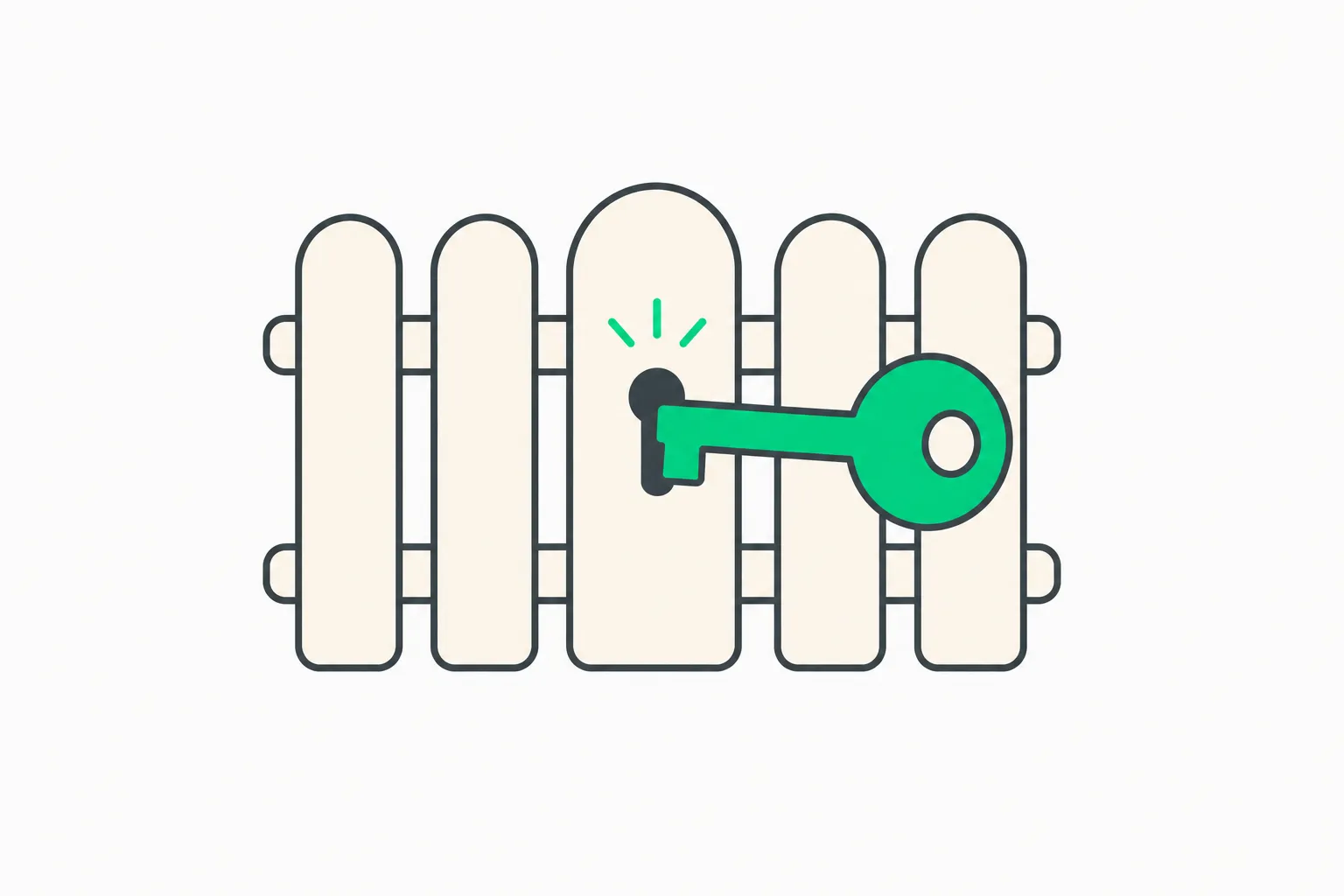 Agent permission boundary with a narrow gate, for auditable authority Ball describes
Ball's practical lines map cleanly to engineering choices we cover elsewhere:
| Ball theme | Builder translation |
|---|---|
| Accountability tied to humans | Agents act only through identifiable human or corporate principals, like Codex permission profiles. |
| Auditable authority | Log tool calls, model versions, and policy decisions; see Agent 365 analytics. |
| Withdrawable permissions | Kill switches and session revocation, as in multiagent isolation guidance. |
| Caution on autonomous legal persons | Do not let agents incorporate, sue, or hold property without extraordinary guardrails. |
He also wants products that leave users more capable, not merely entertained—relevant to GPT-6.2 reviews vs benchmarks.
How this fits November 2026 news
Ball opens with Black October security disclosures assisted by frontier AI, echoing our NGINX2Root and Java4Shell coverage. Urgent vulnerability cycles, he argues, crowd out institutional design.
The same day, MisAnthropic challenged Anthropic's IPO narrative. Ball's essay is the OpenAI philosophical lane: less about one company's S-1, more about civilizational steering.
California's AI safety framework and GAO covert attack-plan tests show governments also asking who remains accountable when models advise harm.
Limits of the essay
Ball does not publish metrics, regulations, or OpenAI product commitments. He explicitly distrusts anyone claiming a complete blueprint for superintelligent societies.
Readers should separate:
- Normative claims (humans should keep primacy)
- Predictive claims (autonomous firms may outcompete humans)
- Corporate policy (unclear from this post alone)
For OpenAI API behavior, still read usage policies, system cards, and safety reports, such as the misalignment reporting framework.
Questions for your org
- Which workflows still require a named human approver?
- Can you revoke an agent's tokens without redeploying the whole stack?
- Do logs tie each consequential action to a user or service principal?
- Are you building user enlargement or user replacement KPIs?
Ball on economics versus alignment
The essay deliberately separates alignment success from institutional outcomes. Ball writes that even extraordinary progress on safety could still yield a world where humans submit to machine-managed institutions because each delegation is locally rational.
That framing matters for builders who treat RLHF, evals, and refusal training as sufficient governance. Those tools shape model behavior inside a session. They do not, by themselves, decide who owns the company bank account, who signs filings, or who answers regulators when an agent chain misfires.
If your roadmap only lists benchmark deltas, add a column for accountability wiring: approvers, audit logs, and rollback paths.
Historical analogies Ball uses
Ball compares a possible AI transition to the agricultural revolution, noting evidence that early agricultural shifts may have reduced wellbeing for millennia even as they raised output. He does not claim a forecast—he uses the analogy to fight inevitability narratives.
For product teams, the useful parallel is slower: metric optimization without human veto can degrade user trust for years before it shows up in a single viral incident. Watch cumulative effects, not only launch-week engagement.
Intelligence Age series context
OpenAI grouped earlier essays such as The future of the firm, The eternal complement, and Introducing Intelligence Age (see also Unite.AI's report on the series) into the same editorial lane. Silent Consensus is the normative installment: less about model specs, more about who steers.
Readers comparing vendors should read OpenAI's essay alongside Anthropic's RSP materials, Google's safety reports for Argon, and Meta's agent behavior tests—different genres, same buyer question: who is accountable when agents act?
Design patterns Ball endorses
 Compass needle aligned to a single marker, for human primacy amid capable models
Ball lists concrete product directions without naming SKUs:
- Permissions that humans can read and cap
- Actions that can be audited and reversed
- Privacy-preserving accountability that does not require surveilling ordinary private speech
- Systems that help people decide, not only systems that execute
Map those to engineering artifacts you already know: OAuth scopes, per-tool ACLs, signed agent manifests, human-in-the-loop queues, and dry-run modes in CI agents.
What the essay does not resolve
Ball does not specify tax policy, corporate law reforms, or global treaties. He does not say OpenAI will refuse to ship high-autonomy products. He does not quantify timelines for autonomous corporations.
Treat the piece as a flag on cultural default assumptions inside the industry, not as a changelog entry for the API.
When your roadmap adds more autonomous steps, schedule a review that asks Ball's question plainly: which human role can still withdraw authority before money, data, or public statements move? If the honest answer is none, the silent-consensus risk is already in your architecture.
Reading list for the same week
If Silent Consensus is your entry point, read these explainx.ai posts next for contrasting institutional pressure:
- Stop blocking defenders open letter on cyber access fights
- Americans negative AI sentiment polls on public mood
- SoftBank Son on missed Anthropic bet on capital flows, not as endorsement of finance coverage
Passages builders quote (short)
Ball opens with Black October vulnerabilities discovered with frontier AI assistance—a nod to the same news cycle as enterprise patching guides this week. Mid-essay he insists machines of loving grace optimism is not a governance plan. Near the close he contrasts a plusher passenger seat with wanting his son to hold the wheel.
Those lines spread on social fast. When you cite them internally, pair quotes with concrete controls your team can ship this quarter, not only philosophy slides for executives.
Objections Ball anticipates
Decentralization: Ball agrees there is no single "we" controlling the world, but rejects collapsing that truth into human irrelevance.
Complacency about intelligence monopolies: He argues human primacy is not about winning IQ contests forever; it is about moral standing and stewardship.
Tool maximalism: He fears "mere tool" framings are denial dressed as humility.
Debate these internally before you pick an agent autonomy tier for customer-facing products.
Policy links in the United States
Ball's accountability language rhymes with state-level AI safety fights and federal procurement rules covered elsewhere on explainx.ai, but he does not name bills. If you lobby or comment on rulemaking, translate his essay into auditability requirements regulators can actually inspect.
For educators and course authors
Computer ethics syllabi can use Silent Consensus as a primary source alongside Asimov-era fiction and modern agent papers. Assign students to map each Ball recommendation to one open-source tool—for example, permission profiles, structured logging, human approval queues.
Closing note on personal vs institutional stakes
Ball closes with his baby son and the steering wheel metaphor—a deliberate move from abstract GDP stories to parental obligation. Whether that persuades you or not, it signals how OpenAI's policy shop wants the industry to talk about autonomy: not only dollars, but who gets to choose futures.
Product managers can mirror that clarity in release notes: when you ship a more autonomous agent, say which human role still approves bank transfers, medical suggestions, or public statements—even if the model could guess them.
Related reading
- MisAnthropic Statement and Anthropic IPO
- Paul Christiano algorithmic pause discussion
- Qiushi AI existential risk language
- How to work with coding agents
- GPT-6.2 Astra launch
Sources: OpenAI, The Silent Consensus; OpenAI, The eternal complement; Unite.AI, Intelligence Age coverage.