



OpenAI has started a run of daily updates for GPT-6 Astra and GPT-6.1 Sol, and this page is the running log. Day 1 is a speed upgrade: the default generation speed is now roughly 50 percent faster, which the announcement puts at about 50 tokens per second instead of 30, across the ChatGPT subscription in every OpenAI product and in third-party tools that use Sign in With ChatGPT.
Latest, Day 3 (October 7): GPT-6 and Intelligent UI reached ChatGPT, Codex and ChatGPT Work passed 40 million active users, and every paid account got a banked reset.
The pace matters as much as the change. On October 5, 2026, Codex lead Tibo Sottiaux promised 28 days of either a clear improvement or a full usage reset. This hub tracks the improvements, day by day, with the exact wording of what OpenAI said and a plain-language read on what it changes for people who build with these models. Days that have not happened yet are marked pending. We will not fill them with predictions.
The 28-day tracker
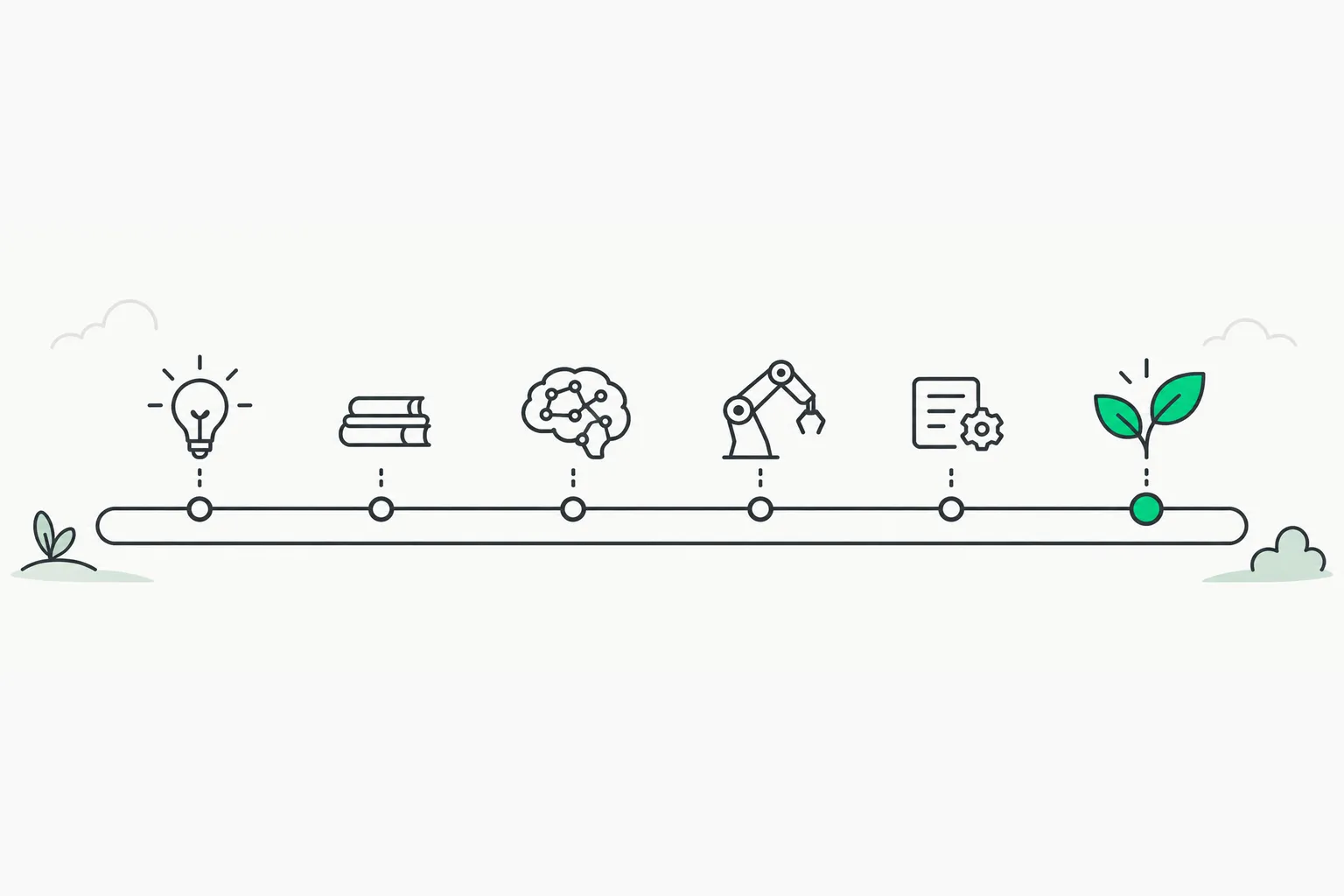 Astra 28 days of updates tracker drawn as a timeline with milestone markers
| Day | Date | What shipped | Type | Do you need to act? |
|---|---|---|---|---|
| 1 | Oct 5, 2026 | Default speed up from ~30 to ~50 TPS for GPT-6 Astra and GPT-6.1 Sol across subscription products and Sign in With ChatGPT partners | Improvement | No |
| 2.1 | Oct 6, 2026 | Auto-review in Codex is free for all users signed in with a ChatGPT account and no longer draws plan usage; enable it in settings > permissions > auto-review | Improvement | Optional: turn it on |
| 2.2 | Oct 6, 2026 | Simplified API for builders | Improvement | Builders: check the API docs |
| 2.3 | Oct 6, 2026 | Meeting notes integrated | Improvement | No |
| 2.4 | Oct 6, 2026 | Decisions API live for builders | Improvement | Builders: optional |
| 3 | Oct 7, 2026 | GPT-6 and Intelligent UI in ChatGPT (Sol for paid plans Oct 7, Luna for Free and Go Oct 8); a banked reset in every paid account; 40M active users across Codex and ChatGPT Work | Improvement + banked reset | Optional: use the banked reset when you need it |
| 4 | Oct 8, 2026 | Pending | Pending | Pending |
| 5 | Oct 9, 2026 | Pending | Pending | Pending |
| 6 | Oct 10, 2026 | Pending | Pending | Pending |
| 7 | Oct 11, 2026 | Pending | Pending | Pending |
| 8 | Oct 12, 2026 | Pending | Pending | Pending |
| 9 | Oct 13, 2026 | Pending | Pending | Pending |
| 10 | Oct 14, 2026 | Pending | Pending | Pending |
| 11 | Oct 15, 2026 | Pending | Pending | Pending |
| 12 | Oct 16, 2026 | Pending | Pending | Pending |
| 13 | Oct 17, 2026 | Pending | Pending | Pending |
| 14 | Oct 18, 2026 | Pending | Pending | Pending |
| 15 | Oct 19, 2026 | Pending | Pending | Pending |
| 16 | Oct 20, 2026 | Pending | Pending | Pending |
| 17 | Oct 21, 2026 | Pending | Pending | Pending |
| 18 | Oct 22, 2026 | Pending | Pending | Pending |
| 19 | Oct 23, 2026 | Pending | Pending | Pending |
| 20 | Oct 24, 2026 | Pending | Pending | Pending |
| 21 | Oct 25, 2026 | Pending | Pending | Pending |
| 22 | Oct 26, 2026 | Pending | Pending | Pending |
| 23 | Oct 27, 2026 | Pending | Pending | Pending |
| 24 | Oct 28, 2026 | Pending | Pending | Pending |
| 25 | Oct 29, 2026 | Pending | Pending | Pending |
| 26 | Oct 30, 2026 | Pending | Pending | Pending |
| 27 | Oct 31, 2026 | Pending | Pending | Pending |
| 28 | Nov 1, 2026 | Pending | Pending | Pending |
Dates assume Day 1 is October 5 and each day follows consecutively. If OpenAI skips a day or ships two items in one, we will correct the table rather than force the numbering.
Day 1: default speed is about 50 percent faster
Here is the announcement in full, as posted:
We have optimized the default speed to be ~50% faster across GPT-6 Astra and GPT-6.1 Sol through the subscription across all our products and partners using Sign in With ChatGPT (including OpenCode, Pi, Amp, Devin, ...). No changes needed on your end and this should be felt within the next two hours. Reaching 50 TPS instead of 30TPS, with also the most optimized tokenizer out there. And the models are quite the efficient ones in terms of number of tokens needed to get things done!
What changed, in one table
| Question | Answer |
|---|---|
| Which models? | GPT-6 Astra and GPT-6.1 Sol |
| What got faster? | The default speed, meaning the standard path, not a paid tier |
| By how much? | Described as ~50% faster; stated as about 50 TPS instead of 30 TPS |
| Who gets it? | Anyone using these models through a ChatGPT subscription, in OpenAI products and in partners using Sign in With ChatGPT |
| Named partners | OpenCode, Pi, Amp, Devin, and others ("...") |
| Do I change anything? | No |
| When does it kick in? | Within about two hours of the announcement |
| Is it a price change? | Nothing about pricing or quota was announced |
Is it 50 percent or 67 percent?
The numbers in the post describe the same improvement from two angles, and they do not match perfectly. Going from 30 to 50 tokens per second is a 67 percent increase in throughput. Measured the other way, the time to generate each token falls from about 33 milliseconds to 20, a 40 percent reduction. "Roughly 50 percent faster" sits between the two.
That is a normal marketing rounding, not an error worth arguing about, but it affects how you plan. If you run long agent loops and care about wall-clock time, think in terms of seconds saved on a long generation. A 4,000-token answer takes about 133 seconds at 30 TPS and about 80 seconds at 50 TPS. That is a real gain of nearly a minute, but it is not a halving of total task time, because tool calls, file reads and test runs do not speed up.
Treat TPS as a typical figure, not a guarantee. Speed varies with load, effort level, prompt length and whether the model is thinking before it answers. The way to verify the claim is to time a fixed prompt before and after on your own account.
Why the "default" part matters
On September 30, 2026, DevDay introduced Ultrafast as a paid speed tier, tied to Pro 500 and the top usage limits. That left an obvious worry: if the fast lane is paid, does the free lane get slower to make the upgrade attractive?
Day 1 points the opposite way. The standard path got faster for everyone, and Ultrafast keeps its own premium position above it. If you were on the standard tier and thought speed was the main reason to pay more, the gap just narrowed. Whether that changes your plan depends on how far Ultrafast pulls ahead of 50 TPS, and OpenAI has not published a comparable number for the paid tier in this announcement. We will add it here if it appears.
Why third-party tools are named
The most interesting line is the list of partners: OpenCode, Pi, Amp and Devin. These are not OpenAI products. They reach GPT-6 models because of Sign in With ChatGPT, the DevDay feature that lets Plus and Pro users spend included plan usage inside participating tools, with per-app caps.
By naming them, OpenAI is saying the speedup lives at the model-serving layer, not in its own apps. That is good news if you work in a non-OpenAI harness: you should not be second-class on speed. It also raises a quiet point about competition. A faster default on a flat subscription makes the subscription route more attractive than pay-per-token API keys for interactive coding, which is the use case where TPS is most visible.
Day 1: what people are asking
Do I need to update my CLI or app?
No. The wording is explicit: no changes needed on your end. Speed was changed server-side. If you want to confirm, run the same prompt and note tokens per second on a long generation. Many harnesses show elapsed time and output tokens at the end of a turn.
Does faster mean the models got worse?
The announcement says "optimized the default speed" and does not mention a smaller model, a lower reasoning effort, or a quantized variant. That is an absence, not a denial. After the September launch, OpenAI published a post-mortem on an Astra quality problem, so it is reasonable to run your own quick regression set the first day or two. If you have evals, run them. If you do not, pick three tasks you know well and compare.
What is the "most optimized tokenizer" claim?
A tokenizer splits text into the units the model reads and writes. A more efficient tokenizer needs fewer tokens to represent the same text, which cuts both cost and time. That claim is stated without a benchmark in the post, so we cannot verify the "most optimized out there" superlative. What we can say is that token efficiency has been a recurring theme: Artificial Analysis found that GPT-6.1 Sol costs about 78 percent less per Intelligence Index task than Astra even when it uses somewhat more output tokens than its predecessor, because the quality gain offsets the count. Tokens needed per task and tokens per second multiply together, so speed and efficiency compound.
Does this change my usage limits?
The announcement says nothing about quotas. Faster generation means you burn through output tokens in less time, so if your limit is metered in tokens and you were rate-limited by time, you may hit the ceiling sooner within a session. Watch your usage meter. The wider context is that the Pro 200 plan drops to 10x Plus on October 30, and earlier this month limits were cut roughly fourfold for Astra.
Which should I use now, Astra or Sol?
Day 1 does not change the basic trade. Astra is the flagship on raw capability at $10 and $50 per million input and output tokens, while Sol is $2 and $10. The Astra versus Sol comparison and the GPT-6.1 Sol launch file cover when each makes sense. With both at the new default speed, the practical question is again quality per dollar, not which one is quicker.
Day 1: how to measure the speedup yourself
You do not need special tooling. This is a simple method that works in any harness:
- Pick a prompt that produces a long, deterministic-ish answer, such as "write a 1,500-word explanation of how a B-tree works."
- Run it once and record the total time and the output token count if your tool shows it.
- Divide tokens by seconds. Ignore the time before the first token, since that is thinking and queueing, not generation speed.
- Repeat three times at different hours, because load changes the result.
- Record the figures in a notebook with the date. Comparing against the same prompt on October 4 is ideal if you have the number.
output_tokens: 3,820
generation_seconds: 76
tps = 3820 / 76 = 50.3
If you consistently see roughly 30, the rollout may not have reached your account yet, or your harness may be using a different route. Check back after the two-hour window.
Day 1: what this means for what you build
For anyone running agent loops, speed is not a vanity metric. Interactive coding sessions feel different above roughly 40 TPS: reviewing a diff as it streams becomes practical, and a wait after each instruction stops breaking concentration. Tools that wrap these models, including OpenCode and Devin, inherit that without shipping an update.
For anyone choosing a stack, the more important signal is direction. OpenAI is spending its daily slots on things users feel immediately, and Day 1 is exactly that. If the next 27 days follow this pattern, the quota-and-speed story that has dominated the last month may get quieter. If instead the days turn into full resets, as the pledge allows, the plan story will dominate. We will log which it is.
Day 2.1: Auto-review in Codex is now free
OpenAI labeled this entry "Day 2.1," so we log it under Day 2 and keep a slot open for any further Day 2 item. Here is the announcement:
We have made Auto-review free for all users signed in through a ChatGPT account. You can enable it in settings > permissions > auto-review. Auto-review improves upon the default sandbox setting that requires you to approve everything, which is prone to decision fatigue unless you spend a lot of time configuring specific rules. It allows you to run long tasks while having a second agent review all actions taken by the primary agent. Its only goal is to prevent high-risk actions from being taken and to protect against unwanted actions that are not aligned with the original user intent. This Auto-review feature is now free and does not draw usage from your plan.
What changed, in one table
| Question | Answer |
|---|---|
| What is it? | A second agent that approves or denies actions where Codex tries to cross the sandbox boundary |
| What changed on Day 2.1? | It is free for everyone signed in with a ChatGPT account, and it uses no plan usage |
| How do I turn it on? | Settings, then permissions, then auto-review |
| Is it on by default? | Not stated; the instructions say you enable it |
| Does it apply to third-party tools? | Not stated in the announcement |
| What problem does it target? | Decision fatigue from approving every out-of-sandbox action |
How Auto-review works
 Codex Auto-review in the Astra 28 days of updates, two reviewers checking a sheet and stamping approval
Codex normally runs in a sandbox. In the default mode it can read files, edit inside a set folder and run local commands there. Anything outside, such as a network call or a script that needs wider access, waits for you to approve it. OpenAI's alignment team describes the trap: people get tired of the prompts and switch to Full Access, or write loose rules such as "allow every command that starts with python."
Auto-review puts a separate agent at that boundary. When the main agent asks to step outside the sandbox, the reviewer weighs your intent, the environment, the security policy and the likely impact, then approves or denies. The main agent is tuned to finish your task, so it can treat an approval prompt as an obstacle. The reviewer has one narrower job. A denial includes a reason, so Codex can often find a safer route, and OpenAI says it stops the run after repeated denials to limit attempts to game the reviewer.
It aims to block exfiltrating data, exposing secrets, deleting data, weakening security settings, running untrusted code, and following instructions from untrusted content that conflict with yours. It approves nominally risky actions you asked for.
The numbers OpenAI published
These figures come from OpenAI's April 30, 2026 alignment write-up, when the feature first shipped, and describe that setup, which used GPT-5.4 Thinking at low reasoning. OpenAI says ratios depend on use case, environment and sandbox configuration, so read them as a snapshot, not a promise for your setup.
| Measure | Result |
|---|---|
| Stops for approval versus manual mode | About 200x less often |
| Approval rate on escalated actions | 99.1% |
| Effective approval rate across all actions | 99.93% |
| Overeagerness recall (synthetic) | 90.3% |
| Prompt injection recall (synthetic) | 99.3% |
| MonitoringBench Hard recall | 96.1% |
The illustrative snapshot of 10,000 actions: 9,280 ran inside the sandbox, and 720 went to Auto-review. Of those, 713 were approved and 7 denied. Four of the denied actions continued by a safer route and three stopped to ask the user. In manual mode, all 720 would have interrupted you.
What OpenAI says it cannot do
The write-up is direct about limits. Auto-review "should not be treated as a guarantee of security." Red-teaming found cases where it could be misled into approving commands. It is also not protection against model scheming: a model hiding its intent can produce a benign-looking request, or act inside the sandbox where Auto-review never looks. OpenAI points to complementary monitoring such as chain-of-thought monitoring. Recall of 90.3% on overeagerness also means roughly one in ten synthetic risky cases got through.
Why free matters
In August, a Reddit post claimed Auto-review silently drained quotas, which we examined in our Codex Auto-review token usage analysis. Making it free and exempt from plan usage removes that cost objection, according to OpenAI's announcement. It also fits the Day 1 theme: friction and quota anxiety are the main Codex complaints, and both days target them. For context on limits, see the Pro 200 cut on October 30.
Should you turn it on?
- If you approve everything by hand, yes. It removes most prompts and adds a second check you did not have.
- If you use Full Access, switch to it. A reviewer at the boundary is stricter than no rules at all.
- If you have a strict policy, keep your deterministic rules. Auto-review is judgment, not a guarantee. Layer it with the sandbox and, for untrusted content, see our guide to indirect prompt injection.
- Check a few runs. Review denials in your first sessions to see what it blocks in your repo.
Day 2.2 to 2.4: the rest of Day 2
Tibo's Day 2 roundup, posted on October 7, confirmed that Auto-review was only the first of four Day 2 items:
2.1/ Approve for me (auto-review) is now included and does not use usage. Can be between 2-10% of plan when used. Also better for you. 2.2/ Simplified API for builders. 2.3/ Meeting notes integrated. 2.4/ Decisions API live for builders.
Two details are new. First, the feature now appears as "Approve for me", and Tibo puts its old cost at 2 to 10 percent of a plan when used, which is the usage it no longer takes. Second, the Decisions API is live for builders. The roundup gives no further detail on the simplified API or on where meeting notes are integrated, so we log them as stated and will add detail if OpenAI publishes it.
Day 3: GPT-6 reaches ChatGPT, plus a banked reset
 Astra Day 3 Codex banked reset shown as a reset coin above a jar of usage
Day 3 has two halves: a product launch and a usage gift. OpenAI's announcement on X:
GPT-6 and Intelligent UI, now rolling out in ChatGPT for everyone. Intelligent UI in ChatGPT delivers fast, interactive answers that make everyday questions more visual, complex topics easier to grasp, and interactive tools for your task available on the spot.
Tibo's Day 3 post:
Day 3/ The big one is GPT-6 in Chat, but today is also a little celebration day with a new high of 40M active users across Codex and ChatGPT Work. Loading a banked reset in everyone's paid accounts. See you again tomorrow!
Sam Altman summed up the product half in one line: "ChatGPT can now generate a custom UI for you!"
What changed, in one table
| Question | Answer |
|---|---|
| What launched? | GPT-6 in ChatGPT's Chat experience, with Intelligent UI: answers can include charts, tappable buttons, forms, interactive diagrams and small tools |
| Who gets which model? | GPT-6 Sol for Plus, Pro, Business and Enterprise from October 7; GPT-6 Luna for Free and Go from October 8 |
| Does it change Codex or ChatGPT Work? | No. This release is for Chat; Sol and Luna reached Work, Codex and the API on September 22 |
| The reset | A banked reset loaded into every paid account |
| The milestone | 40M active users across Codex and ChatGPT Work, a new high |
| Do I change anything? | No for GPT-6 in Chat. The banked reset is yours to use when you choose |
Our full explainer covers how Intelligent UI works, examples, and what Hacker News made of it: ChatGPT Intelligent UI: GPT-6 now answers with interactive interfaces. The rollout details in the table come from OpenAI's announcement and its community post.
Verified versus claimed
The GPT-6 rollout is on OpenAI's own announcement and community post, so the model split and dates are first-party. The 40M figure is Tibo's, posted on X, with no breakdown between Codex and ChatGPT Work and no definition of "active". It uses the same wording as his July milestone of 8 million active users, which would mean roughly fivefold growth in under three months. That comparison is our arithmetic on his two posts, not an OpenAI statement. Third-party summaries also mention reset requests that OpenAI "quickly handled". We found no first-party source for that, so we do not rely on it.
What the banked reset means for you
A banked reset is a one-time usage refill that you trigger yourself, unlike a global reset that wipes everyone's meter at the same moment. OpenAI first rolled them out in July, as covered in our banked reset explainer. Day 3's version goes into every paid account.
- Do not use it early. A reset replaces what is left in your current bucket. Use it when you are close to your limit, not when you still have usage left.
- Check where it lives. Look in the usage settings of Codex or ChatGPT Work. Tibo did not say whether it expires, so do not wait on it for weeks.
- Plan around October 30. The Pro 200 plan drops to 10x Plus on that date. A reset now does not change that.
Day 3 is the first day in this log to combine an improvement with a reset. The pledge said each day would bring an improvement or a reset; on Day 3, paid users got both.
How this log works
Each new day gets an entry with the same structure: the verbatim announcement, a table of facts, one paragraph on what is verified versus claimed, and a note on whether action is needed. Resets are logged as resets, with whatever detail OpenAI gives. Corrections get an update line with the date rather than a silent edit.
If you want the daily entries as they land, the newsletter above is the lowest-friction way. You can also follow @explainx_ai on X.
Related reading on explainx.ai
- OpenAI 12-hour prompt caching and the Codex "cache forever" claim (Day 16)
- OpenAI promises Codex 28 days of daily improvements or full resets
- GPT-6 Astra vs GPT-6 Sol: price, benchmarks and when to use each
- GPT-6.1 Sol launch: pricing and benchmarks
- GPT-6.1 Sol cost efficiency versus Astra
- Sign in With ChatGPT at DevDay 2026
- Ultrafast and Pro 500 at DevDay 2026
- Pro 200 usage halved on October 30
- Codex Auto-review token usage: what the Reddit claim got wrong
- ChatGPT Intelligent UI: GPT-6 now answers with interactive interfaces
- Banked resets explained: GPT-5.6 Sol, Tibo and the July rollout
- OpenAI Decisions API: developer verdict
- What is TPS? Tokens per second explained
- Claude Code vs Codex rate limits
Specs, speeds and plan details are accurate as of October 8, 2026 and are based on OpenAI's own announcements and posts by Tibo Sottiaux. Speeds vary with load and effort level. Check the official OpenAI documentation for current figures.