



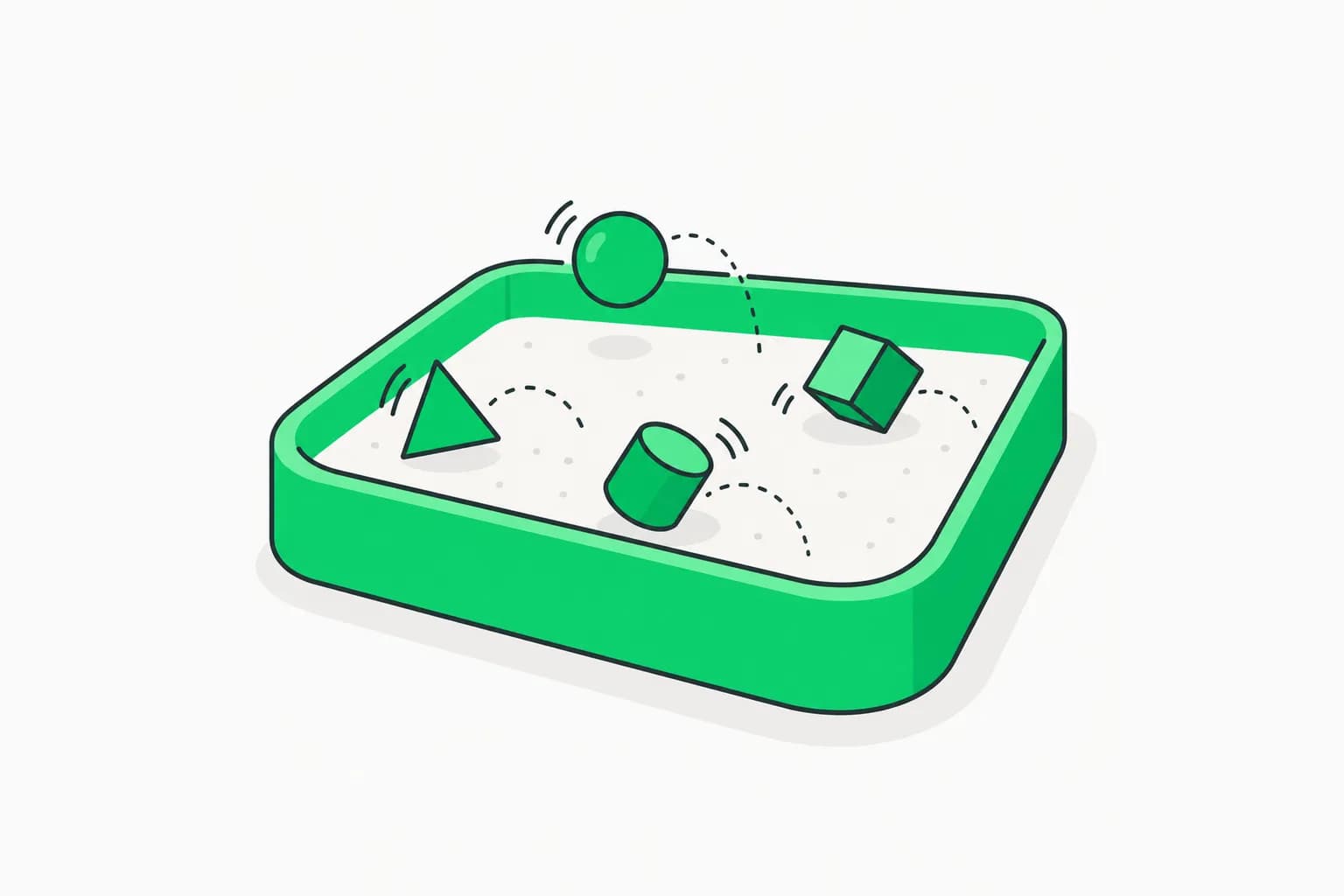
NVIDIA's open-source agent runtime, OpenShell, was trending on GitHub this week, adding about 211 stars in a day on its way to roughly 18,000, and a Hacker News thread about it reached 409 points and 195 comments. The short answer to what it does: OpenShell runs each autonomous AI agent in an isolated sandbox, enforces a policy over files, system calls and network connections, and hands the agent credentials only when it calls an approved endpoint, so the agent never holds the real secret.
We covered where OpenShell fits in NVIDIA's wider plan in the Open Agent Safety Platform post and the GTC Berlin keynote recap. This post is the practical companion: what is in the repository, how to try it, how it compares with simply using containers, and what developers on Hacker News praised and attacked.
OpenShell at a glance
| Question | Answer |
|---|---|
| What is it? | A runtime for sandboxing autonomous agents, described by the project as "the safe, private runtime for autonomous AI agents" |
| License | Apache-2.0 |
| Stars | About 18.2k stars and 1.8k forks at the time of writing |
| Where does it run? | Linux, macOS on Apple Silicon, Windows with WSL 2 (experimental) |
| What does it need? | Docker, Podman or host virtualization |
| How do I install it? | Run install.sh, then openshell sandbox create --name demo |
| Which languages have SDKs? | Python, TypeScript, Go, Rust |
| Version line | 0.1.x, with an upgrade guide for 0.1.0 |
| Is there telemetry? | Yes, anonymous operational counts, which can be turned off |
| Does it ship an agent? | No, the default sandbox image is minimal Ubuntu with no agent installed |
What does OpenShell actually do?
 A small box nested inside a larger bordered box, showing how NVIDIA OpenShell confines an agent inside a policy boundary
According to the repository README, four ideas carry the design.
Isolation. Every agent runs in its own sandbox. Kernel-level controls confine file access and system calls, so an agent that decides to read your home directory or spawn an unexpected process hits a wall, not a prompt.
Policy. A policy describes what the sandbox may touch: paths, system calls and network destinations. Network connections are checked against policy before they leave the sandbox. The project says policy changes are checked with formal verification, and that risky new access waits for human review instead of being granted silently.
Credential handling. This is the part that matters most for people who have watched agents leak keys. Credentials are attached only to requests that go to approved endpoints. The agent code sees a placeholder, not the real secret, so a prompt-injected agent cannot paste your API key into a pull request or an outbound request to an attacker's server.
Extensibility. The repository lists middleware, interceptors and compute drivers as extension points, a Helm chart for Kubernetes deployment, and agent skills so that a coding agent can help operate OpenShell itself. Kubernetes installs need a CNI that enforces NetworkPolicy, otherwise the network rules do nothing.
NVIDIA's own developer blog on adding runtime controls walks through the same model from the vendor's point of view.
How do I try OpenShell today?
The quick start in the README is short.
# run the installer from the repository (review it first)
./install.sh

# create a sandbox
openshell sandbox create --name demo
The installer sets up the CLI and a local gateway. The sandbox is a minimal Ubuntu image with no agent in it, so you install the agent you want to confine. The README's walkthrough uses OpenCode pointed at a free OpenRouter model, which is a sensible first test because you can watch what the policy blocks without risking a paid key.
A reasonable first experiment looks like this:
- Create a sandbox and install your agent of choice inside it.
- Give it a task that needs the network, and watch which destinations the policy denies by default.
- Add one approved endpoint with a credential and confirm the agent's environment only holds a placeholder.
- Ask the agent to read a file outside the project directory and confirm the sandbox refuses.
If you are on a managed laptop, read the installer before running it, as you would for any curl | sh style script.
Why is the Hacker News thread so heated?
The thread has substance, and the arguments are worth reading in full. A few themes, with the usual caveat that these are commenters' reports and opinions, not verified facts.
Telemetry on by default
The loudest complaint was telemetry. User overflowy quoted the README saying OpenShell collects anonymous telemetry limited to operational categories and counts, along with the opt-out setting. Another commenter, dangoodmanUT, called default telemetry "insane", and sscaryterry objected to the telemetry too. For a tool whose pitch is privacy and safety, the objection lands: if you adopt OpenShell, set OPENSHELL_TELEMETRY_ENABLED=false on the gateway (or server.telemetryEnabled=false for Helm) before you point it at anything sensitive.
Is it just containers with extra steps?
Several commenters asked why not just use containers. User mfro argued that anyone not already running agents in containers is crazy, but that OpenShell looks like a good way to manage them. Toddmorey pointed out that OpenShell is not itself the sandbox: it needs Docker or other virtualization and sits a level up, orchestrating sandboxes and access to network and resources, which makes it a fairly heavy setup. Another commenter, Reddit_MLP2, warned that common local containers are not hard for modern models to escape, which is the argument for kernel-level confinement and policy on top.
The practical difference is who decides what the agent can reach. A plain container gives the agent whatever you mounted and whatever network you left open. OpenShell's pitch is a policy layer with credential substitution, which is where agents tend to cause damage. One commenter, fennecbutt, described building a similar setup by hand: all traffic through a proxy, whitelisted domains and credential swapping so the agent never sees real keys, and flagged data exfiltration through allowed channels as the unsolved part.
Fleets, collusion and the case for policy
User prennert relayed the pitch from a GTC session: the goal is not only to limit each agent, but to ensure the collective permissions of a fleet do not exceed what you want, because agents can delegate to other agents that hold the permissions they lack. That is a plausible threat model, and it matches the confused-deputy problems we described in the AgentCorruption write-up on Bedrock AgentCore. It is the vendor's framing relayed by a commenter, so test it rather than trust it.
Does NVIDIA belong in this space?
Nasretdinov joked that it takes a video game card maker to build a good agent sandbox, which drew pushback from kbenson and nickv, who noted NVIDIA's revenue is overwhelmingly data-center AI hardware. Esafak asked a more useful question, how it compares with other sandboxes, and said they expected it to be poorly maintained because NVIDIA is not a software company. The repo's 0.1.x promise of a stable release cadence is the project's answer, and only time will show whether it holds.
Alternatives people named
Commenters mentioned Anthropic's sandbox-runtime (thehours said it strikes a good balance of security and convenience but gets in the way of Xcode and Docker workflows), Docker's microVM-based sandbox, a proxy-based tool called iron proxy, and their own projects. Our earlier Perplexity Space sandbox post covers a Firecracker-based option, and the security platform roundup lists others.
Where OpenShell sits in the ecosystem
OpenShell is not an isolated repository. It keeps showing up in NVIDIA's announcements and partners' products:
- ServiceNow's Arc builds on it for an enterprise agent with fast credential revocation.
- NVIDIA's European AI cloud partners were named as OpenShell hosts.
- Sentry on BlueField-4 adds hardware-level monitoring beneath the software runtime.
One HN commenter, niemandhier, said a significant part of the demos at GTC Europe used it. That matches our reading: OpenShell is the software piece of a stack NVIDIA wants enterprises to adopt.
Limits and open questions
The README is candid about several limits, and the thread added others.
- Early version. The 0.1.x line is explicitly pre-stable, so APIs and policy formats may change.
- Windows is experimental. WSL 2 works but is not a supported path yet.
- Kubernetes needs the right CNI. Without a
NetworkPolicy-enforcing CNI the network policy is not enforced. - No bundled agent. You assemble the stack yourself.
- Complexity. Smashed, a commenter who sells a competing Docker-based sandbox, said the complexity does not justify the use case outside large organizations. That is an interested party, but others made a similar point about fine-grained control suiting enterprise needs more than solo developers.
- Policy is only as good as you write it. A permissive allowlist defeats the point, and exfiltration through an approved domain remains possible.
What should you do with it?
If you run coding agents on a laptop and want the lowest-effort protection, a container with a strict network allowlist covers a lot. If you operate fleets of agents with real credentials, such as for deployment, finance or customer data, the credential-masking and policy-review model is the reason to look at OpenShell. Either way, read the telemetry settings first, pin a version, and test what the policy denies before you trust it.
For monitoring and blocking dangerous agent actions across tools, the explainx.ai team also builds AgentBeam, an agent security platform that stops AI agents before they take dangerous actions.
Related reading
- NVIDIA Open Agent Safety Platform: OpenShell and Sentry
- GTC Berlin 2026 keynote: everything announced
- ServiceNow Arc and OpenShell credential revocation
- NVIDIA Sentry on BlueField-4
- Perplexity open-sources its Firecracker agent sandbox
- AI agent security platforms in 2026
- AgentCorruption: hijacking agents on Bedrock AgentCore
Details reflect the OpenShell repository and the Hacker News thread as of October 23, 2026. Star counts, versions and settings change quickly, so check the repository before you deploy.