



At GTC Berlin on October 21, 2026, Jensen Huang's message to Europe was blunt: stop only consuming AI and start producing it. The keynote, which NVIDIA live-blogged, ran through hardware (Vera Rubin in shipping containers), software (a reference architecture for safe agents and a knowledge layer for company data), robotics (a reference humanoid), vehicles (Volvo Cars joins Hyperion) and a laptop-sized petaflop. This post sorts the announcements by what they change for people who build with AI, and flags where the numbers are NVIDIA's own.
It lands in a busy week. NVIDIA said it has just finished a road trip across Paris, London, Stockholm and Dublin, committing nearly $10 billion to the European ecosystem and working with more than 12,000 partners. We covered one thread of it already: what Handelsblatt reported about a German physical-AI partnership, and what was confirmed.
Update (October 22, 2026): the Vera Rubin node, the telco AI-RAN call and the Hermes demo
Three details from the keynote have been spreading in posts since. They come from social posts about the keynote and NVIDIA's newsroom account, and we have not seen NVIDIA's full press materials, so treat the specifics as reported.
- Vera Rubin node. Posts describe Huang holding up a Vera Rubin node that he said is in full production, takes under five minutes to assemble compared with about two hours for Grace Blackwell, has no cables and is 100% liquid cooled (versus roughly 80% for Grace Blackwell), with two GPUs per node. The assembly-time comparison is Huang's claim on stage, not an independently measured figure.
- Telecom AI-RAN. NVIDIA's newsroom account said nine operators across Europe, the Middle East and Africa are building or expanding NVIDIA-powered infrastructure across data centers, metro sites and cell sites. Posts say T-Mobile completed what was described as the world's first AI-RAN call on a live network with Nokia, and that BT, Deutsche Telekom and Elisa started live-network pilots using Nokia software. We could not find an independent confirmation of the "first" claim.
- Hermes agent demo. Nous Research said Huang ended the keynote by prompting a Hermes agent on RTX Spark to plan an obstacle course for the Hugging Face Microduck robot with Nemotron, have GPT-6 Astra build the environment using tools such as FreeCAD, Omniverse libraries, Blender, Newton and Isaac Lab, and then train thousands of simulated ducks until a policy was validated for the physical robot.
TL;DR: the announcements at a glance
| Announcement | What it is | Status stated in the keynote |
|---|---|---|
| NVIDIA DSX POD | Reference design for Vera Rubin AI factories built in modular containers | Reference design; deployment "as little as 14 days" once utilities are ready |
| OpenShell Reference Architecture for Safe AI Agents | Full-stack design around the open source OpenShell sandbox runtime | New reference architecture |
| Agent Knowledge Foundation | Models and libraries that connect agents to documents and databases | Introduced; includes Nemotron parsing, embedding and reranking tools plus new Kumo models |
| Agile ONE SN | Reference humanoid on Isaac GR00T, 31 degrees of freedom | Expected next year |
| Hyperion expansion | More automakers and mobility firms adopting NVIDIA's drive platform | Volvo Cars adopting Hyperion and Alpamayo Stack |
| RTX Spark | Slim Windows laptops with 1 petaflop and 128GB of memory | Launched the week before |
Why did Huang frame AI as a five-layer cake?
Huang opened by naming European companies already working with NVIDIA: L'Oreal, Revolut, Spotify, Merck, Vodafone, Zara, Porsche, Nestle and HSBC. Then he gave the framing that ran through the rest of the talk. AI, he said, is a five-layer cake: energy powers computers, computers form an AI factory, the factory generates tokens from models, and the models are integrated into every application.
The practical point is the one about order. "Long before the AI models emerge, the infrastructure has to exist," Huang said, comparing it to networking before the internet and the grid before electricity. For European governments that is the sovereignty argument in one line: if the bottom layers sit elsewhere, the top layers do too. If you want the policy background, see Europe's AI landscape in 2026.
What is DSX POD, and is the 14-day figure real?
Huang announced NVIDIA DSX POD, a reference design for complete Vera Rubin AI factories that partners build inside modular containers, integrate and validate before delivery. He said onsite deployment "can shrink from six months to just 14 days once site utilities are ready," and called it "a complete transformation of the world supply chain."
Two things are worth keeping apart. The conditional matters: the 14 days start after power and cooling utilities are in place, which is often the slow part. And it is a vendor-stated best case. Our deeper write-up, DSX POD and the 14 days claim checked, notes that NVIDIA's technical blog does not itself publish a day count and says the design does not remove onsite work.
The same keynote section repeated NVIDIA's efficiency pitch for the DSX AI Factory Platform: up to 100 percent less water for cooling and the same output on up to 30 percent less power. Those are NVIDIA figures for the platform, not measurements from a named customer site.
Huang also said Vera Rubin is in full production and extends the platform from running models to running "the entire AI agent." On the cloud side, Google Cloud announced the same day that its Vera Rubin NVL72 instances reach general availability next month; we break that down in Google Cloud A5X and Vera Rubin. For how the Vera CPU half of the platform performs in independent tests, see Chips and Cheese's Vera CPU measurements.
How does NVIDIA want agents to be made safe?
This was the most useful section for developers. Huang described an agent as five parts: a model, a harness that orchestrates work and memory, a sandbox that isolates the harness, knowledge, and tools. "The most important thing is to make sure the agent is secure," he said. An autonomous agent can reach files, networks and tools, so its privileges should be minimal and it should be monitored.
NVIDIA's answer is the OpenShell Reference Architecture for Safe AI Agents, a full-stack design built on NVIDIA OpenShell, an open source, policy-controlled runtime with kernel-level sandboxing that sits between an agent and the systems it can affect. The notable claim is dynamic privilege: "Every single time an agent is launched, the privileges are different," Huang said, so policy and monitoring must adapt per launch rather than being set once.
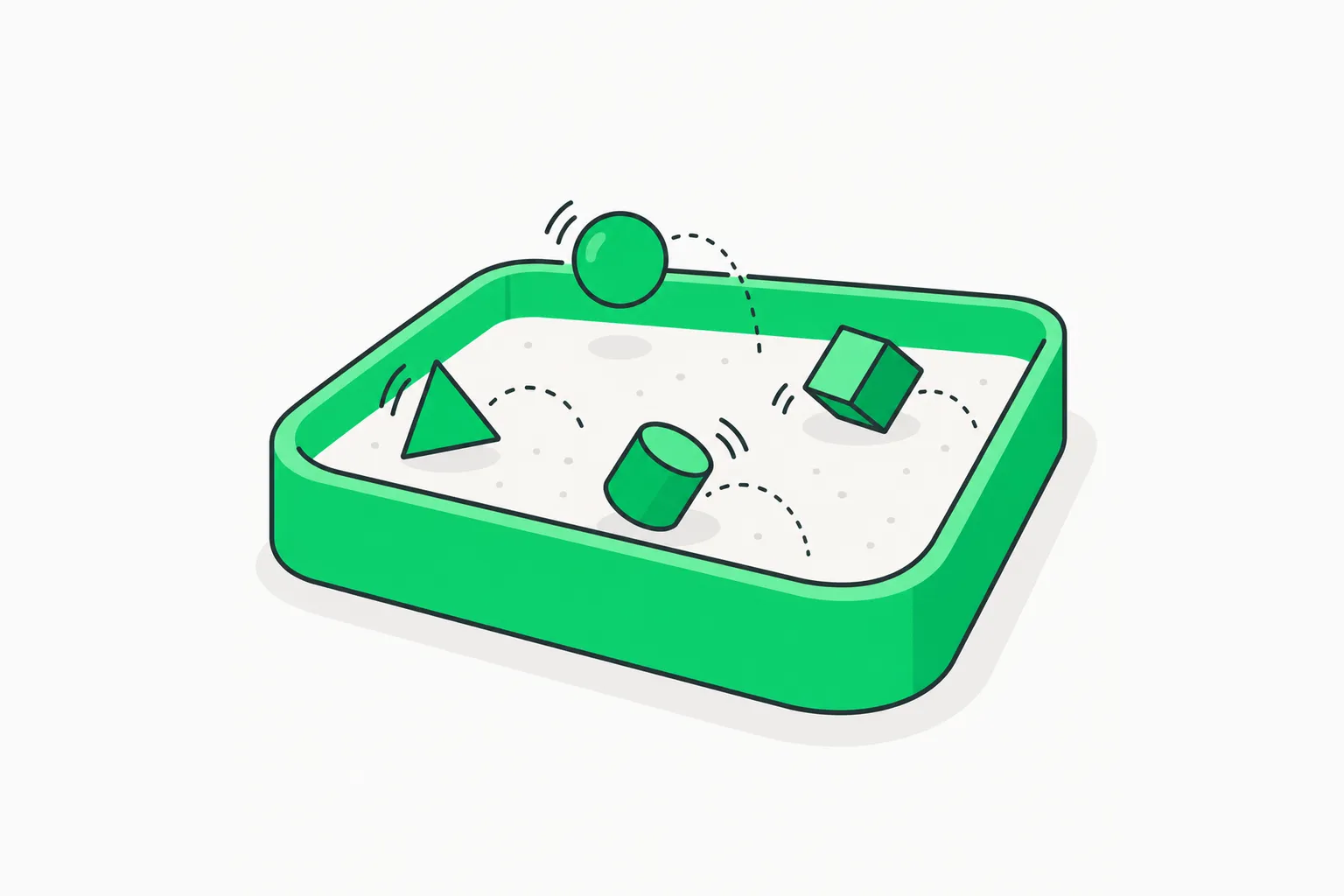 Agent running inside an isolated sandbox, illustrating the OpenShell approach to safe AI agents
Hardware is part of the story too. NVIDIA's earlier Sentry, DOCA Tower and Argus announcement describes enforcement on BlueField-4 outside the host, and the reference architecture is the software-side counterpart. A real-world early example appears in Google's announcement: WPP ran a creative-agent reference architecture on Vera Rubin instances using Nemotron models and OpenShell, with human approval before execution and governed sandboxes protecting brand assets.
If you run coding agents yourself, the takeaway is portable even without NVIDIA hardware: give each agent launch the least privilege it needs, isolate the harness, and log what it touches. For a policy layer that blocks dangerous agent actions before they run, see AgentBeam, the agent security platform from the explainx.ai team.
What is the Agent Knowledge Foundation?
Huang argued that what turns an agent into a "super agent" is access to company knowledge. The NVIDIA Agent Knowledge Foundation is a set of models and libraries for connecting agents to unstructured data in documents and structured data in databases. He highlighted Nemotron tools for parsing documents, embedding queries and reranking results, plus new NVIDIA Kumo models for making predictions from structured data.
If the retrieval half sounds familiar, it is the same family as the Nemotron 3.5 Rerank 8B multimodal reranker we covered earlier. A demo video showed the NVIDIA Agent Toolkit tying knowledge, models and tools together at Lila Sciences (agents helping design a potential B-cell lymphoma therapy with virtual experiments in an automated lab), at Siemens' Erlangen factory (testing production plans in a digital twin) and at Dassault Systemes (engineering agents adapting vehicle design after simulation flags a problem). These are showcase demos; the keynote gave no measured before-and-after results.
Open models: "sovereign intelligence" through post-training
Huang listed NVIDIA's open model families: Nemotron for language, Cosmos for world models, GR00T for humanoid robotics, Alpamayo for autonomous vehicles, Ising for quantum-classical computing and Earth-2 for physics AI. NVIDIA says it supplies the models, the data and the scripts to reproduce them, and companies post-train on their own data.
That is what he meant by "sovereign intelligence": start with an open model "like Nemotron" and specialize it with proprietary data. For the models behind it, see our coverage of the Nemotron 3 Ultra 550B open-weight MoE and the Cosmos 3 world model guide. Huang also noted more than 11 million developers build on NVIDIA's platform, and described CUDA-X libraries as "the tools of the trade" for agents calling simulators and solvers.
Agile ONE SN: a reference humanoid for researchers
On robotics, Huang announced Agile ONE SN, a reference humanoid built on Isaac GR00T with a 31-degree-of-freedom body, expected to be available next year. The stated goal is to cut researcher setup time from weeks to days. It is modular, so teams can use the whole workflow or pull in parts.
 Humanoid robot silhouette representing the Agile ONE SN reference humanoid built on Isaac GR00T
It sits on NVIDIA's open physical-AI stack: Isaac Capture for data collection, GR00T models for robot intelligence, Isaac Lab for simulation training, Isaac OS for runtime, and an open physical-AI dataset. NVIDIA names Agility Robotics, Figure, KUKA and NEURA Robotics as partners already building on the platform. This is a reference design for labs, not a consumer product, and NVIDIA published no price. For the commercial side of the same ecosystem, see Figure's 100,000-GPU Vera Rubin deal with Nscale.
Healthcare got a physical-AI example too. NVIDIA and Siemens Healthineers are developing AI-enabled adaptive radiation therapy, where Nemotron agents coordinate treatment planning and a digital twin simulates tumor targeting as the patient moves. That is a development effort, not an approved treatment system.
Cars, telcos and the petaflop laptop
Volvo Cars is adopting the Hyperion platform and Alpamayo Stack software for safe automated driving, and Bolt with Lucid, Mercedes-Benz, Volkswagen Commercial Vehicles and Einride are showing autonomous-mobility use cases on Hyperion. Huang said vehicles from Volkswagen's van unit, JLR, Volvo and Mercedes-Benz will be Hyperion-compatible. Our Volvo explainer separates what is confirmed from the marketing: Volvo, Hyperion and Alpamayo.
On telecom, Huang said NVIDIA made its first commercial phone call on T-Mobile's network with Nokia after nearly eight years of work, and cited 100,000 sites and roughly 100 gigawatts of potential distributed data center capacity in cell towers. That is a sizing claim from NVIDIA, not a deployment commitment.
The closer was personal AI. Huang held up an RTX Spark machine and compared its 1 petaflop and 128GB of memory with the DGX-1 he delivered to OpenAI in 2016, which "took two people to carry upstairs." A video showed an agent setting up a course, simulating Hugging Face's Microduck robot in Isaac Sim, sending training jobs to the cloud and bringing the policy back to RTX Spark before deployment. Our hands-on pieces cover what reviewers found with RTX Spark laptops and coding and testing on one machine.
What does this mean for what you build or pay?
Most of the keynote is a platform pitch, so read it by layer.
- If you deploy agents: the OpenShell reference architecture is the piece to study. It formalizes ideas you can copy today: per-launch privileges, an isolation layer under the harness, and monitoring.
- If you build RAG or enterprise search: the Agent Knowledge Foundation bundles parsing, embedding and reranking with structured-data prediction. Evaluate it against your current stack on your own documents; no head-to-head benchmark was given on stage.
- If you plan compute: DSX POD and the Google Cloud A5X news both point to Vera Rubin capacity arriving through clouds and containers in the coming months. The 14-day and efficiency figures are best cases to verify with vendors.
- If you work in robotics: Agile ONE SN lowers the barrier to a standard research humanoid, but not until next year.
Everything here is NVIDIA reporting on NVIDIA. Treat benchmarks, deployment times and power savings as vendor claims until customers publish measurements.
Related reading
-
Follow-up: Huang's $2,000-per-GPU software fee remark: said vs unconfirmed
-
Germany and NVIDIA physical-AI partnership: reported vs confirmed
Update — October 22, 2026: A claim about how the stage Microducks were controlled is checked in Microduck demo: claimed vs verified.
Sources: NVIDIA's keynote live blog, NVIDIA on Google Cloud's Vera Rubin instances and Mistral's NVIDIA engineering announcement.
Details reflect NVIDIA's keynote live blog as published on October 21, 2026; product availability and figures may change.