



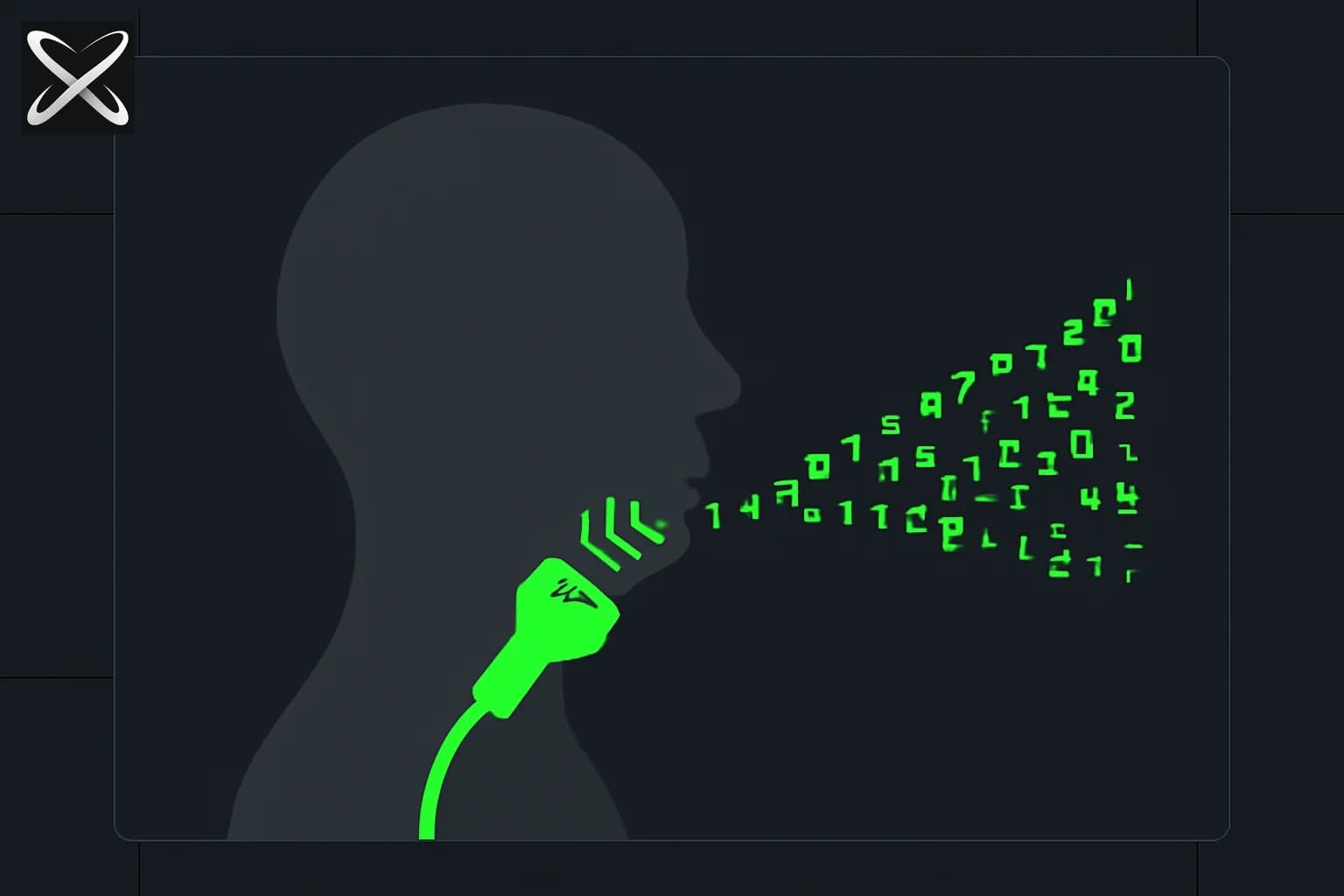
Neuralink published an engineering post on October 1, 2026, summarized on X on October 2, titled "Pretraining on 50,000 Hours of Unlabeled Brain Data." It says participants in its clinical trial have streamed more than 50,000 hours of freeform neural data in two years, and that pretraining on it produced brain-computer interface (BCI) decoders that last weeks, need far less calibration, and set a new cursor-control record of 11.32 bits per second (BPS).
Unlike many announcements in this space, the post explains the method: the architecture, the training objective, and what the ablations show. That makes it readable as a machine-learning story, not only a medical one.
 A sea of small books flowing into a single green vessel.
TL;DR — what people are asking
| Question | Answer |
|---|---|
| What is the data? | 50,000+ hours of unlabeled, freeform neural data over two years |
| Biggest single contributor? | The first participant: 9,000+ hours, or 22.4 billion spikes |
| Architecture? | Per-participant encoders built on Mamba2, with spikes treated like tokens |
| Training objective? | Spatially masked auto-Poisson regression |
| Calibration before? | About 55 minutes a week on average; typically 10 minutes each morning |
| Calibration now? | For some users, about 10 minutes a week |
| Decoder lifespan? | A week or more for users who recalibrate at the first sign of decline; some over three weeks; one still controllable after 20 months |
| Record? | 11.32 BPS (participant P15); previous record 10.39; median about 10 |
| Cross-person model? | Not yet improved online; offline transfer worked |
| Status? | Investigational devices; results may not reflect all participants |
The problem: calibration is a Sisyphean tax
A BCI decoder is a machine-learning model that turns neural activity into intended action. Decoders are unique to each user, and every user must calibrate by following structured tasks that generate a training set. Quality depends on how well that model fits.
The catch is that neural data is nonstationary. Even the best decoders degrade over time, so users recalibrate again and again, generating data that is eventually thrown away. Neuralink puts the cost at an average of 55 minutes per week just to maintain control, and each feature, such as typing or gaming, can need its own decoder.
Meanwhile, participants had been producing a huge pile of unlabeled data, because the device records whenever it is used. The first participant alone has more than 9,000 hours. Neuralink's point is that this data went largely unused until now: "Where once we had limited data and relied on supervised techniques, we now have a dataset large enough to pretrain on."
The method: five bets
Neuralink's stated goal is a universal, drift-robust neural foundation model. It started with participant-specific encoders pretrained on thousands of hours of each person's own recordings. The post lists five design bets.
- Model neural activity as a dynamical system. A neural population is commonly seen as a state evolving under learned rules, which makes the Mamba2 state-space architecture a natural fit. It also satisfies the need for constant, low-latency inference.
- Treat spiking events like tokens. Inspired by the POYO line of work, each recording channel gets a learned embedding that the model sees only when the channel fires. A Perceiver-based input layer handles variable amounts of activity, and the design makes it easier to train across multiple users later.
- Exploit cross-channel structure. The deployed decoder must be fully causal, the future is unknowable beyond a horizon, and spiking data is heavily autocorrelated. Working backward from those constraints led to spatially masked auto-Poisson regression: feed the model half the channels and ask it to predict the other half, which forces it to represent the underlying population state from partial information.
- Intention lives in a stable subspace. Prior work suggested this, and Neuralink's models seem to support it: day-specific information is less dominant in middle layers and re-emerges in the final output.
- One encoder can serve many tasks. Your hand already types, plays instruments and drives without a new attachment. Because the implant records from the hand-knob region of the motor cortex, the same encoder should be adaptable across applications.
If you know language-model training, the masked objective will look familiar: hide part of the input, predict it, and learn structure along the way. The domain-specific twists are the token-like treatment of spikes and the causality constraint, which rules out objectives that peek at the future.
What changed for users
Higher ceiling
BPS measures the maximum rate of information transfer through the cursor, combining speed and precision. Neuralink gives the formula: information per selection, the base-2 log of the number of click targets times the grid size squared minus one, multiplied by the selection rate, which is correct selections minus incorrect ones, floored at zero, per 60 seconds. It calls it the closest thing to an objective measure of decoder quality, and notes the median Neuralink participant sits around 10.
With the pretrained decoders, six participants reached personal records, three surpassed the previous record of 10.39, and one reached 11.32. Users described the cursor as more responsive and steady. Several software corrections, including smoothing and low-velocity suppression, became unnecessary.
Click decoding improved too. Decoded probabilities are more confident, rise faster and separate click types better, so there are fewer accidental clicks. Previously the system leaned on post-processing that reduced errors at the cost of delay. Removing that trade-off made clicks feel snappier and was key to reaching 11 BPS.
Longer life, less calibration
Under the old system, users typically spent 10 minutes calibrating each day, and few decoders lasted longer. With pretraining:
- Even users who recalibrate at the first sign of decline went more than a week without wanting to.
- One user reached 10 BPS with the same decoder on five consecutive days.
- Some decoders held strong performance for over three weeks.
- One study participant's decoder remained controllable more than a year and a half later, and the post shows usable control from a 20-month-old calibration with no post-processing.
Data efficiency improved as well. Thirty seconds of labeled embeddings matched about 3.5 minutes of raw spikes and generalized to data a month out. Some users saw calibration shrink from 10 minutes a day to 10 minutes a week.
The gains extended to a robotic-arm simulation with seven or more simultaneous dimensions, where decoders can become unusable in as little as six days. Decoders trained on the learned embeddings stayed controllable a week later, letting users skip early calibration stages.
Cursor teleportation
Neuralink is also exploring decoding the screen coordinates of the cursor and target directly from neural activity. Preliminary results used stateless linear models fit purely on embeddings. That opens a different interaction: predict where the user wants to go and move the cursor there in one step.
The company is candid about the state of it: it cannot yet predict the intended target with pixel-perfect precision, but the system substantially reduces cursor travel time and crossed 10 BPS in initial testing. The record of 11.32 came from standard cursor control, not teleportation, so do not conflate the two.
What is not solved
Neuralink's own "future directions" section is a list of open problems, and the caveats are part of the result.
- Pooling brains. All live results came from models pretrained on a single participant's data. Multi-participant decoders performed no better online than single-participant ones. Offline transfer is encouraging: a model trained only on P9's data transferred to P2 while keeping 99 percent of weights frozen, and outperformed P2's existing decoder.
- One-shot calibration. Holding performance for a week is encouraging; a year or more would need decoders that adapt as signals change.
- Zero-shot calibration. A model that generalizes to all humans could make control work out of the box. Not demonstrated.
- An API for the motor cortex. A shared decoder for all intended hand movement, so users calibrate once across applications and developers build on a common interface. A vision, not a product.
Neuralink says none of these problems is solved, and that it is hiring ML engineers.
Why builders should care
Even if you never touch a BCI, the post is a clean case study in the pretrain-then-adapt pattern:
- Unlabeled data you already collect can be an asset. The data was a by-product of normal use and went unused until it was big enough.
- Self-supervision stabilizes representations. The target was not accuracy directly but an embedding that drifts less, so downstream heads need little data.
- Architecture follows deployment constraints. Causality, latency and constant-time inference drove the choice of Mamba2 and the objective.
- Per-user models first, shared models later. Personalization often comes before pooling, and pooling must beat the personal baseline to be worth shipping.
- Report the ablations. The post compares embeddings with raw spikes at several dataset sizes, which is the evidence that makes the claim credible.
For parallels in other domains, see our coverage of time-series foundation models and tabular foundation models. For the adaptation half of the recipe, read what fine-tuning is, and for reading performance claims, how to read AI benchmarks.
How this fits the neurotechnology picture
Earlier Neuralink news centered on individual demonstrations: a participant speaking first words through the implant and a mind-controlled wheelchair demo. This post is about the infrastructure that makes such demos routine. Related approaches include Meta's non-invasive Brain2Qwerty v2, the brain implant plus AI voice demo, and tongue-controlled input with the Augmental MouthPad.
What people are asking
Is 11.32 BPS better than a person with a mouse?
Neuralink says it exceeds the performance of most able-bodied people. That comparison depends on the task definition, so check the exact setup before quoting it. The post itself describes BPS as the information transfer rate in its own grid task.
Does this mean the device is ready for everyone?
No. The devices are investigational and not approved by the FDA or other regulators, and the results come from a small group of trial participants who may not reflect all participants or future outcomes.
What is a "token" for a neuron?
Neuralink treats each spiking event as a token, with a learned embedding per recording channel that the model sees only when that channel fires. It is an analogy to language tokens, not a literal vocabulary.
Why predict half the channels from the other half?
It forces the model to learn the shared structure of the population rather than memorize individual channels, and the learned state is what stays stable.
Will pooled models improve with scale?
That is the open question. Neuralink has not yet shown online gains from pooling, only offline transfer. One community reply to the announcement speculated that loss might plateau well before a million hours; the post does not address that.
Honest limitations
- Results are company-reported; I found no independent replication or peer-reviewed paper.
- All live results use single-participant models; the foundation-model claim is aspirational until pooling works online.
- The 11.32 BPS record is one participant; the median is about 10.
- Several figures, such as the dataset-size comparison, are described but I did not review the plots directly.
Bottom line
Neuralink turned 50,000-plus hours of data nobody was using into pretrained encoders that keep decoders working for weeks, cut calibration, and set a record at 11.32 BPS. The method is concrete: Mamba2, token-like spikes, a masked auto-Poisson objective. The hard part, a shared model that beats personal ones online, is still ahead.
Related on explainx.ai
- Neuralink participant speaks first words
- Neuralink telepathic wheelchair demo
- Brain implant plus AI voice
- Meta Brain2Qwerty v2
- Augmental MouthPad
- What is fine-tuning?
- Google TimesFM 2.5
- How to read AI benchmarks
Primary source: Neuralink — Pretraining on 50,000 Hours of Unlabeled Brain Data
Figures reflect Neuralink's October 1, 2026 engineering post. Neuralink devices are investigational and have not been approved by the FDA or other regulatory authorities; participant experiences may not reflect all participants or future outcomes.