



On September 14, 2026, AI safety researcher Neil Chowdhury announced that he had joined Thinking Machines Lab, the AI company led by former OpenAI CTO Mira Murati. The typo in the circulating digest headline — “Thinky Machines” — points to the same company, a naming mix-up explainx.ai encountered in earlier Inkling coverage.
This is a minor personnel move, not a product launch. It is still worth tracking because Chowdhury gave a unusually specific reason for joining: he wants to make open and customizable AI safe even when a central lab cannot monitor every request, revoke access, or preserve safeguards after fine-tuning. That problem sits directly under Thinking Machines Lab's open-weights Inkling model and its broader argument for distributed control.
TL;DR: what people are asking
| Question | Direct answer |
|---|---|
| Is the move confirmed? | Yes. Chowdhury's own dated announcement says he is joining Thinking Machines Lab; his profile identifies him as a member of technical staff working on AI safety and alignment. |
| Was he at OpenAI? | Yes. OpenAI lists him under preparedness evaluations for o1, and Chowdhury says he spent four years doing technical safety work across MIT, OpenAI, and Transluce. |
| What was his most recent role? | Founding engineer at Transluce, an independent research lab focused on understanding and steering model behavior. |
| What is the interesting angle? | Safety for distributed control: safeguards that remain useful after weights leave a lab or users customize a model. |
| Does he lead the safety team? | Not established. The public evidence says member of technical staff working on safety and alignment. It does not announce a leadership title or define team reporting lines. |
| Why should builders care? | Open-weight deployments move more safety responsibility to the model adopter. Evaluations, checkpoint-level red teaming, access controls, and monitoring have to be designed into the adaptation pipeline. |
| What would count as proof? | Published evaluation methods, model cards, reproducible safety results, and evidence that safeguards withstand fine-tuning — not the hire itself. |
What Neil Chowdhury actually announced
Chowdhury's post, titled “Why I'm Joining Thinking Machines,” is dated September 14. It says he wants people to understand, shape, and control the AI they use, while acknowledging that sharing control makes safety harder. He describes the tension plainly: centralized services let labs monitor misuse, restrict dangerous capabilities, and patch systems; releasing model weights removes much of that control.
His stated agenda is therefore narrower and more technically useful than “make AI safe.” It asks how safety works when developers cannot depend on a single hosted gatekeeper.
The post identifies two families of problems:
- Preventing catastrophic misuse without permanent central control. Open weights can be copied and cannot be recalled. Refusal behavior can be modified, while API-level monitoring may disappear entirely in self-hosted deployments.
- Maintaining alignment under customization. Fine-tuning can alter behavior far beyond the narrow dataset or objective a developer intended to change. Every new checkpoint can become a materially different system.
That framing fits Thinking Machines Lab's human-centered, distributed AI manifesto. The lab wants individuals and organizations to shape models with local knowledge rather than rely only on frozen, centrally controlled services. Chowdhury's argument is that this direction needs a safety architecture designed for the same distribution model.
The careful reading matters. Thinking Machines Lab has not published a detailed role charter, named Chowdhury the head of a safety team, or promised a specific safeguard. The confirmed facts are his employer, member-of-technical-staff title, safety-and-alignment focus, and his own description of the research problem he intends to pursue.
Who is Neil Chowdhury?
Chowdhury's background spans model evaluation, red teaming, and tools for inspecting unexpected behavior. Those are practical disciplines for a lab that wants users to modify powerful models.
OpenAI preparedness and agent evaluations
OpenAI's public o1 contributor page lists Chowdhury in preparedness evaluations. He also co-authored MLE-bench, an evaluation built around 75 Kaggle competitions to test whether agents can perform real machine-learning engineering work. The benchmark measures more than question answering: an agent has to prepare data, train models, and improve a submission under a compute budget.
He was also among the contributors to SWE-bench Verified, the human-validated subset created to make coding-agent results more reliable. Both projects reflect the same habit: turn a vague capability claim into a testable task set, then inspect whether the benchmark itself deserves trust. For context on why harness details and dataset quality change headline scores, see explainx.ai's AI benchmark guide.
This experience matters for safety because dangerous capability is not measured well by generic chat prompts alone. An agent may look harmless in a short conversation yet behave differently when given tools, long context, files, credentials, or repeated opportunities to recover from failure. Preparedness evaluation tries to test the system in something closer to the environment where harm could occur.
Transluce and rare-behavior discovery
Before joining Thinking Machines Lab, Chowdhury was a founding engineer at Transluce. His work there included a method for automatically surfacing pathological behaviors and WeirdChat, a public catalog built from more than 175,000 annotated conversations with frontier open-weight models, according to his research profile.
That emphasis is important. Average-case testing can miss behaviors that occur in a small fraction of conversations but become repeatable once a triggering pattern is known. A model used millions of times does not get to treat a 0.1% failure as theoretical. Rare behavior becomes operational behavior at scale.
The research direction also complements embedded evaluators: systems that judge actions during an agent trajectory rather than only scoring a final answer. One technique searches broadly for surprising failure modes; the other tries to catch problems inside an active workflow. Neither is sufficient alone, but together they point toward continuous evaluation rather than a one-time launch checklist.
Why open-weight safety is a different engineering problem
Closed model providers can enforce part of their policy outside the model. They authenticate users, rate-limit accounts, filter inputs and outputs, retain abuse signals, update a classifier, or withdraw access. These controls are imperfect, but they exist at a service boundary the provider owns.
Open-weight distribution weakens that boundary. A downstream operator can change system prompts, replace moderation, fine-tune away refusals, expose new tools, quantize the model, merge adapters, or run it without network monitoring. The original lab may publish strong base-model results and still have little control over the system that reaches an end user.
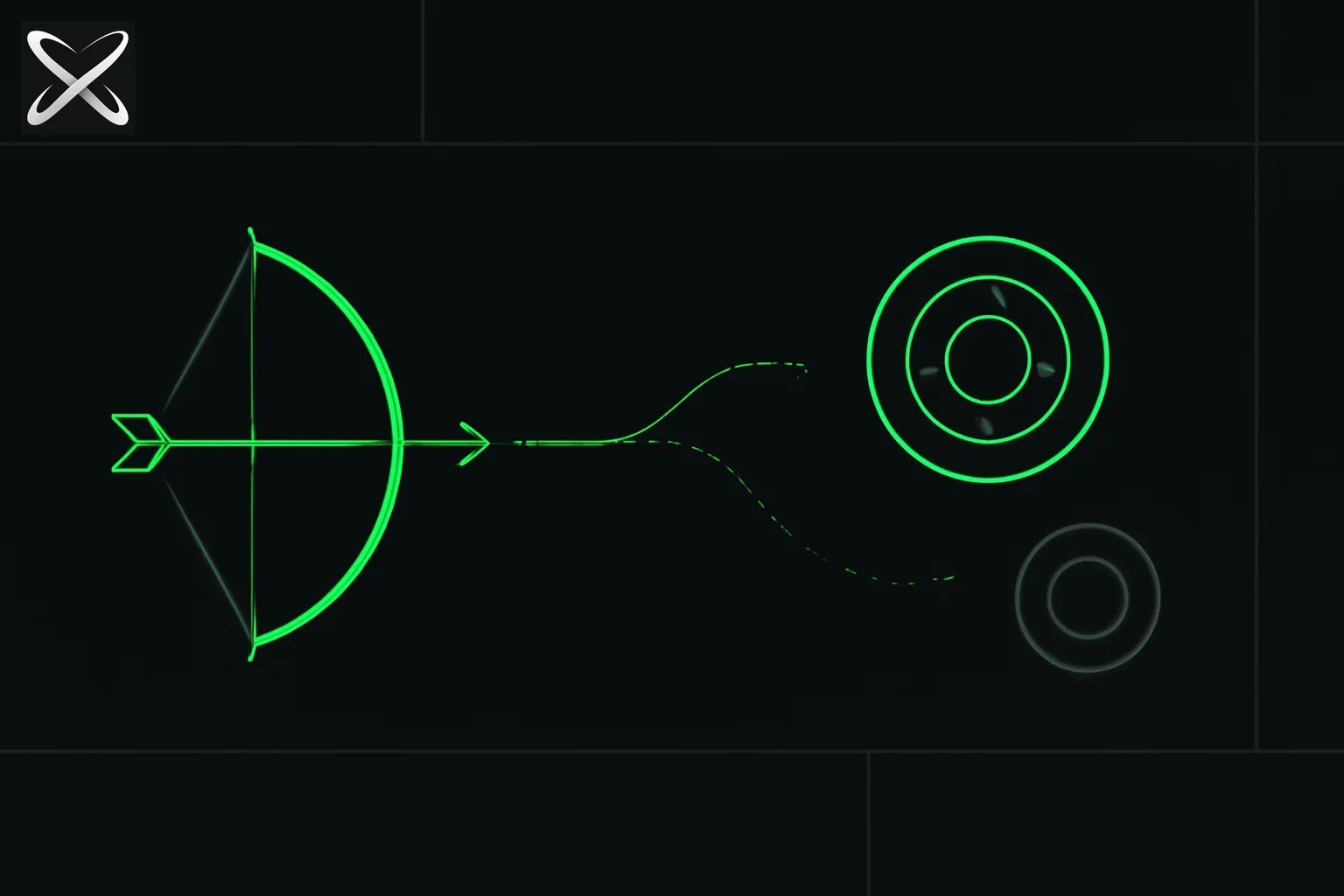
The builder consequence is not “open models are unsafe.” It is that the control surface changes.
| Safety layer | Central hosted model | Open or deeply customized model |
|---|---|---|
| Identity and access | Provider can gate accounts and regions | Deployer sets access; copied weights may have none |
| Request monitoring | Provider sees inference traffic | Self-hosted inference may be private or unmonitored |
| Behavior updates | Provider can patch one service | Every downstream checkpoint may need separate repair |
| Refusal tuning | Harder for an API user to replace | Fine-tuning or weight editing can weaken it |
| Incident response | Central rollback or model swap | Coordination across many operators is required |
| Evaluation | Provider tests a controlled stack | Adopters must test their model, tools, data, and harness |
Thinking Machines Lab has made customization a product premise, not an edge case. Inkling is positioned as a foundation that organizations can adapt, while Tinker makes post-training accessible without requiring every user to own a training cluster. explainx.ai's fine-tuning guide explains the practical distinction between changing instructions in a prompt and changing behavior in weights.
This is why Chowdhury calls safety a likely bottleneck for the company's agenda. If customization predictably destroys safeguards, the product promise weakens. If safety techniques can survive useful adaptation, deeper customization becomes easier to offer responsibly. Research and commercial incentives line up more clearly here than they do in a generic corporate safety pledge.
What his hiring signals about Thinking Machines Lab
A single hire does not establish a lab's safety culture. It does reveal which problems the lab considers worth staffing, especially when the researcher publishes a detailed rationale.
Evaluations may sit closer to post-training
Chowdhury's record suggests evaluation will be coupled to model development and customization rather than treated only as a compliance report after training. For Inkling users, the useful version of this would be repeatable eval suites attached to each adapted checkpoint: capability changes, refusal drift, rare behaviors, reward hacking, and regressions in unrelated domains.
That is the right granularity. “The base model passed” says little about an adapter trained on proprietary data with a new reward function and agent tools. Teams should treat every promoted checkpoint as a release candidate requiring its own evaluation evidence.
Open release policy is becoming a research object
Chowdhury does not pretend that releasing weights and democratizing control automatically produces a good outcome. His announcement explicitly names catastrophic misuse and the limits of safeguards that depend on centralized monitoring. That creates a more credible research question: what capability, evaluation, or mitigation evidence should determine how a model is released?
Thinking Machines Lab has already published safety results for Inkling, but its Inkling launch coverage also leaves an important open question: how those results change after customization. A safety program matched to the product would publish not just base refusals, but degradation curves across representative fine-tunes and methods that preserve desired behavior.
Independent scrutiny remains essential
Hiring a researcher from an independent lab can add useful experience, but moving inside a frontier company also changes the incentives and access model. Internal researchers may see stronger checkpoints and richer incident data; external researchers retain independence and can test claims the lab might not prioritize.
Builders should want both. Thinking Machines Lab's safety work becomes more credible when it produces artifacts outsiders can inspect: datasets, evaluation code, model cards, known-failure disclosures, and clear release thresholds. The hire is a reason to watch for those outputs, not a substitute for them.
What builders should do now
Nothing about this personnel announcement requires changing a production model today. It does sharpen the checklist for teams adapting open weights:
- Threat-model the deployed system, not the base checkpoint. Include tools, retrieval sources, user permissions, fine-tuning data, and the agent harness.
- Re-run safety evaluations after every material adaptation. An adapter, merged checkpoint, quantization change, or new tool policy can change observed behavior.
- Test rare failures at volume. A few dozen curated prompts will not expose low-frequency but reproducible pathologies.
- Separate capability gates from behavior gates. A model can improve on coding or domain accuracy while becoming less reliable under adversarial input.
- Keep rollback and provenance. Record the base model, training data version, objective, hyperparameters, evaluator versions, and deployment digest for each checkpoint.
- Do not inherit the vendor's confidence. Validate on your workflows and risk categories. A model card is evidence about one tested artifact and setup, not a warranty for your modified system.
These practices follow the broader AI alignment engineering model: goals, training behavior, product controls, and monitoring belong to different layers. Open-weight customization makes those layer boundaries more visible because the downstream builder owns more of them.
What would make this hire consequential?
The next evidence should be technical, not biographical. Four outputs would turn this from an interesting signal into a meaningful safety story:
- Post-fine-tuning safety evaluations showing which safeguards degrade under common adaptation methods.
- Reproducible rare-behavior discovery tools that model adopters can run on their own checkpoints.
- Release criteria for open weights tied to measured dangerous capabilities and mitigation strength.
- Monitoring or training safeguards that work without requiring the original model developer to inspect every inference request.
There are difficult trade-offs. A safeguard embedded in training may reduce useful domain adaptation. An inference API can provide stronger controls while recentralizing power. Publishing an evaluation may help defenders measure a risk while also showing attackers what to optimize around. Honest safety research should describe these tensions rather than collapse them into one score.
The most interesting part of Chowdhury's announcement is that it treats the tension as the job. He is not arguing that centralized control is harmless or that open access is risk-free. He is joining a lab whose product direction forces both concerns into the same engineering program.
Bottom line
Neil Chowdhury's move to Thinking Machines Lab is confirmed, and the circulating “Thinky Machines” label is a typo. His title is member of technical staff, working on AI safety and alignment; there is no public evidence that he is leading the team.
The hire is worth tracking because his background and stated agenda match the lab's hardest product problem. Thinking Machines wants powerful models to be open and customizable. Chowdhury wants safeguards that do not collapse when control is distributed and weights are changed. For builders, that means the safety unit is no longer just the original model — it is every adapted checkpoint, tool configuration, and deployment environment built on top of it.
Related on explainx.ai
- Thinking Machines Lab's human-centered AI manifesto
- Inkling open-weights model: specifications, evaluations, and customization
- Why “Thinky Machines” means Thinking Machines Lab
- AI alignment: goals, training, and product controls
- What is an embedded evaluator?
- What is LLM fine-tuning?
- AI benchmarks guide: how to read agent evaluation claims
Primary sources: Neil Chowdhury's joining announcement · Neil Chowdhury's research profile · OpenAI o1 contributors · MLE-bench paper
Role details and research claims are accurate as of September 15, 2026. This post distinguishes Chowdhury's confirmed title and stated interests from inferences about Thinking Machines Lab's future safety program; hiring alone is not evidence that a model or deployment is safe.