



Meta Superintelligence Labs shipped the hardware layer for Muse on October 2, 2026. The official site is gadgets.muse.ai: open-source Muse Gadgets SDKs so builders can wire Muse to ESP32 boards and Linux boxes, plus Muse Home Link, Meta's own USB-C home-network bridge. Nat Friedman announced the release; Alexandr Wang amplified it the same day. The feed headline about 5,000 free Home Links is real — and the claim terms are narrower than the headline.
This is the same Muse that explainx.ai covered as a personal agent with a Sentinel-brokered Secure VM, then as a third-party connector platform, then as a Mac desktop client. Gadgets are the LAN and desk-hardware expansion of that stack — not a new agent product.
TL;DR
| Question | Answer |
|---|---|
| What launched? | Muse Gadgets (open ESP32 + Linux device SDKs) and Muse Home Link (Meta-built USB-C LAN bridge) |
| When? | October 2, 2026 (official site + Friedman / Wang posts) |
| SDK license? | Apache 2.0 (as-is, no warranty); some third-party files keep upstream licenses |
| Runtimes? | ESP32 firmware SDK; Linux SDK for Raspberry Pi and other Linux boxes |
| What is a gadget? | DIY hardware you pair with Muse — displays, buttons, sensors, actuators, local HTTP APIs |
| What is Home Link? | ESP32-C5 USB-C/A dongle that puts Muse on your home Wi-Fi for smart-home and local APIs |
| Are 5,000 free devices real? | Yes — Meta manufactured 5,000; free for active US Muse subscribers, one per account, FCFS, ships October |
| Can I reflash Home Link? | No — retail unit runs official firmware only; DIY ESP32 builds use the open SDK |
| Who is this for? | Hackers with Muse accounts who want desk gadgets or smart-home reach this week |
What Meta actually shipped (verified)
Primary source: gadgets.muse.ai. Supporting detail matches Nat Friedman's October 2 X posts (quoted across Engadget, TechCrunch, The Verge, and Unite.AI coverage the same day) and the dedicated Home Link page.
Muse Gadgets are "open source devices you build yourself." Meta open-sourced the code under Apache 2.0, framed as "built by hackers, for hackers, just for fun," with an explicit proceed-at-your-own-risk warning (bricked boards, voided warranties, brownouts). Two SDKs:
- ESP32 Device SDK — flash an off-the-shelf ESP32 board, optionally add a screen, audio in/out, or other sensors.
- Linux Device SDK — turn a spare Raspberry Pi or Linux machine into a Muse gadget; examples include sysadmin chores and Home Assistant.
Source lives in the facebookincubator/muse-gadget-sdk GitHub repository (directories: esp32, linux, skills), with per-directory README.md and AGENTS.md files aimed at coding agents such as Muse Code. Builders grab an SDK token from the Gadgets site, then pair through the Muse app under Settings → Devices after enabling Developer mode. Paired DIY devices show up with a MuseGadget prefix.
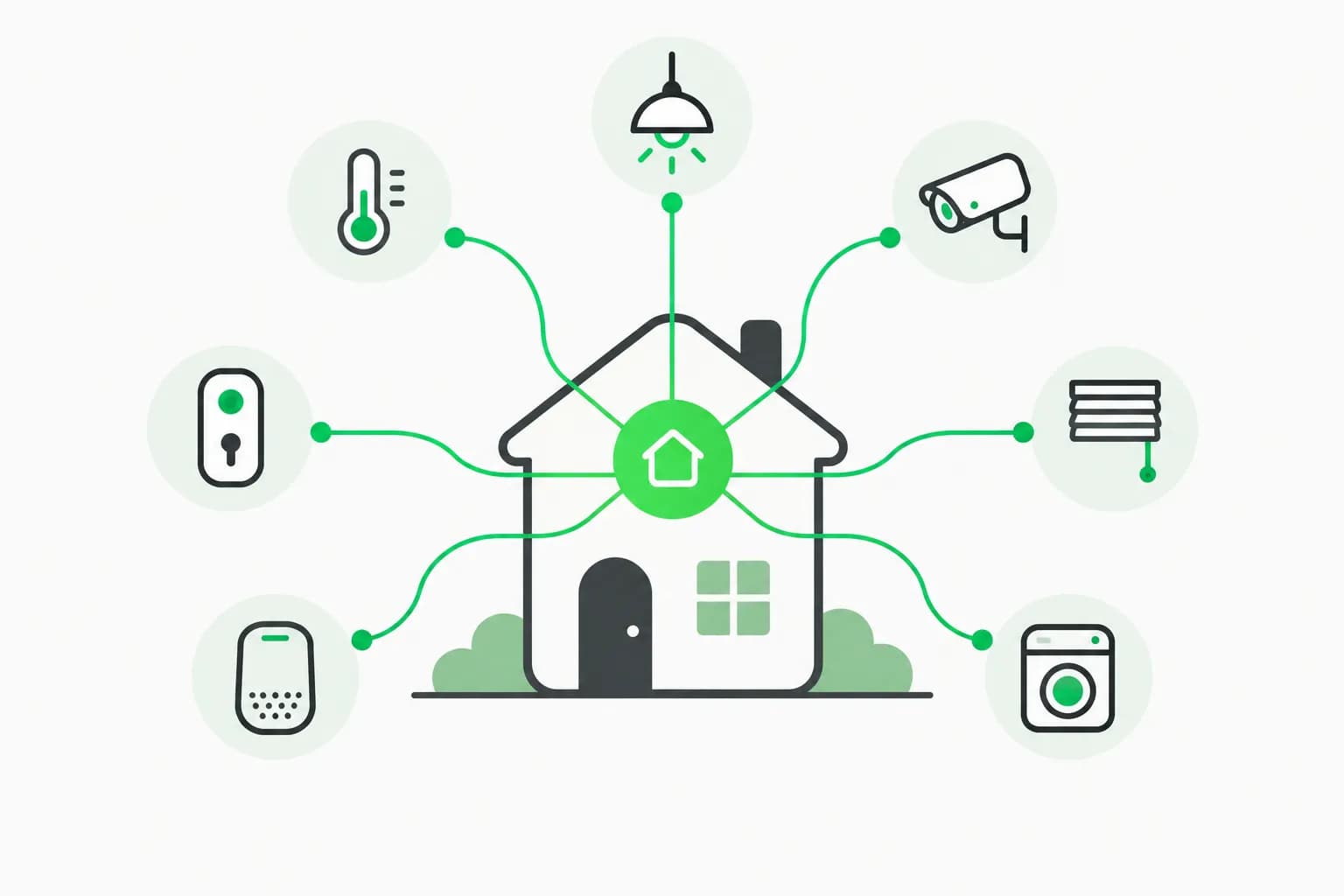
Muse Home Link is the gadget Meta manufactured itself: a small USB-powered device that joins home Wi-Fi so Muse can talk to TVs, speakers, lights, printers, and anything else that exposes HTTPS or a local HTTP API. Community skills (installable from GitHub) cover popular brands such as Philips Hue, Sonos, Apple TV, Google Nest speakers, and Samsung TVs — Meta does not endorse those third-party devices and warns skills can change or break.
What Friedman and Wang actually said — and what the replies asked
Two X posts framed the launch, and the tone is part of the news.
Nat Friedman called it a "side project alert" and wrote: "Announcing Muse Gadgets, an open source ESP32 firmware and Linux sdk so that you can make hardware devices that work with Muse. Grab an API token from gadgets.muse.ai and point your favorite coding agent at the github repo to build your own peripherals for Muse." The post showed about 562,600 views on X when captured on October 3.
Alexandr Wang — Meta's chief AI officer and founder of Meta Superintelligence Labs — quoted it and answered the question he expected: "you may ask, why open-source this? first of all, building gadgets is fun. second, we want to unleash builders to explore all sorts of new and crazy ideas. we believe muse presents a special moment to imagine new kinds of gadgets, and we are excited to see what y'all build!" That quote-post showed roughly 180,400 views.
Two details worth noting. First, the stated rationale is "fun" and builder exploration, not a product roadmap, which matches the SDK's "just for fun" framing and its proceed-at-your-own-risk warning. Second, Friedman's instruction is to point a coding agent at the repository — the AGENTS.md files described above exist for that reason. X shows timestamps in the viewer's local time, so the posts appear dated October 3 in some captures and October 2 in others; this article uses October 2 for the launch, as Meta's own pages do.
The replies are a useful read of what builders want to know next:
| Reply theme | What it asks | What we can say |
|---|---|---|
| Bring your own agent? | Is this Muse only, or can another agent drive the gadgets? | The posts and docs describe devices that "work with Muse," paired through the Muse app with an SDK token. We found no statement that third-party agents are supported; assume Muse only until Meta says otherwise |
| Control a Raspberry Pi? | Can Muse control a Pi? | Yes in principle: the Linux Device SDK is aimed at spare Pi or Linux machines |
| Where do I get boards? | ESP32 boards are cheap and everywhere | Correct — the ESP32 SDK targets off-the-shelf boards, so the free Home Link is optional |
| Hardware for Muse itself | Requests for 3D models and a floating-orb device | Community wishes, not announcements |
| Localization | Requests for French and UK availability | Not addressed in the launch posts |
| Privacy skepticism | A reply joked that getting people's home data for free is "priceless" | The concern is fair; see the privacy section below and the Apple Full Disk Access dispute |
None of the replies change the facts of the release. They do show where the first wave of builder attention is going: cheap ESP32 projects, Raspberry Pi bridges, and whether the SDK is a Muse-only door.
Are the 5,000 free Home Links real? Who can claim?
Verified: yes, the batch number is real. Friedman wrote that Meta manufactured a batch of 5,000 Home Links, free for Muse subscribers while supplies last, shipping in a few weeks. The official Home Link page restates the eligibility rules without the poetic batch marketing:
- Free with an active Muse subscription
- United States only
- Limit one per subscriber
- Ships in October, first come, first served
- Claiming holds a place in line (not a paid order); Meta notifies you when it is ready to ship
- Process uses your Muse account
So the headline "5000 Free Home Link Devices" is accurate on volume and price, misleading if you read it as "anyone worldwide" or "unlimited." Non-US builders and people without an active Muse subscription should plan on DIY ESP32 / Pi hardware instead of waiting for a free dongle.
If you are eligible and care about the free unit: claim immediately. TechCrunch noted Friedman's post drew tens of thousands of views within hours — a 5,000-unit batch will not last a full news cycle among Muse's App Store audience (Muse hit #1 on the US App Store weeks after launch).
Hardware specs and what you can build this week
Home Link (Meta-built)
From gadgets.muse.ai/home-link:
| Spec | Value |
|---|---|
| Chipset | Espressif ESP32-C5, 32-bit RISC-V @ 240 MHz |
| Memory | 8 MB PSRAM |
| Storage | 8 MB flash |
| Wireless | Wi-Fi 6 (2.4 and 5 GHz) |
| Connector | USB-C and USB-A |
| Indicator | LED for pairing / status |
| Dimensions | 35 × 42 × 10 mm |
| Setup | Plug in near router → pair in Muse app over Bluetooth LE → pick Wi-Fi → add community skills |
Setup is four steps: power, BLE pair, stay on the LAN, install skills. That is the "shipped product" path for people who want Muse on smart home devices without soldering.
DIY project ideas Meta listed
The Gadgets page features community-style builds (third-party hardware Meta does not sell or warrant), including:
- Raspberry Pi 5 + Home Assistant / Linux apps
- Waveshare ESP32-S3 round AMOLED touchscreen (push-to-talk, speaker, mic, battery)
- HDMI stick for putting Muse on a TV (listed as coming soon at launch)
- Seeed reTerminal E1002 color E Ink for briefings / reminders / shopping lists
- M5Stack StickS3 pocket status display
- AiPi Lite desk companion with speech and a color screen
- ideaspark ESP32 with a 1.9-inch color display
- Home Assistant Voice Preview Edition (PTT + LED ring)
Builder loop Meta wants: photo or short video, a sentence about the project, a GitHub repo with a README, shared in the community Discord #projects channel.
What you can do this week (practical)
- If you are a US Muse subscriber — claim Home Link on the official page before the 5,000-unit queue empties. Pairing and skills land when the unit ships later in October.
- If you already own an ESP32 or Pi — grab an SDK token, clone
muse-gadget-sdk, point a coding agent at theAGENTS.md, and flash a status display or Home Assistant bridge. You do not need the free dongle to start. - If you care about smart home only — inventory which devices already expose local HTTP/HTTPS or have community skills (Hue, Sonos, Nest, Samsung TV, Apple TV). Home Link is a network bridge, not a universal Matter hub Meta claims to own.
- If you already export Muse VM files — the VM filesystem export story mentioned Home Link as an unreleased hardware reference weeks before this launch. Treat that as foreshadowing that aged into a real SKU, not as a security finding about Home Link itself.
Free vs not free — what actually costs money
| Piece | Cost | Catch |
|---|---|---|
| ESP32 / Linux SDKs | Free (Apache 2.0) | Your boards, power supplies, screens, and time |
| SDK token + pairing | Free with Muse account flow | Requires Muse app + Developer mode; review Gadget SDK Terms before flash/pair |
| Home Link hardware | Free (5,000-unit batch) | Active US Muse subscription, one per account, FCFS |
| Muse subscription itself | Free tier exists; paid plans at higher token budgets | Gadgets assume you already use Muse — this is not a standalone OSS agent |
| Community skills | Free (GitHub) | Unsupported; can break; not for safety-critical use |
| Featured third-party boards | You buy retail | Meta does not sell or warrant them |
The SDK being open source does not mean Muse the agent is open source. You are open-sourcing the edge device firmware and Linux glue, while the personal agent, Muse Spark inference, credentials, and Sentinel still live in Meta's hosted stack.
Privacy and security: the builder questions that matter
Putting Muse on your home Wi-Fi is a different trust decision from chatting with Muse on a phone.
What Meta is clear about
- Home Link firmware is based on the open ESP32 SDK, so you can inspect how Meta's reference gadget works.
- The retail Home Link cannot be reflashed — only official firmware. That limits your ability to audit what is actually running on the dongle you plug in, even though the SDK source is public.
- Community skills are explicitly not for safety-critical uses (home security, emergencies, medical).
- Gadgets pair through the same Muse identity you already use for connectors and browsing.
What you should assume until proven otherwise
- A LAN bridge that can hit local HTTP APIs expands Muse's blast radius from "cloud VM + cloud connectors" to "devices on your home network." That is useful (lights, printers, HA) and risky (anything bound to
0.0.0.0without auth). - Sentinel still brokers agent egress from the Secure VM — see the launch architecture post — but a gadget on your LAN is an additional hop. Treat local APIs the way you treat any agent tool: least privilege, auth tokens, no unauthenticated admin endpoints.
- DIY ESP32 gadgets you flash yourself are more inspectable than the sealed Home Link unit, at the cost of you owning the firmware risk (Meta's own joke about bricked boards is not only a joke).
- This sits next to the broader indirect prompt injection problem for agents with tools: a gadget that can press buttons or call local APIs is another channel an injected agent might try to use if permissions are wide open.
If you already decided Muse is acceptable for cloud connectors and shopping, Home Link is a controlled LAN extension of that choice. If you rejected Muse on Meta-trust grounds, open-sourcing the gadget SDK does not change the hosted agent. For the synthesized safety take, see Is Meta's Muse safe to use?.
How this fits the personal-agent race
October 2026 is the month always-on agents grow hands. OpenAI's Dots are cloud computers with plugins. Muse already had connectors and a Mac client. Gadgets are Muse answering "what if the agent can see a desk display and talk to the TV?" without Meta manufacturing a Charm-class device for every hobbyist.
Compared with building the same idea yourself on OpenClaw or a Home Assistant voice satellite: Muse Gadgets trade portability (you stay inside Meta's agent + account) for distribution (Muse's user base, Discord, featured project page) and a free reference dongle. The Apache 2.0 SDK is the part builders can learn from even if they never ship a Muse-branded product.
Honest limitations
- US-only free Home Link — everyone else buys boards or waits.
- 5,000 units — marketing, not inventory for every subscriber.
- Home Link is not user-flashable — open SDK ≠ open retail firmware image on the dongle.
- "Just for fun" framing — no enterprise SLA; skills can break.
- Not Matter / Thread as a Meta-owned standard — reach is "whatever exposes HTTPS / local HTTP + community skills."
- Still Meta-hosted Muse — OSS edge does not make the agent local-first.
Related reading
- Amazon Bee Frontier and Eclipse AI wearables — Amazon's $75 and $100 rival recorders
- Meta launches Muse: personal agent with Sentinel VM security
- Muse developer connectors platform
- Muse for Mac desktop launch
- Muse VM filesystem export (Home Link mentioned pre-launch)
- OpenAI Dots vs Grok Bot vs Meta Muse
- Is Meta's Muse safe? Honest verdict
- What is indirect prompt injection for AI agents?
- Muse Spark 1.3 benchmarks and pricing
Official sources: gadgets.muse.ai · Muse Home Link · facebookincubator/muse-gadget-sdk (Apache 2.0) · Nat Friedman and Alexandr Wang announcements, October 2, 2026
SDK license, Home Link eligibility, hardware specs, and the 5,000-unit batch details in this post reflect Meta's official Gadgets pages and contemporaneous product-lead posts as of October 2–3, 2026. Claim queues and shipping windows change — verify current terms on gadgets.muse.ai before planning a build or expecting a free device.