




Liquid AI’s d1.3-ultra ties Baseten’s Bison 31B at 76.4 on Artificial Analysis Decision Index v2.1 while Liquid claims materially lower cost per million tasks, according to November 27, 2026 reporting summarized by industry outlets relaying the company’s launch. The index page itself lists d1.3-ultra beside d1.2 in calibration charts — independent confirmation that the model is live in Artificial Analysis’s evaluation harness.
This post connects the November 27 release to our d1.2-ultra coverage and Baseten Bison decision launch so builders can decide whether to re-benchmark routing pipelines.
TL;DR
| Item | d1.3-ultra | Bison 31B (Baseten) |
|---|---|---|
| Decision Index v2.1 | 76.4 | 76.4 (tie) |
| Prior Liquid ultra | 75.0 (d1.2-ultra, Nov 16) | — |
| Listed API input price | $0.042 / M input tokens (Liquid) | See Baseten pricing |
| Vendor task-cost claim | ~60% lower $/M tasks vs Bison | — |
| New output types | Top-k rank, media extract, audio spans | Bison family differs |
What changed from d1.2 to d1.3
Liquid’s public d1.2 blog (November 16) described d1.2-ultra hitting 75.0 on the same index — then the top row. Vendor-side summaries for d1.3-ultra describe a +1.4 index gain and three schema expansions:
- Top-k ranking — order a candidate set instead of binary approve or reject.
- Media extraction — pull numbers and dates from images and audio, not only text.
- Audio time spans — return start and end timestamps for relevant speech segments.
Training notes in third-party writeups mention scanned documents, receipts, tables, multilingual dates, and injection-style text inside files — aligned with indirect prompt injection worries in document automation, though benchmark scores are not security guarantees.
Why Artificial Analysis is the neutral scorekeeper
Decision Index v2.1 blends:
| Weight | Evaluation |
|---|---|
| 30% | AA-Paperclip (documents) |
| 15% | EvalSafe-O*NET-AA (workplace judgment) |
| 15% | AA-Omniscience-Decision (knowledge / hallucination) |
| 15% | HLE-MultiChoice (reasoning) |
| 15% | AA-Symmetry (invariance) |
| 10% | When2Call (tool calling) |
The headline Decision Score rewards correct choices while penalizing overconfident wrong probabilities — why ties at 76.4 still leave room for calibration and $/task winners.
Liquid’s docs home (snapshot November 19, 2026) shows d1.2-ultra as API-only in the model matrix; d1.3-ultra had not yet appeared in that table when we pulled it earlier on November 27, but Artificial Analysis already evaluates d1.3-ultra, which acts as a second primary source for availability.
Cost per million tasks vs per million tokens
Launch coverage repeats two numbers that are not interchangeable:
- $0.042 per million input tokens — Liquid list price for hosted decision models.
- ~60% lower cost per million tasks vs Bison 31B — a task-normalized figure from Liquid’s comparison.
Cryptobriefing’s November 27 summary explicitly warns buyers to check which unit matters for their workload. A short invoice with 15 decision questions may bill differently than a 100-page PDF mapped to one AA-Paperclip document decision.
 Coin stack with a feather evoking lower decision-model cost per million tasks at the same index score
Replay your schemas on Liquid console and Baseten’s Bison endpoint before switching production traffic.
When to pick d1.3-ultra vs Bison vs d1.2
| Use case | Lean toward |
|---|---|
| Needs ranking / sorting outputs | d1.3-ultra (new) |
| Audio or image field extraction | d1.3-ultra |
| Already on d1.2-ultra with stable schemas | Benchmark d1.3 before cutover |
| Microsoft stack bundling | Bison 31B may fit enterprise procurement |
| On-device open weights | Open d1 or d1-2B GGUF, not ultra API |
Decision models excel when you want typed probabilities for fixed option sets — see the index’s explanatory diagram contrasting one decision call vs free-form JSON from chat models.
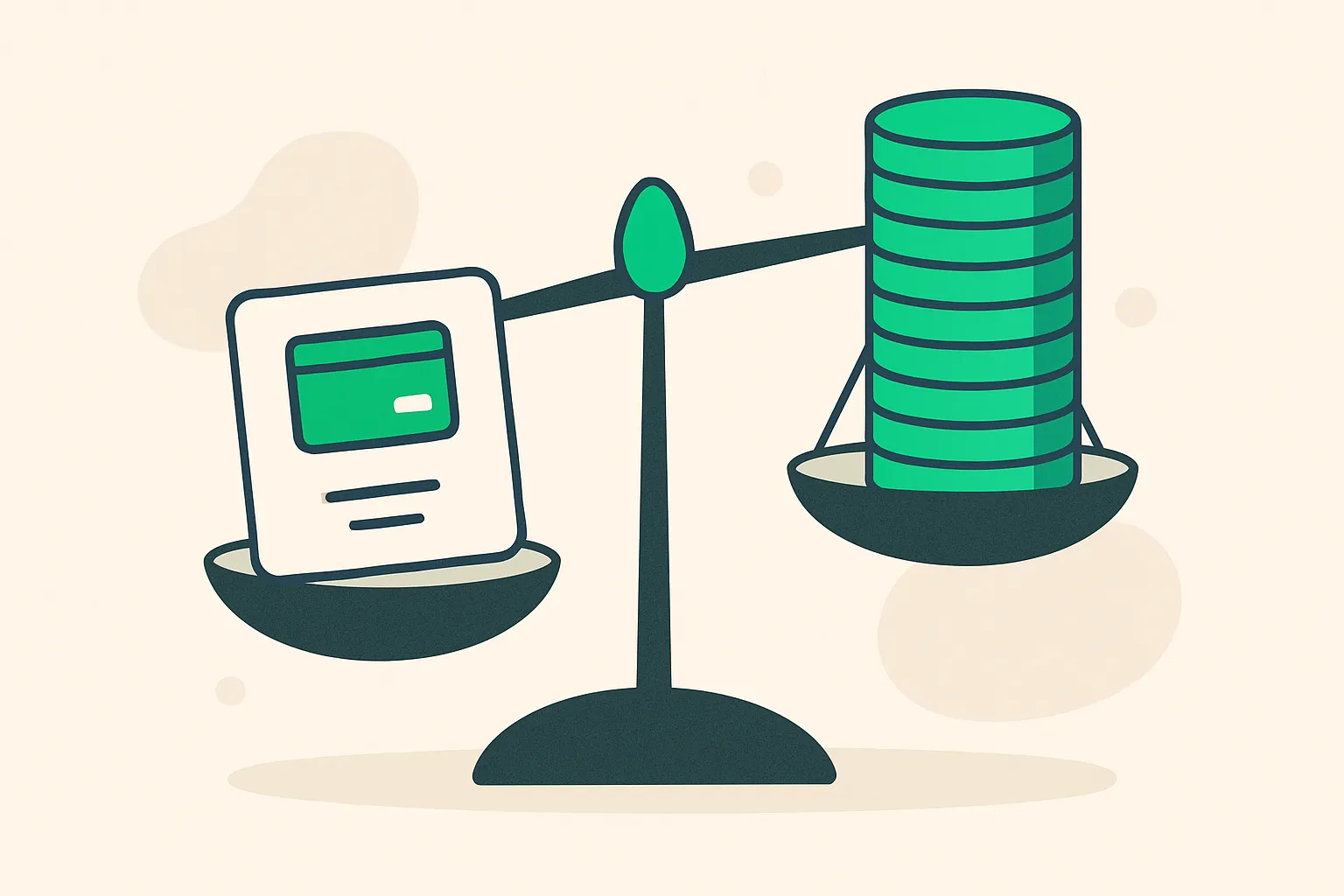 Balance scale comparing subscription-style billing against per-token chips for decision API pricing
Task types to migrate first
| Workflow | Why d1.3 helps | Watch-out |
|---|---|---|
| Invoice approval | Paperclip-weighted index | OCR noise on scans |
| Ticket routing | Top-k ranking new | Threshold calibration |
| Resume screens | Judgment eval in index | Bias audits required |
| Support call QA | Audio spans | Consent recording laws |
| Receipt fraud | Numeric extraction from images | Adversarial scans |
Start with binary noul/choice tasks already on d1.2 before enabling ranking — each new output schema is a client-side migration.
Code-shaped integration (Liquid API pattern)
Decision calls differ from chat completions: you send typed questions and receive probability maps. From d1.2 docs, teams typically:
- Define questions with allowed option sets.
- Pick
d1.3-ultramodel id in console once visible in your tenant (verify in dashboard, not only press coverage). - Set confidence thresholds per question — e.g. auto-approve when p above 0.92.
- Route below-threshold rows to human review queues.
Because input-only billing applies to decision endpoints on Artificial Analysis cost charts, long JSON contexts can still inflate spend even when outputs are tiny.
Bison 31B comparison without vendor FUD
Microsoft-hosted Bison 31B targets Gemma-class decision fine-tunes for Azure-friendly buyers (Baseten launch context). A tie at 76.4 means headline marketing ties; drill into subscores:
- When2Call (tool routing) may favor models trained on tool-heavy corpora.
- AA-Symmetry punishes fragile prompts — critical if your UI reorders buttons.
- AA-Omniscience-Decision tests decline behavior when facts are missing.
Run your holdout with symmetry perturbations (swap option order, negate question) before claiming production parity.
d1 family version ladder (November 2026)
| Model | Index score (public) | Notes |
|---|---|---|
| d1-ultra | 64.69 baseline era | Claimed vs verified pricing post |
| d1.2-ultra | 75.0 Nov 16 | Audio + five task types |
| d1.3-ultra | 76.4 Nov 27 | Ranking + media + spans |
| Bison 31B | 76.4 tie | Microsoft stack |
The +1.4 step from d1.2 to d1.3 is smaller than d1 → d1.2, consistent with mature benchmark curves — expect diminishing index gains next unless new eval slices arrive.
Open weights vs ultra API
Open d1 and d1-2B GGUF paths remain for edge and air-gapped pilots. Ultra tiers stay API-only in the November 19 docs matrix. Compliance teams needing on-prem should not wait for d1.3 GGUF unless Liquid adds a row — watch Hugging Face LiquidAI org and docs matrix weekly during rollout.
Limitations and honest gaps
- No Liquid.ai blog post titled d1.3 appeared on liquid.ai/blog as of November 27, 2026 — details come from Artificial Analysis, Liquid API positioning, and outlet summaries such as CryptoBriefing, not a long-form Liquid paper yet.
- Calibration error for d1.3-ultra is not in the public d1.2 calibration table; reuse d1.2-ultra’s 0.8-point error only as historical context.
- Ties at 76.4 mean neither vendor has separated on the composite; task-level wins still differ on Paperclip vs When2Call slices — download per-benchmark columns on Artificial Analysis before marketing “best.”
Try it safely in production
- Clone production JSON schemas; add ranking fields only if product needs them.
- Run parallel shadow traffic on d1.2-ultra and d1.3-ultra for a week of real PDFs.
- Track decline rates on knowledge questions — d1.3 marketing mentions refusal when uncertain.
- Log injection tests separately; do not confuse benchmark immunity with red-team results.
Related reading
- Liquid d1.2 and d1.2-ultra launch
- Baseten Bison 1 and decision models
- Original d1-ultra pricing claims
- Earlier d1.2 audio and task guide
- GitHub/Microsoft decision-security tooling context
- Agent routing skills for builders
Failure modes teams should rehearse
Overconfidence after a tie: 76.4 with miscalibrated probabilities still automates bad decisions if your threshold is 0.8 and the model says 0.95 while wrong. Pull Artificial Analysis calibration bins after every model pin change.
Schema drift: Adding ranking outputs without versioned API clients breaks mobile apps that expect binary JSON. Ship v2 response types behind feature flags.
Injection via documents: Training on planted instructions in PDFs raises robustness in vendor copy but is not a guarantee. Treat untrusted uploads like untrusted code: sandbox parsing, strip active content, and require human approval before irreversible actions.
Monitoring after you pin d1.3-ultra
- Log
modelstring on every decision record for audit. - Weekly replay of 50 frozen documents through d1.2 and d1.3; alert on probability delta above 0.15.
- Track decline rate on knowledge questions if you enabled refusal-capable prompts.
- Compare $/task using Artificial Analysis cost chart, not token list price alone.
- Re-read Liquid release notes when OpenRouter/Vercel gateways go live — routing may change latency.
Teams already running Baseten bison should export symmetry failures from d1.2 before judging d1.3 — some gains are prompt-template fixes copied into training, not magic on every user question.
Decision models vs LLM JSON mode (buyer checklist)
| Requirement | Decision API | Chat JSON mode |
|---|---|---|
| Calibrated probabilities | Native | Approximate logprobs |
| Fixed option sets | Enforced | Schema hints only |
| Cost on long docs | Input-token priced | Input + output |
| Symmetry-tested | Index includes AA-Symmetry | Rarely tested |
| Open weights | d1 base, not ultra | Many OSS chat models |
Use this table in RFP appendices so procurement does not bundle unlike products.
When to stay on chat models instead
If your pipeline needs long-form rationale for regulators or customers, decision models will feel opaque. Use chat for explanation and decision API for routing, or adopt hybrid flows where chat only runs on escalations.
Scores and prices reflect Artificial Analysis and Liquid materials accessed November 27, 2026.