




Kling AI released Image 4.0 on November 17, 2026 with native 8K still generation, stronger typography, and batch image-set output for creators and API customers. The launch blog and API update log describe a unified understanding-and-generation architecture that keeps visual planning and pixels in one autoregressive stack.
For teams shipping marketing assets or storefront creatives, the practical shift is not only sharper pixels. Kling added structured API parameters, series mode, and long-image endpoints aimed at ecommerce detail pages, areas where earlier image APIs forced manual stitching.
TL;DR
| Feature | Kling Image 4.0 (per official docs) |
|---|---|
| Release | Nov 17, 2026 (studio + API) |
| Max resolution | 2K, 4K, 8K native |
| Text in frame | Up to 2,000 characters |
| Sets per prompt | Up to 10 consistent images |
| Main API | POST /image-generation/kling-4.0 |
| Long layouts | POST /long-image-generation/kling-4.0 |
What Kling Image 4.0 actually ships
Kling positions Image 4.0 as a Creative Studio upgrade and a developer-facing API at the same time. The blog highlights three headline capabilities:
- Enhanced realism and native 8K for lighting, skin texture, and materials.
- Exceptional text rendering with long instructions and small-type layouts.
- Consistent image sets and long-form canvases from a single prompt.
That third bullet targets workflows explainx.ai readers already chase with video models and layout-heavy still models. Instead of generating one hero and photoshopping variants, Kling promises cohesive multi-image sets for storyboards, product grids, and pitch decks.
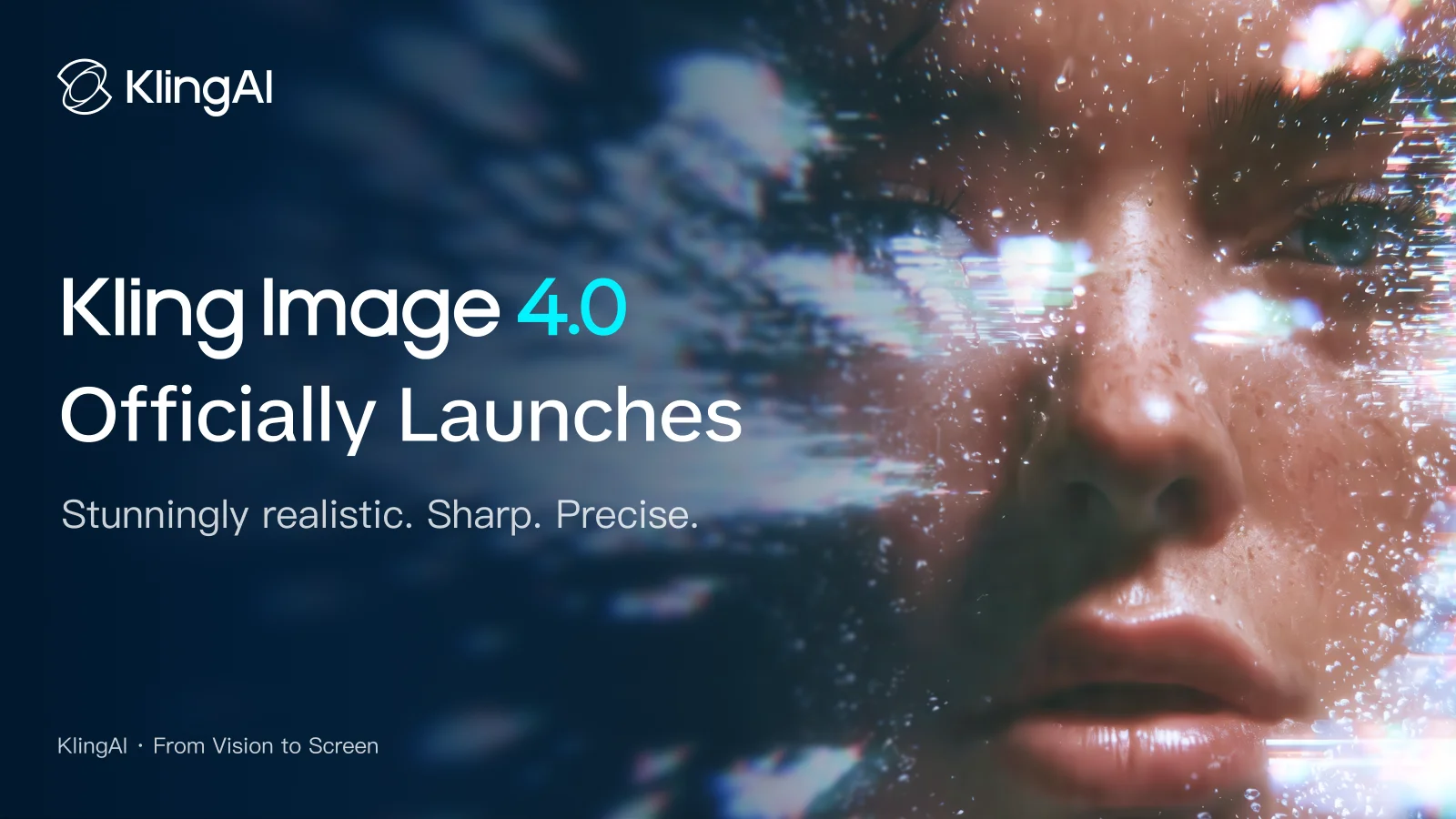 Kling Image 4.0 sample showing native 8K photorealistic AI image output
Image: Kling AI
API: path-based models and series mode
The November 17 API update is the builder-facing source of truth.
Text-to-image and image-to-image now route through /image-generation/kling-4.0. Kling says the design uses path-based model selection and GET /tasks for polling, a cleaner split than burying model IDs only in JSON bodies.
Key parameters mentioned in the changelog:
| Parameter area | What changed |
|---|---|
settings.resolution | 2k, 4k, 8k |
settings.result_type | single or series |
settings.series_amount | 2–10, or auto |
| References | Up to 10 combined image/subject refs via @id |
| Prompt limits | Up to 50,000 characters for English-only prompts per update notes |
Billing now counts input reference images and outputs, with output rates varying by resolution. If you cached costs from older Kling image APIs, rerun estimates on the pricing page before you expose 8K series mode to customers.
Long images for ecommerce and web design
Kling added /long-image-generation/kling-4.0 for tall canvases. The API notes distinguish ecommerce detail pages (product images required, length tiers) from general web design long images.
That parallels how merchandising teams already use AI shopping answer shifts to rethink PDP content. The difference is generative layout: one model pass produces a scroll-length visual instead of many short banners.
Creative Studio versus API: who should use which
Studios and solo creators will live in Kling Creative Studio with prompt-driven sets and long images. Platforms should integrate the API when they need:
- Programmatic series generation for catalogs
- Reference-driven brand consistency (
@idrefs) - Task polling in backend jobs alongside Gemini or OpenAI image routes
If you already standardize on OpenAI-compatible gateways, compare how Kling’s task API fits your orchestration layer versus OpenAI image tooling you may already expose to sales teams.
How Kling Image 4.0 compares to frontier image APIs
Syndicated rankings claim Kling Image 4.0 landed in top-10 image leaderboards at under one-third the cost of OpenAI-class APIs for some tasks. Treat leaderboard posts as directional unless you reproduce the same prompt suite on your account.
For a fair internal bake-off:
| Axis | What to measure |
|---|---|
| Typography | Small-type legibility at 8K downscale to mobile |
| Series consistency | Color and character drift across 10 outputs |
| Reference adherence | Product shape lock with @id refs |
| Cost | Input+output billing at 8K series settings |
| Latency | GET /tasks time at peak hours |
Pair results with your brand safety and regional compliance reviews if you serve regulated industries.
Try Kling Image 4.0 this week
- Open Kling Creative Studio and run a series prompt with
series_amountat 4 to test consistency. - Read the image generation API doc for required JSON fields.
- Stand up a staging worker that stores
task idand pollsGET /tasksbefore you expose 8K billing to users. - Log reference image bytes; the 30MB per reference cap will break naive CDN hotlinking.
- Compare 4K versus 8K output cost on the official pricing table before marketing "8K" in your UI.
Series generation: storyboards and merchandising workflows
Kling’s blog spends meaningful space on image sets: one prompt, up to ten related stills with a shared creative direction. The model can plan what each frame covers, which matters for teams that previously chained separate API calls and prayed for color consistency.
Practical series patterns:
| Use case | Why series mode helps |
|---|---|
| Film previz | Shot list coverage without a human retoucher between frames |
| Marketplace A/B sets | Variant angles that still share lighting grammar |
| Pitch decks | Consistent iconography across chapter slides |
| Social carousels | Platform-native multi-image posts without manual LUT matching |
When series_amount is set to auto, Kling lets the model choose the count. For production pipelines, pin an explicit integer between 2 and 10 so billing and QA stay predictable.
API task flow for backend engineers
The image generation documentation describes a POST /image-generation/kling-4.0 create call followed by GET /tasks polling. That pattern matches other async media APIs explainx.ai covers for video models, but Kling’s November update emphasizes path-based model selection so you upgrade generation tiers by changing the path segment, not only a hidden model string.
Treat these integration steps as a checklist:
- Authenticate with
Authorization: Bearerper Kling API docs. - Choose mode:
singleversusseriesviasettings.result_type. - Set resolution explicitly when marketing "8K" — supported values are 2k, 4k, and 8k per the changelog.
- Attach references with
@idsyntax; respect the 30MB per reference image cap. - Poll tasks until completion; persist task IDs for finance reconciliation because billing now includes inputs and outputs.
Mixed-language prompts have shorter limits than English-only prompts in the API update notes. If your product accepts user-generated prompts in multiple languages, enforce length validation server-side before you forward to Kling.
Text rendering and long copy in one frame
 Kling Image 4.0 sample showing long-form text layout in generated stills
Image: Kling AI
Kling claims up to 2,000 characters of text inside a single image with improved small-type behavior. That targets signage, packaging mockups, and infographic panels where older diffusion models melted letterforms.
Test with:
- Dense legal disclaimers at mobile downscale sizes
- Bilingual labels if your UI allows mixed input
- Outlined display fonts versus grotesk body copy
Compare outputs with Qwen-Image layout strengths if your stack already routes Chinese and English marketing through Qwen-family renderers. Kling may win on photographic realism while Qwen wins on structured dense layouts — run both on the same brief.
Cost and billing: what changed on 11/17/2026
Older Kling image APIs reportedly billed outputs only. The API updates page states billing now covers reference inputs and outputs counted separately, with output rates varying by resolution.
Implications for founders:
| Scenario | Budget impact |
|---|---|
Heavy @id reference stacks | Input-side charges add up |
| 8K series of ten | Multiply output pricing by count and resolution tier |
| Iterative refiner loops | Each poll cycle may create new billable tasks |
If syndicated posts claim Kling beats OpenAI image APIs by two-thirds on cost, recompute using your reference count and 8K series settings. explainx.ai did not snapshot kling.ai list prices for every resolution on November 19, 2026.
Regional and compliance notes
Kling is a Kuaishou-associated generative media stack with global Creative Studio access. Enterprises exporting US or EU campaigns should still run IP, publicity rights, and deepfake policy reviews on likeness prompts, independent of pixel quality.
If your workflow already documents Chinese model disclosure policies for procurement, log Kling like any other vendor with overseas corporate parents.
Limitations and verification gaps
Kling’s blog is marketing-grade on aesthetics; it does not publish a full public leaderboard comparable to Artificial Analysis on explainx.ai’s usual bar. Verify your prompts, especially for logos, regulated claims, and people.
explainx.ai did not independently verify third-party "top 10 at one-third cost" social posts on November 19, 2026. Budget from kling.ai pricing, not reposts.
Workshops and in-product skills
Teams onboarding marketers to Kling should document prompt libraries the way coding orgs document Claude skills. Store approved series templates, banned likeness terms, and reference @id packs per brand line so API integrators do not improvise structure on every campaign.
explainx.ai runs live workshops on generative media workflows; if your team routes creative review through legal, pair Kling outputs with the same human sign-off patterns used for CodeRabbit-style QA loops before anything ships to paid media.
Kling’s release history now lists Image 4.0 beside the earlier Kling 4.0 video milestone from October 2026. Teams producing joint still-and-motion campaigns should version their asset pipeline docs so video and image endpoints do not share one outdated model slug in configuration files.
If your observability stack already tracks Cosmos-style dataset jobs, add Kling task IDs beside video render IDs so finance can reconcile async creative spend in one dashboard.