



Eighty-four percent of AI shopping answers changed brand lists overnight in a Supercite study published November 18, 2026. The team repeated 210 buying questions on ChatGPT, Gemini, Google AI Overviews, and AI Mode on November 17 and 18, comparing 839 answers.
The result challenges one-screenshot GEO audits. If your dashboard shows a single day's recommendation, you may be measuring noise as much as position.
Headline numbers
Supercite reports:
| Metric | Value |
|---|---|
| Answers with different brand sets | 84% (701/839) |
| Brands named day one but not day two | 27% |
| Rank #1 named again next day | 90% (still #1 only 63%) |
| Rank #6+ named again | 61% |
| Category leaders keeping spots | 73% vs 51% for smaller brands |
| Same cited pages both days | 42% |
Gemini changed most (95% of questions). Google AI Overviews changed least (67%) but still moved two thirds of lists.
Worked example: CRM query in AI Mode
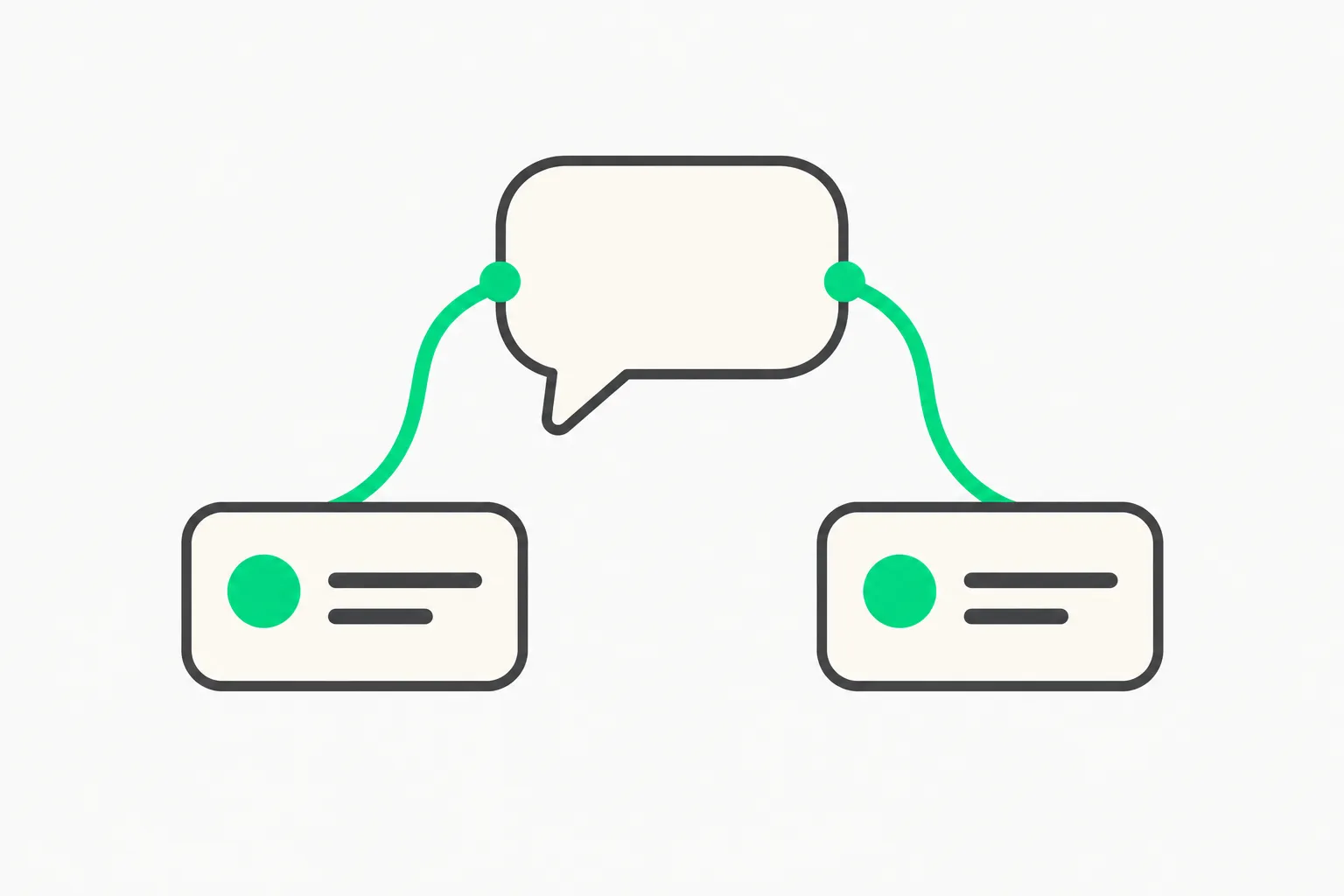 Speech bubble linked to source cards, for answers built from whichever listicles load that day
Supercite contrasts Google AI Mode answers for "easiest CRM for a team that has never used one":
- November 17: Less Annoying CRM ranked first after reading Zapier's listicle.
- November 18: HubSpot ranked first after reading Slack's guide and HubSpot's product page; Less Annoying CRM disappeared.
Nothing about the CRM products changed overnight. The pages the engine read changed, so the summary changed.
That matches Supercite's earlier finding that ~90% of recommended brands appeared on cited listicles—this follow-up shows which listicles load is unstable.
Implications for builders and marketers
Single checks lie. If you ask "does ChatGPT recommend us?" once, tomorrow may disagree. Measure frequency across samples, as we argued when covering Berlin's AI Overviews traffic loss.
Leaders enjoy structural advantage. Brands that appear on many listicles survive page rotation; niche brands drop when the engine picks different articles.
Source monitoring beats answer monitoring. With only 42% page overlap, track which URLs AI cites, not only whether your name appears.
Consumer privacy modes do not fix GEO. Google's temporary threads in AI Mode detach history for a user session but do not stabilize global grounding corpora.
Per-engine patterns Supercite reports
| Engine | Answers changed | Same #1 brand |
|---|---|---|
| ChatGPT | 88% | 71% |
| Gemini | 95% | 57% |
| AI Overviews | 67% | 66% |
| AI Mode | 84% | 58% |
ChatGPT kept top picks more often; Supercite hypothesizes shortlist-from-memory before browsing. Gemini rotated hardest—relevant as Gemini 4 Hydrogen expands Search fan-out.
Category stability
Accounting software barely moved (79% same brands). Running shoes and AI search visibility tools moved most. New categories without settled canonical lists drift by design.
Method limits Supercite discloses
- Two days, one sample per day—includes model stochasticity.
- Automated brand matching with noise from platform names filtered.
- Vendor Supercite sells monitoring; treat numbers as reproducible claims, not independent academia.
Hacker News discussion on item 50549677 includes questions about temperature settings and query wording. Supercite should disclose engine configs in their weekly update; until then, rerun critical queries yourself.
What to do this week
- Pick 10 revenue-critical questions buyers actually type.
- Sample each on four surfaces daily for seven days.
- Log brands, ranks, and cited URLs.
- Map listicles you are not on; pursue placement, not prompt hacks.
- For API products, compare drift to Perplexity Monitor-style alerting.
Connection to Supercite's listicle paper
Supercite's November 17 study argued that most recommended brands came from cited listicles. This November 18 follow-up shows those listicles rotate daily.
Together the two posts imply a two-layer GEO model:
- Inclusion layer: Are you named on the listicles engines tend to read?
- Sampling layer: Which listicles did today's run actually fetch?
You can pass layer one and still fail layer two if your placements sit on pages the model did not retrieve that day.
Enterprise procurement and compliance angles
Procurement teams increasingly ask vendors whether "the AI recommended us." Supercite's data suggests the honest answer is "it depends on the day and engine."
For RFPs, report distributions—for example, named in 6 of 8 daily samples—not yes/no. That aligns with how reliability engineering reports uptime, not single ping results.
Engineering teams shipping RAG shopping bots
If you ship your own buyer assistant, you inherit the same instability unless you fix retrieval corpora. Consumer engines refresh web results per query; your bot will too unless you pin sources.
Mitigations:
- Curated allowlists of review sites for shopping categories.
- Versioned snapshot corpora refreshed on a schedule you control.
- Explicit citations so users see which list moved the answer.
See also RAG trenchcoat memory patterns for lightweight state without over-fetching.
Statistical cautions Supercite acknowledges
Two days cannot separate model randomness from true ranking policy changes. Supercite promises a full-week update; until then, treat percentages as directional.
When reproducing internally, fix locale, account, and IP variables. Supercite used US English consumer surfaces; enterprise tenants may differ.
Competitive intelligence ethics
Tracking competitor mentions in AI answers is legitimate market research. Scraping competitor sites to poison their SEO is not. Supercite's lesson is about measuring public answers, not manipulating rivals.
Table: rank stability vs rank value
| Rank on day one | Named again next day | Still same rank |
|---|---|---|
| #1 | 90% | 63% |
| #2–3 | 79% | (not split in post) |
| #4–5 | 66% | — |
| #6+ | 61% | — |
Being mentioned matters for awareness; holding exact rank matters for default-choice psychology. Both decay overnight.
Workshop exercise for marketing teams
Run a 48-hour drill:
- Agree on five buyer questions that matter to revenue.
- Assign one teammate per engine to screenshot answers morning and evening.
- Diff brand sets and cited URLs in a spreadsheet.
- Present share-of-voice distributions, not winner-take-all narratives.
If your team cannot sustain the drill manually, that is the business case for monitoring tools—Supercite sells one; build internal or buy, but do not skip measurement.
When drift helps you
Not every change is bad. If you improved listicle placement or shipped a comparison page engines newly cite, overnight rank jumps are positive signal.
Track whether cited URLs include properties you control. A jump tied to your domain is strategy working; a jump tied to random affiliate blogs is volatility.
Search ads versus AI answers
Paid search teams already know auction volatility. AI answer drift is organic analogue: multiple winners per query class, rotating sources.
Blend teams: SEO, paid, and GEO sampling should share one question list.
Deep dive: interpreting "84% changed"
"Changed" in Supercite's methodology means the set of brand names was not identical day to day, not that every rank permuted. Overlap metrics in the post separate brand disappearance from rank churn.
When you replicate internally, store full answer text, not only brand extractions, so you can audit false positives from generic nouns misclassified as brands.
Deep dive: cited-page half-life
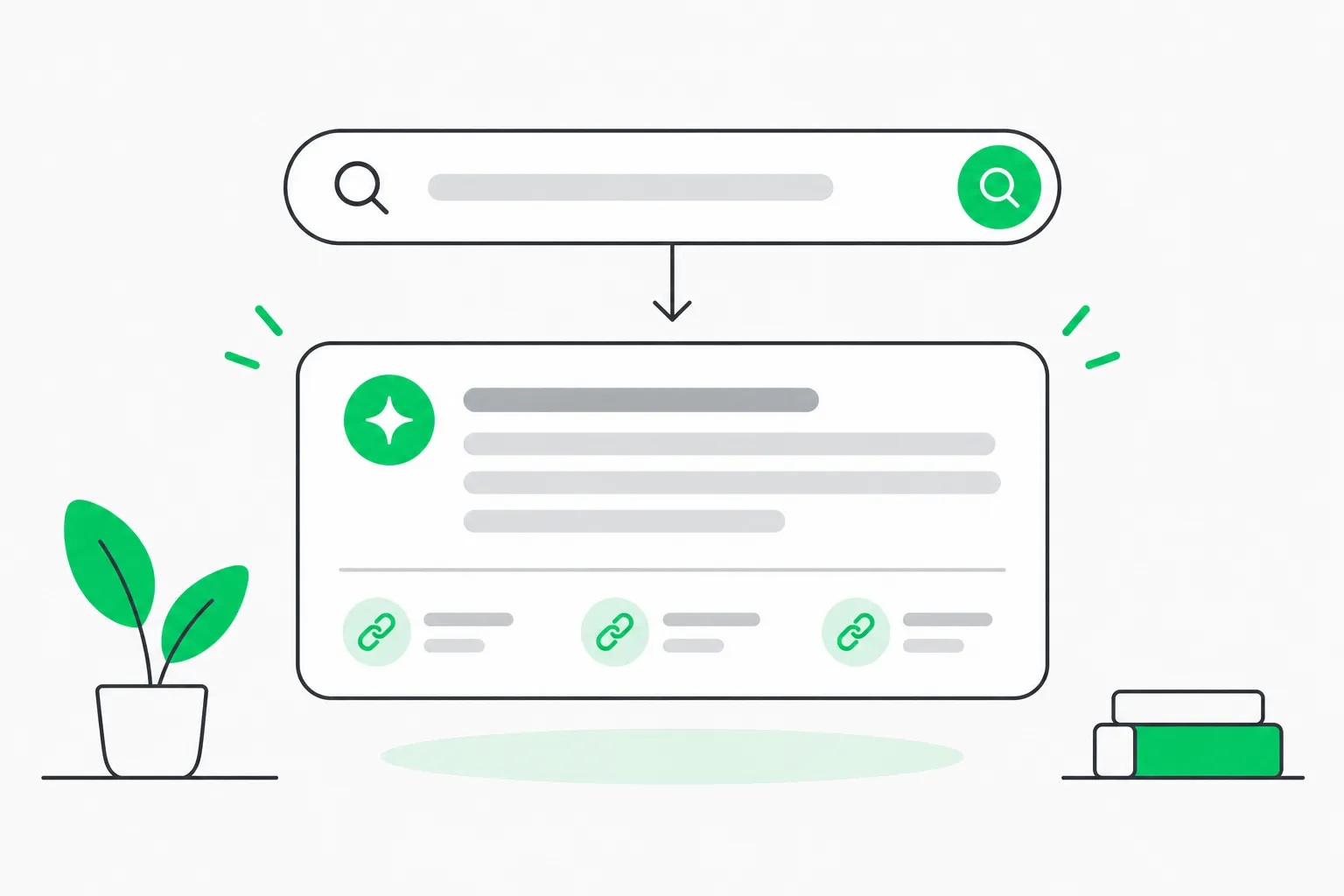 Search bar feeding one answer with source markers, for GEO teams tracking citation churn
Forty-two percent page overlap implies median citation half-life under one day for shopping queries—roughly similar to fresh news SERPs, unlike stable Wikipedia slots.
Content strategists should invest in evergreen comparison pages on your domain plus credible third-party lists, not only blog spam, if you want AI surfaces to find you on more random draws.
Builder takeaway for eval harnesses
If you benchmark shopping assistants, freeze retrieval sets during A/B tests. Otherwise you are measuring Google's crawl lottery alongside your prompt changes—exactly the confound Supercite highlights.
Legal and disclosure
If public claims say "#1 in ChatGPT," substantiate with dated samples or soften language. Regulators and competitors increasingly care about AI visibility marketing the way they cared about search ranking guarantees a decade ago.
Sample weekly scorecard format
| Question | Engine | Day | Brands listed | Your brand named? | Rank | Top cited URL |
|---|---|---|---|---|---|---|
| Best CRM for startups | AI Mode | Mon | 6 | Yes | 3 | example.com/list |
| Best CRM for startups | AI Mode | Tue | 5 | No | — | other.com/guide |
After seven rows per question, compute mention rate and average rank when mentioned. That single table communicates volatility to executives better than anecdotes.
Add a citation churn column tracking whether the top URL changed. That isolates source instability from brand instability when diagnosing a sudden drop.
Finally, compare engines on the same question within one hour. Supercite's design used day boundaries, which already showed high churn; intraday checks may be needed for launch windows when models update silently, as we track for GPT-6.2 power-user reviews. Treat weekly rollups as the minimum reporting period for leadership.
Product teams shipping comparison landing pages should time publication before major model updates when possible, then watch whether AI citations pick up the new URL within Supercite's typical 42% day-over-day page retention band. Log model version notes when vendors ship silent updates. Archive screenshots with timestamps always.
Related reading
- Google AI Mode temporary threads
- Gemini Hydrogen Search upgrade context
- Perplexity orchestrator multi-model API
- Replica skill GEO impressions
- OpenAI GPT-6.2 launch week
Sources: Supercite, November 18 study and Supercite listicle study.