



A year ago, India's sovereign AI story was mostly a compute-procurement headline — the IndiaAI Mission had approved around 18,693 subsidized GPUs, and no Indian foundation model had shipped at any meaningful scale. This Independence Day, August 15, 2026, that headline has turned into shipped products: open-source models trained end-to-end on Indian soil, a nine-institution academic consortium covering all 22 scheduled languages, and Anthropic opening a Bengaluru office because India is now Claude's second-largest market in the world.
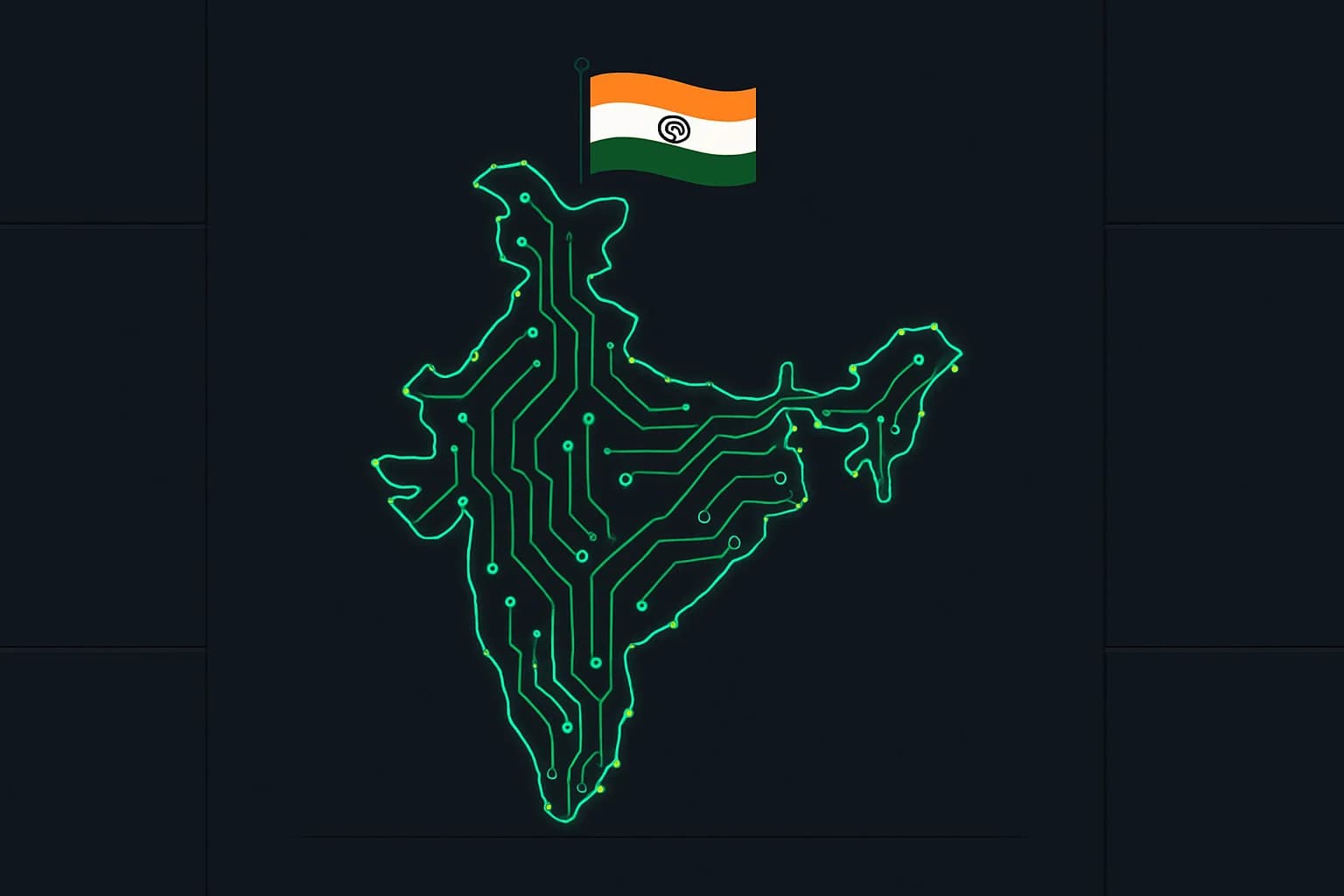
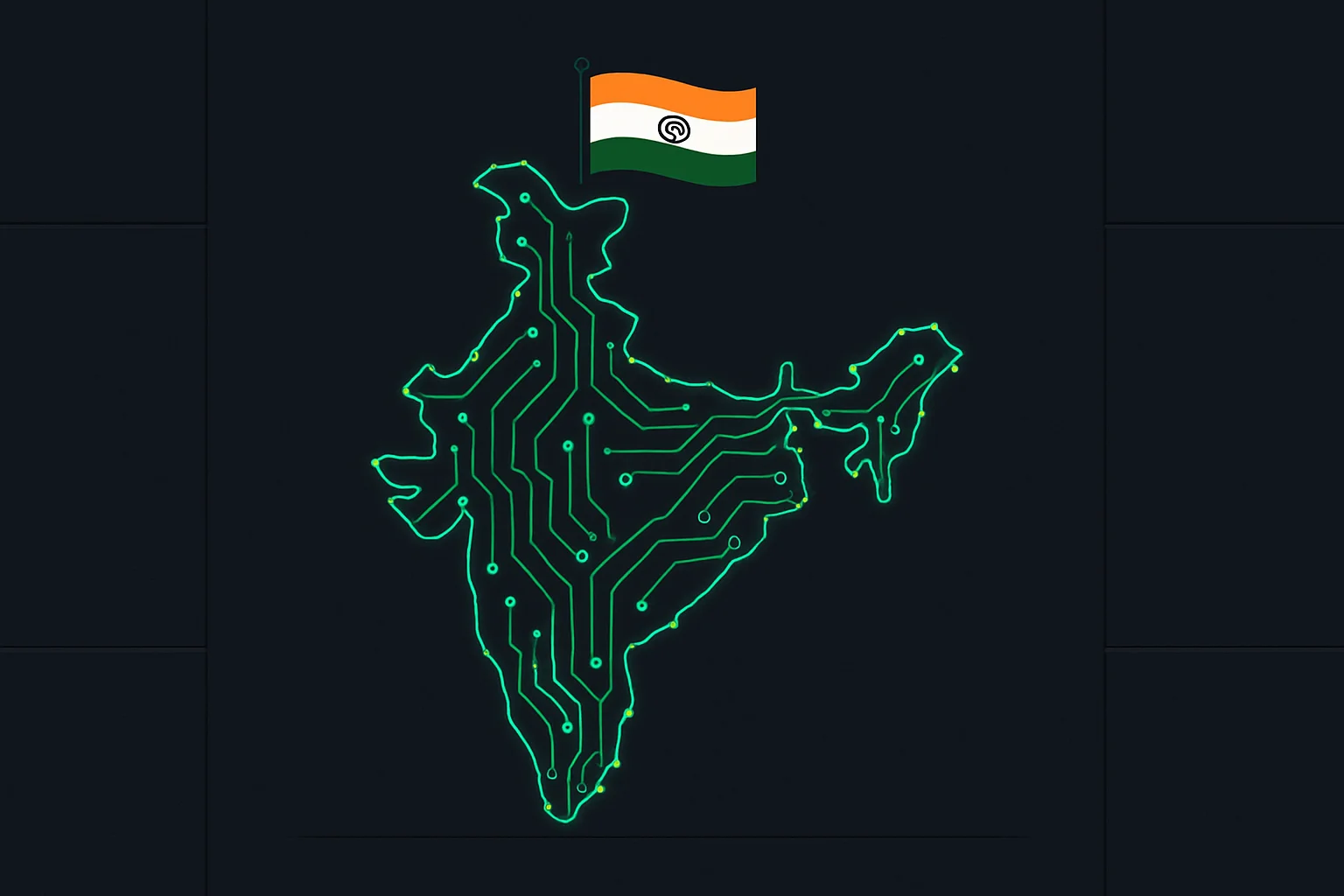 India's silhouette rendered as a glowing AI circuit network beneath a waving Indian tricolor flag with Ashoka Chakra
None of that makes India a frontier AI power — it isn't one, and won't be for years. But "not frontier" and "not moving" are different claims, and this piece is about which one is true. Below: what actually changed in the ecosystem explainx.ai has been tracking all year, what still hasn't, and 15 startups worth watching going into next Independence Day.
TL;DR
| Question | Direct answer |
|---|---|
| What changed most in a year? | Sarvam went from no shipped model to open-sourcing 30B and 105B; BharatGen launched a full 22-language model stack; Anthropic opened a Bengaluru office and INR pricing |
| Is India's AI actually sovereign? | Partially — the software layer is genuinely improving; every GPU underneath it is still an imported NVIDIA chip |
| Does India have a frontier model? | No — Sarvam 105B leads on Indian-language tasks but scores far behind Claude and GPT-5.6 on global reasoning benchmarks |
| Biggest structural gap? | No domestic AI chip, and a power grid not yet built for 100,000+ GPU-scale data centers |
| Where is India's AI adoption strongest? | Enterprise conversational/voice AI — a category Indian startups have led globally for years |
| Who's building it? | 15 startups spanning foundation models, enterprise AI, wellbeing, creative tools, privacy, and education — list below |
One year, measured honestly: Independence Day 2025 vs. 2026
| Signal | Around Independence Day 2025 | Independence Day 2026 |
|---|---|---|
| IndiaAI Mission GPUs | ~18,693 GPUs allocated to empanelled providers | ~34,000 GPUs deployed at ₹65/GPU-hour, targeting 100,000 by December 2026 |
| Flagship Indian model | No large model shipped at scale | Sarvam 30B and 105B open-sourced (Apache 2.0), trained on Indian compute |
| Multilingual model coverage | Fragmented efforts across labs | BharatGen — 4 model families, all 22 scheduled languages, ₹988.6 crore, 9-institution consortium |
| Claude / Anthropic presence | USD billing only, no local office | Bengaluru hub, INR-priced plans, TCS and Infosys partnerships, India is Claude's #2 global market (~5.8% usage) |
| AI regulation | DPDP Act rules still being finalized | MeitY's seven-principle AI Governance Guidelines, 2026 IT Rules Amendment, an AI Safety Institute established |
| Cursor / dev-tool localization | Global pricing only | ₹649/month India-specific Start plan with UPI |
| Domestic AI chip | None | Still none — assembly and packaging only |
The honest read: the software and policy layers moved faster than the hardware layer did, which is exactly what you'd expect from a country building AI capability on top of infrastructure it doesn't manufacture. Every improvement above is real. None of them changes the chip dependency explainx.ai flagged a year into this story — India's sovereign AI compute runs entirely on NVIDIA silicon, subject to the same export-control authority that cut off China's chip supply in 2022.
What actually shipped this year
Sarvam went from promise to product. In February 2026, Sarvam AI open-sourced Sarvam 30B and 105B — the first Indian foundation models trained end-to-end on IndiaAI Mission compute. On Indian-language benchmarks, Sarvam 105B beats GPT-4, Claude, and Gemini in roughly 90% of comparisons. On global English-centric benchmarks, it scores 18 on the Artificial Analysis Intelligence Index — behind even mid-tier open models. That gap is the whole story of India's current AI position in one number: genuinely strong where it was built to be strong, genuinely behind everywhere else. Sarvam followed the model launch with Epoch 2026, its first flagship conference, in Bengaluru at the end of July.
BharatGen turned a national ambition into a shipped stack. IIT Bombay's consortium — 9 institutions, 60+ researchers, ₹988.6 crore in DST and IndiaAI Mission funding — launched four model families in June 2026: a reasoning-and-coding text model, speech recognition, zero-shot voice-cloning text-to-speech, and a document-vision model, all covering India's 22 scheduled languages. It's the most institutionally serious multilingual AI effort India has produced, and it exists specifically because a global frontier model was never going to prioritize Gondi, Bodo, or Santali.
Anthropic decided India was worth a local office. Claude went from USD-only billing to INR pricing with 18% GST built in, a Bengaluru hub led by ex-Microsoft India MD Irina Ghose, and premier partnerships with TCS and Infosys. That's not charity — it's Anthropic responding to India being its #2 market globally by usage, at roughly 5.8% of traffic, second only to the US. Cursor made a smaller but similar bet, launching an India-specific ₹649/month plan with UPI support.
The compute base roughly doubled, but the ceiling problem didn't move. From ~18,693 GPUs a year ago to ~34,000 today, with a 100,000-by-December-2026 target still standing. What hasn't changed: every one of those chips is NVIDIA silicon, India's semiconductor mission remains focused on assembly rather than fabrication, and 100,000-GPU-scale data centers require power density India's grid — still 70%+ thermal — isn't built for yet.
What still hasn't changed
Three gaps explainx.ai flagged a year ago are still open, and worth naming plainly rather than glossing over on a celebratory news hook:
- No frontier model. Sarvam and BharatGen are real achievements on Indian-language tasks and a genuine hedge against foreign-model dependency. Neither is close to Claude Fable 5, GPT-5.6, or Gemini 3.1 Pro on frontier reasoning. Closing that gap needs an order of magnitude more training compute than India currently has access to.
- No domestic chip. India's entire sovereign-AI compute base — every GPU in the IndiaAI Mission, every card in Krutrim Cloud — is imported. The 2026 US-India interim trade deal protects near-term access, but it's a trade agreement subject to renegotiation, not a structural fix.
- Brain drain, mostly unchanged. India's most technically skilled AI researchers still disproportionately land at Google, Meta, Microsoft, or OpenAI in the US. IndiaAI Mission startup grants help at the margins; they haven't reversed the underlying compensation and research-environment gap.
Top 15 AI startups building India's AI story in 2026
 Constellation diagram representing India's top AI startup ecosystem as connected network nodes
This is a curated cross-section, not a funding-round leaderboard — chosen to represent the actual categories where Indian AI is building real products, from sovereign foundation models down to the enterprise and consumer layer built on top of them. One disclosure up front: explainx.ai is on this list, because AI education and skills verification is a genuine, distinct category in India's AI story, not because this is a neutral outside ranking.
| # | Startup | Category | What it does |
|---|---|---|---|
| 1 | Sarvam AI | Sovereign foundation models | Bengaluru-based; built India's first indigenous LLMs (30B, 105B) trained on IndiaAI Mission compute, open-sourced under Apache 2.0 |
| 2 | Krutrim (Ola) | Foundation models + cloud | India's first AI unicorn; Krutrim-3 trained on 2T+ tokens across all 22 languages, plus its own GPU cloud for Indian enterprises |
| 3 | BharatGen | Multilingual sovereign AI consortium | IIT Bombay-led, 9-institution academic-industry effort; four model families covering text, speech, and documents in all 22 scheduled languages |
| 4 | Fractal Analytics | Enterprise AI & analytics | One of India's few AI decacorns; builds applied AI and analytics platforms for global enterprise clients |
| 5 | Uniphore | Enterprise conversational AI infrastructure | Voice and conversational AI platform for enterprise customer engagement, one of India's earliest AI unicorns |
| 6 | Yellow.ai | Agentic customer experience AI | Enterprise-grade conversational and agentic AI for customer support, deployed across dozens of countries |
| 7 | Observe.AI | Contact-center conversation intelligence | AI that analyzes and coaches contact-center conversations in real time for enterprise quality and compliance |
| 8 | Haptik (Reliance Jio) | Conversational commerce AI | Conversational AI assistants for commerce and customer service, now part of Reliance Jio's platform stack |
| 9 | CoRover.ai | Sovereign conversational assistant | Builds BharatGPT — India-first conversational AI used across government and enterprise deployments |
| 10 | Wysa | AI mental health & wellbeing | AI-guided mental health support chatbot, used in clinical and consumer wellbeing contexts globally |
| 11 | Gan.ai | AI-personalized video | Generates hyper-personalized video at scale for marketing and customer engagement use cases |
| 12 | Dashtoon | AI-generated visual storytelling | AI-assisted comics and webtoon creation platform for creators and publishers |
| 13 | Entropik | Emotion & behavior AI | Emotion AI and consumer behavior analytics for market research and UX testing |
| 14 | explainx.ai | AI education | Bootcamps, courses, and an AI skills registry — this site's own category, included transparently, not neutrally |
| 15 | BGBlur | AI privacy | AI-powered face and background blurring for photos and video, built for privacy protection rather than content generation |
Two patterns stand out. First, enterprise conversational and voice AI is where India has led globally for years, not just this cycle — Uniphore, Yellow.ai, Observe.AI, Haptik, and CoRover.ai collectively represent one of India's genuinely durable AI export categories, well before "sovereign AI" became a policy phrase. Second, the foundation-model layer (Sarvam, Krutrim, BharatGen) is the newest and most explicitly nation-building part of the list — all three exist specifically because of the IndiaAI Mission and the strategic logic explainx.ai covered in India's sovereign AI status piece: dependency on foreign frontier models is a real strategic risk, and these three are India's answer to it.
Where India sits globally, honestly
India is unambiguously the leading AI power in the Global South — ahead of Brazil, Indonesia, South Africa, and the Middle East on indigenous model development, compute investment, and regulatory maturity. It is not competing with the US or China on frontier capability, and none of this year's progress changes that ranking. What it has built instead is differentiation: multilingual depth no frontier lab has matched, a democratic governance framing distinct from both American techno-liberalism and Chinese techno-authoritarianism, and — per Anthropic's own usage numbers — a developer population large enough to be the second-biggest market for the world's leading AI labs regardless of whether India ships a frontier model of its own.
That's a real position. It's also, honestly, a position built on a foundation India doesn't own. The chips are American. The next two years — chip-supply guarantees, whether India hits its 100,000-GPU target, whether a Sarvam 2.0 closes any of the frontier gap — will determine whether "sovereign AI" describes India's actual infrastructure or just its stated ambition.
Bottom line
This Independence Day, India's AI story is genuinely better than it was a year ago — shipped models instead of procurement announcements, a Bengaluru office instead of USD-only billing, a 15-company startup layer building real products on top of a national compute push. It is not, and isn't close to being, a frontier AI power, and the chip dependency that made that true a year ago still makes it true today. Both things are worth saying on the same day.
Update — September 3, 2026: Add one more to the deep-tech column — Pranos Fusion switched on PRAGYA, India's first privately built tokamak, in about eight months on a $6.8M round.
Related regional and India AI reading
Update — September 27, 2026: Google × Flipkart agentic checkout in Gemini and AI Mode — India-first embedded Buy button vs UCP, October 2026 rollout reporting.
Update — August 20, 2026: Adalat AI joined YC's F26 batch — courtroom ASR, paperless courts, and a WhatsApp helpline for litigants, the first nonprofit YC has backed in nearly five years per the team.
- Adalat AI joins YC F26: courtroom ASR for India's justice backlog
- Razorpay Vulcan: India’s first payments foundation model (Aug 18, 2026) — a transformer trained on 4B payments, not language, still on NVIDIA + AWS
- India's sovereign AI status: IndiaAI Mission, gaps, and geopolitics — the full deep-dive this piece updates
- BharatGen: IIT Bombay's sovereign AI for 22 languages
- Sarvam Epoch 2026: every confirmed launch
- Anthropic's Claude INR pricing for India
- Cursor Start India: ₹649 plan
- AI-native companies: the Indian startup reality
- Top 10 AI instructors and trainers in India
- US vs Chinese AI startups comparison
- Europe AI landscape 2026 · UK AI landscape 2026 · Singapore AI landscape 2026
Sources: IndiaAI Mission · Sarvam AI · Anthropic API pricing · explainx.ai reporting through August 2026
Figures reflect India's AI ecosystem as of August 15, 2026, drawing on IndiaAI Mission disclosures, Sarvam and Anthropic public statements, and explainx.ai's ongoing coverage. GPU counts, funding figures, and market-share numbers change quickly in this space — verify current figures before citing them elsewhere.