



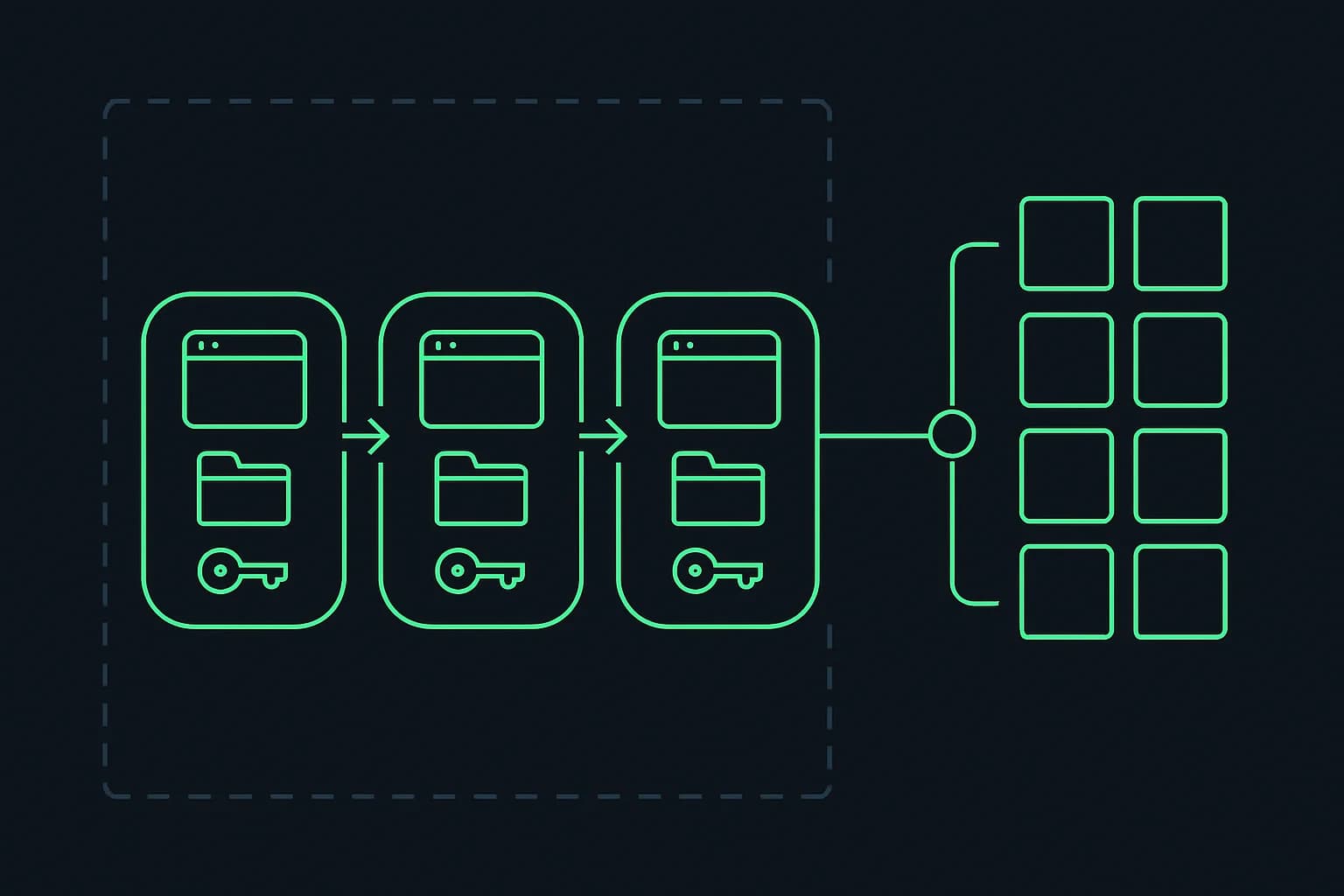
August 2026 news cycles credited Grok Build 1.0.9 with the first agent budget controls for multi-agent coding — but public changelogs and command references point to --agent-budget landing in Grok Build 1.0.7 (August 19, 2026), with workflow UX polish in 1.0.8. The capability still matters: hard caps on child-agent fan-out are how you keep multi-agent workflows from eating your token budget and your shell.
TL;DR — what people are asking
| Question | Direct answer |
|---|---|
| Flag name? | --agent-budget N |
| Default cap? | 128 child-agent calls |
| Max cap? | 1,024 |
| Min cap? | 1 |
| Version landed? | ~1.0.7 (Aug 19) per community trackers; not verified on x.ai changelog |
| Related tools? | spawn_subagent, /workflow, /workflow runs |
| Pair with? | --effort LEVEL for child reasoning without changing session /effort |
What agent budget solves
Grok Build (open-sourced July 2026) ships workflows that split large engineering jobs across investigate / review / verify subagents — SpaceXAI described defaults of 128 agents, scaling to 1,024 on big tasks when Grok Build 1.0.0 launched.
Without a cap, the failure modes look like every other harness:
- Token runaway on parallel planners re-reading the same monorepo
- File-descriptor exhaustion when fan-out spawns too many shell sessions (1.0.1 bounded subagent spawning addressed FD issues earlier)
- Operator blindness — you approved step one; step forty forked twelve children
--agent-budget N makes the cumulative child call limit explicit at launch — the same class of guardrail destructive command guards provide for shell, but for agent cardinality.
How to use it (documented patterns)
From Grok Build command references tracking 1.0.7+:
grok --agent-budget 64 --effort high "Refactor package X across services A–F"
/workflow review-changes and saved Rhai workflows in .grok/workflows/ inherit budget context when spawned with flags. /workflow runs opens the live dashboard — pause, resume, stop, save — so you can abort a runaway fan-out without killing the parent session.
--effort LEVEL adjusts child reasoning effort without mutating the parent session's /effort — useful when children need low for grep loops but the coordinator stays high.
Enterprise deployments should pair budgets with:
- Centrally pinned
config.toml(1.0.0 enterprise controls) GROK_CONFIG/GROK_CONFIG_PATHoverrides (1.0.5) so MDM launchers inject caps users cannot strip in UI- Sandbox profiles blocking always-approve escalation
Version honesty — why headlines say 1.0.9
x.ai/build/changelog publicly shows v1.0.5 (Aug 15) as "Latest" — stale versus installed clients on 1.0.7–1.0.8 per Toolsbase and Releasebot scraping. Aggregators then label the next rumored drop 1.0.9 and attach any recent multi-agent feature — including budget controls that already shipped.
explainx.ai's rule: ship guidance on verified flags, cite version uncertainty, update when x.ai publishes official notes. If you are on an older grok binary without --agent-budget, upgrade via curl -fsSL https://x.ai/cli/install.sh | bash and check grok --help.
Comparison anchors
| Harness | Parallelism control | explainx.ai coverage |
|---|---|---|
| Grok Build | --agent-budget, /workflow | This post + Grok Build open source |
| Claude Code | Subagents, hooks, permission modes | Harness guide, steering stack |
| Codex | Multi-agent v2 delegation | Codex multi-agent v2 |
| Cursor | Auto routing + usage caps | Auto per-model pricing |
Honest limitations
- Official changelog lag — do not rely on x.ai's web changelog alone for version truth.
- Budget ≠ token budget — child call cap is not the same as dollars; pair with
/usagevisibility (hidden on some free tiers per 1.0.5 notes). - Workflow scripts — saved Rhai workflows can still loop internally unless hooks block — budget caps spawns, not infinite tool retries inside one child.
- 1.0.9 feature list unverified — this post documents --agent-budget, not every rumored 1.0.9 item.
What this means for what you build or pay
If you run Grok Build workflows on production repos, set --agent-budget below default until you trust the workflow's stop conditions — 128 is already high for paid Grok API tiers. If you evaluate Grok against Claude Code for multi-agent refactors, budget controls are a checkmark — but compare sandbox strength (Grok repo upload secrets) and model quality (Grok 4.6 evals) before switching.
Related on explainx.ai
- Grok Build open-sourced — architecture and install
- Grok Build mode launch
- Loop engineering for coding agents
- What is an agent harness?
- Codex multi-agent v2 delegation
- Grok Bot vs coding harnesses — surface area comparison
- Att 56% coding cost reduction via routing
Sources: x.ai Grok Build changelog (web, note staleness), Toolsbase Grok Build command reference (August 2026), Releasebot Grok Build updates, eWeek on Grok Build 1.0.0 enterprise controls. Flag behavior and version attribution accurate as of August 25, 2026 — verify with grok --help on your installed binary.