



Related — August 27, 2026: Clinical inference moved from monitoring to the operating theatre — surgeons at UCLH removed a pituitary tumour with live AI guidance, a world first. Same hard constraint GlucoFM faces at the edge: sub-second, on-prem, no cloud round-trip.
On August 26, 2026, Google Research (@GoogleResearch) posted GlucoFM — a lightweight, self-supervised foundation model for continuous glucose monitoring (CGM) data.
The tweet hit 118K+ views within hours. Replies immediately split into two camps: metabolic-health builders calling it "huge" for diabetes apps, and confused users asking "is this a wearable?" or "can this run on ESP32?"
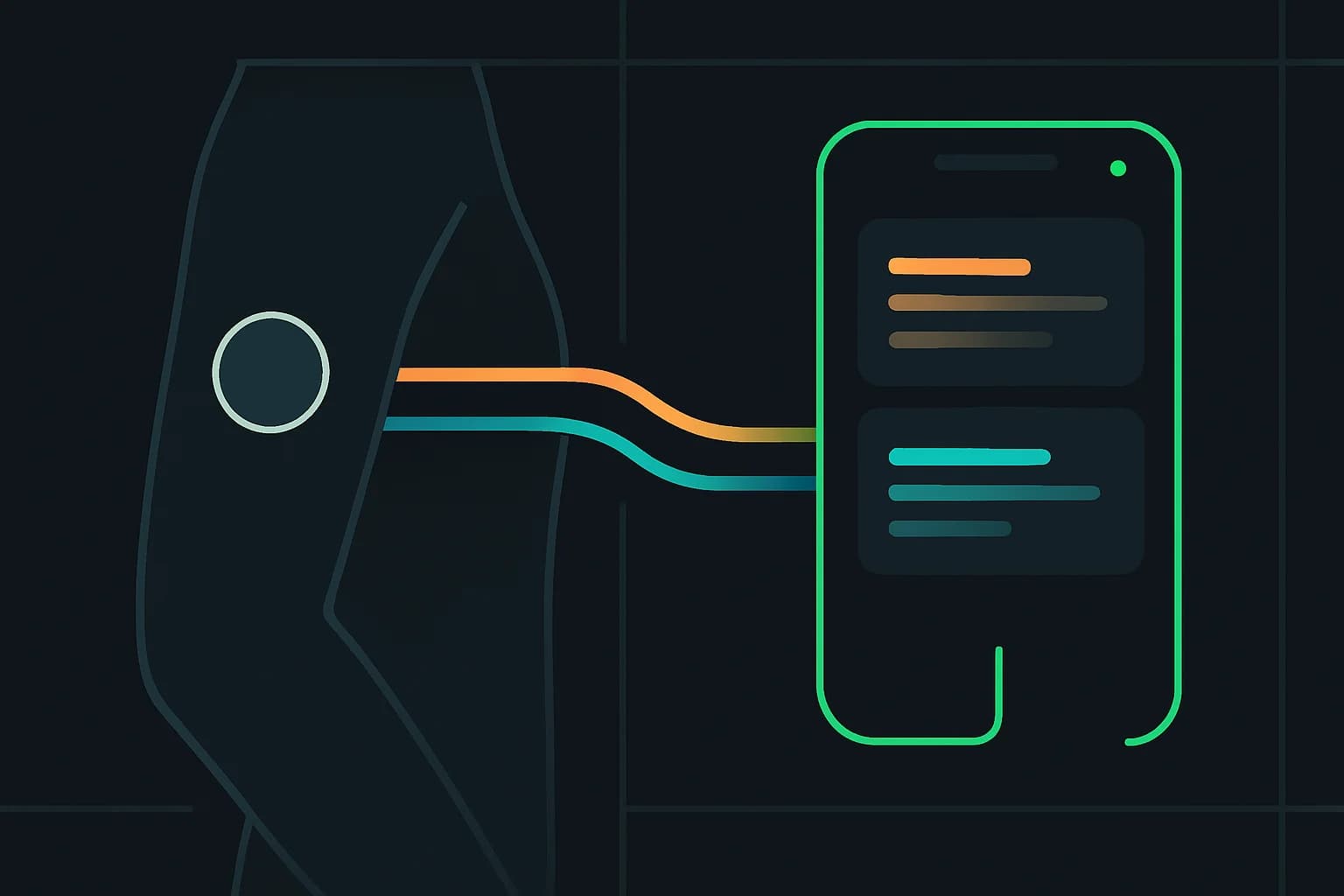
explainx.ai's read: GlucoFM is neither hardware nor a consumer app. It is research infrastructure — a way to turn messy CGM time series into transferable embeddings for diabetes risk, insulin resistance, beta-cell dysfunction, and post-meal glucose curves, using far less labeled clinical data than training task-specific models from scratch.
That matters the same week Abbott's Libre Duo added dual-analyte CGM streams: sensors keep generating richer time series; foundation models are how software stacks will eventually make sense of them at scale.
TL;DR — GlucoFM at a glance
| Question | Answer |
|---|---|
| What is it? | CGM foundation model (software), not a sensor |
| Announced | August 26, 2026 — Google Research blog |
| Core idea | Dual-stream encoder: slow baseline + short-term spikes |
| Training | 109,066 hours unlabeled CGM; 477 sessions; JEPA-style latent objectives |
| Grid | 24-hour windows, 5-minute resolution + missingness mask |
| Tasks tested | 7 clinical phenotypes across 4 cohorts (14 evals) |
| vs GluFormer | +5.8 pp average PR-AUC; +4.1 absolute on strongest baseline comparison |
| Meal forecast | 21.88 mg/dL MAE (2h post-meal trajectory) vs 22.90 best baseline |
| Weights/API? | Not released in launch post |
| Run on ESP32? | No — research model; edge deployment untested |
What problem GlucoFM solves
Consumer wearables estimate steps, sleep, and heart rate. CGMs add something wearables cannot: direct interstitial glucose every few minutes via a skin sensor — fasting curves, overnight stability, post-meal spikes.
The bottleneck is labels. Knowing whether someone has insulin resistance, beta-cell stress, or elevated diabetes risk usually requires labs, clinics, and longitudinal studies. CGM traces are plentiful (especially among people with diabetes); ground-truth phenotypes are sparse.
Foundation-model playbook:
- Pre-train on large unlabeled CGM corpora
- Freeze encoder representations
- Linear probe or small head for clinical tasks with limited labels
GlucoFM follows that pattern — same family as TimesFM for generic time series, but architecture specialized for glucose dynamics.
Architecture — why two streams?
Google's key claim: CGM is not one signal. It mixes:
| Component | What it looks like | Sources |
|---|---|---|
| Slow state | Baseline drift, overnight trend | Physiology, circadian rhythm |
| Fast events | Spikes, dips, noise | Meals, exercise, sensor artifacts |
Prior models (CGMformer, GluFormer, CGM-JEPA) often use one stream. GlucoFM splits:
- State stream — lower-frequency glycemic trend
- Event stream — residual short-term deviations
Ablation in the paper: event-only was weakest; dual-stream beat raw-input and state-only variants. Transient spikes alone do not stabilize metabolic phenotyping.
Pre-training objectives (JEPA-style, not reconstruction)
GlucoFM avoids predicting exact mg/dL values — sensor noise and compression artifacts make reconstruction a noisy target. Instead:
- Contextual latent prediction — mask parts of a daily sequence; predict latent representations from surrounding context
- Temporal dynamics — predict how baseline and event latents evolve hour-to-hour
Plus CGM-aware augmentations: baseline drift, dropout-like gaps, sparser sampling, short disconnections — matching real Libre/Dexcom failure modes.
Inputs are aligned to a 24-hour, 5-minute grid with an observation mask so missing readings stay explicit.
Benchmarks — what Google reports
Seven clinical tasks, four cohorts
Evaluated cohorts: CGMacros, Stanford, Hall, ShanghaiT2DM.
Tasks: diabetes risk, insulin resistance, beta-cell dysfunction, hyperlipidemia, hypoglycemia, obesity, glucotype — 14 cohort–task pairs total.
Method: Subject-disjoint linear probing — freeze encoder, train linear classifier on single 24-hour windows, no participant overlap between train and test.
| Metric | Result |
|---|---|
| Task-averaged PR-AUC | 58.8 (GlucoFM) vs 54.7 (best GluFormer retrained on same corpus) |
| Absolute gain | +4.1 PR-AUC points (~7.5% relative) |
| Headline wins | All diabetes-risk and beta-cell-dysfunction evals; 3/4 insulin-resistance evals |
Postprandial glycemic response (PPGR)
Dynamic task: predict full 2-hour glucose-change trajectory after a logged meal.
- 874 meal events, 34 participants, Dexcom + Libre evaluated separately
- Progressive context: frozen representation → +1h pre-meal CGM → +meal nutrition → +fasting glucose → +BMI/diabetes status
- GlucoFM MAE: 21.88 mg/dL vs 22.90 best baseline vs 27.69 train-mean baseline
Multi-day aggregation
Averaging up to 7 days of frozen daily embeddings improved subject-level PR-AUC in most settings — e.g. +14.0 points Hall diabetes prediction, +9.6 Stanford beta-cell dysfunction. Simple averaging failed on one ShanghaiT2DM insulin-resistance setting — aggregation strategy is task-dependent.
Cross-cohort transfer
Train classifier on cohort A, test on cohort B: GlucoFM led 11 of 12 transfers ( +0.5 to +8.6 PR-AUC over second-best). Absolute PR-AUC ranged 61.6% to 90.0% depending on pair — suggesting physiology signal survives dataset shift better than single-stream baselines.
Few-shot learning
At one labeled subject per class and 1% of observations, GlucoFM still led — important when clinical labels cost thousands of dollars per participant.
What people are asking on X
"Is it a wearable device?"
No. GlucoFM reads CGM data after a Dexcom, Libre, or study-grade sensor produces it. The Libre Duo authorization is hardware news; GlucoFM is downstream ML.
"What are the inputs?"
Time series: interstitial glucose samples (typically 5-minute intervals), timestamped within a day, with gaps masked. For PPGR forecasting, add meal macros (carbs, fat, protein, fiber, energy) and participant metadata (BMI, fasting glucose, diabetes status). No images, no voice, no ESP32 IMU — unless you fuse those separately.
"Publish the weights?"
Not yet. Research post + paper link only. For health-AI builders, watch whether Google follows Nemotron-style open weights or keeps GlucoFM internal for Google Health / Fitbit pipelines.
"Can this save people from nighttime hypoglycemia?"
Hypoglycemia is an evaluated classification task, not a shipped alert system. Real-time hypo prevention needs latency-tested inference on live streams, clinician workflows, and regulatory clearance — a different product layer. Do not conflate research PR-AUC with bedside safety.
"Can this run on ESP32?"
Unlikely as published. Transformer encoder + dual streams on 288-step daily grids is research-scale compute. Edge deployment would need distillation and validation; Google does not discuss microcontroller inference.
What this means for builders
| If you build… | Implication |
|---|---|
| Diabetes / metabolic apps | Foundation embeddings could reduce labeled-data needs for risk scoring — when weights or an API exist |
| CGM data pipelines | Standardize on 5-min grids + mask; dual-stream thinking may beat single-feature engineering |
| Closed-loop insulin (Loop, AID) | Complementary to sensor hardware — potential better meal response models, not replacement for control algorithms |
| Health LLM products | Another signal class beside ChatGPT Health records — time-series FM vs document RAG |
| Dual-analyte Libre Duo stacks | GlucoFM today is glucose-only; ketone streams would need retraining or multimodal extension |
Google names Shwetak Patel among contributors — tying GlucoFM to Google's long-running Wear-CGM research line, not a one-off blog post.
Comparison to prior CGM foundation models
| Model | Representation | Pre-training style | Google-reported vs GluFormer |
|---|---|---|---|
| CGMformer | Single stream | CGM-specific transformer | Baseline family |
| GluFormer | Single stream | Strongest prior on same corpus | 54.7 avg PR-AUC |
| CGM-JEPA | Single stream | JEPA-style latent learning | Compared in paper |
| GlucoFM | Dual stream (state + event) | JEPA + temporal dynamics + CGM augmentations | 58.8 avg PR-AUC (+4.1) |
The dual-stream ablation is the paper's architectural bet: event-only collapsed performance; state-only was competitive but lost head-to-head. That matches clinical intuition — hypo alerts and post-meal spikes matter, but overnight drift and fasting baseline carry insulin-resistance signal too.
Pipeline sketch for when weights exist
If Google releases GlucoFM weights or a Fitbit / Android API, expect this shape:
CGM export (LibreView, Dexcom Clarity, Apple Health)
    → resample to 5-minute grid + mask gaps
    → GlucoFM encoder (frozen or fine-tuned)
    → embedding vector per 24h window
    → linear head OR small MLP for task (risk, PPGR, etc.)
Builders already normalizing Libre Duo dual streams should plan separate encoders or early fusion — GlucoFM today is glucose-only; ketone-augmented pre-training would be a new model generation, not a config flag.
Regulatory wall: FDA-cleared CGMs measure glucose for diabetes management; risk scores derived from foundation embeddings would need their own clinical validation before appearing in diagnostic copy — same gap as ChatGPT Health reasoning over vitals without becoming a medical device.
Limitations Google acknowledges
- Modest pre-training population (477 sessions) vs millions of CGM users globally
- 24-hour windows processed independently — multi-week trends not native yet
- Device variance (Dexcom vs Libre) handled in eval but still challenging
- No consumer product timeline in the post
Next steps Google lists: larger diverse pre-training, native multi-day modeling, real-time adaptation research.
Bottom line
GlucoFM is the missing software layer between CGM hardware and clinical intelligence — dual-stream, JEPA-pretrained, strong on transfer and few-shot metabolic phenotyping. It is not something you wear, flash to an ESP32, or download from Hugging Face today.
For builders riding the Libre Duo dual-analyte wave, the actionable takeaway is architectural: treat CGM as multiscale time series (baseline + events + missingness), not a flat glucose line. When Google ships weights or a Fitbit-integrated API, the benchmark table in the research post is the spec sheet to beat.
Related on explainx.ai
- FDA Libre Duo — dual glucose + ketone CGM (Aug 25)
- ChatGPT Health + Apple Health records — privacy for builders
- Google TimesFM 2.5 — time-series foundation model
- Google TimesFM-3 — native multivariate forecasting in one pass
- Google passive heart rate via smartphone camera
- AI for cooking and nutrition — meal planning guide
- Choosing open-weight vs closed models — when weights matter
Official: Google Research — GlucoFM blog · @GoogleResearch announcement
Architecture and benchmark figures reflect Google's August 26, 2026 publication. GlucoFM is research software — not FDA-cleared diagnostic software. Do not use for medical decisions without clinical validation.