



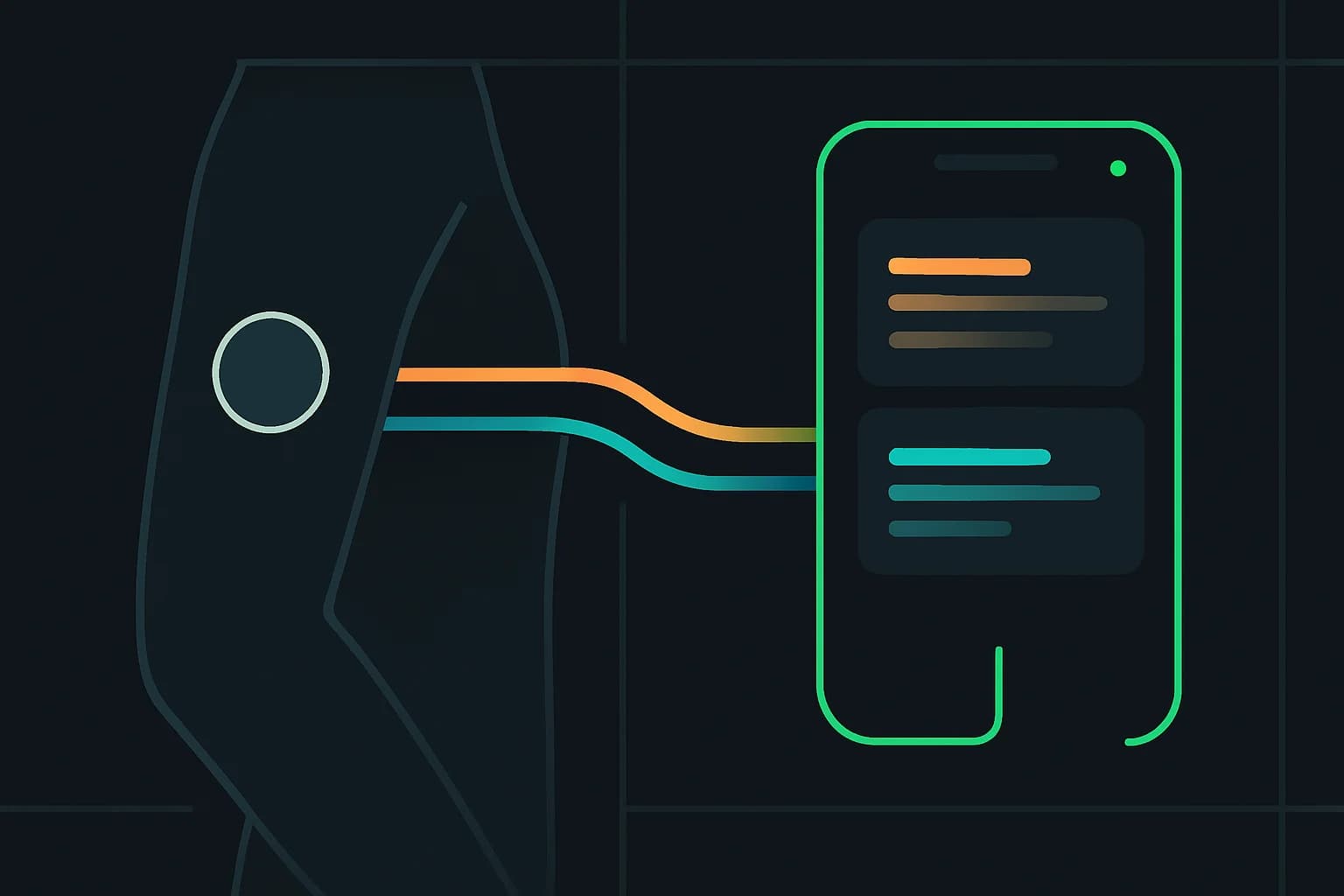
On August 25, 2026, the U.S. Food and Drug Administration authorized Abbott's Libre Duo 10 Day Continuous Dual Glucose Ketone Monitoring System — the first wearable in the United States to continuously track ketones, and the first device anywhere to stream both glucose and ketones from a single patch. Abbott plans a U.S. launch later this year.
If you build health dashboards, caregiver apps, or closed-loop insulin tooling, the consequential shift is structural: wearable biosensing just went from one primary analyte to two, with minute-level timestamps, smartphone delivery, and a new FDA performance category (integrated continuous glucose and ketone monitoring, or iCGK) sitting beside the existing iCGM standard. That is a pipeline and schema problem before it is a patient-education problem — similar to when ChatGPT Health forced builders to reason about permissioned multi-source health context instead of a single PDF upload.
TL;DR — builder questions first
| Question | Direct answer |
|---|---|
| What's new? | Dual-analyte patch: glucose + ketones, every minute, 10-day wear, ages 2+ |
| Regulatory path? | FDA De Novo after Breakthrough Device designation — not a drug approval |
| Evidence package? | Six studies, 600+ participants (FDA summary via Abbott press materials) |
| Why ketones? | Rising ketones can precede diabetic ketoacidosis (DKA); CGM alone does not measure them |
| Phone / cloud? | Latest U.S. Libre app, LibreView for clinicians, LibreLinkUp for caregivers |
| AID integrations? | Beta Bionics iLet + Sequel twiist by end of 2026; Insulet/Tandem in 2027 |
| Builder takeaway? | Treat ketones as a second time series with different dynamics and alert semantics |
| HN reality check? | High engagement (~380 points) but debate on ketone value, cost, and CGM quality vs marketing |
What FDA actually authorized
The FDA announcement and Abbott's August 25 press release align on the core claims:
| Field | Detail |
|---|---|
| Device | Libre Duo 10 Day Continuous Dual Glucose Ketone Monitoring System |
| Sponsor | Abbott Diabetes Care |
| Population | People with diabetes ages 2+ |
| Wear | Up to 10 days per sensor |
| Sampling | Every minute to a compatible smartphone |
| Analytes | Interstitial glucose and ketones |
| Pathway | De Novo (novel device class) after Breakthrough Device designation |
| Standards | First system meeting FDA iCGM and new iCGK benchmarks |
| Clinical package | Six studies, 600+ participants (FDA-cited in authorization summaries) |
Abbott positions Libre Duo for people at higher ketone risk — including those on insulin or SGLT2 inhibitors, where DKA can occur even when glucose readings look near-normal. That last case is exactly why a glucose-only pipeline can miss a dangerous state change.
Chris Scoggins, EVP of Abbott's diabetes care business, used an automotive metaphor in the press release: glucose is the speedometer; ketones are the check-engine light. For engineers, the better analogy is adding a second sensor bus to hardware that previously exported one CAN frame — downstream parsers, alert policies, and storage schemas all need revision.
The sensor-data pipeline builders inherit
Most continuous glucose integrations today look like this:
- Patch samples interstitial fluid on a fixed interval.
- Transmitter pushes readings to a phone app over BLE.
- App displays trends, fires threshold alarms, optionally syncs to LibreView or HealthKit (for supported workflows).
- Third-party systems — open-source Loop/OpenAPS forks, research dashboards, caregiver viewers — consume the stream through vendor APIs, reverse-engineered bridges, or manual exports.
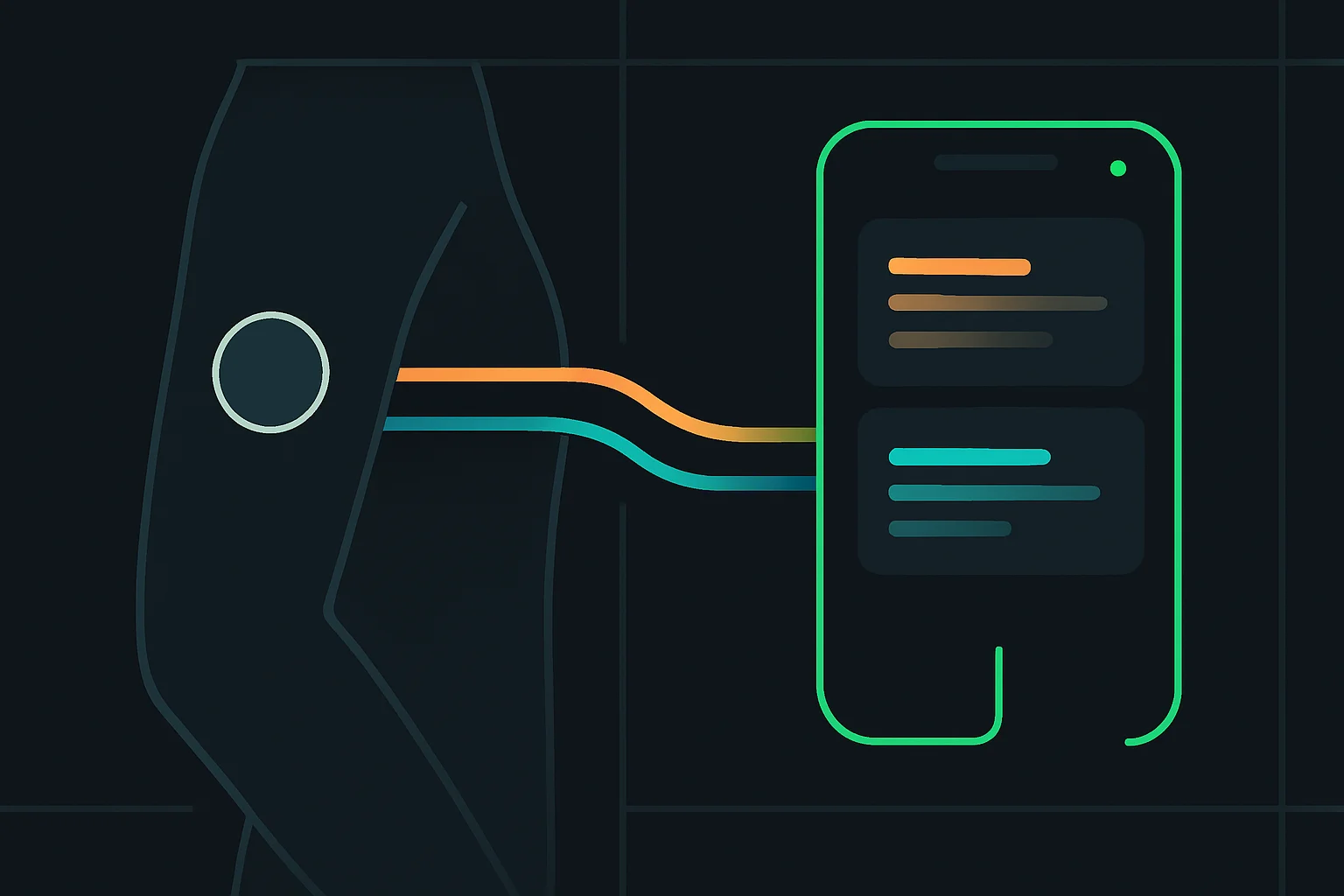
Libre Duo inserts a parallel ketone series at step 1–2 with its own rise/fall behavior and FDA-defined alarm semantics (including an Urgent High Ketones tier Abbott documents in U.S. safety labeling). If you already normalize CGM data into InfluxDB, Timescale, or a FHIR Observation bundle, you cannot flatten ketones into valueQuantity on the same code path as glucose without losing clinical meaning.
Schema and alert-engine implications
| Layer | Glucose-only today | Dual-analyte with Libre Duo |
|---|---|---|
| Storage | One numeric stream + trend arrows | Two streams + cross-analyte rules |
| Alerts | Hypo/hyper thresholds | Coupled rules (ketone rise with "normal" glucose) |
| AID loops | CGM-driven basal adjustments | Potential ketone-aware guardrails (vendor-dependent) |
| Caregiver UX | Single chart | Dashboard must show both timelines without alarm fatigue |
| Testing | Replay captured CGM CSV | Need paired fixtures; ketone spikes are event-rarer |
This is the same class of problem explainx.ai covered when Google's PHRM added passive rPPG heart-rate streams from phone cameras — a new biomarker source with different error modes — except Libre Duo is a regulated medical device with labeled alarm limits, not a research prototype.
AID and pump integration timeline
Abbott named concrete closed-loop partners:
- 2026 (year-end): Beta Bionics iLet, Sequel Med Tech twiist
- 2027: Insulet, Tandem; MiniMed exclusive dual-sensor + smart dosing collaboration
For open-source Loop maintainers and Nightscout bridge authors, each new iCGM generation historically triggers a lag while community drivers catch up to proprietary BLE protocols. Dual-analyte authorization does not automatically mean Day-one Loop support — plan for a vendor SDK / entitlement window before assuming ketones appear in your self-hosted MongoDB.
Where this sits in the wearable biosensing race
Libre Duo is one branch of a broader builder landscape:
| Approach | Example | Builder angle |
|---|---|---|
| Invasive patch CGM | Libre Duo, Dexcom, Stelo OTC | Minute-level interstitial streams; payer and prescription friction varies |
| Screenless wellness wearables | Google Fitbit Air | HR/HRV/sleep — not glucose, but same phone-hub aggregation pattern |
| Phone-only rPPG | Google PHRM research | No patch, different trust / regulatory tier |
| Edge on-device inference | Coral Edge AI | Local feature extraction before cloud sync — relevant if you pre-process noisy sensor traces on-device |
| Non-invasive glucose (still pending) | Apple Watch rumors, startup demos | HN threads repeatedly ask why Big Tech hasn't shipped needle-free glucose; Libre Duo doubles down on interstitial chemistry instead |
Apple's non-invasive glucose chase and Abbott's dual-analyte patch are not mutually exclusive product bets — but for 2026 shipping code, the actionable stream is still regulated patch → phone → API, not wrist spectroscopy.
What Hacker News argued (~380 points)
The FDA/Abbott story hit the front page with roughly 380 points — high signal for a med-device post, but the comment section was far from uniform celebration. These themes dominated; paraphrased positions, not quotes:
Dan Kaminsky and DKA memory
Several threads connected ketone/DKA risk to Dan Kaminsky, who publicly discussed his Type 1 diabetes and died in 2021. Commenters used his story as a emotional anchor for why background ketone visibility matters — early ketone rise before obvious glucose catastrophe. Others cautioned against memorial-driven regulatory enthusiasm without pricing and false-alarm data.
Open-source Loop vs vendor lock-in
The Loop ecosystem (iOS closed-loop insulin dosing built by the community) appeared repeatedly: enthusiasts want ketone-aware guardrails in the same stack that already ingests Dexcom/Abbott glucose. Skeptics noted Abbott's history of API friction and asked whether Libre Duo ketones will be readable outside Abbott's app on day one — a fair builder question that past CGM generations answered slowly.
Is continuous ketone monitoring worth it?
This was the sharpest split:
- Pro: Urine and fingerstick ketones are episodic; continuous data catches illness/SGLT2 edge cases CGM misses.
- Con: Ketone elevation without symptoms may generate alarm fatigue; not every person with diabetes faces equal DKA risk; marketing outruns evidence for mass-market ketone tracking.
explainx.ai's read: treat ketone alerts like anomaly detection on a rare class — useful for high-recall monitoring in targeted cohorts, expensive if you optimize for precision across everyone paying out of pocket.
CGM quality vs marketing
HN regulars compared Abbott/Dexcom accuracy claims, adhesive failures, and lag versus the press-release superlatives ("world's first"). Builders should assume sensor dropout and compression lows still happen — dual analyte does not fix physics.
Reimbursement and "healthmaxxer" framing
Commenters flagged that FDA authorization ≠ insurance coverage. Without payer codes, Libre Duo may sit in the same cash-pay bucket as premium CGMs. The "healthmaxxer" angle — biohackers stacking every wearable stream — drew eye-rolls from clinicians in-thread: more data is not automatically better decisions unless workflows integrate it.
Honest limitation: explainx.ai did not independently verify every clinical claim in Abbott's six-study package. This post focuses on authorization facts and builder consequences, not prescribing who should wear the sensor.
What to prototype this quarter
If you are shipping health-adjacent software (not practicing medicine):
- Extend your time-series model — separate
Observationcodes for glucose vs ketone; document units (mmol/L vs mg/dL) explicitly. - Replay dual-stream fixtures — build alert tests where glucose is flat and ketones climb (SGLT2 scenario).
- Caregiver notification policy — LibreLinkUp-style sharing will expect two charts; do not SMS only on glucose hypo if ketones are elevated.
- Watch AID SDK releases — closed-loop integrations are the fastest path to ketone-aware automation; open Loop will follow community reverse engineering.
- Compare against your Apple Health ingestion — if you already ingest HR/sleep from ChatGPT Health-style pipelines, decide whether ketones belong in the same LLM context window (usually: no, without clinician review).
Official sources
- Abbott press release — August 25, 2026
- FDA press announcement (authorization summary)
- Product information: abbo.tt/libreduo (Abbott)
Related on explainx.ai
- How AI Toothbrushes Work: Sensors, Models, and Dyson's Camera — another consumer wearable built around continuous on-device sensor classification
- GlucoFM — Google dual-stream CGM foundation model (Aug 26)
- ChatGPT Health: Apple Health and medical records — permissioned multi-source health context on phones
- Google PHRM: passive heart rate via smartphone camera — another biosignal stream without a patch
- Google Fitbit Air: screenless continuous monitoring — wellness wearables and phone-hub UX patterns
- Coral Edge AI: edge inference platform — on-device preprocessing for sensor-heavy products
- AI for mental health chatbots: limits of fluent output — why streaming vitals into LLMs needs guardrails
- Google Search IO 2026 agents — fitness-app integrations with Strava, Garmin, and Apple Health as context layers
Accurate as of August 26, 2026. Libre Duo is a prescription medical device; this article is for builders and educators, not medical advice. Authorization details reflect FDA and Abbott public materials at publication time. Follow @explainx_ai for updates.