



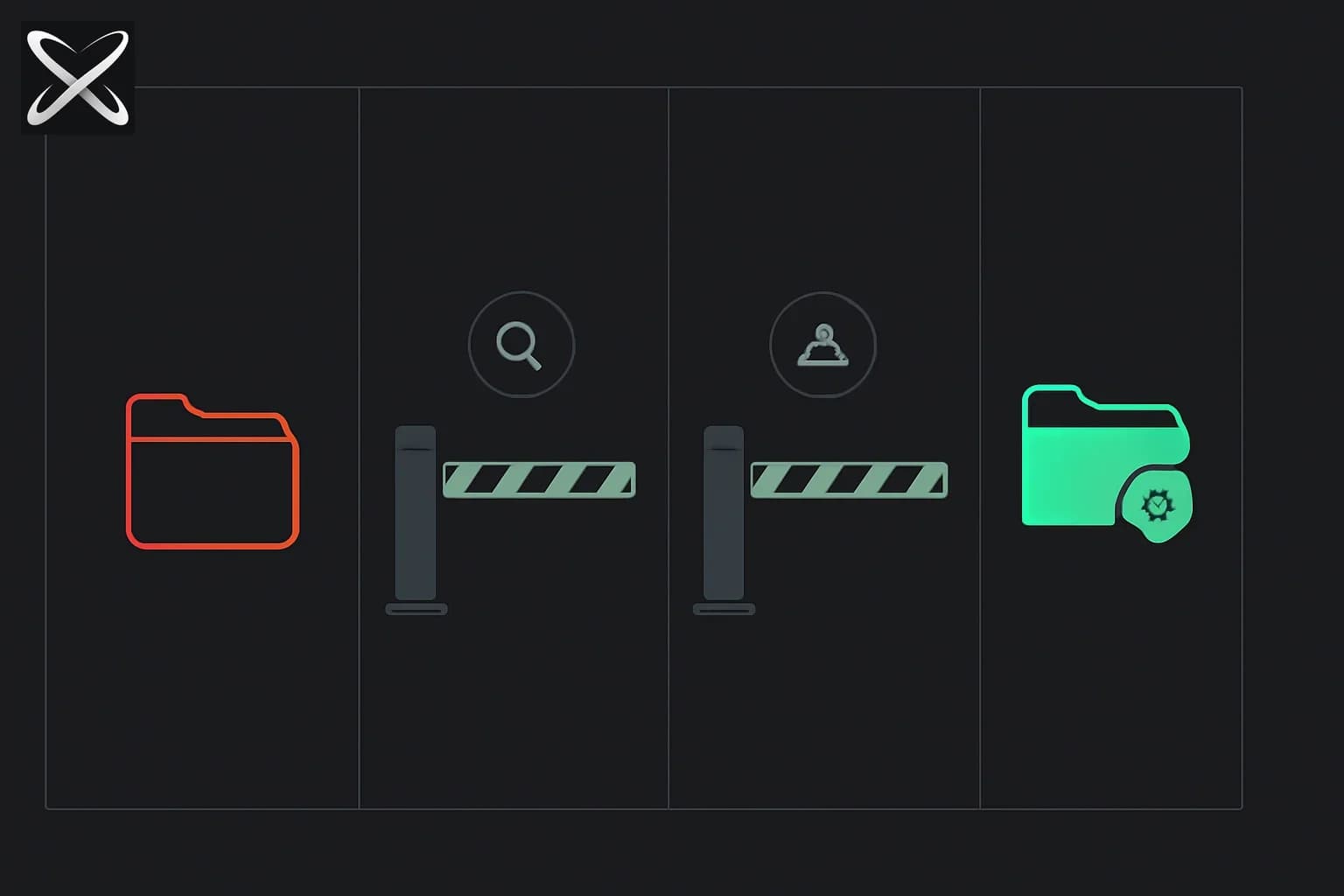
F-Droid, the open-source Android app repository, shipped version 2.0 on September 24, 2026. F-Droid calls it "the largest app update in 10 years." The timing is pointed: the announcement opens with a banner saying "F-Droid is under threat. Google is changing the way you install apps on your device," linking to the Keep Android Open campaign.
This is not an AI story on its face. It matters to builders anyway. Anyone using coding agents to ship Android apps, or distributing tools outside Google Play, is affected by what happens to alternative installation paths. And the release itself is a good look at a small team rewriting a decade-old app.
TL;DR: F-Droid 2.0 at a glance
| Question | Answer |
|---|---|
| What is it? | Full redesign of the official F-Droid client |
| Built with | Kotlin and Jetpack Compose, Material Design |
| Navigation | Discover, Search, My Apps |
| Rollout | Gradual, "over the coming weeks," after 14 test releases |
| Updates | Automatic background updates by default |
| Installer | Unified session installer using Android's pre-approval API |
| Dropped | Android 6 support, pull-to-refresh, F-Droid Privileged Extension support, app wiping on panic trigger |
| Audit | Independent review by the Open Technology Fund's Security Lab with Convocation; full report pending |
| Funding | NLnet (Mobifree), Open Technology Fund, NGI, Calyx Institute |
What changed in the app?
Discovery and search
F-Droid 2.0 restructures the app around three areas and folds categories into Discover. The category system is much larger, with higher-level "meta" categories and 17 separate game genres instead of one Games bucket. Search now covers app descriptions, categories and translated content rather than only names, has much better Chinese, Japanese and Korean support, and remembers recent queries.
Filters combine, so you can, for example, show only action games compatible with your device that do not depend on non-free network services. F-Droid stresses this happens "without tracking you, or trying to engage you to spend increasingly more time in the app."
Installation
The technical headline is a unified installer that uses Android's newer session and pre-approval APIs, so on supported devices you confirm right after tapping install rather than after the download. F-Droid credits "pressure from the EU's Digital Markets Act (DMA) and anti-trust actions around the world" for Android offering third-party stores a smoother install path.
Updates now fetch and install automatically by default, and existing preferences are respected. A commenter pointed out that these session-installer APIs have existed since Android 14 in 2023, so the notable thing is that F-Droid finally adopted them.
What was removed
The release notes are candid about cuts:
- App wiping on a panic trigger (used with apps like Ripple) has not returned. F-Droid says it needs specialized work for a small user base, and suggests users who depend on it postpone updating.
- App disguise now changes only the icon and name, not a fake calculator, so users understand the app remains visible in system settings and forensic inspection.
- Tor auto-detection is gone. "Use Tor" migrates to generic proxy settings, with Tor VPN recommended.
- F-Droid Privileged Extension is not supported in 2.0. A maintainer replied on Hacker News that the team is exploring reviving it because the session installer "mostly replaces" it but not fully.
- Android 6 support was dropped; old releases keep working on old devices.
- Nearby app sharing is being reimplemented and is not ready for launch.
Why does the Google timing matter?
F-Droid's banner and the Keep Android Open campaign refer to Google's plan to change how apps get installed. The details are contested. Commenters on Hacker News described an "advanced flow" that requires a one-time 24-hour wait before enabling installs from outside a verified path, with the setting carrying over in backups. Others pointed to a nine-step process listed on the campaign site. The policy was described as targeting Google Mobile Services, so AOSP-based systems such as GrapheneOS and LineageOS would not be bound by it.
Treat all of that as second-hand. Verify current requirements with Google's developer documentation before you plan a distribution strategy, and note that people in the thread disagreed on whether the escape hatch will last. As one commenter put it: "Knowing Google, that's a big assumption."
The practical open question for F-Droid is repository trust. Because F-Droid builds apps from source and signs them itself, one commenter suggested Google could recognize the repository's signing keys rather than requiring each developer to register. Whether Google would do that is unknown.
What are people saying?
The Hacker News thread hit 886 points and 250 comments. The recurring arguments:
- Design. Some found the Material redesign clean; others wanted visible separators and clearer scroll cues. One user rolled back to v1 over progress bars and per-app update taps.
- Alternatives. Users compared Droid-ify, Neo Store, Aurora Store and Obtainium. A maintainer noted third-party clients should implement the same security standards, including newer index formats, and said Obtainium lacked signature verification on F-Droid repos.
- Safety versus freedom. Some argued unvetted installs should not be on a normal user's "happy path" and that a phishing APK is a real risk for non-technical relatives. Others said education and permission sandboxing are the answer and that "installing software is installing software."
- Reality check. Many users reported the rollout had not reached them yet, and the site APK served 1.23.2 on launch day.
What does this mean for AI app builders?
Three connections to explainx.ai's core:
- Agents make shipping Android apps trivial. With Claude Code and similar tools, a solo developer can build and release an APK in a day. Distribution rules decide whether that app reaches anyone. See our guide to controlling Claude Code from your phone for the developer-side workflow.
- AI apps are a malware lure. Verification rules exist partly because attackers imitate popular apps. Our post on the fake Claude app that stole crypto and the write-up on RATHat, an AI-navigation Android malware show the threat is not hypothetical. A store that builds from source, like F-Droid, is one mitigation; Google's identity checks are another.
- Trust in agent skills follows the same pattern. The debate over verified versus open distribution is the same one playing out for agent skills, where registries add verification because unverified installs carry risk.
What should you do now?
- If you distribute Android apps outside Play: publish through more than one channel, keep reproducible build instructions, and follow Google's verification guidance closely.
- If you use F-Droid: wait for the rollout to reach you rather than side-loading the website APK. If you rely on app wiping or the Privileged Extension, delay the update.
- If you build AI features into Android apps: decide early whether you need Play distribution, which brings review and identity requirements, or an open channel, which brings reach limits.
- If you are worried about the policy: the Keep Android Open campaign lists the steps it suggests; read it and Google's own statements side by side.
How is F-Droid different from Play, Obtainium and other clients?
F-Droid builds each app from source on its own infrastructure and signs it with the repository's key, which is why commenters describe it as a due-diligence layer: it blocks proprietary code and anti-features are labeled. Obtainium and GitHub-release installers skip that middleman and pull developer-signed APKs directly, which is faster for apps that update daily but gives up the build-from-source guarantee. Play adds review and identity checks but also ads and tracking in many apps. Third-party F-Droid clients such as Droid-ify and Neo Store exist, and a maintainer cautioned that they should implement the same index and signature standards.
The practical rule from the thread: choose the channel by how fast you need updates and how much you trust the publisher, and keep at least two channels for critical apps.
A checklist before you update or ship
- Wait for the rollout rather than sideloading the site APK, since launch-day reports showed 1.23.2 still being served.
- Back up your app list so you can roll back if the new interface or per-app update flow does not suit you; one user reverted to v1 the same day.
- Check panic-feature dependencies. If you use app wiping, postpone the update.
- Confirm your device's Android version. Android 6 is no longer supported by 2.0.
- Read Google's current verification rules if you distribute your own APKs, and plan a second distribution path in case requirements change.
What is the bottom line?
F-Droid 2.0 is a genuine modernization delivered by a small, grant-funded team, with real trade-offs for users who relied on its niche privacy features. The larger story is not the interface. It is whether independent install paths survive on the world's most-used mobile platform, which affects everyone who ships software outside a single store, AI builders included.
Related reading on explainx.ai
- Fake Claude app steals crypto: RevStealer
- RATHat: Android malware with AI navigation
- Claude Code mobile remote control guide
- Agent skills security and verification
- Apple iPhone Duo event and Android recreation
- Meta Muse for Mac desktop launch
Official sources: F-Droid 2.0 announcement, the Keep Android Open campaign, and the Hacker News discussion of the release.
Details reflect F-Droid's announcement and community reports as of September 25, 2026; Google's policy specifics were not independently verified.