




Enverus Intelligence Research (EIR) published a November 24, 2026 analysis that normalizes water use to monthly consumer spending, putting about 1.9 gallons of water against $25 of frontier LLM inference and 308 gallons against the same $25 spent on almond milk. The release is spreading through Reuters, Channel News Asia, and World Oil as the latest answer to a question that started with Sam Altman's almond analogies and now shows up in zoning fights from Quilicura to Ohio ballot measures.
TL;DR
| Question | Answer per Enverus release (via Reuters / World Oil, Nov 24, 2026) |
|---|---|
| $25 on frontier LLM inference | ~1.9 gallons water (base case, includes power plant) |
| $25 on almond milk | ~308 gallons |
| $25 on golf green fees | ~679 gallons |
| $25 household power (all gas grid) | ~31 gallons |
| Share at power plants | ~90% of modeled inference water |
| Hyperscale campus intensity | ~32,100 gallons / acre / month (vendor estimate) |
What Enverus actually released
Enverus, which brands itself an energy analytics company, issued a newsroom post titled Setting the record straight on data center water use on November 24, 2026 from Calgary. World Oil and Reuters relay the same takeaway table. The public summary describes a longer subscriber report named Data Center Water Use | Setting the Record Straight. Full PDFs are not on the open web; journalists quote the press-style takeaways.
Ryan Luther, director of Energy Transition Research at EIR, told outlets that "If a typical consumer is worried about their water footprint, skipping one almond latte a week does more than giving up AI chatbots entirely." World Oil reproduces that line alongside the gallon table. Channel News Asia and The Straits Times carry the same spending benchmark with Reuters attribution.
The methodology, as described in secondary coverage, does three things builders should track:
- Anchors everything to consumer dollars, not liters per token or gallons per GPU hour. That makes the story legible to city councils but hides burst demand during training runs.
- Includes thermoelectric water at power plants serving inference loads. EIR reportedly assigns ~90% of inference water to generation, not cooling towers at the campus fence line.
- Compares AI spend to lifestyle goods—almond milk, golf, residential electricity—so readers can sanity-check magnitudes without reading a utility interconnection filing.
This is vendor research from an energy-data firm, not a peer-reviewed hydrology paper. Treat every gallon as EIR's model output until an independent group publishes code and inputs.
Why the almond headline keeps returning
The almond comparison is not new to AI politics. We dissected Sam Altman's almond-versus-ChatGPT water claim when it dominated social feeds in 2025. The pattern is stable: labs defend usage intensity, drought regions attack siting, and intermediate analysts try to reframe the fight.
Enverus sits in the third bucket with better arithmetic than a viral clip but the same political edge. Its numbers support operators who argue inference is cheap in water per latte, while Jaron Lanier's sacrifice-zone essay and Malaysia's data-center rules show communities rarely debate national per-dollar averages—they debate aquifer permits next door.
Microsoft's Brad Smith milk-regulation line is a cousin argument: AI is culturally compared to groceries and public services. Enverus supplies gallons per grocery dollar this week.
How Enverus says power plants dominate the footprint
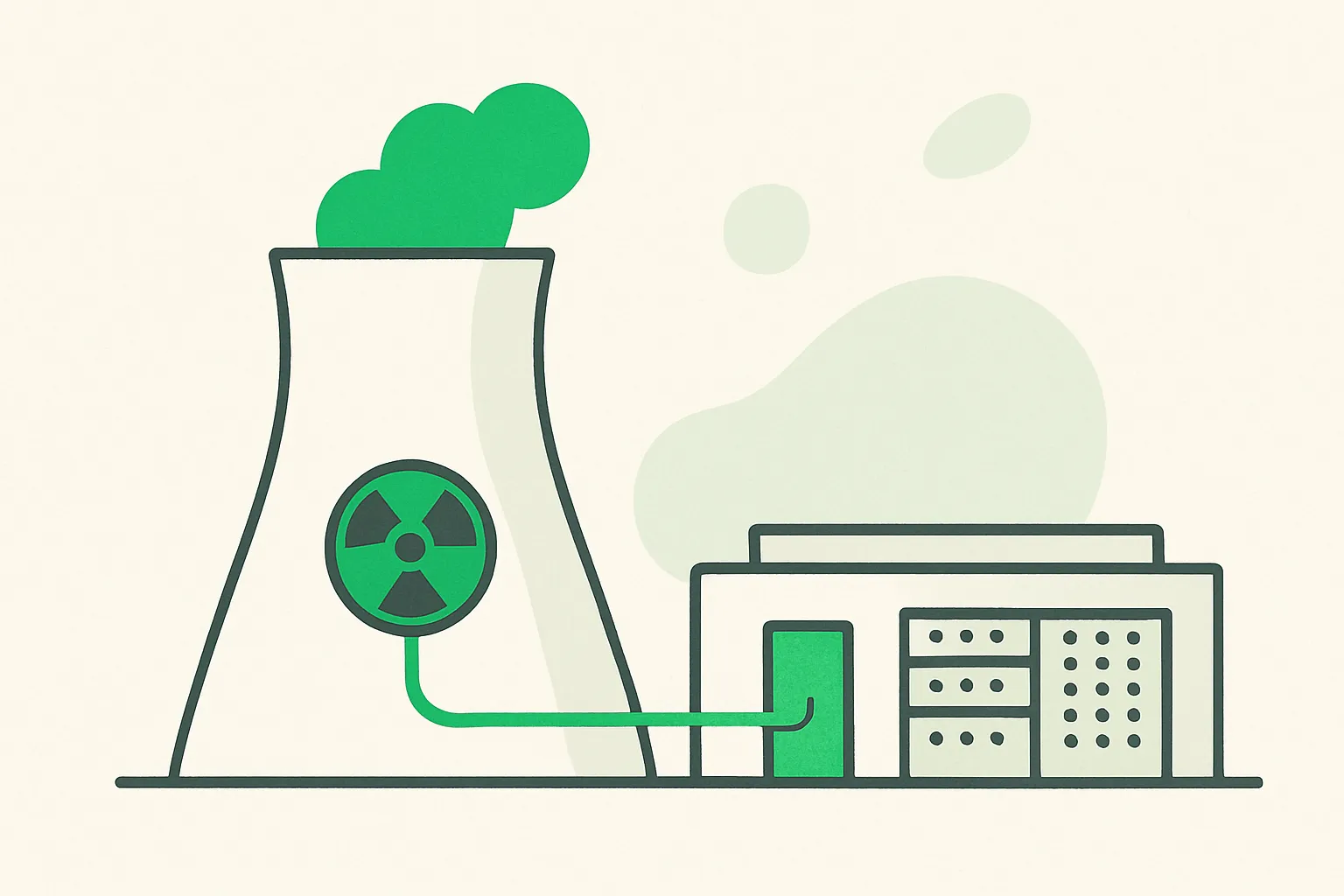 Cooling tower linked to a data center by a green power line
World Oil's November 24 write-up stresses that most modeled water sits at generators, not inside the white building. That matches how grid planners already think about data center real environmental impact: megawatts arrive with cooling water contracts upstream.
For builders, the implication is practical:
- A campus on a dry-cooled design may still import water through gas or coal plants unless the PPA points at wind, solar, or nuclear with different water profiles.
- Open-weight local inference shifts dollars from hyperscale rent to home electricity bills, which EIR puts at ~31 gallons per $25 on an all-gas grid—still not zero.
- Community compacts, like OpenAI's campus blueprint, promise site-level disclosure; Enverus does not replace county permit PDFs.
When TSMC's Texas fabs and Samsung cooling talks hit the news, water numbers are per-facility. EIR's national consumer benchmark cannot settle a Brazos River hearing by itself.
What developers are saying on Hacker News
The Reuters-linked thread on November 25, 2026 drew early skepticism, not celebration.
eesmith called the release another non-peer-reviewed white paper from what they read as big energy and AI allies, and pointed readers to a Harvard data-center climate emissions study with a worse-than-prior headline (comment). That is eesmith's opinion, not proof that EIR miscounted gallons.
davydm criticized dollar-normalized analogies with a coffee-versus-gardening example, saying the frame "completely skips scale" when one activity is tiny spend and another is huge (comment). Early November 25 comments preview how technical readers may attack the report: not by denying water, but by rejecting spend as the denominator.
When you cite Enverus in engineering forums, lead with method transparency. Acknowledge the full report is paywalled and that local gallons per acre still matter for Arizona backlash stories.
How to read the "$25 per month" anchor
EIR's $25 is a consumer inference subscription metaphor, not your enterprise Azure commit. Mapping it to work:
| If you spend on… | EIR's claimed water per $25 | Caveat |
|---|---|---|
| Frontier hosted chat APIs | ~1.9 gal | Model mix and region change grid water |
| Almond milk | ~308 gal | Agriculture accounting differs by brand |
| Golf fees | ~679 gal | Course irrigation varies by climate |
| Home power (all gas) | ~31 gal | Rooftop solar shifts plant share |
If your team runs batch training, synthetic data generation, or video world models, monthly consumer inference is the wrong proxy entirely. Use utility interconnections and cooling tower disclosures for capital projects.
Enverus also claims skipping one almond latte saves more water than $100 of inference, and one golf round beats $16,000 of inference on the same accounting—stunt comparisons designed for headline shows, not capacity planning.
What is verified vs what outlets relay
| Claim | Status on Nov 25, 2026 |
|---|---|
| EIR published a Nov 24, 2026 newsroom summary | Verified via World Oil, CNA, Straits Times quoting Enverus |
| 1.9 / 308 / 679 gallon triplet for $25 spends | Attributed to EIR; full spreadsheet not public |
| ~90% of inference water at power plants | Attributed to EIR in World Oil |
| Hyperscale ~32,100 gal/acre/month | Attributed to EIR in multiple outlets |
| Peer review or government audit | Not stated in public materials |
| Conflicts with every local permit fight | Not resolved—site politics use different denominators |
When politicians cite "AI uses less water than golf," ask which golf course, which grid, and which month of inference spend they mean.
How utilities and regulators may read the same chart
Energy-transition research shops like Enverus sell into oil, gas, and power traders first, not city councils. That does not automatically invalidate the math, but it does explain why the denominator is dollars instead of acre-feet per county. When Constellation and hyperscaler PPAs hit the wires, the buyer cares about megawatts; when Reuters picks up Enverus, the reader cares about whether ChatGPT is evil.
Regulators in Thailand are writing tiered noise and water rules with site inspection language. Those dockets rarely cite consumer almond milk, but they do cite gallons per day per permit. A mayor can hold both truths: national per-dollar ratios from EIR and a local exceedance on a cooling tower blowdown line.
For enterprise inference buyers, the actionable slice of EIR is the ~90% at power plants line. If your procurement claims "net-zero campus" while the PJM or ERCOT mix still runs thermoelectric coal, your water story travels upstream. That is the same structural point as data-center real environmental impact—just packaged for lifestyle media.
What builders and planners should do this week
 Green cable linking a transformer to a small server cabinet
-
Separate three questions: personal chatbot guilt, campus cooling design, and grid fuel water. Enverus mostly answers the first.
-
Pull primary permits for any site you depend on. Thailand's tiered rules and SpaceX Cochise hearings show regulators want local gallons, not national lifestyle ratios.
-
Document your own PPA water story if you market "green AI." EIR's emphasis on plants rewards transparent fuel disclosure, similar to OpenAI compact talking points.
-
Avoid repeating almond memes without a source line. Link this report or our Altman fact check instead.
-
Track December hearings and campus filings in your state even if national headlines quote Enverus. Ohio voters already moved faster than any vendor white paper.
Training versus inference in the water debate
Most community anger in 2026 targets training clusters, while Enverus anchors frontier inference spend at $25 per month. Training can burst cooling demand for weeks; inference is steadier but more geographically distributed as edge POPs grow. Neither label replaces a permit spreadsheet.
If your team ships open models, Ling-3.2-Air style local inference shifts gallons from Virginia to home gas grids—back to EIR's 31 gallons per $25 household line. Advocacy and accounting diverge again.
Related reading
- Sam Altman's almond versus ChatGPT water claim, fact-checked
- Data center environmental impact: water and electricity
- Data center water lawsuits and community pushback
- Quilicura residents ran a human-AI campaign over data center water
- OpenAI national community compact for compute campuses
- Ohio voters passed municipal data center restrictions
Figures and quotes from Enverus are as relayed by World Oil, Channel News Asia, and Reuters on November 24–25, 2026. Gallons are vendor-modeled, not measured at your campus.