



ElevenLabs agreed to acquire Kotoba Technologies on November 16, 2026, folding a Japan-rooted voice lab into ElevenAgents so enterprises can run Japanese text-to-speech, speech-to-text, and speech-to-speech on the same stack that already powers English agents. The deal lands days after Jensen Huang canceled an ElevenLabs summit appearance — unrelated operationally, but a reminder of how visible voice-AI conferences have become in the AI calendar.
What the companies announced
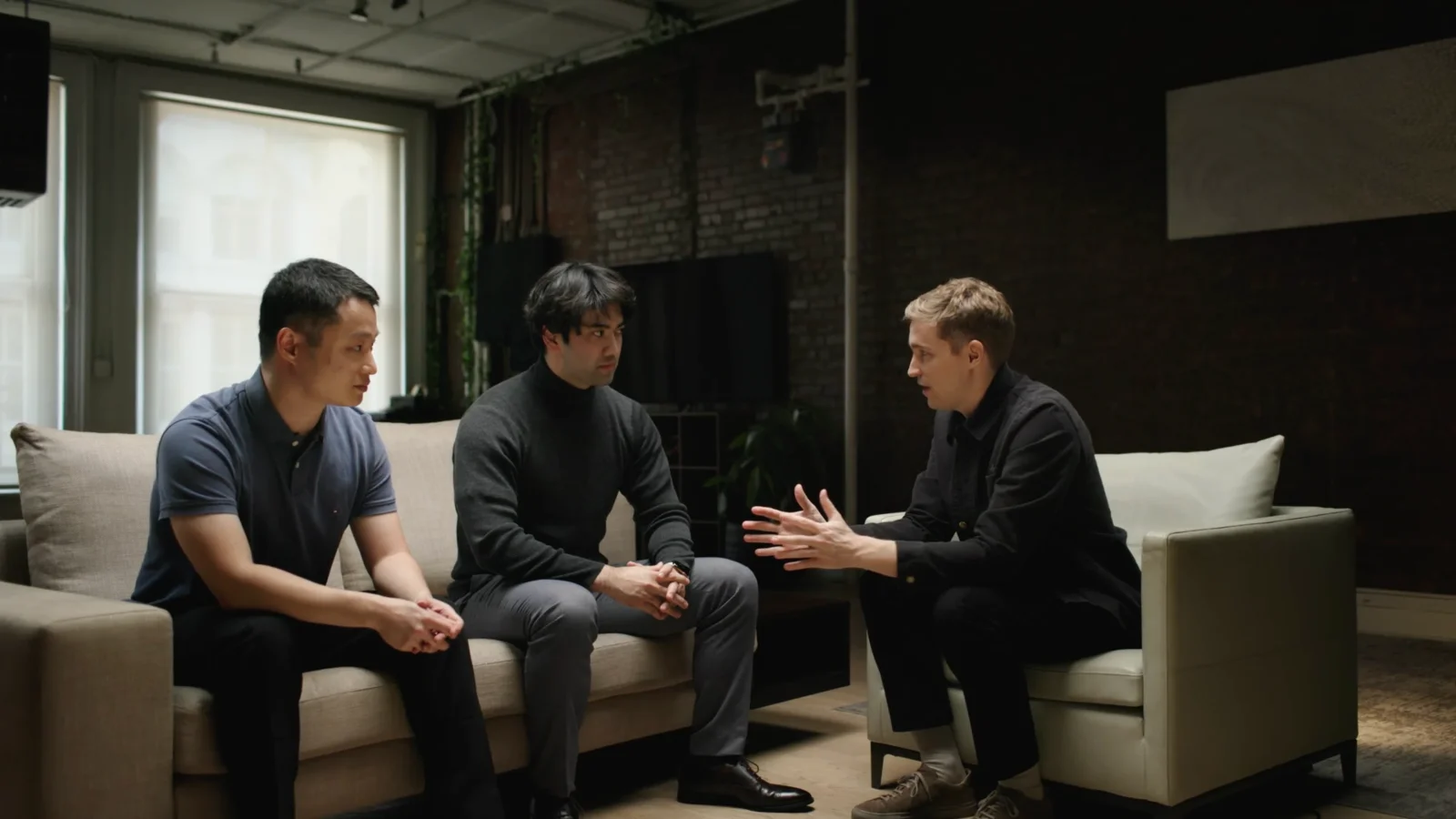 ElevenLabs and Kotoba leaders after the acquisition announcement
Image: ElevenLabs
ElevenLabs' blog post says Kotoba — founded in 2023 by researchers Noriyuki Kojima and Jungo Kasai — will join as the leading Japanese voice AI team. CEO Mati Staniszewski argued that AI must feel natural per culture, not only per language, and that Kotoba already built state-of-the-art voice models adopted by major enterprises.
Kotoba's PR Times release on November 17, 2026 confirms the acquisition is ElevenLabs' first buy in Japan. It states 15 employees transfer and that closing is slated for late Q4 2026 after regulatory steps.
Koto model family
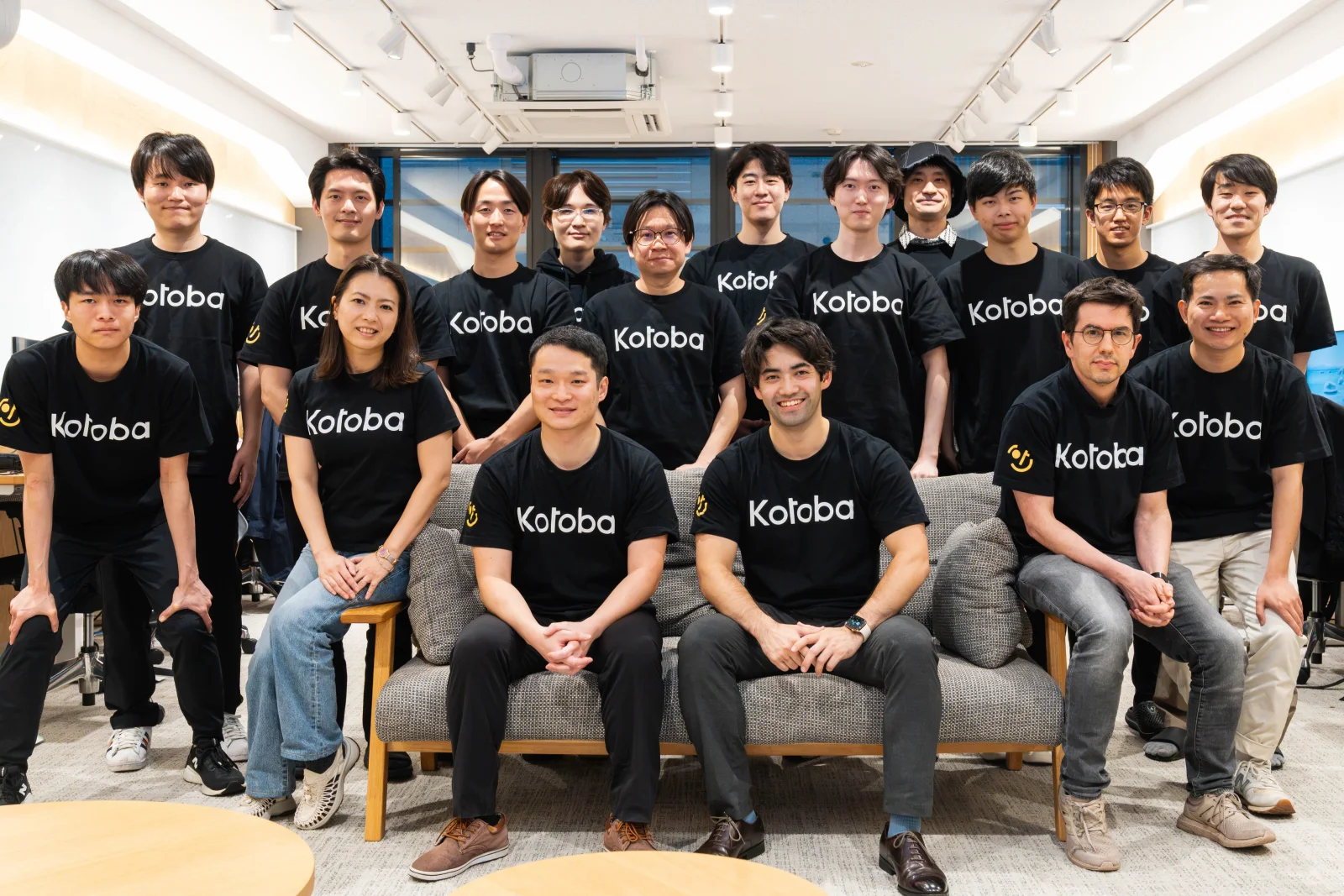 Kotoba Technologies voice research team in Tokyo
Image: Kotoba Technologies
Both announcements highlight Koto across:
- Text-to-speech for Japanese agents and media
- Speech-to-text for contact centers and meeting capture
- Speech-to-speech paths aimed at simultaneous interpretation
ElevenLabs says Salesforce already uses Koto for Agentforce Voice conversations in Japanese — a concrete enterprise anchor, not a benchmark slide.
CTO Piotr Dąbkowski emphasized Japanese linguistic complexity; Kotoba CTO Jungo Kasai framed the deal as accelerating voice AI agents and translation products out of Tokyo.
Deal economics: what is verified vs reported
| Claim | Source | Status |
|---|---|---|
| Acquisition agreed | elevenlabs.io/blog/kotoba, PR Times | Announced by both companies |
| First ElevenLabs acquisition in Japan | PR Times | Stated in Kotoba release |
| Price above $100M | Nikkei Asia Nov 17 | Press report; not in ElevenLabs blog |
| Anime export angle | Nikkei, Japanese business press | Industry narrative; not in primary ElevenLabs quotes |
explainx.ai does not repeat Nikkei's dollar figure as fact in headline copy; readers should treat it as reported consideration until SEC or Japanese disclosure filings appear, if any.
Why Japanese voice is a distinct engineering problem
Japanese combines multi-script input, mora timing, honorific registers, and low-resource dialect edges that break naive multilingual stacks. Labs often bolt on a Japanese locale late; Kotoba's pitch — echoed in ElevenLabs' post — is architecture from day one.
For builders comparing stacks:
- Latency-sensitive telephony still pairs with Retell Tell-1 class models for English-first stacks.
- Open-weight experiments might use Zyphra Zonos3 or local runtimes, but enterprise Japan deployments historically bought compliant hosted APIs — this acquisition doubles down on hosted ElevenAgents.
Go-to-market signals
ElevenLabs plans local sales leadership and infrastructure investment in Japan over coming months, per its blog. That matters if you operate sovereign AI requirements in APAC alongside Sarvam's India inference pricing or Tencent HY4 Flash launches — voice is becoming as geopolitically segmented as LLM weights.
What builders should do before close
If you already use ElevenLabs for English agents: Map which workflows need native Japanese versus translated scripts. Koto integration may change voice IDs and latency profiles after close — pin versions in staging.
If you compete with Salesforce Agentforce Voice in Japan: Benchmark Koto against your current TTS vendor on name-reading accuracy and customer honorifics, not only WER.
If you rely on open models: This deal does not block open weights, but it signals where ElevenLabs thinks paid moats live: locale depth and enterprise compliance.
Japanese linguistic challenges voice models must solve
Japanese TTS is not English with different characters. Product teams routinely underestimate:
- Script mixing: Kanji, hiragana, katakana, and Latin acronyms in one sentence confuse grapheme-to-phoneme models trained mostly on Wikipedia dumps.
- Mora timing: Pitch accent and mora count drive perceived naturalness more than raw WER.
- Register: Customer-service agents need keigo levels matched to industry norms; anime dubbing wants entirely different prosody.
- Named entities: Foreign brand names written in katakana need lexicons, not guesses.
Kotoba's pitch — reiterated in ElevenLabs' post — is locale-first architecture. Salesforce picking Koto for Agentforce Voice implies enterprise customers already trusted it on those axes more than a generic multilingual checkpoint.
ElevenAgents stack after close (expected)
Until regulatory close, APIs stay separate. After close, watch for:
| Surface | Likely integration |
|---|---|
| ElevenLabs TTS API | Koto voices as selectable locales |
| ElevenAgents | Japanese dialog policies with Kotoba turn-taking |
| Scribe STT | Shared tokenizer improvements from Kotoba STT |
| Enterprise SSO | Japan data residency statements in DPA |
None of that is confirmed shipping; it is the roadmap shape enterprise architects should questionnaire ElevenLabs about during Q4 renewals.
Competitive map for multilingual voice agents
| Vendor | Japan angle |
|---|---|
| ElevenLabs + Kotoba | Acquisition doubles down on hosted enterprise Japan |
| OpenAI / Astra voice SKUs | Check region latency and script coverage in your own evals |
| Google Cloud Speech | Strong infra, different agent glue |
| Local carriers | Often still win on telephony regulatory boxes |
Voice-agent builders should run side-by-side MO tests on:
- Numbers and dates read aloud in contracts
- Name reading for customer CRM records
- Barge-in behavior during noisy mobile calls — see Retell latency benchmarks
Implementation playbook for teams outside Japan
Week 1: Inventory which flows are Japanese-native versus translated English scripts. Machine translation before TTS often breaks honorifics.
Week 2: Clone your English agent graph; swap only voice and STT endpoints. Measure task success rate, not MOS scores alone.
Week 3: Legal review voice cloning consent if you fine-tune on executive recordings — Kotoba does not remove biometrics law obligations.
Week 4: Load-test concurrent calls; Japan enterprise peaks differ from U.S. retail peaks.
If you lack Japanese-speaking QA staff, hire contract reviewers for 50 scripted calls before marketing claims "native" quality.
Why anime and media exports matter indirectly
Nikkei frames the deal as helping anime overseas through better dubbing pipelines. explainx.ai does not treat entertainment economics as core, but builders should know media houses are often early adopters of STT+TTS stacks that later migrate to customer support. A model good at dramatic dialog sometimes fails on boring IVR phrases — test both.
Governance and workforce notes
Fifteen Kotoba employees joining ElevenLabs is tiny headcount but dense research talent. Watch hiring pages in Tokyo if you compete for speech researchers. Conversely, open-source communities may see alumni contribute datasets now that Kotoba models sit inside a commercial API — similar to waves after other voice startup acquisitions.
Extended FAQ for voice-agent architects
Will Koto voices clone executives without consent? ElevenLabs still requires cloning policies; acquisition does not change biometric law.
Does Agentforce Voice automatically upgrade? Salesforce customers should open support tickets asking whether Koto routing is opt-in per org.
Can I keep using Kotoba APIs until close? Assume status quo until ElevenLabs communications say otherwise; monitor both status pages during Q4 close.
What about Korean or Mandarin next? ElevenLabs blog frames Japan as first step in East Asia; no Korea-specific SKU announced.
How does this interact with OpenAI realtime voice? Competing stacks; run MOS and task-success evals on your own telephony carrier.
Is $100M+ deal price confirmed? Only via Nikkei reporting; not in ElevenLabs primary post.
Are anime studios direct customers? Not named in primary sources; treat Nikkei media angle as industry inference.
Latency to U.S. callers using Japanese agents? Architecture question for your next peer — measure RTT and TTS buffering separately.
Data residency in Japan? Ask ElevenLabs for post-close DPA updates; acquisition intent mentions local infrastructure investment but not certainties.
Building Japanese voice agents: architecture sketch
A minimal production graph after close might look like: telephony SIP trunk → STT (Koto) → LLM policy (could remain English-centric internally) → TTS (Koto) → caller. Keep LLM reasoning language and spoken language decoupled early in pilots; translating reasoning traces after the fact is cheaper than debugging honorific errors in the policy model itself.
Log per-turn latency budgets: Japanese enterprise callers tolerate slightly longer pauses when prosody is correct, but IVR hang-ups spike when silence exceeds about 1.2 seconds without filler audio. Warm-transfer phrases need pre-rendered audio caches because streaming TTS still hiccups on rare kanji.
Security reviews should include prompt injection via synthesized speech — attackers can spell email addresses or OTP codes aloud to confuse STT. Pair voice stacks with the same tool-approval patterns we document for coding agents, adapted to telephony. Also log redacted transcripts today under your existing corporate data-retention policy.
Finance teams should model per-minute costs across STT, LLM, and TTS; Japanese deployments historically paid premiums for locale accuracy. If Nikkei's $100M+ figure is directionally right, amortize it against expected Agentforce-style expansion rather than consumer hobby projects. Re-check ElevenLabs pricing after regulatory close. Document which voice IDs map to Koto checkpoints in your internal runbooks so incident response can roll back quickly if a bad deploy ships.
Related reading
- ElevenLabs Scribe v3 live speech-to-text
- Retell Tell-1 voice model latency
- Jensen Huang cancels ElevenLabs summit
- Hugging Face PyBot swarm agents
- Bedrock agentic retrieve and AgentCore memory
- Apple Siri AI usage limits beta
Acquisition terms beyond publicly announced closing timeline reflect company blog posts and PR Times checked November 17, 2026.