



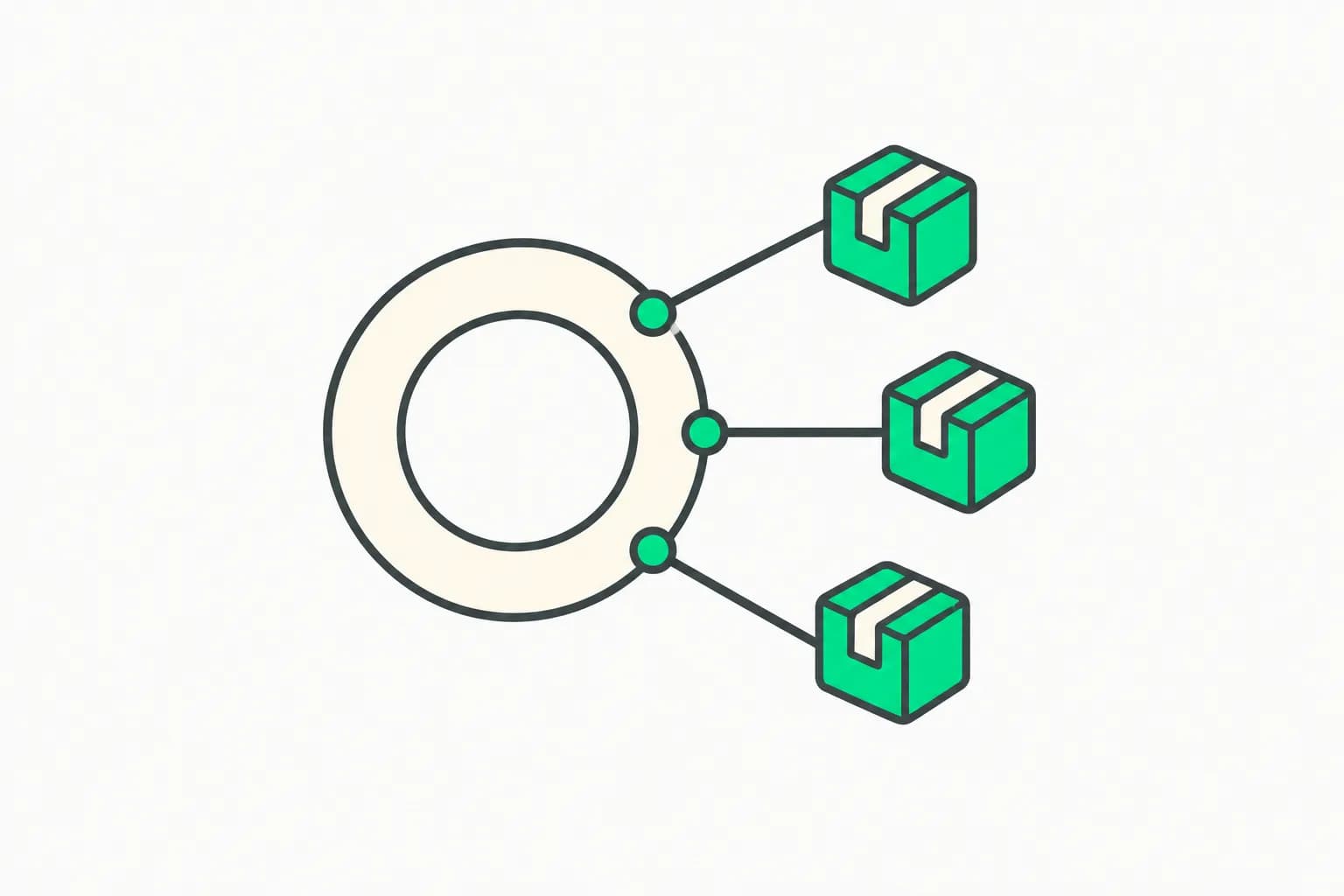
Delegent is a Claude Code harness where a frontier model keeps the keyboard while small language models do the legwork, according to arXiv 2611.33098v1 posted November 24, 2026. Lingwei Gu and Jimmy Lin report 67% lower frontier spend on long-horizon coding and 59% on agentic search when a 27B FP8 SLM handles delegated subtasks—without losing task scores in their tables.
TL;DR
| Item | Detail per abstract |
|---|---|
| Pattern | Frontier leads; SLM subagents investigate, test, search |
| Base harness | Claude Code |
| 27B SLM savings | −67% coding cost, −59% agentic search |
| 2B SLM savings | −66% coding cost on laptop-class model |
| Router training | None — models are swappable |
| Code | github.com/castorini/delegent (not public as of Nov 25, 2026) |
Why delegation beat routing in this paper
Agent bills in 2026 scale with context re-reads: every tool loop sends the full transcript back through a frontier model. Teams respond with cascades (cheap model first), routers, and prompt caching—see Claude platform cost tuning and model-selection energy math.
Delegent picks a different lever: keep the frontier model responsible but spawn SLM workers for narrow subtasks—read this module, run tests, search the monorepo. The frontier model still plans merges and architecture; the SLM does not own the PR.
That matches how Cognition SWE 2.1 Lightning and mobile agent testers in GitHub Actions squeeze latency and dollars without declaring small models safe for final commits alone.
What the harness actually delegates
The abstract names subtasks explicitly:
- Investigating code — localized reads instead of whole-repo frontier passes.
- Running tests — command execution with summarized output back to the lead model.
- Searching a corpus — IR-style lookups Jimmy Lin's group knows well from castorini tooling.
Each subtask returns focused context, shrinking the next frontier call. Savings grow with legwork the frontier used to perform inline—exactly the long-horizon coding and agentic search suites in the paper.
Authors stress a short instruction that reserves main coding for the frontier model. That guardrail matters: without it, a 2B SLM loses tasks in their ablations. Delegation boundaries are not automatic; they are prompt design.
Reported cost and quality numbers
 Green feather on a low coin stack suggesting lower inference spend
| Setup | Frontier cost change | Performance |
|---|---|---|
| 27B FP8 SLM helper | −67% coding, −59% search | No loss (authors) |
| 2B laptop SLM | −66% coding | Held with instruction tweak |
Treat "no loss" as benchmark-specific. Your private monorepo with custom CI may diverge. Run an A/B on issue-fix tasks before changing seat licenses.
Compare to OpenRouter spend shifts—routing between API vendors is orthogonal to in-repo SLM helpers.
When delegation helps and when it does not
Delegation wins when subtasks are narrow, outputs are summarizable, and mistakes are recoverable by the frontier lead on the next turn. It struggles when every line of code depends on global invariants only visible after full-file reasoning—think cryptographic constant layout or distributed consensus patches.
The paper's short instruction that reserves hard coding for the frontier is the operational secret. Teams that over-delegate see 2B models lose tasks in the authors' ablations. Run a week-long trial where only git grep, pytest -k, and log tail jobs go to the SLM; keep refactors on the frontier until error budgets stabilize.
Latency can rise if serial handoffs multiply; the savings target is dollars, not wall clock. For CI-heavy repos, parallel SLM workers may still beat one fat context—similar spirit to parallel mobile agent testers.
Delegent vs cascades and vs other November harnesses
| Approach | Who runs the full task | Training needed |
|---|---|---|
| Cascade / router | One model per task pick | Often router labels |
| Delegent | Frontier always | No router training |
| AWS Strands Decider v2 | Gemma picks tools in AWS stack | Service-specific |
| Autopilot visual harness | Vision loop for UI tasks | Different domain |
Delegent is closest to practitioner folklore: "use Opus to think, Haiku to grep." The paper formalizes it inside Claude Code and counts dollars.
Hardware and SLM choices
 Small rounded engine beside a larger engine, suggesting SLM helpers
The 27B FP8 point targets GPUs many shops already own for local inference, echoing PrismML ternary coding models and Rockbox LLM port culture—small, quantize, delegate.
A 2B model fitting on a laptop is the accessibility headline, but authors admit task loss without the short instruction that keeps hard coding on the frontier.
How to adopt the pattern before code ships
- Read arXiv 2611.33098v1 for task definitions and tables (11 pages, 5 tables per abstract).
- Watch castorini/delegent—404 on Nov 25 may mean embargo lag.
- Prototype manually in Claude Code: define SLM-only subagents for search and test logs with explicit handoff prompts.
- Measure tokens per merged PR, not per chat—savings track legwork volume.
Pair with T3 Code telemetry findings if you audit what leaves the machine.
Security note for delegated agents
Cheaper subagents still read secrets if you point them at production repos. Anthropic Siren honeypot and NCSC agentic offensive frameworks are reminders to sandbox SLM tools with least privilege, not to skip them because the model is small.
Measuring savings on your repo
Export token invoices from Claude Code or your API dashboard for two weeks: label PRs where search and test loops dominated wall time. Those PRs are Delegent-shaped. Re-run with manual delegation prompts before automating.
Track false negatives: an SLM that misses a failing test costs more when the frontier model ships a broken diff. The paper claims no performance loss on its suites—you need your regression matrix.
Agentic search savings (59% claimed) matter for legal, support, and compliance teams running RAG over tickets. Pair with MemOnce memory thinking so subagents do not re-fetch the same corpus every hop.
Open-source stacks without Claude Code can still copy the pattern in Autopilot harness or Protocolis solid-state web execution—numbers will differ.
Jimmy Lin and castorini context
castorini built Anserini, Pyserini, and years of cheap-first IR recipes. Delegent extends that ethos to coding agents: retrieve and rank with SLMs, decide with frontier. When github.com/castorini/delegent goes live, expect repro scripts tied to academic corpora first, then community ports.
Enterprise rollout guardrails
- Secrets: SLM subagents get read-only tokens by default.
- Branch protection: frontier model must open PRs; SLM never pushes main.
- Audit: log which subtask used which model ID.
- Rollback: one-click disable delegation when incident response starts.
Finance teams should compare Delegent against seat-based Devin pricing in Cognition SWE 2.1—different products, same budget line.
FAQ for engineering managers
Will a 2B model work Monday? Only with strict task boundaries; authors report losses without the short instruction. Do we need Claude Code? Paper numbers assume it; patterns port with effort. What about Codex or Gemini CLI? Untested in the abstract—re-benchmark. How do we audit delegated reads? Log paths and hashes per subagent turn. Does this replace caching? No—combine with prompt caching for compound savings.
Platform teams should publish an internal delegation policy: which repos allow SLMs, which require frontier-only review, and which directories are never delegated (prod configs, key material, HIPAA rows).
Hiring managers interviewing agent engineers can use Delegent as a discussion prompt: design subtask boundaries for your monolith, estimate token savings, list failure modes.
Related reading
- Claude platform cost and prompt caching
- Cognition SWE 2.1 Lightning on Devin
- Mobile agent testers with Claude Code in GitHub Actions
- AWS Strands Decider v2 with Gemma
- PrismML 27B agentic coding at 5.9GB
- OpenClaw ShellBench real-world agent benchmark
Closing note for platform owners
Delegation is an org policy, not only a model trick. Write which directories SLMs may touch, which CI jobs they may trigger, and which customer tiers still require frontier-only review. When castorini/delegent ships, diff their prompts against your draft policy before enabling wide rollout.
Cost wins compound when teams stop re-reading entire monorepos each tool loop. They evaporate when SLMs hide failing tests. Measure both dollars and escaped defects every sprint.
Share delegation configs in internal wikis with redacted prompts so junior engineers do not reinvent unsafe shortcuts. When Jimmy Lin publishes tables, reproduce agentic search and coding splits separately—59% and 67% answer different CFO questions.
Procurement negotiating Claude Enterprise should ask whether vendor-side delegation arrives before your internal SLM rollout—Delegent is a pattern, not a billing feature, until Anthropic or Cursor ships equivalents. Staff engineers can pilot manual subagents this week and quantify token delta before waiting for castorini code.
Security questionnaires from banks may soon ask which model read production SQL; delegation logs become audit artifacts, not debug trivia. Export those logs to SIEM fields your GRC team already reviews monthly during release trains.
Cost percentages come from the Delegent arXiv abstract (November 24, 2026). Verify against your harness once the GitHub repository is available.