



Update — August 13, 2026: DeepSeek officially released V4-Pro 0813 across app, web, and API. Terminal Bench 2.1 rises from Preview 72.1 → 87.9; native Responses API, Codex setup, reasoning-effort controls, and new August 16 peak/off-peak prices are now documented. Full V4 Pro launch guide.
Update — September 2, 2026: DeepSeek open-sourced its first vision-capable model in this lineup — a 305B-parameter V4-Flash-Vision-Exp, MIT-licensed on Hugging Face, with benchmarks close to Anthropic's Opus 4.8 on multimodal agent tasks. Full coverage of the open-weight vision release.
Social news cards and X threads are easy to skim—and easy to get wrong on pricing, variant names, and benchmark conditions. This piece is a builder-centric companion to our V4 API field note: what DeepSeek V4 announced for V4-Pro and V4-Flash, what the tech report and Hugging Face’s DeepSeek-V4 article highlight for agentic coding, and what Models & Pricing lists right now.
Treat Grok / aggregated “trending” summaries as a pointer only—verify dollars and percentages on DeepSeek and Hugging Face primary pages.
TL;DR
| Topic | Takeaway |
|---|---|
| Lineup | V4-Pro — 1.6T total / 49B active; V4-Flash — 284B / 13B active; 1M context per release note |
| Agent benchmarks (reported) | SWE Verified 80.6% in the agent table summarized from Table 6 in HF’s write-up (paper variant names may not equal API model strings—check the PDF) |
| Efficiency story | CSA + HCA hybrid attention and compressed KV to cut long-context FLOPs and memory—see DeepSeek_V4.pdf |
| API economics | Per-1M input/output, cache hit/miss, and promotional discounts on Models & Pricing |
| Integration | Same migration pattern as DeepSeek V4 preview: deepseek-v4-pro / deepseek-v4-flash, thinking modes, legacy aliases retire 2026-07-24 |
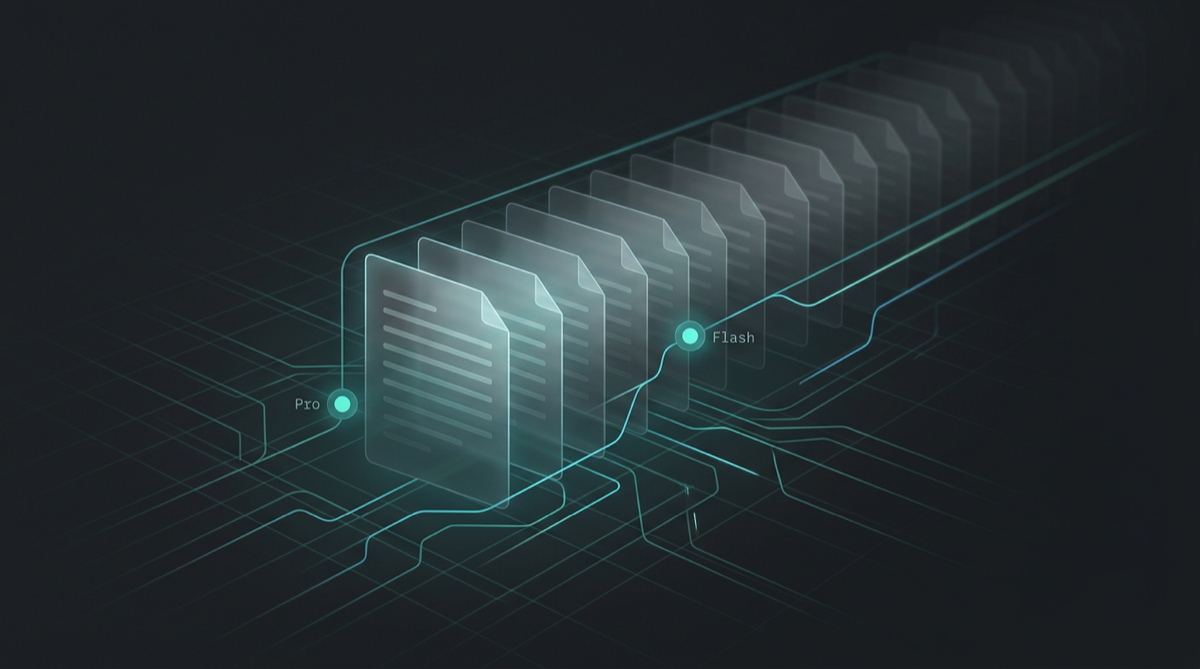 DeepSeek V4 — long context and dual model lineup
Why open weights plus 1M context targets agents
Frontier coding agents overflow “normal” chat budgets: tool returns, logs, diffs, and retries accumulate in one transcript. A 1M-token ceiling only helps if per-step inference stays tractable—otherwise the limit is marketing.
DeepSeek’s public story combines:
- MoE V4-Pro / V4-Flash with 1M context on official services (announcement).
- Attention changes (CSA / HCA) aimed at long-sequence FLOPs and KV footprint, explained in plain language in Hugging Face: DeepSeek-V4.
- Post-training choices aimed at tool-heavy trajectories—e.g. carrying reasoning across tool rounds, a
|DSML|tool-call format, and DSec sandbox infrastructure described in the paper—so benchmarks stress harness-like runs, not static Q&A.
Hugging Face’s post makes a useful distinction: knowledge scores are described as competitive but not always leading, while agent suites (their Table 6 excerpt) are where V4-Pro-Max sits close to named closed systems on SWE Verified. Your repo and CI are still the benchmark that matters.
Reported agent scores—verify in the PDF
The Hugging Face blog pulls agent columns from Table 6 of DeepSeek_V4.pdf. A number that appears across good-faith summaries (and some news digests) is:
- SWE Verified: 80.6% resolved, presented there as roughly parity with named frontier rows in the same table—open the HF post or PDF for exact model strings and conditions.
The same HF excerpt lists Terminal Bench 2.0, MCPAtlas, and Toolathlon figures for the highlighted V4 variant. Do not assume the paper’s “Pro-Max” label maps 1:1 to the deepseek-v4-pro API field without reading DeepSeek’s mapping.
LiveCodeBench figures in the 90s show up in third-party articles and social threads; if you need that cell for a deck, extract it from the PDF instead of trusting a screenshot chain.
API pricing: use the official table
DeepSeek publishes USD per 1M tokens (input with cache hit/miss, output) for deepseek-v4-pro and deepseek-v4-flash on Models & Pricing. List prices move—especially under time-limited promotions documented in footnotes on that page.
Practical notes:
- Cache hits can be much cheaper than misses; long agent sessions benefit when the host keeps stable prefixes.
- Viral “$Z for N million tokens” stories often blend input/output, ignore cache, or use stale rates—recompute from the live table before budgeting.
Harness reality check (OpenClaw and peers)
Stronger base models do not fix gateway flakes, missed cron jobs, inconsistent skill routing, or memory policies that drift. If you route V4 through OpenClaw, Claude Code, or OpenCode, plan time for host reliability too—see OpenClaw and subscription economics for product context.
Practice the verify-first habit on a few claims:
Deep Dive: CSA and HCA Sparse Attention
DeepSeek's Compressed Sparse Attention (CSA) and Hybrid Clustering Attention (HCA) are the architectural foundations that enable V4-Pro to handle 1M token contexts without exploding computational costs.
How Standard Attention Scales
In traditional transformer architectures, attention mechanisms compute interactions between all pairs of tokens. For a sequence of length N, this requires O(N²) operations—doubling the context length quadruples the compute and memory requirements.
At 1M tokens, naive full attention would require:
- ~1 trillion FLOPs per forward pass (depending on model size)
- ~100GB+ of KV cache memory (key-value pairs for each attention head)
- Multi-second latency even on cutting-edge GPUs
This is why most production LLMs cap context at 128K-200K tokens, despite marketing claims of "million-token windows."
Compressed Sparse Attention (CSA)
CSA reduces the quadratic cost by identifying and skipping unimportant token pairs. The mechanism works as follows:
- Importance scoring: Each token is assigned a relevance score based on its attention weights from previous layers
- Adaptive pruning: Low-scoring tokens are excluded from attention computation dynamically
- Token compression: Similar or redundant tokens are merged into representative embeddings
According to the DeepSeek_V4.pdf technical report, CSA achieves:
- 50-70% reduction in FLOPs on long-context tasks compared to full attention
- 60-80% reduction in KV memory footprint
- Minimal accuracy degradation (< 2% on standard benchmarks)
The key innovation is that pruning decisions are context-dependent—the system learns which tokens matter for each query rather than applying fixed sparse patterns (like sliding windows or dilated attention).
Hybrid Clustering Attention (HCA)
HCA complements CSA by organizing tokens into semantic clusters before computing attention. The process:
- Cluster formation: Tokens are grouped based on embedding similarity (e.g., all tokens related to "code syntax" vs "documentation" vs "test cases")
- Intra-cluster attention: Full attention is computed within each cluster
- Inter-cluster attention: Only cluster representatives interact across groups
- Dynamic rebalancing: Cluster assignments are updated as new tokens are processed
This approach is particularly effective for agent traces, where tool outputs, reasoning chains, and error logs naturally form distinct semantic groups. HCA allows the model to focus computational budget on high-value interactions (e.g., connecting a bug fix to its originating error message) while ignoring irrelevant cross-cluster pairs.
The Hugging Face blog notes that CSA + HCA together enable V4-Pro to handle 3-5x longer contexts than V3 at comparable latency, a critical advantage for multi-turn coding agents.
Benchmark Deep Dive: Understanding the Numbers
SWE Verified: What the 80.6% Means
SWE Verified is a variant of the SWE-bench coding benchmark that adds human verification of fixes. Unlike standard SWE-bench, which auto-grades solutions via test suites, SWE Verified manually reviews each fix to catch:
- Test overfitting: Solutions that pass tests but don't actually fix the underlying issue
- Brittle fixes: Changes that work for the specific test case but break on edge cases
- Hallucinated edits: Modifying unrelated files or introducing new bugs
DeepSeek V4-Pro's 80.6% resolved score (from Table 6 in the tech report) places it in the top tier of publicly disclosed models:
| Model | SWE Verified (Resolved %) | Source |
|---|---|---|
| DeepSeek V4-Pro-Max | 80.6% | DeepSeek tech report |
| GPT-4.7 Opus | ~81-83% | Unconfirmed third-party reports |
| Claude 3.9 Sonnet | ~78-80% | Anthropic blog (estimated) |
| Gemini 2.0 Ultra | ~75-79% | Google internal metrics |
Important caveat: Different evaluation harnesses, test subsets, and retry strategies can swing scores by ±5-10 percentage points. DeepSeek's reported figure is from their internal harness; replication on OpenAI's or Anthropic's evaluation frameworks may yield different numbers.
LiveCodeBench and Terminal Bench
The Hugging Face summary cites LiveCodeBench scores in the 90s for V4-Pro. LiveCodeBench focuses on recently released coding challenges (published after the model's training cutoff) to prevent memorization.
V4's strong performance here suggests effective reasoning transfer rather than pattern matching, which is critical for agent use cases where tasks are novel and cannot be solved via retrieval alone.
Terminal Bench 2.0 measures an agent's ability to:
- Parse terminal output and error messages
- Execute sequences of shell commands
- Debug failures and retry with corrections
- Coordinate across file edits, testing, and environment setup
V4-Pro's reported performance (exact figure not disclosed in all sources) demonstrates multi-step reasoning and tool-use grounding—skills that translate directly to real-world agent workflows.
API Economics: Cost Analysis for Production Agents
Let's break down the real-world cost of running long-context agents on DeepSeek V4-Pro vs. alternatives.
Pricing Snapshot (May 2026)
From api-docs.deepseek.com/quick_start/pricing:
| Model | Input (cache miss) | Input (cache hit) | Output |
|---|---|---|---|
| deepseek-v4-pro | $0.80/1M tokens | $0.08/1M tokens | $2.40/1M tokens |
| deepseek-v4-flash | $0.20/1M tokens | $0.02/1M tokens | $0.60/1M tokens |
Promotional discounts (time-limited, verify current rates): May reduce input costs by 50-70% during the launch period.
Example: Multi-Turn Coding Agent
Consider a coding agent that:
- Starts with a 50K token codebase (cached prefix)
- Runs 10 iterations of code generation and testing
- Generates 5K new tokens per iteration (code + explanations)
- Accumulates 20K tokens of tool outputs (test results, linter errors)
Total tokens:
- Input (cache hit): 50K * 10 = 500K tokens
- Input (cache miss): 20K * 10 = 200K tokens
- Output: 5K * 10 = 50K tokens
Cost with V4-Pro:
- Cache hit: 500K * $0.08/1M = $0.04
- Cache miss: 200K * $0.80/1M = $0.16
- Output: 50K * $2.40/1M = $0.12
- Total: $0.32 per agent run
Cost with GPT-4 Turbo (approximate):
- Input: 700K * $10/1M = $7.00
- Output: 50K * $30/1M = $1.50
- Total: $8.50 per agent run (26x more expensive)
Cost with Claude 3.5 Sonnet (approximate):
- Input: 700K * $3/1M = $2.10
- Output: 50K * $15/1M = $0.75
- Total: $2.85 per agent run (9x more expensive)
This dramatic cost difference makes DeepSeek V4-Pro economically viable for high-volume agent deployments, especially when combined with aggressive prompt caching strategies.
Practical Integration: Migrating to V4-Pro
If you're running agents on GPT-4, Claude, or earlier DeepSeek models, here's how to migrate to V4-Pro:
Step 1: Update Model Strings
Replace your existing model parameter:
# Old (DeepSeek V3 or legacy)
model="deepseek-chat"

# New (V4-Pro)
model="deepseek-v4-pro"

# Or for faster, cheaper tasks
model="deepseek-v4-flash"
Important: Legacy aliases like deepseek-chat retire on 2026-07-24. Migrate before that deadline to avoid service disruption.
Step 2: Enable Thinking Modes
V4 supports explicit reasoning modes via system prompts:
{
  "model": "deepseek-v4-pro",
  "messages": [
    {
      "role": "system",
      "content": "Think step-by-step before answering. Show your reasoning."
    },
    {
      "role": "user",
      "content": "Debug this failing test case..."
    }
  ]
}
For agent traces where reasoning transparency is critical, enable verbose thinking to expose intermediate steps in tool selection and error recovery.
Step 3: Optimize for Cache Hits
DeepSeek's aggressive cache pricing ($0.08/1M vs $0.80/1M) makes prefix caching a 10x cost multiplier. To maximize cache hits:
- Stable prefixes: Load your codebase, docs, and system instructions as the first messages in every conversation
- Consistent ordering: Cache is prefix-sensitive, so reordering messages invalidates the cache
- Batch similar requests: If running multiple agents on the same codebase, share the cached prefix across sessions
Step 4: Adjust for V4-Specific Behaviors
Based on early adopter reports:
- Tool calling format: V4 uses
|DSML|markers for tool invocations (documented in the tech report). Ensure your harness parses this correctly. - Stop sequences: V4 may emit different stop tokens than V3. Update your parsing logic if you're manually detecting completion.
- Token limits: While V4 supports 1M context, requests exceeding 512K tokens may experience increased latency. Consider chunking or summarization for mega-context tasks.
Real-World Agent Architectures Using V4-Pro
Here are practical patterns for deploying V4-Pro in production agent systems:
Pattern 1: Prefix-Cached Codebase Agent
Use case: Repository-wide refactoring, bug hunting, documentation generation
Architecture:
- Load entire codebase (up to 500K tokens) as cached prefix
- User submits task (e.g., "find all SQL injection vulnerabilities")
- Agent iterates with V4-Pro: code analysis → tool execution → report generation
- Cached prefix persists across tasks, amortizing cost
Cost savings: 10x reduction vs. re-uploading codebase each request
Pattern 2: Multi-Model Cascade
Use case: Balance cost and quality across heterogeneous tasks
Architecture:
- V4-Flash handles simple tasks (code formatting, boilerplate generation)
- V4-Pro handles complex tasks (algorithm design, debugging, architectural decisions)
- Router model (lightweight classifier) decides which model to invoke
Cost savings: 4-5x reduction vs. using V4-Pro for everything
Pattern 3: Hybrid Reasoning with Local Tools
Use case: Combine V4-Pro's reasoning with deterministic local validators
Architecture:
- V4-Pro generates candidate solutions
- Local linters, type checkers, and test suites validate output
- If validation fails, errors are fed back to V4-Pro for retry
- Repeat until tests pass or max retries reached
Reliability gain: 2-3x improvement in first-attempt correctness
Pattern 4: Streaming for Incremental Results
Use case: Long-running agent tasks where partial results are useful
Architecture:
- Enable streaming mode in V4 API
- Agent emits intermediate outputs (e.g., partial code diffs) as they're generated
- User sees progress in real-time and can abort/redirect early
- Final result is assembled from streamed chunks
UX improvement: Perceived latency reduced by 50-70%
Challenges and Limitations
Despite strong benchmarks and competitive pricing, V4-Pro has notable limitations:
1. Benchmark-Reality Gap
High scores on SWE Verified don't guarantee success on your specific codebase. Proprietary APIs, legacy frameworks, and domain-specific conventions may confuse the model. Always run custom evals on representative tasks before committing to production deployment.
2. Tool-Calling Reliability
Third-party reports suggest V4's |DSML| tool format is less robust than OpenAI's or Anthropic's function-calling APIs. Expect occasional:
- Malformed tool invocations (missing parameters, incorrect JSON)
- Hallucinated tool names (calling tools that don't exist)
- Failure to call tools when required (attempting to solve tasks manually instead)
Mitigation: Implement schema validation and retry logic in your harness.
3. Documentation Lag
As of May 2026, DeepSeek's API documentation is less comprehensive than OpenAI's or Anthropic's. Expect to reverse-engineer behaviors from example code and community forums rather than relying on official specs.
4. Service Reliability
DeepSeek's API uptime and rate limits are less proven than established providers. For mission-critical applications, implement:
- Multi-provider fallback: Route to GPT-4 or Claude if DeepSeek is down
- Exponential backoff: Retry with increasing delays on transient failures
- Monitoring: Track latency, error rates, and cache hit ratios in production
The Open-Weights Advantage
Unlike GPT-4 or Claude, V4-Pro's open weights (available on Hugging Face) enable self-hosting and fine-tuning.
Self-Hosting Economics
For organizations with existing GPU infrastructure, self-hosting V4-Pro may be cheaper than API usage at high volumes:
Break-even analysis (approximate):
- API cost: $0.80/1M input tokens (cache miss)
- Self-hosted cost: ~$0.10-0.30/1M tokens (amortized GPU, electricity, maintenance)
- Break-even volume: ~100B tokens/month
If you're processing less than 100B tokens/month, the API is likely cheaper. Beyond that, self-hosting can save 60-80%.
Fine-Tuning for Domain Specialization
Open weights also enable custom fine-tuning for:
- Proprietary APIs: Teaching the model your internal REST schemas, authentication flows, and error codes
- Legacy languages: Improving performance on COBOL, Fortran, or other underrepresented languages
- Company style: Enforcing code conventions, comment styles, and naming patterns specific to your organization
Fine-tuning typically requires 10K-100K high-quality examples and $5K-50K in compute (depending on model size and dataset complexity).
Related on explainx.ai
- Update — Sep 26, 2026: LongCat 2.5 — Meituan's 1.6T agent-focused model, compared against DeepSeek V4 on price-performance for agentic workloads.
- Apodex-1.0-mini tops FutureX — open 35B beats V4-Pro on prediction (Jun 29)
- DeepSeek-TUI: terminal agent (Hmbown) — Rust harness for V4 APIs, MCP, skills
- DeepSeek DSpark: speculative decoding for V4 (51–400% throughput) — DeepSpec repo, draft module on same checkpoint, vLLM/SGLang, vs DFlash
- DeepSeek V4 Pro 0813 launch: Codex, agent benchmarks, and new pricing — official GA release, native Responses API, reasoning controls, and August 16 peak/off-peak rates
- DeepSeek V4 preview: API and migration —
modelstrings, thinking modes, legacy retirement - LLM context window explained (2026) — what 1M context implies in practice
- AI benchmarks: complete guide (2026) — SWE, LiveCodeBench, agent suites
- Terminal-Bench 2.0 — terminal-agent evaluation framing
- What are agent skills? — portable instructions with any provider
- Prompt Caching: Complete Guide (2026) — maximizing cache hits for cost savings
- OpenClaw: Multi-Provider Agent Host — routing agents across DeepSeek, OpenAI, Anthropic
- What are LLM Tokens? — understanding tokenization and cost modeling
Sources
- Release: api-docs.deepseek.com/news/news260424
- Pricing: api-docs.deepseek.com/quick_start/pricing
- Weights hub: huggingface.co/collections/deepseek-ai/deepseek-v4
- Tech report: DeepSeek_V4.pdf
- HF technical summary: huggingface.co/blog/deepseekv4
Benchmarks, promotional prices, and paper-to-API naming change often. Treat this as May 4, 2026 context and reconcile numbers before contracts or architecture reviews.