



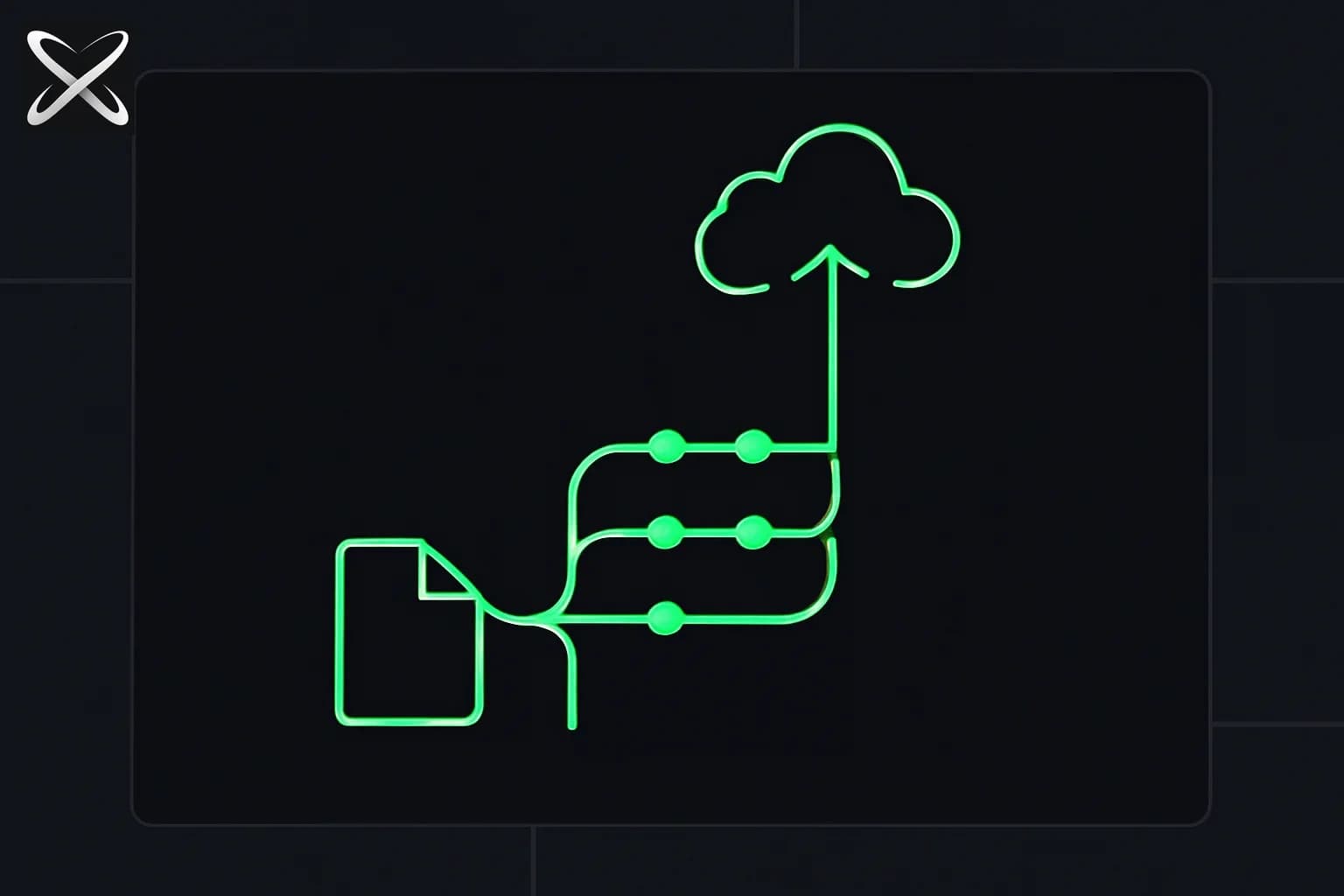
Cursor just built its own on-ramp away from GitHub — and shipped it during a GitHub outage. On August 17-18, 2026, @cursor_ai announced Origin, a code hosting platform built directly into the Cursor editor, was live in beta for paid users. The timing wasn't planned that way, according to Cursor's own team — but the internet ran with it anyway.
TL;DR
| Question | Answer |
|---|---|
| What is it? | Origin — a code hosting platform inside Cursor: repos, pull requests, code browsing, search |
| When did it launch? | Beta rollout started August 17-18, 2026 |
| Who gets access? | Paid Cursor users only, for now |
| Does it replace GitHub? | No — Origin syncs in real time with GitHub as the source of truth |
| What integrates with it? | Vercel, Buildkite, and Depot at launch, "more coming soon" |
| Why the GitHub jokes? | Origin's launch coincided with a GitHub outage; a Cursor team member joked about it directly |
| Any connection to the SpaceX deal? | Not officially, but Origin is the first major Cursor launch since SpaceX closed its $60B acquisition on August 14 |
What Origin actually does
Cursor's own announcement was direct: "Origin, our code hosting platform, is now live. It's fast, easy to use, and deeply integrated with Cursor. Get started by syncing your repos from GitHub."
That last sentence matters more than it looks. Origin isn't asking teams to abandon GitHub on day one — it's asking them to sync repos in, then decide how much of their workflow moves over. Inside Cursor, paid users can now:
- Host repositories directly, alongside or instead of GitHub
- Manage pull requests without switching to a browser tab
- Browse code and run searches in the same surface where they're already prompting the editor's AI features
- Sync in real time with GitHub, which Cursor is positioning as the source of truth for teams not ready to fully migrate
The integration list is the more concrete signal of intent. Cursor said it has "partnered with some of the top GitHub integrations. Vercel, Buildkite, and Depot are already available, with more coming soon." Those three aren't random picks — Vercel handles deployments, Buildkite and Depot handle CI — meaning Origin is angling to sit at the center of the same toolchain teams already wire up around GitHub, not just replace the git host and leave everything else pointed elsewhere. Cursor's framing also leans on its agents being able to update branches directly inside Origin, closer to the loop of an AI coding harness than a classic hosted-git product.
This is a beta, and it's gated to paid Cursor users. Early access is already reaching individual subscribers beyond enterprise pilots — explainx.ai's own team has seen Origin access land on a personal paid account, consistent with Cursor rolling this out broadly to its paying base rather than a narrow allowlist.
Why "we were going to ship this earlier, but GitHub was down" landed
Cursor team member Matt Palmer (@mattyp) posted the line that turned a product launch into a meme: "We were going to ship this earlier, but GitHub was down." It's a joke, but it's a pointed one — Origin is a direct GitHub competitor, and it launched in the exact window GitHub itself was inaccessible.
The developer community piled on immediately. Piq (@piq9117) wrote: "At this point github should send us an alert when they are online." Another reply, from an account posting as "effectfully," joked about "how GitHub looks at its users after being forced to ingest 12 bajillion lines of hyperslop per second and then getting blamed for being down" — a jab at both GitHub's reliability and the flood of AI-generated commits every git host is now absorbing.
Palmer kept the bit going in his own quote-tweet of Cursor's announcement, adding "can't make this stuff up" as replies stacked up ("the impeccable timing 🤌" from Min Choi, "Haha, love it 😅" from Morgan). One reply asked the obvious follow-up — Shikhar (@xikhar) wrote "don't you self host origin on origin?" — and Palmer's answer doubled as an honest admission of the launch's actual dependency: "importing your github repos as a first onboarding step is non-optimal if github is down." Another reply, from RedOneX, needled "Or maybe you were the cause GitHub was down. Just saying," to which Palmer replied simply: "maybe..."
Under the memes, the reaction was genuinely split. Plenty of replies were straightforward congratulations on the product. But a real thread of skepticism ran alongside it: several developers said they'd try Origin for AI-native or greenfield projects specifically, while explicitly saying they weren't ready to fully ditch GitHub for existing codebases, org permissions, and the compliance tooling built up around it over years.
The sharpest pushback came from Victor Pontis (@VictorPontis), who questioned whether "live" was even the right word: "It's not actually released tho? I wish you didn't do this launch without it actually being launched... Devs are really looking for a code hosting platform that's more reliable and a flaky launch is not a good sign." That's a fair tension to sit with — Cursor's own copy says Origin "is now live," but the onboarding flow's dependency on GitHub (per Palmer's own reply above) means a beta gated to paid users, launched during the very outage it's positioned to be an alternative to, is going to draw exactly this kind of "is this actually shipped" scrutiny. Treat "live" here as "beta rollout has started for paid users," not "generally available and battle-tested."
The bigger story: Origin ships four days after SpaceX owns Cursor
Treating Origin as just "Cursor shipped a feature" misses the more structurally interesting part. Four days before Origin's launch, SpaceX officially closed its $60 billion acquisition of Cursor (Anysphere), folding Cursor into the SpaceXAI team that also builds Grok 4.6, Grok Build, and Grok Bot. Origin is the first major Cursor product to ship after that close — and it's not a small feature. It's a direct swing at GitHub's core business: hosting the world's code.
That puts an odd shape on the competitive map. GitHub is owned by Microsoft, which also backs OpenAI. Cursor now sits under SpaceX, which owns Grok. A code-hosting platform launched by a Grok-adjacent company, aimed at the code-hosting incumbent owned by an OpenAI backer, is a genuinely new front in a rivalry that used to be fought mostly on model quality and IDE features. Cursor Router — launched in July and still live as of this writing — continues to route requests across Claude, GPT, and Grok models regardless of who owns the hosting layer underneath, so Origin doesn't (yet) change which models power your agent inside Cursor. But it does mean Cursor is no longer just competing with GitHub Copilot on autocomplete quality; it's now trying to host the repos GitHub Copilot depends on.
Whether Origin succeeds depends on something outside this launch entirely: git hosting is a trust-and-inertia product, not a feature-checklist product. Years of org structures, permissions, compliance audits, and muscle memory sit on top of GitHub for most teams. A faster, more integrated alternative inside your editor is a real pitch — but it's competing against switching costs that have nothing to do with speed.
What to watch next
- Whether Origin pricing gets broken out from standard Cursor plans, or stays bundled as a beta perk for paid subscribers
- Whether more CI/deploy integrations land beyond Vercel, Buildkite, and Depot
- How SpaceXAI frames Origin publicly — so far it's been announced as a Cursor product, not folded into Grok branding the way the acquisition close post worried the Cursor brand itself might be
- GitHub's own reliability track record going forward — the meme cycle around this launch won't matter if GitHub's uptime is solid next month, but a repeat outage would give Origin's timing story a second act
- Whether the "it's not actually released" criticism sticks — Victor Pontis's skepticism above is a specific, checkable claim; if Origin's onboarding flow still depends on syncing from a working GitHub weeks from now, that's a legitimate product gap rather than launch-week noise
Related on explainx.ai
- Update — August 21, 2026: Full RCA for the outage Origin launched beside — GitHub August 17 outage: root cause and what it means (7h47m, Copilot retry storm, 2.9B commits/month).
- Update — August 20, 2026: Separate from Origin — Cursor's Team email (effective August 24) changes Auto pricing and raises included usage. Hosting and Auto metering are not the same launch.
- SpaceX closes $60B Cursor acquisition — Cursor joins the Grok team
- Grok 4.6 launch — official evals and day-one Cursor access
- SpaceX acquiring Cursor for $60 billion — the original SEC 8-K breakdown
- Cursor Router — automatic model selection across Claude, GPT, and Grok
- Claude Code vs Cursor vs GitHub Copilot: the full comparison
- What is Git? How to push code to GitHub — a beginner's guide
- Cursor Big Day — Composer 2.5, iOS, SpaceX context
- Cursor Start India — ₹649 Grok 4.5 & Composer plan
Primary sources: @cursor_ai on X · Matt Palmer (@mattyp) on X · cursor.com
Facts and figures are accurate as of August 18, 2026, based on Cursor's own launch posts. Origin is in beta and gated to paid users — pricing, feature scope, and available integrations may change as the rollout continues. Follow @explainx_ai for updates.