



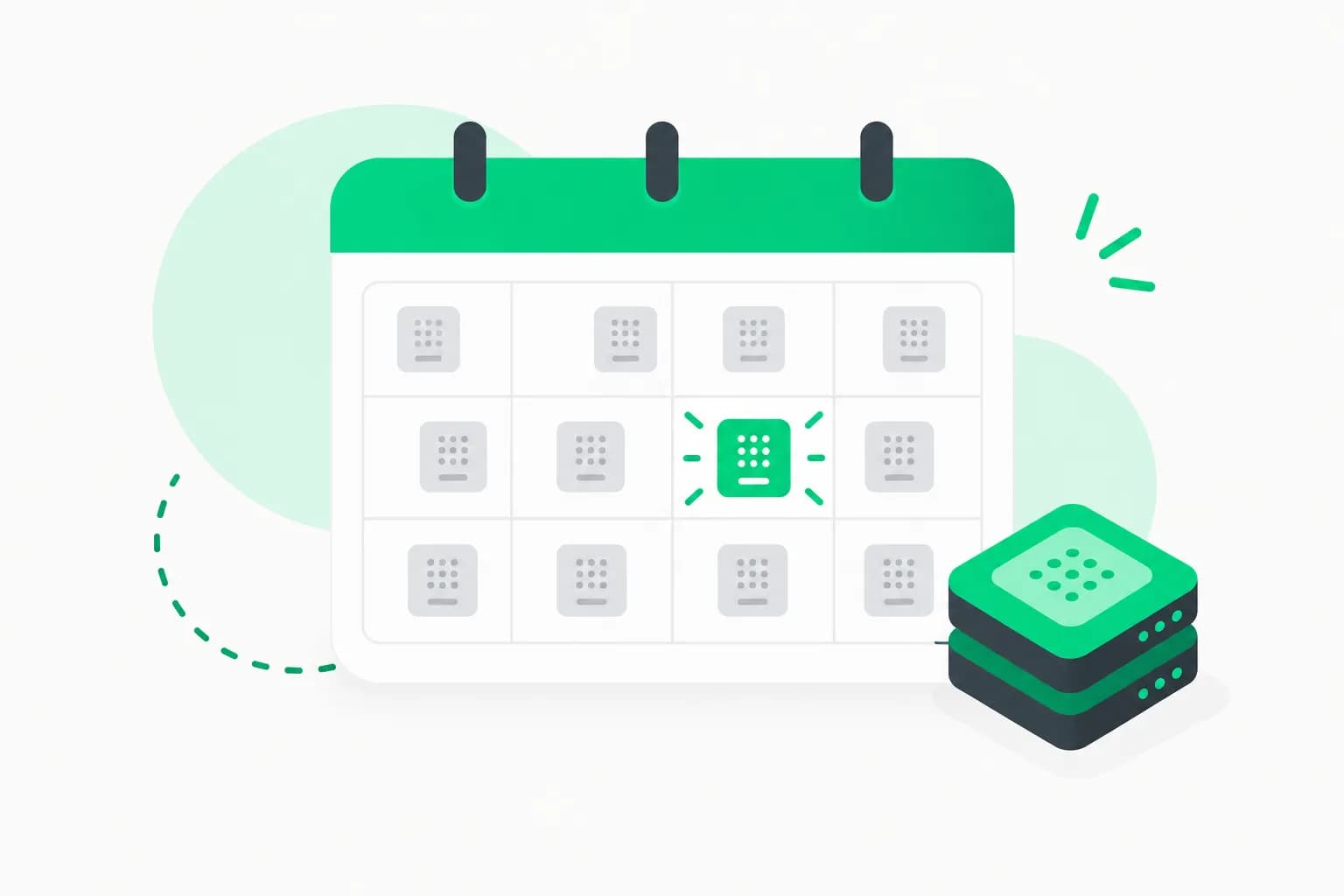
Compute Exchange will host a virtual two-sided auction on December 2, 2026 for standardized NVIDIA B200 and B300 GPU capacity, per @computeexchange on November 20, 2026. Each contract describes one eight-GPU bare-metal node in a U.S. data center, on a 12-month term starting April 1, 2027. The event is timed to NVIDIA GTC DC and is limited to verified U.S. organizations.
Compute Exchange's own marketplace site markets three lanes — hardware resale, reserved neocloud rental, and forward contracts — with identity-verified counterparties only. The December auction fits the forward lane: lock delivery months ahead instead of negotiating opaque private deals.
TL;DR
| Question | Answer |
|---|---|
| Event date | December 2, 2026 (virtual), during GTC DC per posts |
| Products | Standardized B200 and B300 eight-GPU bare-metal nodes |
| Term | 12 months |
| Delivery start | April 1, 2027 |
| Location | U.S. data centers |
| Who can bid | Verified U.S. organizations per Compute Exchange |
| Operator | Marketplace aggregates; providers execute |
What Compute Exchange says it is solving
Private GPU deals hide price, location, interconnect and support terms. Buyers compare WhatsApp quotes; sellers guess willingness to pay. Compute Exchange pitches fungible SKUs — same chip generation, same node shape, same contract length — so bids meet asks in one venue.
Its homepage copy stresses:
- Hardware market for used and refurbished data-center GPUs.
- Reserved GPU rental across verified neocloud partners with 1–36 month terms.
- Forward contracts to hedge allocation queues and price spikes.
The December 2 auction is the forward-contract story applied to next-generation Blackwell Ultra class capacity (B200/B300) with an explicit April 2027 service start. That date matters for finance and ML platform teams planning training clusters around NVIDIA's Vera Rubin era rollouts.
Standardized lots: what we know and what we do not
Confirmed from Compute Exchange posts (November 20, 2026):
- One lot = one eight-GPU bare-metal node.
- Geography = United States data centers (no region list published yet).
- Duration = 12 months of reserved capacity.
- Service start = April 1, 2027.
- Chips = NVIDIA B200 or B300, presented as standardized classes rather than custom rack configs.
Not published yet:
- Opening bid guidance or reserve prices.
- Power, network, or SLA attachments per node.
- List of winning neocloud operators Fulfillment partners.
- Whether networking is InfiniBand, RoCE, or single-node only.
Treat every dollar figure you see on social as speculation until Compute Exchange or NVIDIA publishes clearing results.
Why builders should care about price discovery
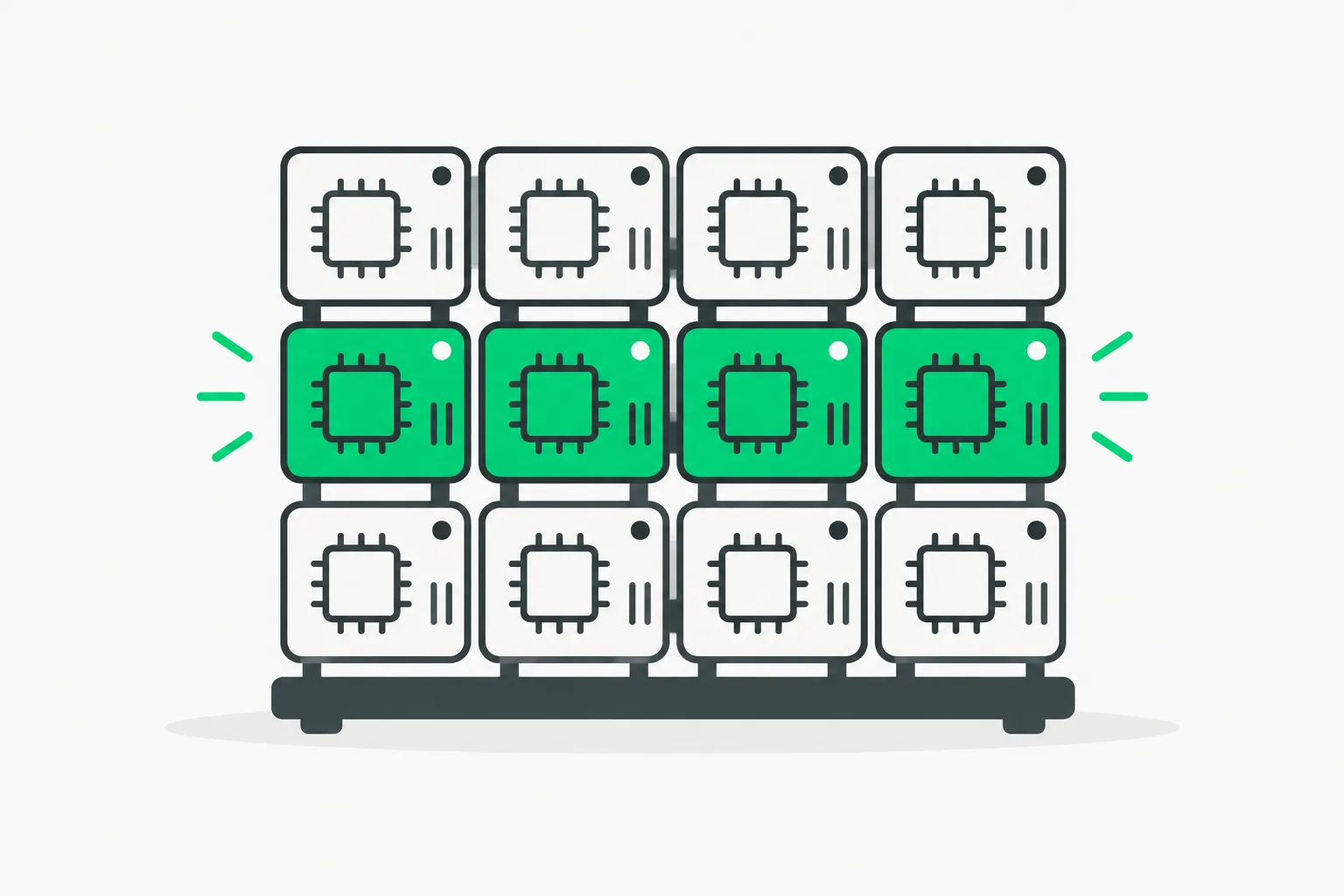 GPU cluster grid illustrating institutional forward capacity planning
If you buy inference or training by the hour today, a forward auction looks distant. It still sets the reference curve your CFO will use when neocloud salespeople quote 2027 B300 racks.
Practical uses:
- Sanity-check private quotes against an eventual clearing print.
- Hedge training plans that slip when allocation queues stretch, similar to how AI VPS auction spikes exposed secondary-market stress on consumer hosts.
- Align multi-Region training with cross-Region inference routing plans — forward nodes in the U.S. may pair with application tiers elsewhere.
Compute Exchange is not alone in financializing compute. NVIDIA's revenue-share programs and SpaceX-linked GPU financing headlines show how tight Hopper and Blackwell supply already is. A public auction is another datapoint, not a magic fix for scarcity.
Participation and compliance notes
 Interconnect fabric illustrating multi-site GPU delivery planning
The auction is limited to verified U.S. organizations. Compute Exchange's site describes corporate registration checks, beneficial ownership, operational track record, and SLA history before quotes surface.
That matters for:
- Startups without audited financials — begin verification early if you intend to bid.
- International labs — this specific auction copy names U.S. orgs; other product lines may differ.
- Export-sensitive buyers — forward contracts do not replace BIS rules on advanced GPU destinations; see House Foreign Affairs license reporting for how policy intersects sourcing.
How Compute Exchange says quoting works
Even before the auction, the site's four-step workflow explains how non-auction deals run:
- Submit specs — GPU type, quantity, region, duration (under five minutes advertised).
- Receive quotes — live auction across verified providers within about two hours.
- Compare — side-by-side SLA and price table.
- Execute — sign the Compute Services Agreement with the chosen provider; Compute Exchange records the match.
The December 2 event is a scheduled auction instance of that philosophy: standardized lots so bids are comparable. It is not a spot market for hour-by-hour GPU shares like consumer VPS auctions we tracked in Hetzner pricing noise.
Product lines on compute.exchange
| Product line | What you buy | Term shape |
|---|---|---|
| Hardware market | Used or refurbished accelerators | Asset sale tiers |
| Reserved GPU rental | Neocloud capacity | 1–36 month terms across partners |
| Forward contracts | Future delivery and price lock | Bilateral, future-dated |
The B200/B300 auction sits in forward contracts with a April 1, 2027 start, signaling that buyers are hedging calendar 2027 training, not tomorrow's inference burst.
Verification ladder for counterparties
Compute Exchange lists due diligence before any quote surfaces:
- Corporate registration and beneficial ownership.
- Operational track record and deployed capacity claims.
- SLA history and remediation behavior.
- Identity-verified contact authority for contracting.
For startups, the friction is feature, not bug: it keeps spoof sellers out of a market where a bad forward contract can strand a multi-million-dollar training plan. Plan two to four weeks of paperwork if you are a first-time bidder.
What to ask your CFO before bidding
- Utilization model — Will an eight-GPU node run 24/7 from April 2027, or is this hedge insurance?
- Interconnect needs — Single-node contracts may not span NVLink domains you expect for 70B-class training.
- Exit clauses — Unclear in public copy; negotiate before auction day.
- Power and cooling — Forward nodes still sit in a data center with grid risk; pair with Texas permitting debates as context for U.S. siting fights.
- Policy shock — Export rules can change before 2027 delivery; see license disclosure fights.
GTC DC timing and NVIDIA narrative
Scheduling the auction during NVIDIA GTC DC means bids will move with keynote supply statements about Blackwell Ultra availability. Buyers may treat clearing prices as signals even if they do not win lots — similar to how Vera Rubin financing headlines move neocloud cap tables without delivering racks immediately.
Compute Exchange is not NVIDIA; treat any GTC quote as correlated, not sponsored, unless either party says otherwise in writing.
Secondary market and neocloud partner tiers
The marketplace groups neocloud partners into enterprise AI clouds, bare-metal providers, and infrastructure operators converting power assets into GPU halls. Auction fulfillment likely routes through one of those buckets, but public copy does not name winners ahead of time.
If you already rent from a named neocloud, ask whether December 2 lots overlap your incumbent contract or compete with it. Double-booking forward capacity is an easy mistake when finance and platform teams do not share spreadsheets.
What people are asking
Will Compute Exchange publish clearing prices publicly? The marketplace pitches price discovery, but November 20 copy does not promise a post-auction tape. Plan to capture your own notes if you bid.
Is April 1, 2027 delivery guaranteed? Forward contracts always carry counterparty and supply risk. Read fulfillment terms when they appear; nothing in the teaser guarantees NVIDIA ship dates.
Can non-U.S. companies bid? The auction announcement names verified U.S. organizations. Other product lines on the site may allow different jurisdictions; do not assume parity.
How does this compare to reserved capacity from AWS or Azure? Hyperscalers sell integrated cloud contracts with software bundles. Compute Exchange aggregates neocloud and reseller supply with a different legal wrapper. Compare total cost of training, not sticker per GPU hour alone.
Does buying forward mean you skip the queue? It may move you ahead of handshake deals, but datacenter power, networking install, and driver validation still take calendar time. Forward buys schedule risk; they do not eliminate engineering work.
Should startups bid? Only if verification paperwork and twelve-month payment exposure fit your stage. Many seed teams should treat the auction as a price signal, not a purchase requirement.
Building a simple internal model
Finance teams can sketch a node-year TCO before December 2:
- Take last quarter's private B200/B300 quote per eight-GPU node.
- Add power, networking, and support the quote excludes.
- Compare to the auction clearing print if published.
- Stress-test 70% utilization vs optimistic 95% — forward contracts hurt most when racks sit idle after migration delays.
Platform teams should align the same spreadsheet with workload timelines from streaming training launches and inference routing projects so capacity lands before model deadlines, not after.
What to watch on December 2
- Clearing prices per B200 vs B300 eight-GPU node-year.
- Vendor attribution — which neocloud or infrastructure operator fulfills each lot.
- Fine print on early termination, power caps, and interconnect.
- Secondary liquidity — whether Compute Exchange publishes a curve others can hedge against.
- NVIDIA keynote context at GTC DC for B300 supply statements that might move bids.
Related reading
- AI VPS pricing and Hetzner auctions
- NVIDIA revenue-share compute programs
- Vera Rubin and Microsoft Ignite infra
- Together Storage Accelerator for GPU clusters
- Texas data-center permit fights
- IEA outlook on data-center power
Auction terms follow Compute Exchange posts on November 20, 2026; clearing results are unknown until after December 2.