



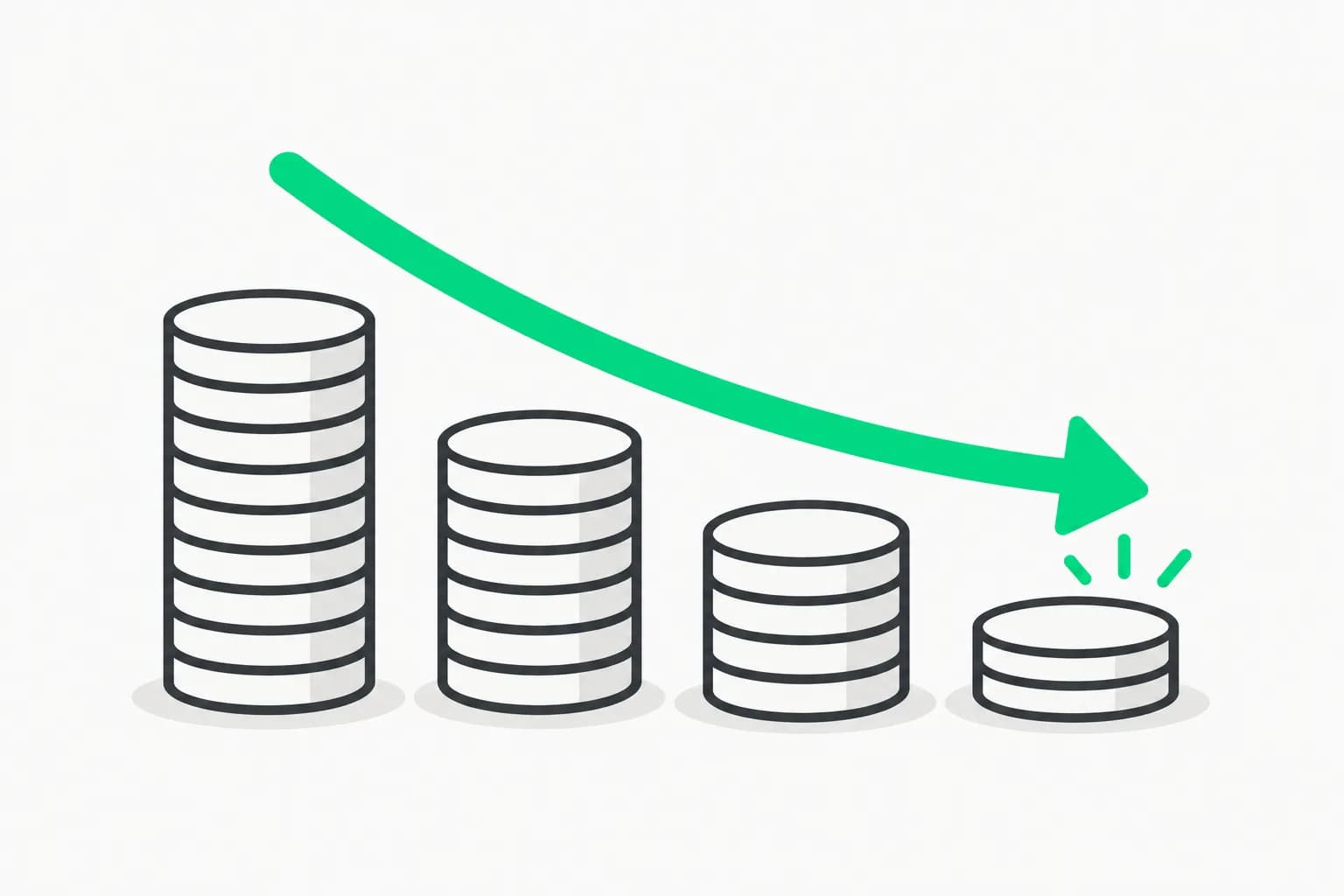
Baseten has launched Grid, a gateway, router and guardrail layer for enterprise coding agents, and a headline number is making the rounds: a 72% cost cut against Claude Opus 5.5. The launch coverage we could read gives a different figure, nearly 70%, and attaches a quality cost of 0.9 percentage points. We found no source for 72%.
This post is a claimed-versus-verified read. It covers what Baseten announced, what the numbers say, what is still unproven, and how to test a router like this on your own code. For background on why teams are chasing this problem, see our report on AT&T cutting AI coding costs 56% with model routing.
Quick reference: claimed versus verified
| Claim | Where it appears | What we could verify |
|---|---|---|
| Grid launched on November 4, 2026 as a public preview | Unite.AI report; CEO Amir Haghighat's X article said it would launch "tomorrow" | Confirmed by two sources |
| Router saves 72% vs Opus 5.5 | Social and aggregator summaries | Not found in any source we read |
| Router saves nearly 70% cost per task vs Opus 5.5 | Unite.AI, citing Baseten | Reported; benchmark details not published in what we read |
| Quality tradeoff of 0.9 points | Unite.AI, citing Baseten | Reported; metric and task set not named |
| Works with Claude Code, Codex, OpenCode, Pi | Haghighat's X article and Unite.AI | Confirmed by two sources |
| Opendoor uses it for all AI requests | Haghighat's article; Opendoor's head of engineering quoted by Unite.AI | Customer statement, not independent |
| Savings vary by workload | Baseten, per Unite.AI | Baseten's own caveat |
What Baseten announced
In a post on X dated November 3, Baseten co-founder Amir Haghighat described Grid as "our new gateway, router, and guardrail platform," one of three launches that week alongside Sandboxes and serverless Loops training. His argument is that coding-agent usage has exploded, spend has followed, and "developers default to the most intelligent model available, not the one that's best-suited to a specific task."
He says open-weight models "have caught up to frontier performance on coding, while costing much less to run," so a central layer should route each task to the best model for quality and total price. Grid has three parts:
- Gateway: puts every model and dollar of spend in one place.
- Intelligent Router: matches each task to the right model.
- Guardrails: sets company-wide policies on who can use what and what models may do.
The Unite.AI report on the public preview adds the numbers, the supported providers and the planned features. Note that Unite.AI labels its author as an AI-generated research agent reviewed by its editors, so we treat it as a secondary summary of Baseten's material. Baseten's own product page for Grid loaded as an empty shell when we fetched it, so we could not read a primary benchmark write-up.
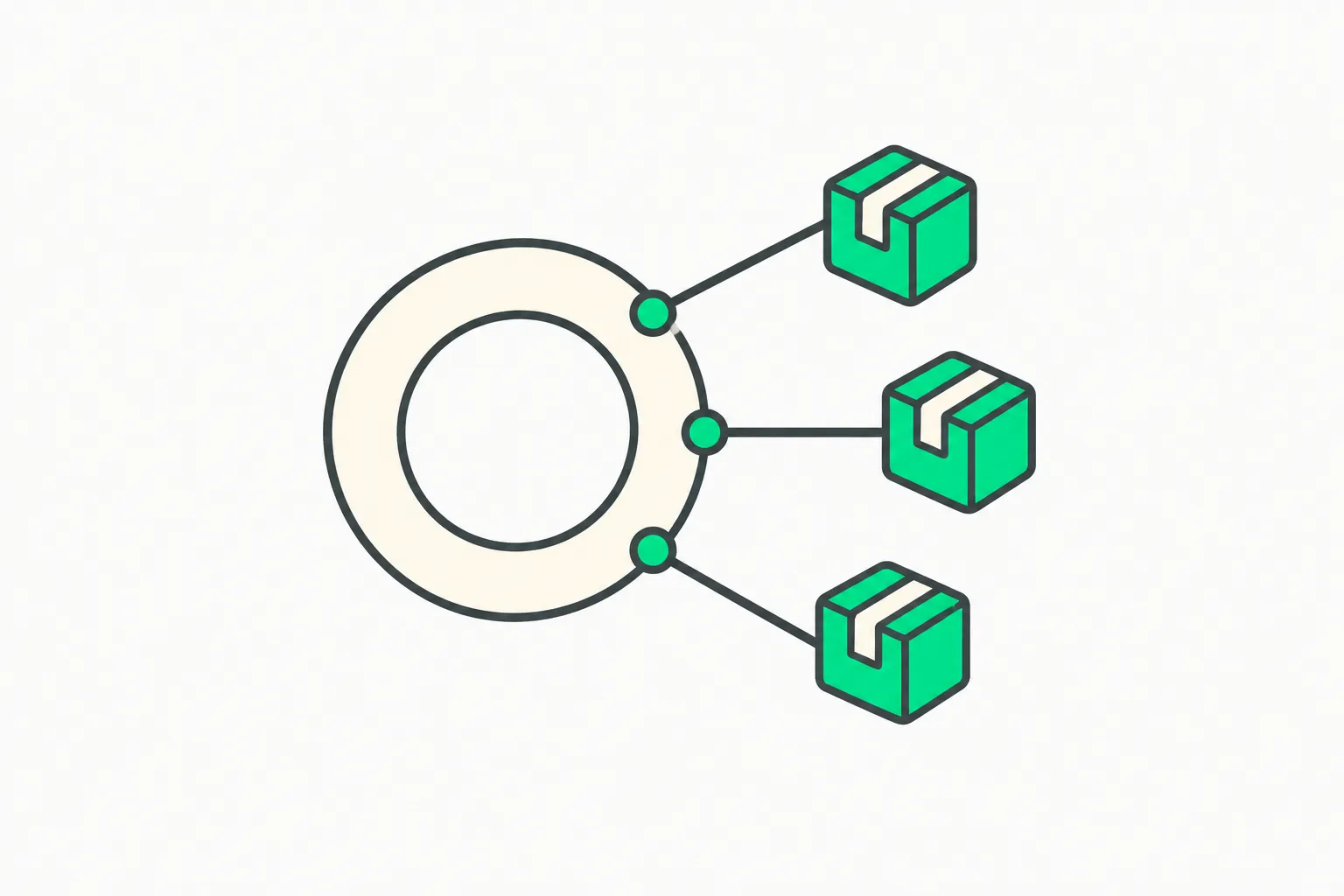 A ring routing parcels outward along spokes, showing how a model router sends each coding task to a different model
The number: 72% or nearly 70%?
The secondary report says Baseten Router "achieved nearly 70% savings in cost per task in initial benchmarks, with a 0.9-percentage-point quality tradeoff against Opus 5.5." That is the only figure with a named baseline we could find. A savings number of 72% could come from a chart in Baseten's materials that we could not open, from rounding in a different direction, or from an error in a relay. We cannot say which.
Treat the gap as a reminder to cite the primary chart when it is published. The difference between 70% and 72% is small, but the habit matters: a number that grows as it is shared is a warning sign.
Three questions the figure leaves open:
- Which tasks? "Cost per task" depends on the task set. Easy tasks route cheaply, hard tasks do not.
- What quality metric? A 0.9-point drop could be a pass rate on a benchmark, a human rating, or something else. The report does not say.
- What baseline cost? Opus 5.5 at list price, or with prompt caching? Caching changes the baseline a lot. Our Claude Code token efficiency guide explains why.
For the model being compared, see our Claude Opus 5.5 launch, benchmarks and pricing post.
How the router works, according to Baseten
Baseten says the router does not rank models by token price alone. For each request it looks at the organization's approved open and closed models and weighs likely task performance against cost, and it counts the cost of retries, failed tool calls and incomplete answers. Routes can lean toward cost, intelligence or a mix.
Teams can also opt in to share traces, which Baseten says can train custom routers for their own workloads.
Cache behaviour is the interesting engineering claim. Haghighat writes that routing "needs to maximize KV cache hit rate, so multi-turn agentic sessions keep landing on a warm cache." Unite.AI adds that when Baseten serves the model, long sessions can be sent to warm cache to cut cost. This is a real concern: switching models mid-session throws away the cache, which can erase savings. Whether Grid solves this for third-party models such as Opus is not stated in what we read.
Gateway and guardrails
The gateway is the part most platform teams will use first. According to Unite.AI, administrators can approve models, grant team-level access, set budgets, use company-managed credentials and watch usage across teams, apps and agents. A dashboard shows spend by model, total spend, token volume, cache hit rate and cost saved.
At launch it supports models from OpenAI, Anthropic, Gemini Enterprise Agent Platform, Amazon Bedrock and Baseten. Developers connect Claude Code, Codex, OpenCode and Pi with one setup command, and admins can push the configuration through mobile device management. In-house apps change a base URL and model ID.
 A signpost with a guarded path, standing for gateway guardrails that apply company policy to coding agent requests
Guardrails sit at the gateway and check requests and responses. The risks Baseten lists include documents with hidden instructions that redirect agents, unauthorized actions, and customer data appearing where it should not. Baseten also says these safety checks differ from execution controls, which decide what an agent can access and do, and that enterprises need both.
That distinction is worth keeping. A gateway sees text going in and out. It cannot by itself stop an agent from deleting a file on a laptop. Action-level control needs a separate layer.
What is still planned, not shipped
Unite.AI says Baseten plans to add delegation of longer tasks to cloud-hosted agents, coordination of multiple agents, routing tuned to customer data, richer safety signals and support for customers' own guardrails. Early access is through a waitlist. The report itself notes that, with several features planned and savings dependent on workload, the preview leaves open how well the benchmark results will carry over to real coding work.
How this fits the wider routing trend
Routing is becoming a standard layer. Our posts on OpenRouter and enterprise model routing and on Microsoft's work on cutting cost per answer with routing and caching show the same pattern: send easy work to cheap models and keep frontier models for hard work. A study on Fireworks, Kimi K3 and model routing looked at the same question from the inference side.
What is different about Grid is the packaging: gateway, budgets, guardrails and router in one product, tied to an inference company that also serves open-weight models. That is also the main thing to weigh. A router run by a vendor that sells inference has a reason to prefer its own hosted models. Baseten says the router works across approved providers, but the incentive exists, so test the routes it picks.
How to test it on your own work
Do not accept any vendor number, including 70%. Run a bake-off:
- Pick 30 to 50 real tasks from your repos: bug fixes, tests, small features, refactors.
- Run each with your current default model and record cost, pass or fail, retries and time.
- Run the same tasks through the router with the same harness.
- Compare cost per passed task, not cost per request, and read the failures.
- Repeat after a week, because routing and models change.
A useful report line looks like this: "Router cost per passed task was X% lower on N tasks, and pass rate moved from A% to B%." If a vendor cannot give you that, you have a marketing number.
What this means for what you pay
If you run coding agents at team scale, spend is rising and defaults are costly. A router can help when most tasks are easy and the quality drop is small. It helps less when your work is mostly hard, when you rely on heavy caching of one model, or when your security rules allow only a short model list. The honest summary is that a 70% saving on a vendor benchmark is a reason to test, not a reason to buy.
What to watch
- Baseten publishing the full benchmark: task set, metric, baseline price and date.
- Independent tests from Grid users on real repos.
- Whether the 72% figure traces to a Baseten chart or turns out to be a misquote.
- Which planned features, such as cloud-hosted agents, ship and when the waitlist opens.
Related reading
- AT&T cuts AI coding costs 56% with model routing
- OpenRouter model routing for enterprise cost control
- Microsoft token wars: model routing and prompt caching on Azure
- Fireworks, Kimi K3 and model routing study
- Claude Code token efficiency and prompt cache guide
- Claude Opus 5.5 launch, benchmarks and pricing
- Mirendil-Base: claimed versus verified
- Sources: Amir Haghighat's X article, Unite.AI report
Details are accurate as of November 5, 2026. Figures come from Baseten's CEO post and a secondary launch report; the primary benchmark was not available to us.