




Mirendil, a startup that is working toward recursive self-improvement, says one researcher working with AI agents pretrained a competitive coding model in 3.5 months for under $10M in compute. If true, that is a large drop in the team size and budget that pretraining has needed. Two days after the October 21, 2026 announcement, a Baseten post added that the larger Mirendil-Base-Large scored best on private code it tested.
This post separates three layers: what Mirendil documents in its own announcement, what Baseten has said, and what nobody outside the companies has been able to check yet. The short version is that the headline cost and team-size claim is specific and plausible but self-reported, and the benchmark table in the same post is more modest than the social-media summaries suggest.
TL;DR: questions people are asking
| Question | Answer |
|---|---|
| Who built it? | Mirendil; one researcher directing agents, per the company |
| How long and how much? | 3.5 months, under $10M, all-in including experiments and agent token spend |
| How big? | Base is 100B to 500B parameters; Base-Large 500B to 2T; Base-XL 2T to 10T |
| Is it released? | No weights or API yet; post-training has started |
| Does it beat Kimi-K3? | Not on Mirendil's own seven-repository average (0.222 vs 0.193 bits per byte) |
| What did Baseten say? | Base-Large had the lowest bits per byte on private codebases it tested; no scores found |
| Independent verification? | None published yet |
What Mirendil actually published
The announcement is dated October 21, 2026, 9:00 am PT, under the title "Pretraining at scale without a pretraining team." The framing is an experiment: "could one researcher, working with agents, pretrain a competitive coding model?" The company says Mirendil-Base is the result and that the figure is "all-in," including the agents' token spend and data processing.
Several specifics are worth pulling out because they are testable in principle:
- Agents wrote over 99% of the code, ran experiments and diagnosed failures, while the researcher decided what to try and what to trust.
- Built from scratch in an empty repository, on generic libraries such as PyTorch and JAX, with popular open-source projects as references.
- Public data only. Mirendil says it bought or licensed no additional data and used no distillation or synthetic data for this experiment.
- A model family. Base-Large is described as about 80% of the way through training and Base-XL, called frontier-class, about 19% through.
Co-founder and CEO Behnam Neyshabur announced it on X, writing that the team would share independent evaluations, post-training benchmarks and API access "very soon."
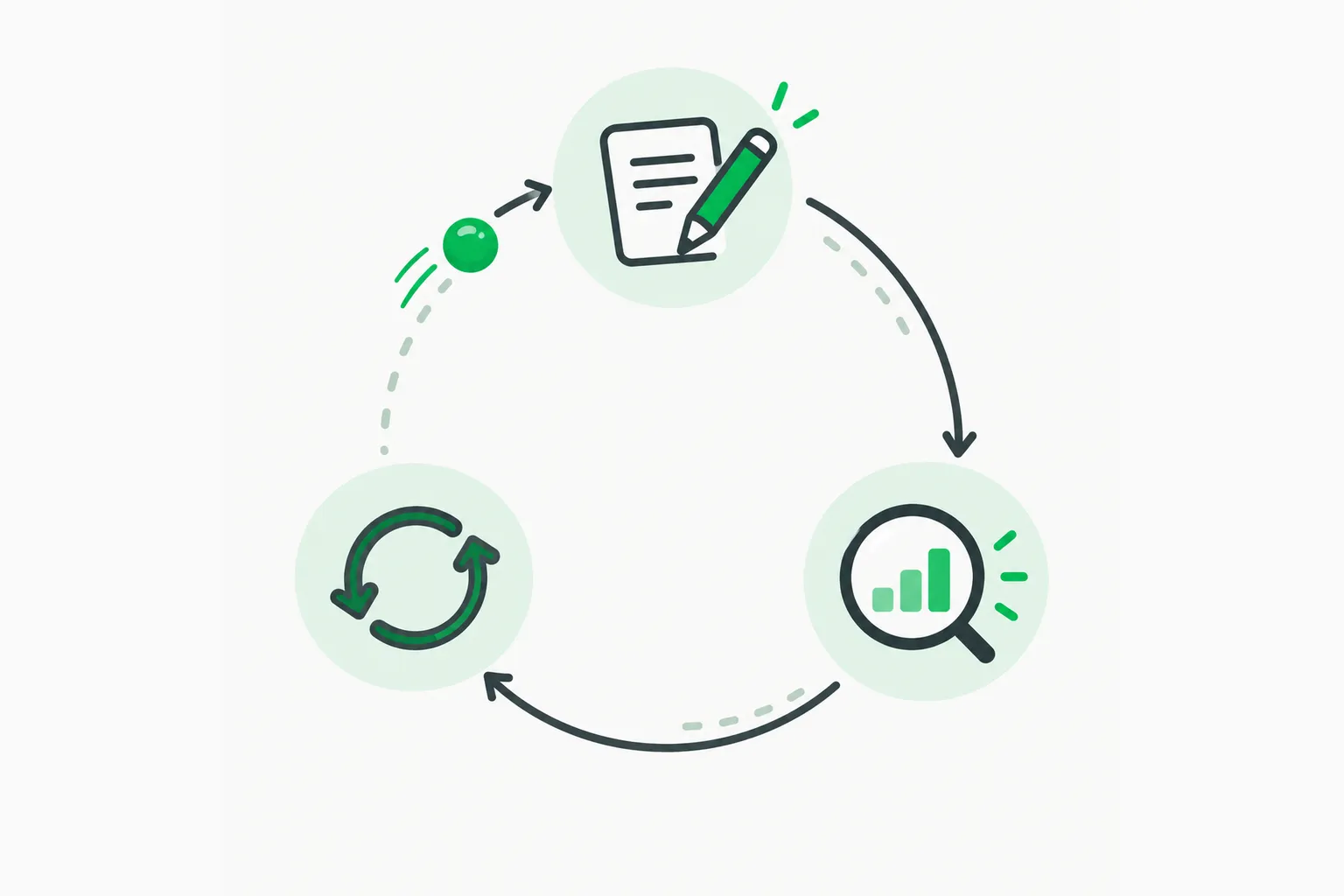 A green dot circling a loop of steps, picturing agents running the Mirendil-Base research loop under one researcher
What the benchmark table really shows
The headline number readers repeat is "Kimi-K3 level." The company's second figure does not say that. It reports cross-entropy in bits per byte on seven external repositories published after the models were trained. Bits per byte is the model's loss per byte of text, which lets models with different tokenizers be compared. Lower is better.
| Repository | Kimi-K3 | Mirendil-Base | Nemotron-550B-Base | GLM-5.3 | DeepSeek-V4-Pro-Base |
|---|---|---|---|---|---|
| codex-sec | 0.200 | 0.228 | 0.241 | 0.247 | 0.245 |
| grok-build | 0.183 | 0.210 | 0.220 | 0.220 | 0.225 |
| openworker | 0.229 | 0.268 | 0.296 | 0.287 | 0.304 |
| json-render | 0.127 | 0.127 | 0.185 | 0.181 | 0.173 |
| native | 0.210 | 0.257 | 0.263 | 0.257 | 0.263 |
| scriptc | 0.203 | 0.219 | 0.274 | 0.252 | 0.228 |
| anydoc | 0.200 | 0.246 | 0.251 | 0.250 | 0.261 |
| Average | 0.193 | 0.222 | 0.247 | 0.242 | 0.243 |
Numbers from Mirendil's announcement; the column order here follows the company's table as published.
Read plainly: Mirendil-Base beats Nemotron-550B-Base, GLM-5.3 and DeepSeek-V4-Pro-Base on average, ties Kimi-K3 on one repository (json-render), and trails it on the other six. Kimi-K3 is a 2.8T-parameter mixture-of-experts model with 104B active parameters, per the company's footnote, while Mirendil-Base sits in the 100B to 500B range. So "competitive with much larger models" is a fair reading; "matches Kimi-K3" is not what the table says.
Two caveats the company itself raises matter here. Kimi-K3 and GLM-5.3 are post-trained models, which tend to score slightly worse on bits per byte than their base versions, so the comparison is not perfectly like for like. And the repositories are chosen by Mirendil, with names suggesting recent agent and developer-tool projects. A different set of repositories could move the average.
A further reminder: bits per byte measures how well a model predicts code. It is a good pretraining signal, but it is not a coding-agent benchmark. It does not tell you how the model scores on tasks like SWE-style bug fixing or terminal work, which is where post-training and tool use decide results. For how those benchmarks are read, see our coverage of Kimi K3.1 Pro's published results.
The Baseten claim: what is known
On October 21, Baseten posted on X that Mirendil-Base-Large "had the lowest bits per byte (a tokenizer-independent measure of perplexity) of any model we tested" on private codebases the model had not seen, and said it would serve as inference partner for Mirendil models. That is the claim; here is the state of verification.
- Source quality. It is a vendor's own post on X, from a company with a commercial relationship with the model's maker. That does not make it wrong, but it is not independent.
- No scores. We searched for a Baseten blog post or table behind the claim and found only the X post as relayed. We could not find which models were compared, how many codebases, or the margin.
- A model still in training. Mirendil says Base-Large was about 80% trained at announcement. Whatever Baseten tested was a checkpoint, not a finished model.
- Private codebases cannot be checked. By design, nobody outside can rerun that test.
So the accurate summary is: Baseten reports a first-place result for a partial checkpoint on a private test, with the numbers unpublished. Compare the earlier case in which an inference vendor's index was the main evidence for a launch, in our Base Labs claimed-vs-verified post.
Is the cost claim believable?
The under $10M, 3.5-month figure is the part most people care about, and it is the hardest to audit. A few context points help judge it.
First, the scope is generous: Mirendil says the figure includes research, small-scale experiments, the final run, agent token spend and data processing. Companies often quote only the final training run, so an all-in number is a stricter claim.
Second, a mixture-of-experts model in the 100B to 500B range trained on a public-code-heavy corpus is within reach of a $10M budget on current hardware, especially with efficiency gains from architecture, data mixture and kernels, which the company credits. Compare the open efforts we have covered, such as Microsoft's 4B coding agent trained without distillation, which show how far small budgets now go, though at much smaller scale.
Third, the part that is hard to verify is "one researcher." The company is building agents that write over 99% of the code, but the choice of data mixture, architecture changes and when to trust a result still came from a person, plus presumably infrastructure and cloud support from the funded company. The announcement does not say how much of the compute was donated or discounted by partners. That is the question we would ask first.
Why it matters: the recursive self-improvement framing
Mirendil says it exists to help scientists, engineers and small teams take on their most ambitious problems with AI, and it builds models to speed up its own research first. The announcement says "our next model will be built partly by Mirendil models" and "we don't think we have reached fully autonomous recursive self-improvement yet, but we are closer than we have ever been."
That language lands in a week when the topic is everywhere. See our explainer on what recursive self-improvement is, Jack Clark's 2027 forecast, the Google DeepMind view that self-improving AI is not close, and Anthropic's R&D automation index. Mirendil's case is a concrete data point on one side of that debate: agents doing nearly all the hands-on work of a pretraining run, with a human setting direction.
It also offers a measurable idea that other research can test, such as Epoch's InnovationEval: if the bottleneck moves from people to compute, data and judgment, then pretraining costs should keep falling for smaller teams. One announcement is not proof of that trend.
What would verify the claims
Here is what we would watch for, in order of how much each would settle:
- Open weights or API access. The strongest verification is letting outsiders run the model. Mirendil has promised API access.
- Independent evaluations. The company promised them; third-party results on public coding benchmarks would show whether low bits per byte translates into agent performance.
- A Baseten write-up with numbers. Which models, how many private codebases, the margins, and whether the tested checkpoint is final.
- A cost breakdown. How compute was sourced and priced, and what the agent token spend was.
- Post-trained results. Pretraining quality is a starting point; the post-trained model is what developers would use.
What this means if you build with models
Nothing changes in your tool choice today: there is nothing to download or call. Practically, treat this as an early signal that more small teams will train specialized base models, and that coding-specialized models in the hundreds-of-billions range may become cheaper to make. If you evaluate coding models, run your own repository tests rather than relying on loss numbers. A held-out loss on your own code is a cheap, useful check that mirrors what Mirendil did.
If you follow open and semi-open coding models, compare against what you already use. Our coverage of Kimi K3 running at 842 tokens per second on vLLM shows how serving claims get tested; the same discipline applies here.
Bottom line
Verified: Mirendil published a detailed announcement with a table of company-run results. Claimed: one researcher, 3.5 months, under $10M, over 99% agent-written code, and a Base-Large result that Baseten says leads on private code. Not verified: any independent evaluation, the cost breakdown, and the Baseten numbers. The claim is notable and worth following, and the right posture until outside tests exist is interested but unconvinced.
Facts here are accurate as of October 23, 2026, and the model family is still training; check Mirendil's page for updates.