



Related — October 7, 2026: A viral, disputed claim says a Grok Bot agent posted a CEO's bank audit into Slack. See what is unverified and the permission lessons.
Related — October 11, 2026: Vals AI reports agent teams cost 1.8x to 5.1x more than one agent with little quality gain. See the study and what it means.
Related — October 7, 2026: Gumloop's Agent Browsers and AgentMail's AgentID tackle agent access and identity. See how each works.
This is an opinion piece. The facts are cited, the conclusions are ours, and you are free to disagree.
The picture that emerged from a single scroll of X on October 5 and 6, 2026 is hard to miss. SpaceXAI's chief engineer is quoted as saying that "99% of people are still typing into chat windows, while only 1% have already hired an agent team," and describes six bots, including a chief assistant that wakes him at 5 a.m. with his schedule and a travel bot that delegates to a flight bot. Meta's Alexandr Wang listed what Muse shipped recently: connectors, invite codes, a phone-call beta, Muse for Mac, computer use on Mac, small-business tools, gadgets. Cursor said you can now steer SDK agents while they run, with subagents moving to the background.
Then, in the same feed, a founder-journalist wrote that about half of her Muse use cases had vanished in two days because the browser would not do them any more. She asked whether websites were changing their policies or adding bot detection.
Our argument: that last post is the important one.
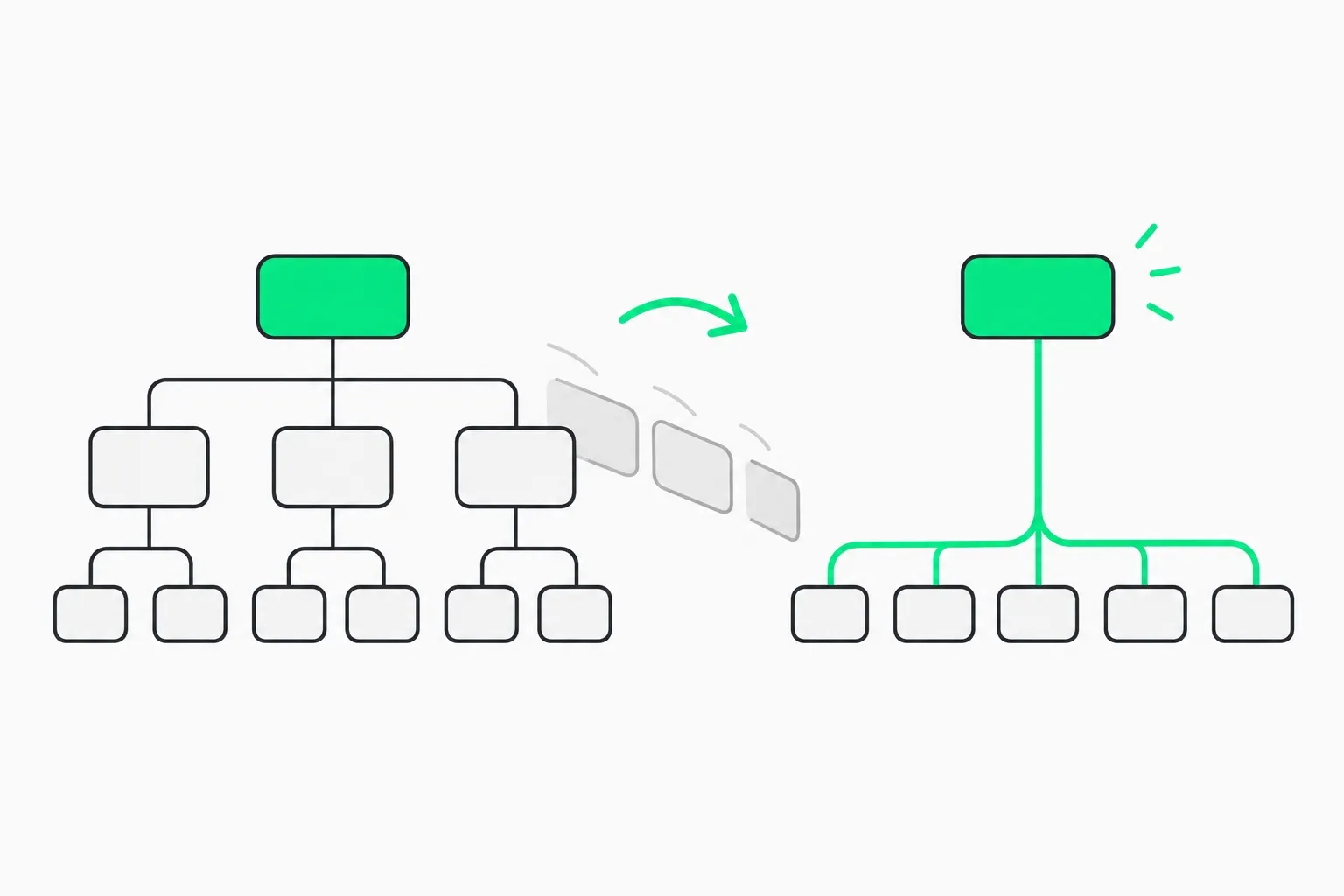 An org tree with its middle layer folding away.
TL;DR
| Claim | Our view |
|---|---|
| Agent teams are the next interface | Yes, and they are arriving faster than most people notice. |
| Capability is the limit | No. Permission is. |
| Websites will keep agents out | Increasingly, and often for good reasons. |
| Operating systems will gate agents | Apple is already moving. Expect others to follow. |
| The winning products | Those that make delegation safe and revocable, not the ones with the most connectors. |
The org chart is moving into your phone
The delegation pattern is real. You tell a chief assistant what you want, and it routes parts to specialists for writing, inbox triage, travel or code. We have covered the individual products: Meta Muse for Mac, SpaceXAI's Grok Bot organization with 200-plus cloud agents, Hermes Agent's manual subagent control, and the broader Dots vs Grok Bot vs Muse vs OpenClaw vs Hermes comparison.
What is new is not any one feature. It is that the mental model changed from "a smarter chat box" to "a small staff." That shift has a consequence people underweight: a staff needs a manager, and a manager needs authority limits. In a company, you do not give a new hire the master key on day one. With agents we did exactly that, because the demos were so good.
Why the doors are closing
Three different gatekeepers are tightening at the same time, and none of them is acting out of spite.
Websites. A site that was built for humans and search crawlers has no reason to welcome an automated agent that clicks through checkout, scrapes a feed or logs in as you. Some will block it to protect revenue, some to stop fraud, some because they simply cannot tell a good agent from a bad one. We saw the clearest case in September when Amazon blocked Muse from shopping on Amazon.com. The journalist's experience this week is a softer version. We do not know the cause, and she was careful to frame it as a question, but the shape is familiar: a workflow that worked on Monday breaks on Wednesday because something on the other side changed.
Operating systems. Apple is reportedly moving to require explicit approval before agents can use Full Disk Access on macOS, after the dispute over Muse and a user's Messages thread. We covered it in Apple to tighten Mac Full Disk Access for AI agents. Reasonable people differ on how serious the original incident was, and Meta's side is in our intended-behavior analysis. But the direction is clear: the OS vendor is deciding it will be the one who says yes.
Users. The least discussed gatekeeper. After enough stories about an agent emailing officials unprompted, as in our Dots safety checklist, people start asking what they actually granted. Trust is a resource, and it is spent faster than it is earned.
Our opinion: the next competition is over permission design
For two years, the agent race was a capability race: better models, more tools, more connectors. Muse's own list is a connector list. That race is not over, but it is no longer the binding constraint for many everyday tasks. The binding constraint is that an agent needs access to things owned by someone else, and those owners are now saying "not so fast."
Here is what we think follows.
- Delegation will need receipts. If one bot hands a task to another, which hands it to a third, the user needs a readable trail: who was asked, what they touched, what they spent. Tools that make this trail first-class will win trust. Cursor's
run.steer()is a small, good example of control while running; the missing half is clear review afterwards. - Narrow credentials beat clever prompts. The safest agent is one that cannot do the dangerous thing, not one told not to. Use spend-limited cards, read-only tokens and per-task scopes. Prompts are a policy; credentials are a wall.
- Sites will start offering agent lanes. The honest long-term answer to "bot detection versus helpful agents" is an interface where a site says what an agent may do, rate-limits it and identifies it. Until then, expect friction and breakage. Treat any workflow that depends on an agent driving a consumer website as fragile.
- The browser is the weakest link. Agents that drive a browser inherit every site's anti-automation defenses. API connectors are slower to build but sturdier. Builders who ship connectors, such as those in Meta's connector platform, have a structural advantage over those who rely on clicking.
- Open and local options gain value. If the big platforms get gated by sites and operating systems, self-hosted agents under your own credentials become more attractive for sensitive work, which is part of why open-source personal agents keep appearing.
The strongest counterargument
The best objection to this piece is that permission problems are the normal friction of any new technology and will be solved by the same market forces that solved earlier ones. Payment APIs replaced screen-scraping of banks. OAuth replaced password sharing. Seen that way, today's blocked browsers are an awkward adolescence, and standard agent identities and scoped tokens will arrive within a year or two.
We agree that the end state is probably better, and we would welcome it. Our disagreement is about timing and about who does the work. Those standards have to be built by sites that currently have little incentive to build them, and by platforms that have an incentive to keep their own agents privileged. In the gap, users and builders carry the risk. Anyone planning a product or a personal workflow around agent teams should assume the awkward period lasts longer than a demo cycle, and design for failure: fallbacks, alerts and a human who can take over.
A second objection is that raising permission as the bottleneck understates how often agents still simply get things wrong. That is fair, and both can be true. Capability and permission are separate limits, and a team is only as reliable as its weakest member. Our claim is narrower: for a growing share of everyday tasks, the model could do the job and something outside the model said no.
What would change our mind
We could be wrong in two ways. First, the Muse browser problem might be a temporary bug or a one-off provider change, not a trend. Second, sites might respond to agents by cooperating rather than blocking, which would make the browser path sturdy after all. If either shows up in the next few months, we will say so here.
We would also change our view if agent teams proved reliable enough that users stopped wanting receipts. We doubt it. In every domain where we delegate, from contractors to accountants, trust is built through visibility first and convenience second.
What to do now
If you use or build agent teams, a few habits are cheap and pay off.
- Start small. One agent, read-only, on a task whose failure costs you nothing. Add a second only when you have a reason.
- Give each bot its own identity and budget. Separate keys, separate cards, separate inboxes where possible. A leak or mistake then has a boundary.
- Keep a log you actually read. Weekly, scan what your agents did. You will find surprises.
- Test for breakage. If a workflow depends on an agent using a website, add a check that tells you when it stops working, rather than discovering it a week later.
- Prefer connectors to browsing. Use an official API or connector when one exists.
- Know your OS prompts. If macOS asks whether an agent may access your files, read it. That prompt is the new front line.
If you are learning to build this properly, our Muse safety verdict and the shared cloud agent teams manifesto are good starting points, and our workshops cover agent design and guardrails hands-on.
Related reading
- Apple to tighten Mac Full Disk Access for AI agents
- Amazon blocks Meta's Muse from shopping on Amazon.com
- Is Meta's Muse safe to use? The honest verdict
- Dots vs Grok Bot vs Muse vs OpenClaw vs Hermes
- Hermes Agent manual subagent control
- One engineer, five bots, 200+ cloud agents
- Is ChatGPT Dots safe to leave unattended?
- What Meta got right with Muse
Primary: public X posts by Alexandr Wang, Cursor, Jessica Lessin and a SpaceXAI engineer, October 5 to 6, 2026
This is opinion as of October 6, 2026. Quotes come from public posts we have not independently verified, the cause of the Muse browser problem is unknown, and product details change quickly.