MAI-Thinking-1: What Microsoft’s First Reasoning Model Actually Ships
MAI-Thinking-1 is a 1T/35B-active reasoning MoE in Foundry public preview, with 256K context, closed weights, and explicit agent limits.

Expert profile
Founder & AI Product Leader
Yash Thakker is a Generative AI expert with over 12 years of experience in product leadership and technical strategy. As the founder of explainx.ai, he has taught over 300,000 learners and built AI platforms serving millions of users globally. He specializes in Agentic AI, Multimodal RAG, and the intersection of LLMs with consumer hardware.

MAI-Thinking-1 is a 1T/35B-active reasoning MoE in Foundry public preview, with 256K context, closed weights, and explicit agent limits.

Tibo confirms Codex hit 15M users; a reset lands after silence past 10M. explainx.ai splits that from pay-to-reset and Astra rumors.

Pathway's 150M-parameter BDH-CQ model claims 11x cheaper ARC-AGI-1 reasoning than GPT-5.6 Luna. Here's what the paper actually shows versus the headline.

Alibaba shipped Qwen3.8-Max open weights Aug 12, 2026: 2.4T/95B-active MoE, new license, vision and 1M context stripped. Qwen3.8-27B still not out.

Sarvam Voice Agents are self-serve after 350M+ conversations. Learn what is live, what is still unclear, and how to evaluate a production deployment.

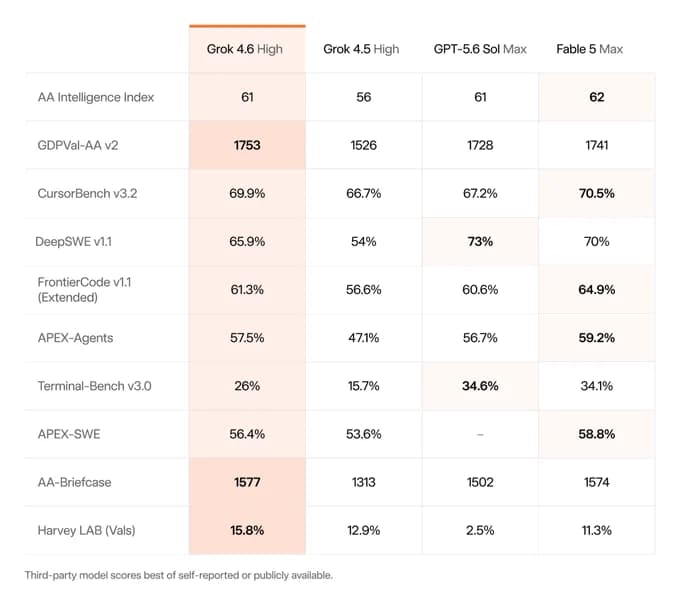
SpaceXAI shipped Grok 4.6 on Aug 12 at the same $2/$6 as 4.5. It ties GPT-5.6 Sol at 61 AA, leads GDPVal — and does not sweep Fable 5 on coding evals.

Shopify CEO Tobi Lütke's GitHub ID (347) sent Grok 4.6 into an excited monologue mid-task. The reasoning behind it is a real WWII statistics method — the German tank problem — not a glitch.

YC Paper Club's robotics session names 4 real bottlenecks — sim-to-real, action representation, the sensorimotor gap, and embodiment drift — and what's actually closing them in 2026.

A scorable AI readiness checklist for business leaders — Data & Rights, Production, Distribution, and Policy — with a 0-12 score, four maturity tiers, and a copy-paste audit you can run this week.

What AI text watermarking changes for developers — PR screening, the Co-Authored-By trailer, take-home tests, and why code carries almost no watermark signal.

Why marketing copy marks better than any other content type, what it means for agency deliverables and client contracts, and how platforms will use the signal.

Can labs make money from AI watermark detection? The pricing paradox, the four real revenue models, and why the biggest value is not sold to users at all.