



WhiteMatter closed a $20 million Series A in early November 2026 and made its core idea explicit: one Guardian agent for every enterprise AI agent. The company, formerly QuilrAI, says traditional DLP, CASB, EDR, and IAM stacks assumed a human at a keyboard — while production agents now delegate to sub-agents, call MCP servers, and move at machine speed.
If you ship agents inside a company, the funding headline matters less than the control-plane pattern. WhiteMatter is betting enterprises will pay for agents-under-management metering the way they once paid for endpoint agents. Whether or not you buy the product, the architecture is the story enterprises will compare against AWS AgentCore Gateway with Cedar policy and Microsoft’s Project Perception guardian agents.
TL;DR
| Question | Answer |
|---|---|
| Funding | $20M Series A, led by Blumberg Capital (Nov 9–10, 2026) |
| Rebrand | QuilrAI → WhiteMatter |
| Core rule | 1:1 Guardian provisioned when each agent is created |
| Stated scale | 2.25M+ agents under management; 116B governed interactions (vendor figures) |
| Policy latency | Sub-3ms inline decisions per WhiteMatter marketing |
| Red teaming | QATM — 102 attack techniques cited in the rebrand post |
| Pricing model | Business Insider reports agents-under-management fees, not customer token pass-through |
| Named customers | Sentara Healthcare, Vodafone, Concentrix, Alter Domus, Spotnana (per press release) |
Why WhiteMatter thinks grey matter is not enough
WhiteMatter’s naming metaphor is deliberate. In its rebrand announcement, the company argues that grey matter (model reasoning) exploded inside enterprises while white matter (routing, coordination, regulation) did not keep up. Agents now:
- Spawn sub-agents without a clear owner in IT inventories
- Pull skills and MCP packages onto laptops without security review
- Chain tool calls faster than human approval queues
That diagnosis matches what security teams reported during incidents like the Cursor and Fireworks trace exposure and the steady drumbeat of MCP misconfiguration posts this fall. WhiteMatter positions itself as the connective tissue: discover agents, assign cryptographic identity tied to a human owner, red-team blueprints, then enforce policy inline.
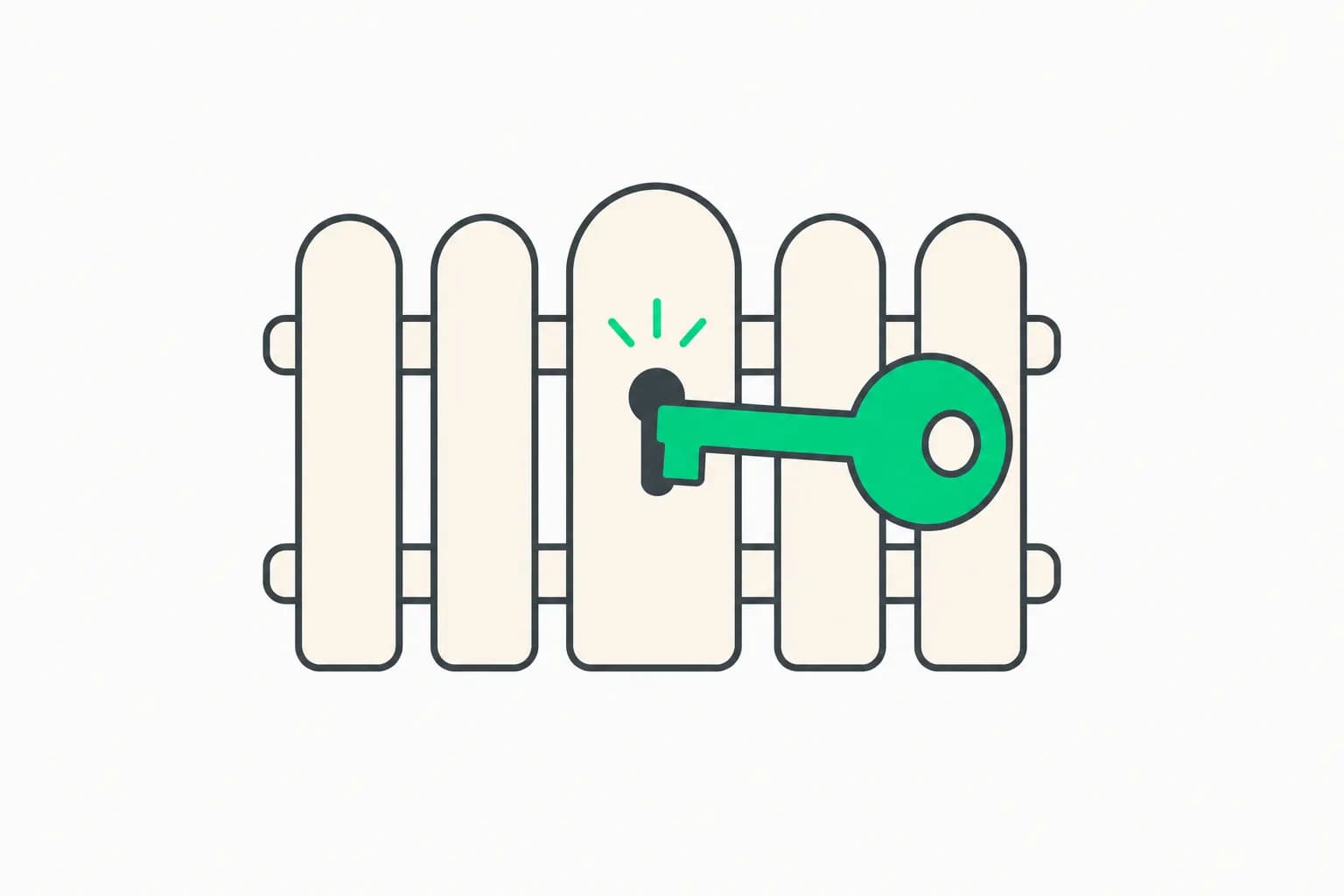
 WhiteMatter Guardian agent model enforcing enterprise policy at each AI agent lifecycle stage
Agents that act on your behalf need rules. See how explainx helps secure your agents →
The Guardian lifecycle WhiteMatter documents
WhiteMatter’s Guardian Agent product page is more concrete than a typical funding press release. The documented lifecycle has seven beats:
- Discover sanctioned and shadow agents across sensors (endpoint, browser, SaaS, cloud, code)
- Blueprint purpose — what data, tools, and outcomes the agent is for
- Create the Guardian — policy generated from that blueprint
- Go live with enforcement hooks at runtime
- Assess and red-team against the QATM library (102 techniques in the rebrand post)
- Decide at runtime — allow, hold for human review, deny, or narrow permissions
- Coach and resolve findings back into the blueprint
Two implementation details stand out for practitioners:
Monitor mode before Action mode. New rules run in Monitor first and report what they would have blocked. Owners see impact before flipping to Action. That is the same gradual rollout pattern NIST-style agent guidance recommends — and it avoids the “flip a deny switch and break payroll” failure mode.
One owner signs each policy revision. Every change yields a new signed revision with a named human accountable for it. That directly answers audit questions regulators are starting to ask in frameworks discussed in our NIST, NSA, and CISA agent control coverage.
Sub-agents inherit the same rule: each sub-agent gets its own Guardian, not a shared blanket policy. For teams building hierarchical coding agents, that is the difference between securing the root orchestrator only and securing every worker with filesystem access.
What the Series A money is for
The November 10 funding release is standard venture framing — R&D, go-to-market, executive hires — but it also confirms Vidit Arora (formerly at Securonix) as founder and CEO. Blumberg Capital’s investment note adds one engineering number: policy decisions in about 2.24 milliseconds, which the firm ties to real-time enforcement at machine speed.
Revenue claims — fivefold growth in six months and ~200% net revenue retention — are useful as directional signals, not benchmarks. Enterprise security buyers should still run a proof of concept on their own agent mix (browser copilots, IDE agents, ServiceNow-style automations, and homegrown LangGraph workers).
How Guardian agents differ from other “guardian” products
The word guardian is overloaded in 2026. Keep three lanes separate:
| Approach | Who built it | What it optimizes |
|---|---|---|
| WhiteMatter Guardian | WhiteMatter (commercial) | Per-agent enterprise policy, ownership, MCP governance, spend attribution |
| Microsoft Project Perception | Microsoft security | Multimodel attack simulation guardians inside a defender product |
| DIY gateway policy | Your platform team | Cedar or OPA at an MCP gateway, OIDC user binding, audit logs |
WhiteMatter spans pre-production validation and runtime in one SKU. Project Perception, as we covered in October, focuses on finding vulnerabilities and auto-remediation paths for agentic apps. AWS’s Okta series shows identity-first tool gating at the gateway. None of these fully replaces the others; they stack.
For MCP specifically, WhiteMatter’s pitch overlaps with concerns we raised in Cloudflare’s modern security model for pentest orchestrators: agents are becoming orchestrators of orchestrators. A policy layer that only watches the final HTTP response is too late.
 Enterprise MCP and SaaS connectors placed under Guardian agent policy enforcement
Agents-under-management economics
Business Insider’s report clarifies pricing philosophy: Guardians run on WhiteMatter-hosted models, not on the customer’s inference tokens. Customers pay on an agents-under-management basis — analogous to assets under management in finance, but counting autonomous workers.
That model aligns incentives if agent counts explode. It can also punish teams that spin up ephemeral sub-agents for each coding task unless the platform deduplicates short-lived workers. Ask vendors how they classify:
- Ephemeral CI agents versus long-lived copilots
- User-installed ChatGPT plugins versus IT-approved ServiceNow agents
- Shadow MCP servers started from a developer laptop
WhiteMatter says it discovers shadow agents across eight sensor types. Your security team should still compare discovery coverage against your actual deployment map — especially after Meta’s reported spike in internal agent incidents.
What builders should copy (with or without WhiteMatter)
You do not need a Series A budget to implement the useful parts of this architecture:
- Blueprint before production. Document data classes, tool allow lists, and escalation paths. Tie each blueprint to a named owner.
- Provision policy automatically when a new agent registration appears — even if enforcement starts in log-only mode.
- Centralize MCP and skill installs through a catalog with version pinning, as we recommend in MCP gateway reviews.
- Attribute spend per agent — token routing and semantic caching only work when finance can see which team’s agent burned the budget.
- Red-team the blueprint, not just the model — QATM’s 102 techniques are a reminder that tool misuse and credential theft dominate real incidents more than clever jailbreak prose.
For coding-agent teams, extend the same blueprint-and-monitor pattern to IDE and CI workers, using the MCP catalog discipline from our Chrome DevTools MCP guide.
How to protect yourself while evaluating vendors
Treat WhiteMatter like any other agent control plane:
- Run Monitor mode on production traffic for at least one full business cycle before enforcing denies on revenue paths.
- Require exportable audit logs that name the rule behind each allow, hold, or deny — WhiteMatter claims this; verify in your contract.
- Map data residency for Guardian inference (vendor-hosted GPUs may process prompt metadata you consider sensitive).
- Keep a break-glass human path when guardians misfire on novel tool schemas — agents change weekly in 2026.
Limits and open questions
WhiteMatter’s numbers — 2.25 million agents, 116 billion interactions — are self-reported and not independently audited in the materials we reviewed. The sub-3ms policy figure is a marketing claim; latency at your scale depends on topology and agent fan-out.
The product is closed source and priced for enterprises. Small teams will still rely on open MCP gateways, Cedar policies, and self-hosted observability from the AWS and Okta reference paths. WhiteMatter’s contribution is packaging the 1:1 Guardian metaphor into something CISOs can buy before regulators formalize agent incident reporting.
Finally, guardian-on-guardian recursion is unexplained in public docs: if a Guardian is itself an agent, who guards the Guardian? Enterprise buyers should ask about bootstrap trust and tamper-evident policy stores.
What procurement should ask in the first call
Security reviews fail when teams treat agent governance like a checkbox next to an existing CASB. Ask WhiteMatter — or any competitor — for written answers on: how shadow agents are discovered on air-gapped dev laptops, whether Guardian decisions are deterministic across model upgrades, how MCP server version changes trigger policy re-signing, and whether deny events export to your SIEM without a proprietary schema. Request a reference customer running coding agents in CI alongside customer-support copilots, because those workloads stress tool policies differently. If answers are vague, keep Monitor mode longer and retain your gateway-level Cedar or OPA controls from the AWS reference path.
Related on explainx.ai
- Okta Cross App Access and AgentCore Gateway (Part 2)
- Microsoft Project Perception and guardian agents
- Cursor and Fireworks agent trace security incident
- Cloudflare modern security model for agentic pentest orchestrators
- Chrome DevTools MCP setup for coding agents
- Meta Project OT and internal agent incident rates
WhiteMatter product names, customer logos, and performance figures are accurate as of November 14, 2026, per the company’s newsroom and product pages.