



The UK Budget delivered on October 28, 2026 put AI infrastructure and AI security in the same package. Chancellor John Healey announced a British Data Centre Covenant that trades priority grid access for local obligations, plus extra money for AI safety and security. A smaller line, a reported National Agentic Security Unit aimed at rogue AI agents, is the part of the story that is least well sourced, so this post separates what is confirmed from what is claimed.
In short: Reuters and City AM confirm the covenant, the £500 million for AI safety and security and the £140 million for the Sovereign AI Unit. The £40 million agentic unit, £60 million AI Cyber Shield and £70 million infrastructure vulnerability line appear in a news aggregator summary and social posts. We could not confirm them in a primary Budget document at the time of writing.
TL;DR: claimed vs verified
| Item | Status | Source |
|---|---|---|
| British Data Centre Covenant: priority grid connections for local investment, jobs, water protection | Confirmed | Reuters via Yahoo, City AM |
| On-site power generation permitted while waiting for a grid connection | Confirmed | Reuters, City AM |
| £500m extra for AI safety and security | Confirmed by City AM; also posted by Bloomberg's news account | City AM |
| £140m extra for the Sovereign AI Unit | Confirmed by City AM | City AM |
| AI Challenge Prize for public services, funding for workers adapting to change | Confirmed | Reuters |
| £40m National Agentic Security Unit for rogue agents | Reported, not confirmed by us | Aggregator summary citing social posts |
| £60m automated AI Cyber Shield, £70m to find security holes in critical infrastructure | Reported, not confirmed by us | Same aggregator summary |
| 6 GW of AI data-centre capacity by 2030 | Reported, tied to Treasury paper by a secondary outlet | Not in the Reuters brief |
Agents that act on your behalf need rules. Agentbeam stops the dangerous actions →
What the Budget confirmed: the Data Centre Covenant
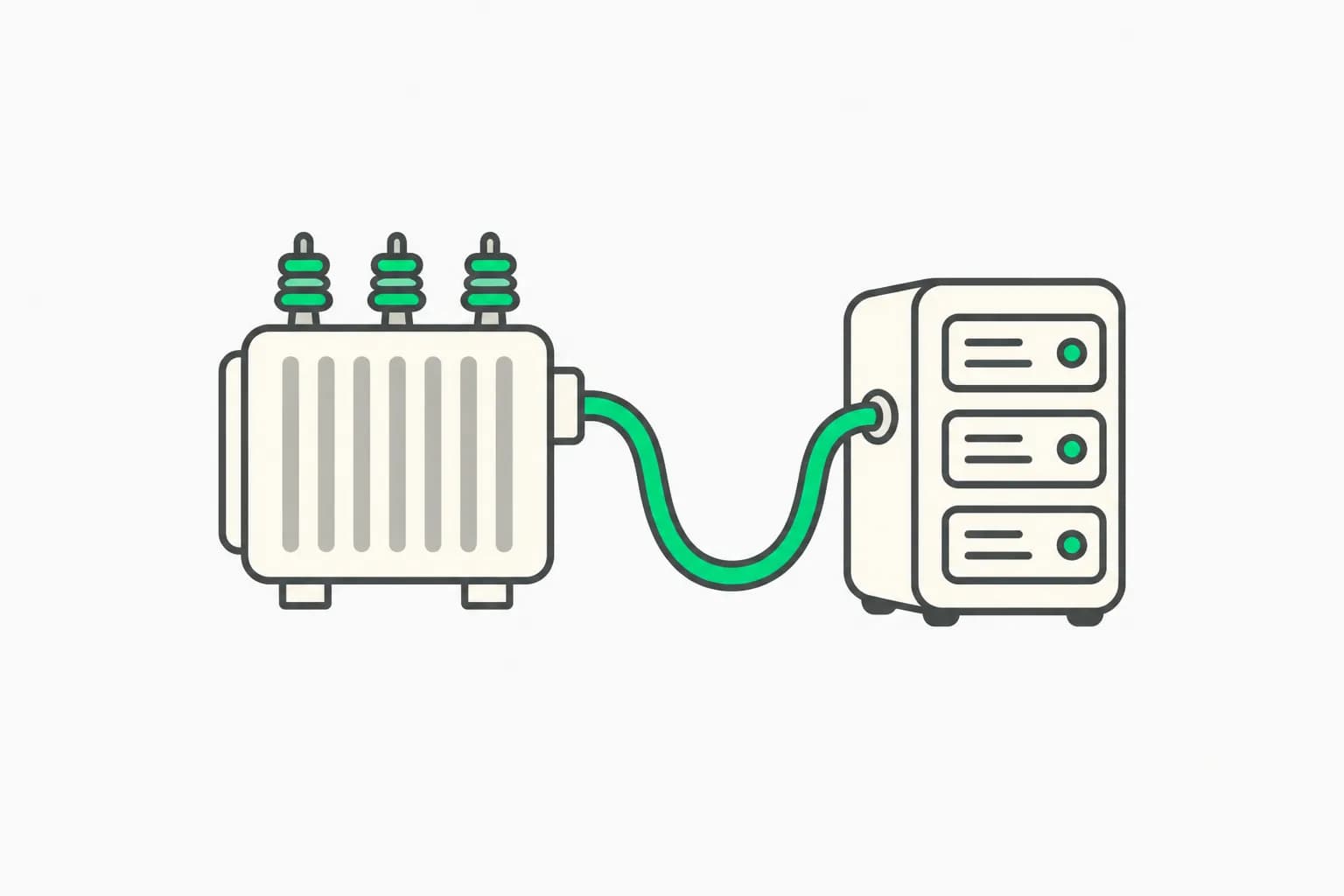
 A cooling tower feeding server blocks, illustrating the power and water costs behind the UK Data Centre Covenant
Reuters reports that Healey said the government would launch a "British Data Centre Covenant". Operators would commit to invest in local communities, create jobs and protect water supplies. In return, they would receive priority grid connections and, where necessary, permission to build on-site power generation. City AM adds that Healey promised "strict conditions" on developers, and quotes him: "To ensure our most sensitive data stays under British control, I am setting out a new deal for datacentres in the UK."
The stated aim, per Reuters, is to keep sensitive data from public services and the armed forces inside Britain. City AM places the move against a grid problem: electricity shortages threaten billions of pounds of planned AI infrastructure, and it notes that Microsoft withdrew from a planned Essex AI data centre with Nscale after the site could not secure power.
This matters beyond politics. Grid access has become the scarcest input for AI capacity, and the covenant makes it a negotiated asset. Operators that want fast connections must now accept public obligations on water and community benefit, which is where protests against new sites have concentrated. For background on how UK AI policy has been developing, see our coverage of Nvidia's £250 million agentic safety compute plan in the UK and the UK AI biosecurity lab with OpenAI and Anthropic credits.
The money: what City AM confirms
City AM reports two headline sums: £500 million in additional funding for AI safety and security, "building on earlier investments in cyber defence, biosecurity, and the AI Security Institute", and £140 million for the Sovereign AI Unit, which invests in strategically important British AI companies. The same article does not name a separate agentic security unit. Its nearest matches are the Sovereign AI Unit and the AI Security Institute.
Two experts quoted by City AM show the reaction. Gary Watson of Stellanor called linking grid access to local benefit "the right deal". Dr Maria Dunford of Lifebit warned that "funding is only the first step, and procurement needs to follow", arguing public contracts still favour overseas firms.
The claimed part: a National Agentic Security Unit
A news aggregator summary of the Budget says the £500 million package includes a National Agentic Security Unit with £40 million to "detect, investigate and respond to rogue AI agents", £60 million for an automated AI Cyber Shield and £70 million to identify security holes in critical infrastructure. It cites a post on X relaying the £40 million line, and Bloomberg's news account for the £500 million figure.
We searched for the unit's name and the £40 million figure and found only the aggregator and those posts. We did not find a Treasury or GOV.UK page, a Reuters line or a City AM mention. The searches did surface the older Cyber Shield concept from the National Cyber Security Centre, a plan for autonomous AI agents that find and fix vulnerabilities in government networks and critical infrastructure. That makes an AI Cyber Shield funding line plausible, but plausible is not confirmed.
Note also that the £500 million, a £165 million national AI biosecurity initiative mentioned by another outlet, and a headline total of £700 million are not reconciled in the sources we found. Until the Budget documents are checked, do not repeat the sub-line numbers as fact.
How to check it yourself
- Open the Budget document and Treasury policy paper on GOV.UK and search for "agentic", "Cyber Shield" and "Sovereign AI Unit".
- Compare any sub-allocation against the £500 million total. If £40m, £60m and £70m are real allocations, they should sum to £170 million inside it.
- Look for the unit's host body (the AI Security Institute, the NCSC or the Department for Science, Innovation and Technology) and a legal basis. A "regulatory body" that monitors misaligned activity would need statutory powers, which a Budget line alone does not create.
Why a rogue-agent unit is a live question
Whether or not the exact line holds, the idea fits a pattern. Governments are being asked who investigates when an AI agent causes harm to a third party. Our coverage of the pattern of AI agents breaching companies and Claude models breaching 15 systems in security incidents shows incidents are accumulating faster than institutions to handle them, and we log such events in our Felony Bench tracker. A UK unit with investigation powers would be one of the first national bodies with that remit.
The UK already has relevant institutions. The AI Security Institute tests frontier models, and our posts on the White House restoring AISI access to frontier models and Anthropic barring AISI from Mythos 5.1 testing show how much depends on lab cooperation. Microsoft's Brad Smith has also argued for emergency brakes, covered in this post on AI being less regulated than milk.
How the pieces fit together
Read as a whole, the Budget treats AI as both an industrial and a security problem. The covenant is the industrial half: it answers the question of where models will run and who pays the local cost of running them. The safety and security money is the oversight half: it funds the bodies that test, monitor and potentially respond to AI systems once they are deployed.
The link between them is sovereignty. Healey framed the covenant around keeping sensitive public-service and military data under British control, which means the data-centre rules and the security spending are meant to reinforce each other. A reader tracking UK policy should therefore watch two things at once: whether grid connections actually arrive faster for covenant signatories, and whether any security unit gets statutory powers rather than just a budget line.
There is also a timing caveat. Budget day coverage is built from speeches and press briefings, and the line-by-line allocations often appear in the supporting documents hours or days later. That is exactly why the sub-allocations here are labelled as reported rather than confirmed.
What this means for builders and operators
- Data centre developers: expect grid priority to come with conditions on water, jobs and community investment. Plan reporting for water use.
- Teams deploying agents in the UK: an agent-incident unit, if it exists, implies expectations for logging and incident response. Keep action logs and be able to explain what an agent did and why.- UK AI startups: the Sovereign AI Unit's extra £140 million is a possible investor, according to City AM; procurement, as Dunford noted, is the harder part.
- Everyone else: wait for the Budget documents before citing the £40m, £60m or £70m figures.
Open questions
- Does the National Agentic Security Unit exist as a named body, and who hosts it?
- What powers would it have over foreign labs whose agents act in the UK?
- Is the 6 GW by 2030 target a Treasury number, and how much grid capacity does the covenant actually unlock?
- How are the £500 million, £165 million and £700 million figures related?
We will update this post when the official documents or a second outlet settle those points.
Related reading
- Nvidia UK £250M agentic safety compute
- UK AI biosecurity lab with OpenAI and Anthropic credits
- White House restores UK AISI frontier model access
- Anthropic bars UK AISI from Mythos 5.1 testing
- AI agents hacking companies: not a coincidence
- Brad Smith: AI less regulated than milk
- Sources: Reuters brief, City AM, NCSC Cyber Shield
Accurate as of October 28, 2026. Budget figures were still being reported; verify against official documents.