



Prompt libraries age fast: models change, guardrails tighten, and vague “do marketing” requests stop working. This explainx.ai shortlist is different because every entry is a structured template with variables—not a one-line ChatGPT trick.
Each card links to explainx.ai’s structured generator so you can adapt variables (audience, constraints, output shape) instead of pasting a brittle paragraph you found on social.
TL;DR
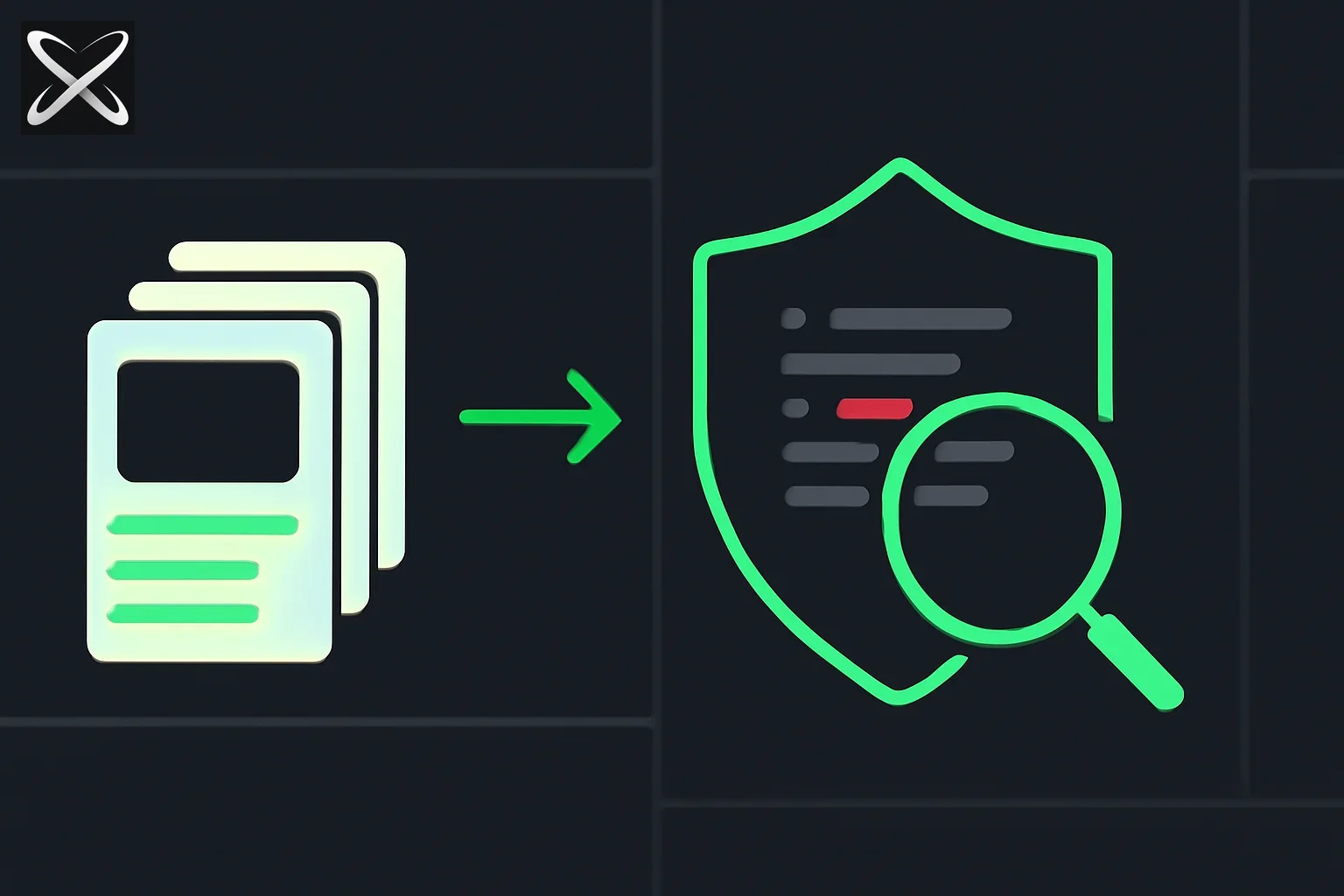 Top AI prompts for security review diagram: template cards feeding a shield with a magnifying glass scanning code for a vulnerability
| Item | Detail |
|---|---|
| Canonical URL | https://explainx.ai/blog/top-ai-prompts-for-security-review |
| Templates ranked | 20 structured explainx.ai prompt generators |
| Data source | explainx.ai /generate/prompts catalog (scored for Security & Review) |
| Updated | 2026-06-22 |
Why This Category Matters
- Security prompts must encourage conservative language: impact, likelihood, mitigations, and what evidence is missing. The worst ones sound like pentest cosplay.
- We selected review and threat-modeling adjacent patterns that score on this cluster’s security lexicon.
Top 20 AI Prompt Templates for Security & Review
Each entry below is a real template from the explainx.ai catalog — ranked by topical relevance to this cluster, not by generic popularity. Open the generator link to fill variables and copy a production-ready prompt block.
1. API docs “Get started” page
Generate API getting-started docs with guarded examples. How to use: Draft a Markdown "Getting started" page for API "{{api_name}}". Context: Purpose: {{purpose}} Baseline URL placeholder: {{base_url_placehold… — helpful when you need repeatable structure across teammates.
- Signals: TEXT · writing · documentation · ~450 tok est.
- Generator: Open structured template
2. Sequential module opener + recap stingers
Courseware motion prompts stressing recurring motif grammar and restrained palette. How to use: Generate transition motion bridging Module {{module_index}} "{{module_title}}" within course "{{series_title}}". Maintain recurring motif to… — strong when you paste real inputs instead of placeholder text.
- Signals: VIDEO · tutorial · tutorial · ~320 tok est.
- Generator: Open structured template
3. AI Agent Architecture Design Prompt
Design production-ready AI agent architectures. Includes tool orchestration, multi-turn workflows, state management, and safety patterns. How to use: You are an expert AI systems architect specializing in designing autonomous agent systems. <objective> Design the architecture for: {{agentP… — good fit if you care about sectioning, constraints, or output shape.
- Signals: TEXT · coding · ai-agent-architecture · ~1500 tok est.
- Generator: Open structured template
4. Competitive positioning matrix
Competitive teardown matrix prompt for devtools GTM. How to use: Build a Markdown comparison matrix for OUR product "{{our_product}}" vs {{named_competitors}} on axes: {{axes_list}} Facts we will assert co… — helpful when you need repeatable structure across teammates.
- Signals: TEXT · analysis · competitive · ~450 tok est.
- Generator: Open structured template
5. Research paper → decision brief
Structured research condensation with citation discipline. How to use: Summarize scholarly work "{{paper_title}}" for {{consumer}}. Source notes (verbatim snippets allowed): {{source_notes_placeholder}} Produce:… — aim this at a single deliverable per run—avoid kitchen-sink prompting.
- Signals: TEXT · analysis · research · ~450 tok est.
- Generator: Open structured template
6. SQL cohort exploration draft
Prompt for analyst-grade SQL scaffolding with explicit guardrails against inventing schemas. How to use: You are an analytics engineer. Draft {{dialect}} SQL (read-only intent) answering: {{business_question}} Event grain: {{event_grains}} Assum… — works best if you define the audience and success criteria up front.
- Signals: TEXT · analysis · analytics-sql · ~450 tok est.
- Generator: Open structured template
7. Executive explainer narration
Explainer narration template with escalating clarity passes. How to use: Compose {{minute_target}} explainer VO clarifying "{{decision}}" aimed at executives in sector {{sector}}. Three passes: Ultra-dense gist (T… — good fit if you care about sectioning, constraints, or output shape.
- Signals: AUDIO · voice · voiceover · ~420 tok est.
- Generator: Open structured template
8. Interview arc + follow-up scaffolding
Interview scripting template emphasizing ladder structure and glossary discipline. How to use: Draft interviewer-only script scaffolding for episode about {{guest_domain}} targeting outcome {{desired_outcome}}. Segments: Warm calibrati… — excellent for turning tribal knowledge into copy-paste scaffolding.
- Signals: AUDIO · podcast · podcast-intro · ~420 tok est.
- Generator: Open structured template
9. Synthetic motif session brief (producer handoff)
Music generation handoff prompting with ethical loop length + stem intent. How to use: Compose directional brief producing {{loop_length_hint}} looping bed for branding moment "{{scenario}}" BPM target {{bpm_anchor}} tonal cent… — helpful when you need repeatable structure across teammates.
- Signals: AUDIO · music · jingle · ~420 tok est.
- Generator: Open structured template
10. Audiobook chapter VO — measured authority
Narration micro-prompt emphasizing breath cadence clarity for explanatory audiobooks. How to use: Speak chapter excerpt titled conceptually "{{chapter_title}}" (do not read verbatim ISBN numbers unless {{read_isbn_ok}} permits). Audience … — strong when you paste real inputs instead of placeholder text.
- Signals: AUDIO · narration · voiceover · ~420 tok est.
- Generator: Open structured template
11. Podcast sonic cold open VO
Podcast intro narration micro-template with intrigue seeding. How to use: Compose {{intro_seconds}} cold open narration for "{{series_name}}" asserting promise-line: {{promise_line}} Texture motifs (spoken—not mixi… — works best if you define the audience and success criteria up front.
- Signals: AUDIO · podcast · podcast-intro · ~420 tok est.
- Generator: Open structured template
12. Tech deep-dive monologue pacing
Podcast narration prompt focusing on rhythmic paragraphs and selective SSML breaks. How to use: Write a contiguous {{minute_target}} host monologue exploring {{episode_thesis}} for {{listener_profile}}. Constraints: Deliver speakable pr… — aim this at a single deliverable per run—avoid kitchen-sink prompting.
- Signals: AUDIO · podcast · podcast-intro · ~420 tok est.
- Generator: Open structured template
13. Product hero VO scaffold
Product narration template with truthful outcome clause and reviewer appendix. How to use: Draft {{minute_target}} hero VO for SKU {{sku}} showcasing outcomes constrained to truthful_outcomes corpus: {{truthful_outcomes}} Pain voca… — works best if you define the audience and success criteria up front.
- Signals: AUDIO · voice · voiceover · ~420 tok est.
- Generator: Open structured template
14. UI transition micro‑SFX (text choreography)
Short UI sound effect cue sheet prompt for synthesized click / whoosh hybrids. How to use: Design lexical sound choreography for stacked UI gestures: sequence {{interaction_flow}} adhering loudness temperament {{loudness_temper}} t… — good fit if you care about sectioning, constraints, or output shape.
- Signals: AUDIO · sound-effects · interaction · ~360 tok est.
- Generator: Open structured template
15. Tutorial VO with checkpoint cadence
Structured tutorial narration template with enumerated checkpoints and sparing SSML. How to use: Author VO narration teaching {{lesson_title}} for learners at {{experience_band}}. Structural envelope per numbered step inside {{step_outli… — good fit if you care about sectioning, constraints, or output shape.
- Signals: AUDIO · voice · voiceover · ~420 tok est.
- Generator: Open structured template
16. SEO-Optimized Blog Post
Create SEO-optimized blog posts using AI. Includes keyword optimization, proper structure, and engaging content. How to use: You are an expert SEO content writer with deep knowledge of Google's ranking factors and E-E-A-T principles. <instructions> Write a comprehe… — works best if you define the audience and success criteria up front.
- Signals: TEXT · writing · blog-post · ~1000 tok est.
- Generator: Open structured template
17. Go HTTP handler with HMAC validation stub
Go service webhook handler skeleton emphasizing signature verification scaffolding. How to use: Generate Go {{go_version}}+ code implementing POST {{path_suffix}} validating HMAC signatures using header {{signature_header}} and shared s… — works best if you define the audience and success criteria up front.
- Signals: TEXT · coding · go-services · ~720 tok est.
- Generator: Open structured template
18. React Server Component data shell
Generate RSC-aligned React 19 TypeScript scaffolding with guarded data fetching prompts. How to use: Implement a Next.js-compatible React Server Component page segment for "{{page_goal}}" fetching {{remote_source}} via {{fetch_mode}} usage. … — pairs well with a short eval rubric (tone, structure, safety).
- Signals: TEXT · coding · react · ~650 tok est.
- Generator: Open structured template
19. Typed API route handler (Next.js Route Handler style)
Generate disciplined TypeScript server handlers using zod guards and predictable error envelopes. How to use: Implement a POST handler answering: {{purpose}} Tech guardrails: - Runtime: {{runtime}} - Request schema (zod-esque description): {{request_… — aim this at a single deliverable per run—avoid kitchen-sink prompting.
- Signals: TEXT · coding · web-api · ~700 tok est.
- Generator: Open structured template
20. Zod schema inferred from messy JSON samples
Infer zod parsers from sample payloads with sane defaults. How to use: Given sample payloads: {{samples_markdown}} Target TypeScript inference style: {{strictness}} Output: • zod module exports • type alias expo… — use the variables as guardrails so outputs stay on-brief.
- Signals: TEXT · coding · validation · ~480 tok est.
- Generator: Open structured template
Ranking Table (Quick Scan)
| Rank | Name | Generator | Signals | Summary |
|---|---|---|---|---|
| 1 | API docs “Get started” page | Open | TEXT · writing · documentation · ~450 tok est. | Generate API getting-started docs with guarded examples. How to use: Draft a Markdown "Getting started" page for API "{{api_name}}". Context: Purpose: {{purpose}} Baseline URL placeholder: {{base_url_placehold… — helpful when you need repeatable structure across tea |
| 2 | Sequential module opener + recap stingers | Open | VIDEO · tutorial · tutorial · ~320 tok est. | Courseware motion prompts stressing recurring motif grammar and restrained palette. How to use: Generate transition motion bridging Module {{module_index}} "{{module_title}}" within course "{{series_title}}". Maintain recurring motif to… — strong when you paste re |
| 3 | AI Agent Architecture Design Prompt | Open | TEXT · coding · ai-agent-architecture · ~1500 tok est. | Design production-ready AI agent architectures. Includes tool orchestration, multi-turn workflows, state management, and safety patterns. How to use: You are an expert AI systems architect specializing in designing autonomous agent systems. <objective> Design the archit |
| 4 | Competitive positioning matrix | Open | TEXT · analysis · competitive · ~450 tok est. | Competitive teardown matrix prompt for devtools GTM. How to use: Build a Markdown comparison matrix for OUR product "{{our_product}}" vs {{named_competitors}} on axes: {{axes_list}} Facts we will assert co… — helpful when you need repeatable structure across teamm |
| 5 | Research paper → decision brief | Open | TEXT · analysis · research · ~450 tok est. | Structured research condensation with citation discipline. How to use: Summarize scholarly work "{{paper_title}}" for {{consumer}}. Source notes (verbatim snippets allowed): {{source_notes_placeholder}} Produce:… — aim this at a single deliverable per run—avoid ki |
| 6 | SQL cohort exploration draft | Open | TEXT · analysis · analytics-sql · ~450 tok est. | Prompt for analyst-grade SQL scaffolding with explicit guardrails against inventing schemas. How to use: You are an analytics engineer. Draft {{dialect}} SQL (read-only intent) answering: {{business_question}} Event grain: {{event_grains}} Assum… — works best if y |
| 7 | Executive explainer narration | Open | AUDIO · voice · voiceover · ~420 tok est. | Explainer narration template with escalating clarity passes. How to use: Compose {{minute_target}} explainer VO clarifying "{{decision}}" aimed at executives in sector {{sector}}. Three passes: Ultra-dense gist (T… — good fit if you care about sectioning, constrai |
| 8 | Interview arc + follow-up scaffolding | Open | AUDIO · podcast · podcast-intro · ~420 tok est. | Interview scripting template emphasizing ladder structure and glossary discipline. How to use: Draft interviewer-only script scaffolding for episode about {{guest_domain}} targeting outcome {{desired_outcome}}. Segments: Warm calibrati… — excellent for turning tribal |
| 9 | Synthetic motif session brief (producer handoff) | Open | AUDIO · music · jingle · ~420 tok est. | Music generation handoff prompting with ethical loop length + stem intent. How to use: Compose directional brief producing {{loop_length_hint}} looping bed for branding moment "{{scenario}}" BPM target {{bpm_anchor}} tonal cent… — helpful when you need repeatable |
| 10 | Audiobook chapter VO — measured authority | Open | AUDIO · narration · voiceover · ~420 tok est. | Narration micro-prompt emphasizing breath cadence clarity for explanatory audiobooks. How to use: Speak chapter excerpt titled conceptually "{{chapter_title}}" (do not read verbatim ISBN numbers unless {{read_isbn_ok}} permits). Audience … — strong when you paste real |
| 11 | Podcast sonic cold open VO | Open | AUDIO · podcast · podcast-intro · ~420 tok est. | Podcast intro narration micro-template with intrigue seeding. How to use: Compose {{intro_seconds}} cold open narration for "{{series_name}}" asserting promise-line: {{promise_line}} Texture motifs (spoken—not mixi… — works best if you define the audience and succ |
| 12 | Tech deep-dive monologue pacing | Open | AUDIO · podcast · podcast-intro · ~420 tok est. | Podcast narration prompt focusing on rhythmic paragraphs and selective SSML breaks. How to use: Write a contiguous {{minute_target}} host monologue exploring {{episode_thesis}} for {{listener_profile}}. Constraints: Deliver speakable pr… — aim this at a single del |
| 13 | Product hero VO scaffold | Open | AUDIO · voice · voiceover · ~420 tok est. | Product narration template with truthful outcome clause and reviewer appendix. How to use: Draft {{minute_target}} hero VO for SKU {{sku}} showcasing outcomes constrained to truthful_outcomes corpus: {{truthful_outcomes}} Pain voca… — works best if you define the |
| 14 | UI transition micro‑SFX (text choreography) | Open | AUDIO · sound-effects · interaction · ~360 tok est. | Short UI sound effect cue sheet prompt for synthesized click / whoosh hybrids. How to use: Design lexical sound choreography for stacked UI gestures: sequence {{interaction_flow}} adhering loudness temperament {{loudness_temper}} t… — good fit if you care about sectio |
| 15 | Tutorial VO with checkpoint cadence | Open | AUDIO · voice · voiceover · ~420 tok est. | Structured tutorial narration template with enumerated checkpoints and sparing SSML. How to use: Author VO narration teaching {{lesson_title}} for learners at {{experience_band}}. Structural envelope per numbered step inside {{step_outli… — good fit if you care abou |
| 16 | SEO-Optimized Blog Post | Open | TEXT · writing · blog-post · ~1000 tok est. | Create SEO-optimized blog posts using AI. Includes keyword optimization, proper structure, and engaging content. How to use: You are an expert SEO content writer with deep knowledge of Google's ranking factors and E-E-A-T principles. <instructions> Write a comprehe… — w |
| 17 | Go HTTP handler with HMAC validation stub | Open | TEXT · coding · go-services · ~720 tok est. | Go service webhook handler skeleton emphasizing signature verification scaffolding. How to use: Generate Go {{go_version}}+ code implementing POST {{path_suffix}} validating HMAC signatures using header {{signature_header}} and shared s… — works best if you define |
| 18 | React Server Component data shell | Open | TEXT · coding · react · ~650 tok est. | Generate RSC-aligned React 19 TypeScript scaffolding with guarded data fetching prompts. How to use: Implement a Next.js-compatible React Server Component page segment for "{{page_goal}}" fetching {{remote_source}} via {{fetch_mode}} usage. … — pairs well with a s |
| 19 | Typed API route handler (Next.js Route Handler style) | Open | TEXT · coding · web-api · ~700 tok est. | Generate disciplined TypeScript server handlers using zod guards and predictable error envelopes. How to use: Implement a POST handler answering: {{purpose}} Tech guardrails: - Runtime: {{runtime}} - Request schema (zod-esque description): {{request_… — aim this at |
| 20 | Zod schema inferred from messy JSON samples | Open | TEXT · coding · validation · ~480 tok est. | Infer zod parsers from sample payloads with sane defaults. How to use: Given sample payloads: {{samples_markdown}} Target TypeScript inference style: {{strictness}} Output: • zod module exports • type alias expo… — use the variables as guardrails so outputs stay on-br |
How This Ranking Works
Unlike directory rankings that sort database rows by installs or stars, this list ranks prompt templates from explainx.ai’s static catalog by topical overlap with Security & Review (titles, descriptions, keywords, variable labels, and excerpted base prompts).
At 20 items, this is an exploration list: you get deeper coverage across sub-workflows, modalities, and constraint styles. We still cap irrelevance—every included template must clear a minimum relevance score.
If two templates tie, we prefer more complete metadata (rich variables, concrete best-practice scaffolding) because that tends to produce more consistent real-world outputs.
Scoring caveats
- Relevance is lexical and semantic-light on purpose: we match against template text you can inspect, not opaque embeddings, so the ranking is explainable in an editorial review.
- List length is fixed to 20 for reader scannability; if a topic is narrow, we may include neighboring high-utility templates to avoid thin pages—clearly disclosed in this section.
- Modality diversity (text vs image vs video vs audio) is a tie-breaker when relevance scores are close, because multimodal teams often need adjacent patterns in the same briefing.
- Some lower positions include high-quality general templates to complete the page without leaving blank slots—use them as structural baselines and swap in stricter variables for your stack.
A Practical Selection Framework
Start from the deliverable, not the vibe
For Security & Review, name the artifact: email, ADR, shot list, SQL draft, support reply, or roadmap section. The templates below work best when the desired output shape is explicit.
Treat variables as the contract
If you skip required variables, models improvise. Spend 30 seconds filling constraints and you’ll beat 90% of generic prompts that only swap adjectives.
Prefer one model pass + one human pass
Especially for customer-facing or regulated text, use the template to generate structure, then audit claims, numbers, and promises in a second pass.
How to choose prompts for Security & Review
- Pick 2–3 finalists and test them on the same brief; Security & Review outputs vary wildly when constraints differ.
- If a template is ‘too long,’ fill only the critical variables first—then iterate on tone and length.
- When a template targets a different stack but shares structure, keep the skeleton and swap domain nouns rather than abandoning the pattern.
Implementation tips
- Ship a micro-playbook: which Security & Review prompts are approved, which require manager review, and which are experimental.
- Log failure modes (hallucinated metrics, wrong tone, refusal) and attach the variable set you used—patterns emerge fast.
- Link generator pages in your team wiki so people stop re-pasting divergent versions from random threads.
How to Use These Templates
Visit /generate/prompts and filter by Security & Review. Start with the top five templates for daily work, expand to ten for team playbooks, and use the full 20 when you are building a shared prompt library. Paste real inputs in variable slots — audience, schema, constraints, brand voice — instead of placeholder text. The model uses those as guardrails, not suggestions.
One Model Pass, One Human Pass
AI-generated output from these templates should go through one structured review before it ships externally. The model cannot verify facts, compliance, or brand fit in your market context. Treat catalog output as a high-quality first draft.
Closing guidance
- This “top 20” list is a curated relevance slice of explainx.ai prompt templates for Security & Review, not a universal claim about the best prompts on the internet.
- If nothing fits perfectly, remix: take the closest template, narrow the task, and tighten variables until the model stops drifting. That is the practical core of modern prompt work.
- When you are ready to go beyond static lists, bookmark the generator hub at /generate/prompts and explore modality pages (text, image, video, audio) for adjacent security & review patterns.
Frequently asked questions
How did explainx.ai choose these 20 prompt templates for Security & Review?
Unlike directory rankings that sort database rows by installs or stars, this list ranks prompt templates from explainx.ai’s static catalog by topical overlap with Security & Review (titles, descriptions, keywords, variable labels, and excerpted base prompts).
At 20 items, this is an exploration list: you get deeper coverage across sub-workflows, modalities, and constraint styles. We still cap irrelevance—every included template must clear a minimum relevance score.
If two templates tie, we prefer more complete metadata (rich variables, concrete best-practice scaffolding) because that tends to produce more consistent real-world outputs.
Is this page just recycled generic ChatGPT prompts?
No. Each item is a structured template in the explainx.ai catalog—typically with variables, best-practice scaffolding, and modality-specific guidance. The surrounding article text is unique to this topic cluster so pages do not read as duplicate templates across URLs.
Can I run these prompts directly on explainx.ai?
Yes. Each ranked item links to /generate/prompts/{modality}/{category}/{slug} where you can fill variables and copy a production-ready prompt block. That is the preferred path versus pasting static text from a screenshot.
Will "Top 20 AI Prompt Templates for Security & Review" stay the same forever?
Ordering may shift when we add templates or refine relevance scoring, and the updatedAt timestamp reflects generation time. The goal is a useful evergreen guide—not a frozen leaderboard.
Related Resources
- Generate a prompt for security & review
- Browse AI skills directory
- AI tools directory
- Master prompt engineering: Claude guide 2026 Rankings reflect explainx.ai catalog listings as of the published date. Edit this MDX file directly to update templates or rankings.