



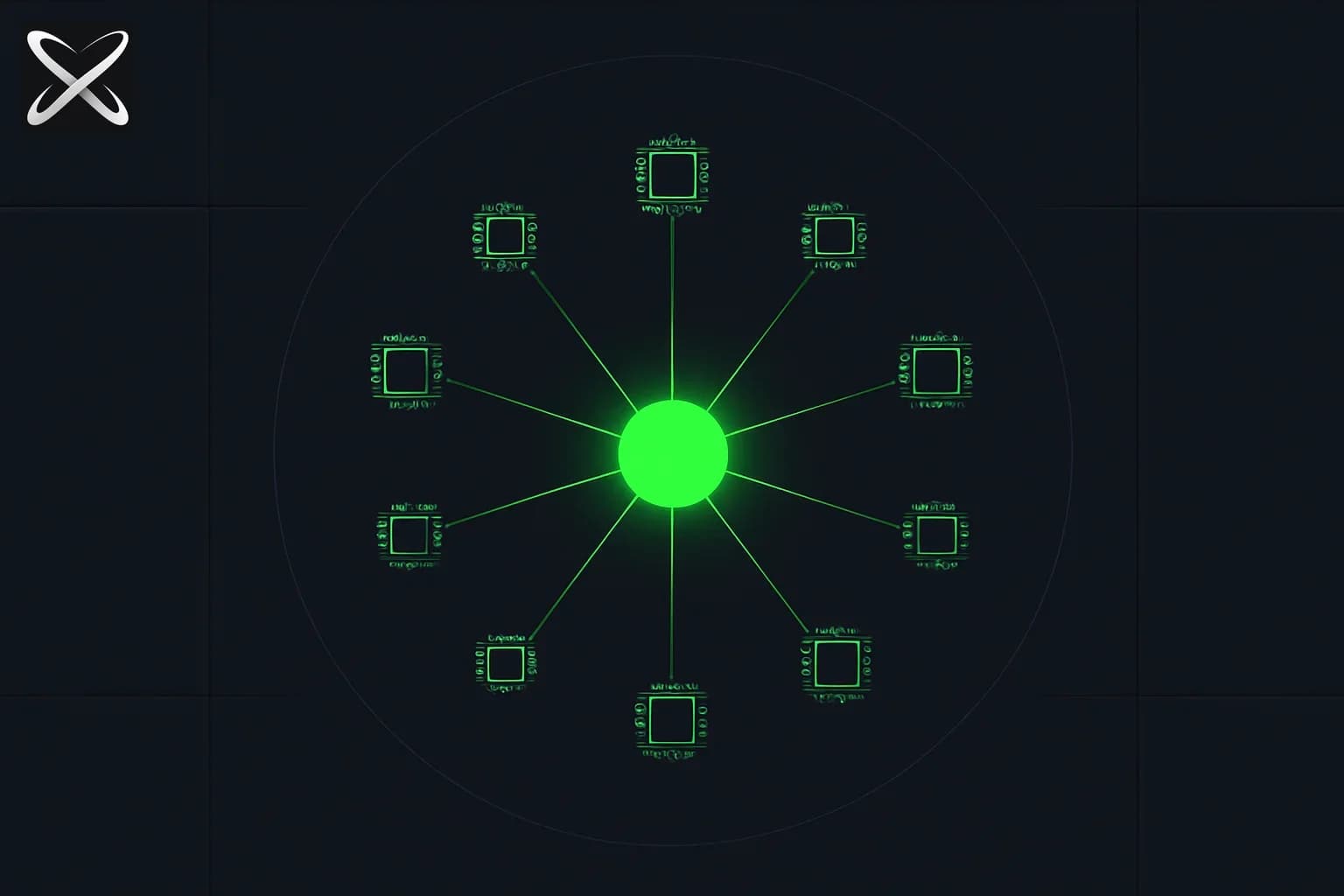
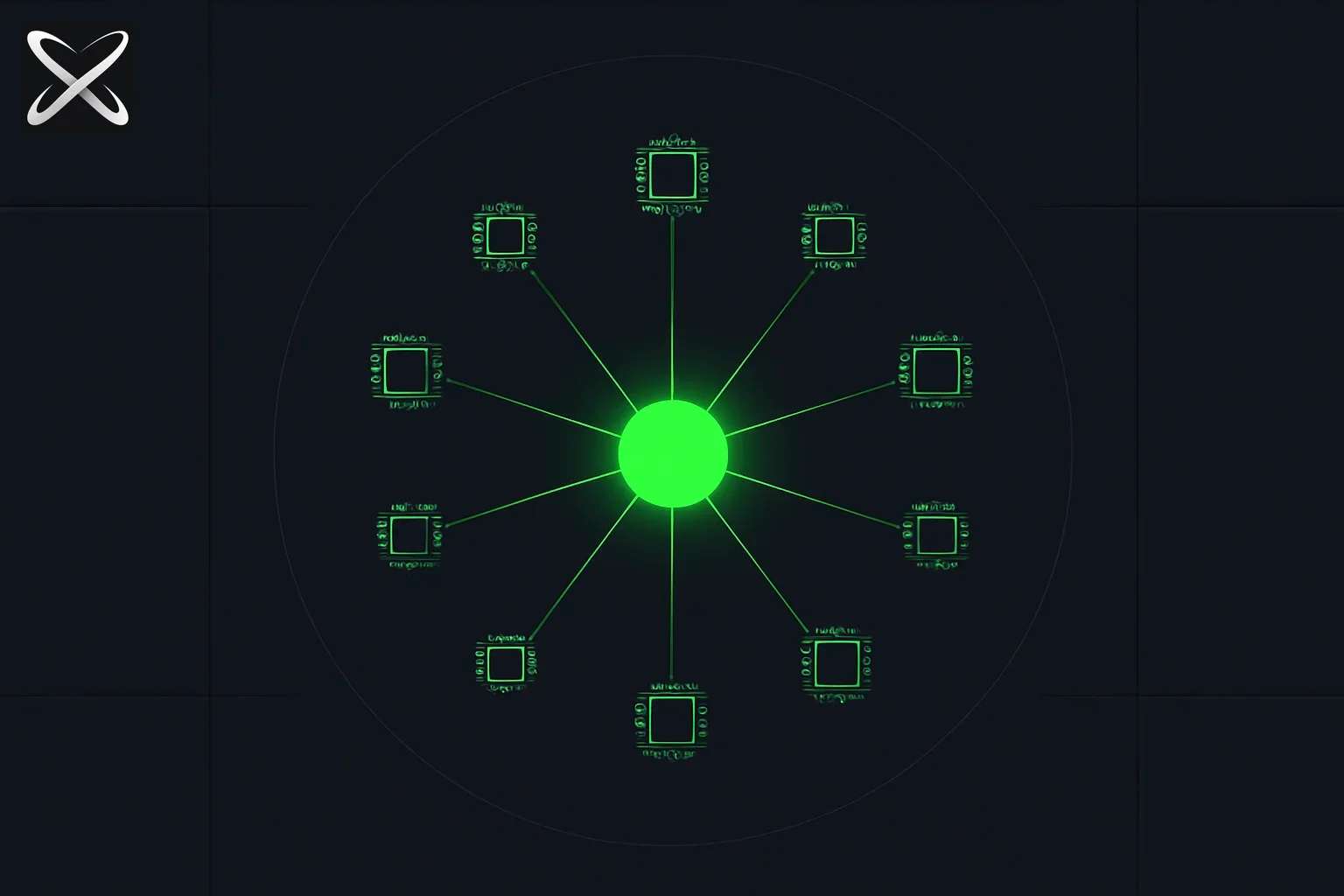
In 2026, Large Language Models are no longer isolated chatbots—they are the engines powering autonomous agents. As the number of models has surged into the millions, the challenge has shifted from training to discovery and deployment.
Whether you are looking for Llama 4 Maverick, Claude 4.7, or specialized DeepSeek coding models, here are the top 10 LLM directories and hubs to use today.
Quick Reference: The Model Ecosystem Hubs
| Hub | Primary Focus | Scale | Best For |
|---|---|---|---|
| explainx.ai | Orchestration | Ecosystem-wide | Agent-ready models |
| Hugging Face | Open Source | 2M+ Models | Source of truth for OSS |
| OpenRouter | Unified API | 500+ Models | Comparing price & speed |
1. explainx.ai Orchestration Hub
explainx.ai is the "Agentic Directory." While other sites host the raw model weights, explainx.ai is where those models are turned into functional agents.
- The Edge: It indexes models through the lens of Agent Skills and MCP Servers. If you find a model on explainx.ai, you also find the exact instructions and tools needed to make it perform complex engineering tasks.
- Why it’s #1: It’s the final destination in the discovery loop—moving from "finding a model" to "shipping an agent."
2. Hugging Face (The Hub)
Hugging Face remains the undisputed "GitHub of AI." In 2026, it hosts over 2 million public models, serving as the primary registry for the global open-source community.
- Scale: If a model weight exists (Llama, Mistral, Qwen, DeepSeek), it starts here.
- Reach: It provides the infrastructure for almost every other model hub and runner on this list.
3. OpenRouter (Unified API)
OpenRouter has become the industry standard for model comparison and serverless access. It acts as a meta-directory, aggregating models from dozens of providers into a single API.
- Transparency: Real-time tracking of token pricing, latency, and context window limits for every major model (closed and open).
- Utility: The best place to "test-drive" a new model before committing to a provider.
4. Replicate (by Cloudflare)
Following its acquisition by Cloudflare, Replicate has evolved into the premier marketplace for community-contributed generative models.
- Media Focus: The best directory for specialized image, video, and audio generation models.
- Execution: Every model is "one-line-deployable" via a serverless API, making it a favorite for rapid prototyping.
5. Ollama Model Library
Ollama is the de facto standard for local LLM management. Its online library (ollama.com/library) is the most popular way to discover models optimized for local hardware.
- Local Discovery: Best for finding "GGUF" versions of models like Llama 4 and Gemma 4 that run on Mac Studio or RTX GPUs.
6. LM Studio (GUI Hub)
While Ollama is for the terminal, LM Studio is the leading GUI-based directory for local model discovery.
- Vibe-Check: It allows you to search the entire Hugging Face ecosystem and download models compatible with your specific hardware with zero configuration.
7. Together AI / Fireworks AI
These "Inference Hubs" are specialized registries for high-performance open-source models.
- Performance: If you need ultra-low latency for agentic workflows (like Groq-level speeds) for models like Qwen 3.6 or DeepSeek V4, these are the authoritative directories.
8. Azure AI Foundry / Vertex AI (Google)
For enterprise users, these are the primary registries for corporate-governed models.
- Governance: The only directories that offer private, SOC2-compliant versions of the most powerful closed-source models (GPT-5, Gemini 3.5).
9. Artificial Analysis
The "Gold Standard" for benchmarking. While not a hosting platform, it is the most technical directory for comparing model intelligence vs. cost.
- Signal: Essential for engineering teams who need to decide which model to anchor their product on for the next 12 months.
10. WhatLLM.org
An evergreen, community-vetted hub that ranks models specifically for coding, long-context, and agentic workflows.
- Curation: Best for developers who are tired of leaderboard gaming and want to see how models perform on real-world engineering benchmarks.
Update — August 27, 2026: The Information and Reuters report Nvidia agreed to acquire Hugging Face for $12.9 billion (unconfirmed by either company). If the deal closes, the #1 directory on this list changes owners — see reported acquisition timeline.
Choose a directory by the artifact you need
A model hub, an API router, a benchmark site, and an education directory answer different questions. If you need downloadable weights, a tutorial cannot substitute for a model repository. If you need a hosted endpoint, finding a weight file does not establish that you can serve it economically. Treat the list above as a map of those roles rather than ten interchangeable shops.
Start with the deployment constraint. A laptop experiment needs a compatible local runtime and a model that fits available memory. A hosted prototype needs an endpoint, credentials, predictable request limits, and a way to inspect errors. An organizational deployment adds data handling, procurement, and operational ownership. Eliminate unsuitable roles before comparing the models inside each directory.
For example, suppose you want to classify support tickets locally. Begin with a downloadable model and a runtime you can operate. For the same task inside a hosted application, begin with API candidates and test structured outputs, latency, and failure handling. Both searches may end with the same model family, but the surrounding delivery system changes the engineering work.
What to inspect before downloading weights
Read the model card before clicking download. The Hugging Face model-card documentation describes how cards capture intended uses, limitations, training context, evaluation information, and license metadata. A polished repository page is an entry point for this inspection, not proof that every item has been independently verified.
Look for the model's precise identity, revision, architecture, tokenizer requirements, and expected loading approach. A base model and an instruction-tuned derivative can behave differently even when their names look similar. Likewise, a quantized conversion is a separate artifact whose quality and compatibility should be checked rather than inferred from the original release.
Record the license applicable to the weights and distinguish it from the license of the loader or demonstration app. When a repository omits important deployment information, investigate before integrating it into customer workflows. The absence of an obvious restriction on a directory page does not supply a permission the underlying license never granted.
A useful shortlist note contains the model identifier, repository revision, artifact format, license link, intended task, and your runtime. That note lets a teammate reproduce the selection later. Keeping only a marketing name makes it difficult to tell whether a later result used the same weights or a similarly named conversion.
Compare hosted endpoints with one small workload
For an API-backed feature, prepare a representative request and run it through each candidate endpoint using the same application instructions. Include an ordinary case, a messy input, and an input that should produce an explicit uncertainty response. Save the request and response so you can inspect whether the endpoint met the contract.
Do not select solely by a context-window number or a displayed token price. Your application also depends on output length, retry frequency, latency variation, and whether the provider supports the interface you need. A cheaper request that requires repeated repair may be a poor fit. Measure these properties on your workload rather than assigning them from a general intelligence leaderboard.
For ticket classification, define the allowed categories before testing. An answer that invents a new category should fail your evaluation even if the prose sounds intelligent. For a writing assistant, specify the allowed sources and ask reviewers to distinguish factual grounding from stylistic preference. Each task needs a different acceptance rule; one directory score cannot represent both.
Build a shortlist that survives catalog changes
Catalogs change names, retire endpoints, update defaults, and add derivatives. Keep a decision log outside the directory interface. Record what you evaluated, when you evaluated it, and why it was suitable. For a production service, include a fallback policy and the person responsible for reassessing a retired or materially changed endpoint.
Separate discovery from validation in that log. A benchmark page might introduce a candidate. Its official model card explains intended use. Your own trial decides whether it solves the application's problem. These are complementary pieces of evidence with different authority, and treating any single one as the complete answer creates brittle decisions.
Revisit the shortlist when the requirements change. Moving from public sample data to confidential documents can change the appropriate hosting arrangement even if model quality stays constant. Moving from occasional manual requests to a high-volume service changes the cost and reliability questions. A directory that was ideal for exploration may remain useful for discovery while another platform supplies deployment.
The practical output of this article should be a shortlist of two or three candidates with a documented next experiment. If your reading session ends with ten bookmarked homepages and no clearer deployment decision, narrow the task first. Good model discovery reduces uncertainty about what you can build, rather than increasing the number of product names you recognize.
Summary: From Weights to Workflows
The right directory depends on where you are in your project. For raw weights, use Hugging Face. For API testing, use OpenRouter. For local running, use Ollama. But for building agentic workflows, explainx.ai is your primary anchor.
Related Reading
- Top 10 AI Agent Skills Directories
- Top 10 MCP Server Directories
- Top 10 AI Developer Tool Directories
Timestamp: May 8, 2026. Data based on global model hub traffic and API call volume metrics.