




Tencent published OmniEVIE-4B on Hugging Face in November 2026, an Apache-2.0 unified multimodal retriever built on Qwen3.5-4B. The model card and GitHub repo are the primary sources.
TL;DR
| Question | Answer |
|---|---|
| Size | ~4.54B parameters (BF16 weights ~9 GB file) |
| License | Apache-2.0 |
| Index footprint | ≤ 9,472 bytes/record at K128×d64 int8 |
| 1M search latency | 54.2 ms on one CPU thread (vendor table) |
| Modalities | Text, image, visual PDF, video, agent GUI traces |
| Code | github.com/Tencent/OmniEVIE |
What problem OmniEVIE targets
Most RAG stacks compress a page or clip to one embedding, which loses cell-level or second-level evidence. Tencent markets OmniEVIE for moments when the answer lives in one table cell, a gesture, or a buried clause.
The model outputs multi-vector late interaction scores similar in spirit to ColBERT, but trained across modalities with token compression so indexes stay small enough for million-scale corpora on CPU.
Architecture tricks on the card
Tencent lists:
- Bidirectional full-attention layers on Qwen3.5
- Prefix-MRL projection for elastic dimensions 64–2048
- ST-HAC spatio-temporal Ward clustering for video and pages
- query_gate.safetensors learned query saliency with thresholds τ = 0.6 and noise floor θ = 0.38 on an example page
Each record compresses to at most 128 × 64D int8 vectors. The card cites 8.82 GiB per million records at K128, or 2.15 GiB at K32.
 Tencent OmniEVIE-4B multimodal retrieval shown as a search compass over queries
Localization demos Tencent emphasizes
The Hugging Face page describes ViDoRe V3 page hits with highlighted regions, QVHighlights clip intervals, and per-token cluster matches on a 966-patch page compressed to 128 int8 clusters.
That is the differentiator versus single-vector embedders you might run beside Google Search personal intelligence style assistants — evidence coordinates ride with the hit.
How builders try it
- Clone Tencent/OmniEVIE and read the technical report PDF linked on the model card.
- Download
tencent/OmniEVIE-4Bweights from Hugging Face. - Index a mixed corpus (PDF pages + short clips) and measure latency on your CPU nodes — vendor 54 ms assumes their K128 settings.
- Compare recall@k against your current text-only embedder on tables and charts, not just prose paragraphs.
Pair with MemOnce scalable memory if you need agent memory atop retrieval, not instead of it.
Elastic dimensions and storage tiers
Prefix-MRL lets you pick 64D for cheap indexes or 2048D for hard queries without retraining separate models. Operations teams can tier hot archives at K32 ( 2.15 GiB/M ) and compliance archives at K128.
When not to adopt yet
- Downloads were at zero on the public card when fetched — expect friction early.
- Only one Hugging Face like at publish — community evals are thin.
- Agent/GUI modalities need your own traces — Tencent demos use curated corpora.
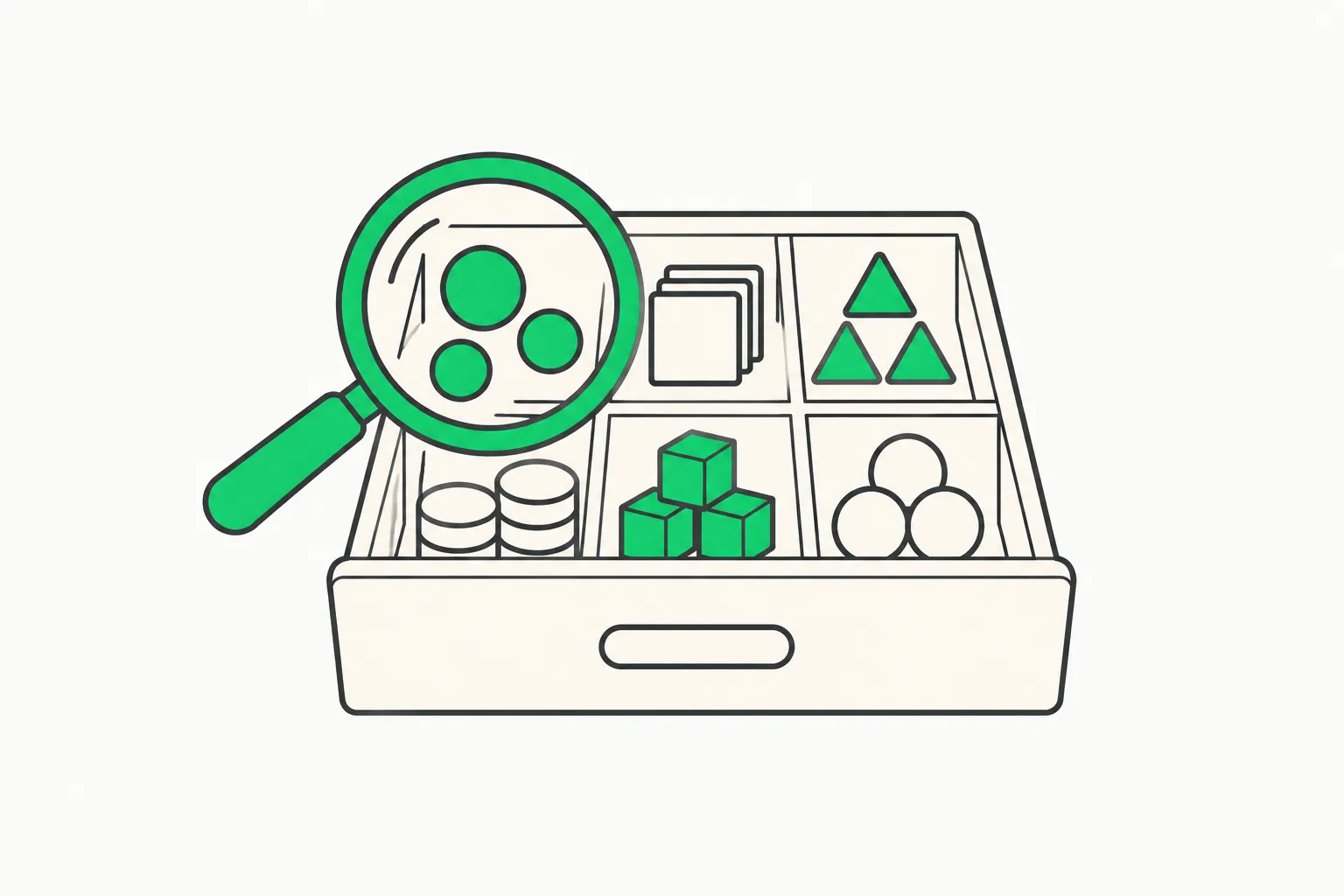 Multimodal RAG index footprint chart for OmniEVIE int8 records
Tencent in the open-weight landscape
Tencent joins Qwen3.5-4B-family open-weight chatter with a narrow retrieval SKU instead of another general chat drop. Enterprises mixing Alibaba Ling, Tencent retrieval, and ByteDance infra loans in Malaysia should read Miti's colocation notice separately from model weights.
ST-HAC clustering in plain language
Spatio-temporal Ward clustering groups patch tokens into fixed K clusters per page or clip. Instead of storing every patch embedding, OmniEVIE stores cluster centroids plus saliency weights. That is how 966 patches become 128 int8 clusters in the card’s token-level alignment demo.
For video, temporal neighbors merge so search hits return intervals, not just frame IDs. Security teams indexing surveillance or ops recordings get timestamps without training a separate caption model.
query_gate and false positive control
The learned query_gate down-weights low-signal clusters using threshold τ = 0.6 and margin θ = 0.38 on the sample page. That is analogous to ColBERT MaxSim guards but trained end-to-end with the Qwen3.5 trunk.
When you evaluate, log how often the gate zeros clusters — aggressive gating speeds CPU search but can drop rare cells in dense tables.
Matryoshka dimensions in production
Prefix-MRL exposes 64D through 2048D from one head. A common pattern:
- K32 + d64 indexes for mobile sync or edge caching
- K128 + d256 indexes for precision queries on server
You pay storage linearly in K and d; the card’s 8.82 GiB/M figure is not the minimum configuration.
QVHighlights and video QA numbers
Tencent cites QVHighlights val with 1,083 queries: 78.0% peak-in-segment hit, 94.3% span intersection, 18% average span width. Those metrics reward retrievers that return tight intervals, not bloated windows.
If your product shows clip previews to users, span intersection correlates better with perceived relevance than nDCG@10 on whole-file embeddings.
Comparison to dual-encoder RAG
| Approach | Strength | Weakness |
|---|---|---|
| Single cosine embedding | Cheap, simple | Loses cell-level evidence |
| Cross-encoder rerank | Accurate | Too slow at million scale |
| OmniEVIE multi-vector | Late interaction at compressed size | Heavier encoder up front |
Teams running MemOnce memory layers might use OmniEVIE for ingress indexing and MemOnce for session state — complementary layers, not duplicates.
Operational security
Apache-2.0 weights still execute custom CUDA/CPU kernels from the repo. Run supply-chain review on Tencent/OmniEVIE releases the same way you would for any HF custom_code model.
Dataset tags on Hugging Face
Tags reference TIGER-Lab/MMEB-V2 and vidore/vidore_benchmark_v3 (gated). If vidore stays disabled in your region, reproduce ViDoRe V3 numbers on your own PDF set instead of assuming leaderboard portability.
Agent and GUI memory modality
The feature table lists agent, tool, GUI, and memory modalities. That targets RPA traces and IDE screen recordings, not only consumer photos. If you fine-tune, curate GUI trajectories with labeled widgets — vanilla screenshot scrapes rarely carry enough structure.
Integration with existing Qwen stacks
Because the trunk is Qwen3.5-4B, teams already running Qwen embedding services can A/B OmniEVIE against single-vector pipelines with similar GPU footprints. Expect higher encode latency offset by better locate on hard negatives.
Legal and compliance indexing
Visual document retrieval with bounding boxes helps audit which clause supported an answer — a common regulated industry ask. Pair outputs with human sign-off; retrieval localization is not legal advice.
MMEB-V2 and cross-modal retrieval
The MMEB-V2 dataset tag signals multi-modal embedding benchmark alignment. When you report internal metrics, cite which MMEB task families you matched — image-text, video-text, and composed QA differ sharply in failure modes.
Serving CPU versus GPU for search
The 54 ms CPU figure is search-only after vectors exist. Encoding still needs GPU for reasonable throughput. Budget separate node pools: GPU encode fleet plus CPU ANN search replicas, similar to two-tier designs in vector DB guides.
Fine-tuning cautions
Qwen3.5-4B finetunes may collapse late-interaction heads if you train only on contrastive loss without localization labels. Tencent’s report PDF is the right place to check which losses they used before DIY fine-tunes.
Cold start on Hugging Face
Early zero download stats mean bug reports may lag. Pin git SHAs when you freeze production indexes, and snapshot weights to private object storage the day you promote.
Evaluation checklist
| Step | Goal |
|---|---|
| Prepare | Curate 50 PDF pages with known cell answers |
| Index | Build K32 and K128 indexes; log GiB |
| Query | Measure p50/p95 latency on one CPU thread |
| Inspect | Verify bounding boxes match human labels |
| Video | Test QVHighlights-style clips if your product uses timestamps |
Build versus buy for enterprise search
| Path | When it fits |
|---|---|
| Buy SaaS search | You need SLA, SOC2, no GPUs |
| Self-host OmniEVIE | You need on-prem multimodal evidence boxes on PDFs and video |
| Hybrid | OmniEVIE index plus frontier LLM answer synthesis |
Procurement should ask vendors whether localization tensors travel with hits. OmniEVIE’s pitch is yes — verify on your documents, not vendor slides.
Power and carbon footnote
CPU search at 54 ms still follows GPU-heavy indexing. Sustainability reports should count encode energy, not query energy alone, especially if you re-index nightly on fresh filings.
Tencent may ship larger OmniEVIE variants later; 4.5B is the efficient entry. Architect indexes so you can re-embed without renaming tenant namespaces when v2 weights appear.
Support engineers should store query id, cluster ids, and bounding boxes in ticket JSON so customers can click through to evidence. That audit trail is the product feature single-vector RAG rarely exposes without custom rerankers.
Procurement teams comparing OpenAI file search, Gemini corpora, and self-hosted OmniEVIE should score evidence localization as its own row. Accuracy without coordinates fails audit in finance and law, even when BLEU looks fine on summaries that skip table provenance.
Related on explainx.ai
- MemOnce scalable LLM memory
- Google personal intelligence in Search
- Cloudflare Clairic open weights
- Hugging Face Harbor eval guide
- Peakcut self-hosted clipper
- SciResearch eval at LLNL
Re-run encode benchmarks after every driver or CUDA upgrade; int8 search paths are sensitive to CPU vector instructions.
Tencent Hugging Face model card text is accurate as of November 24, 2026.