



Update — October 7, 2026: Musk said Grok Bot will route tasks to the best back end, including Claude Opus 5.5, Midjourney and Suno. See what was announced and what is missing.
Update — September 5, 2026: SpaceXAI's Grok Bot Marketplace — the storefront for pre-built Grok agents inside Grok Bot — is now reported to carry 69 public bots from 43 creators. It's the latest entry in a pattern that now spans every major lab: a place to browse and install someone else's agent instead of building your own.
What actually shipped, and when
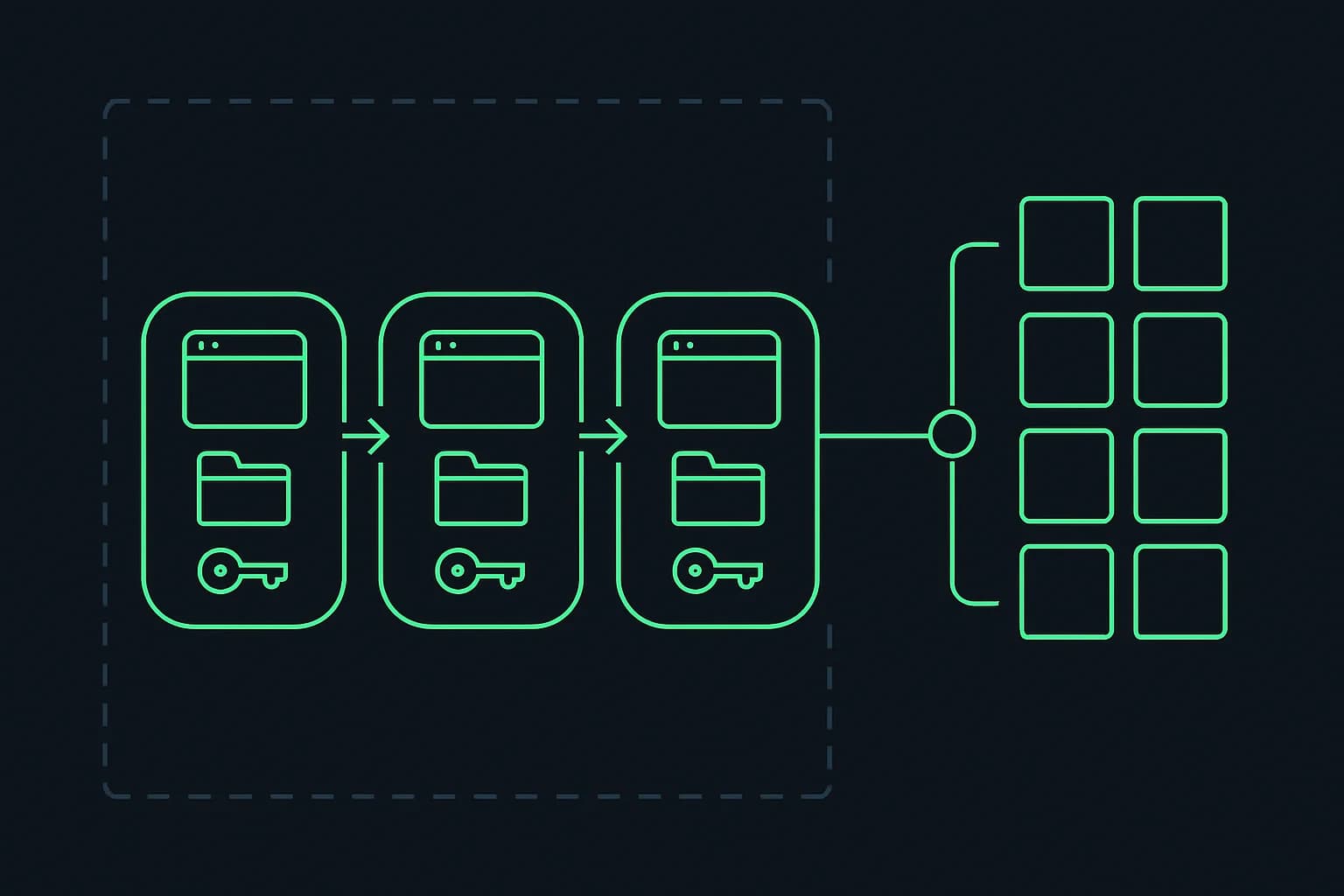
SpaceXAI put Grok Bot into early beta on August 11, 2026 — persistent agents that get their own virtual machine and sign into your real tools rather than returning text for you to act on. Seventeen days later, on August 28, the company added a template marketplace: users can now package a bot's identity, skills, connected tools, and routines into a shareable template and install someone else's in one click.
| Question | Direct answer |
|---|---|
| When did the marketplace launch? | August 28, 2026 — 17 days after Grok Bot's August 11 beta launch |
| How many agents/bots are listed? | 69 public bots from 43 creators, per third-party trackers (not an xAI-published figure) |
| How many categories? | 10 per those trackers; xAI's own launch material names 11 broader domains |
| What are the domains? | Engineering, Sales, Product, Operations, Finance, Design, Marketing, Recruiting, Customer Success, Personal, Team |
| Has it exited beta? | No formal announcement found — access has widened (enterprise admin activation since Sept 3), not a stated GA milestone |
| What does a template include? | A bot's identity, skills, connected tools, and routines — installed from a shareable link |
| Who's building on it? | Named creators include Eric Zakariasson (a Notion-coordinated Projects Manager bot) and Sawyer Merritt (a home-robot control template) |
| Is creator monetization live? | Not documented — no published revenue-share rate or paid-template mechanism as of this writing |
The number that matters more than the count: curated, not flooded
The detail worth sitting with isn't 69 — it's that SpaceXAI is explicitly describing the marketplace as hand-picked, browsable by category, rather than an open flood of self-published bots. That's a real design choice, and it's the opposite of how OpenAI's GPT Store launched in January 2024: any ChatGPT Plus subscriber could publish a GPT instantly, and the store opened already carrying a catalog in the hundreds of thousands, ballooning past 3 million within months. Quality control on that store was — and largely still is — a post-hoc problem, not a launch-time filter.
Sixty-nine bots from 43 creators is a rounding error next to that. It's also, per xAI's own framing, closer to a curated shelf than an open bazaar. Whether that survives as the catalog grows into the thousands SpaceXAI is presumably targeting is the actual story here, not the day-30 headcount.
How this stacks up against Claude's marketplace approach
Anthropic's Claude Marketplace took a third path entirely. When CrowdStrike brought its Falcon security platform onto it on September 2, 2026, the pitch wasn't "browse community bots" — it was established enterprise vendors plugging existing products into Claude, purchasable against spend commitments customers already have. That's an enterprise-procurement marketplace, built around trust in named vendors and governance controls (scoped permissions, human-in-the-loop approvals, audit trails) baked into the no-code agent builder from day one.
Grok Bot's marketplace sits at the opposite end: individual creators sharing personal templates by link, the way explainx.ai's own skills registry lets developers publish and discover SKILL.md files, or the way Claude Code's skills ecosystem grew from individual contributors before institutional players joined in. Community volume versus vendor trust is a real tradeoff, not a maturity gap — but it does mean the two marketplaces will face different failure modes as they scale. CrowdStrike's model risks vendor lock-in and pricing opacity; SpaceXAI's risks the exact quality-control problem that made GPT Store's catalog mostly unnavigable.
What "69 agents" actually tells builders
Three things worth taking away, independent of whether the count holds up as the catalog grows:
- Every major lab now treats a bot/agent marketplace as a required surface, not a differentiator. OpenAI has one, Anthropic has one (now with real enterprise vendors on it), and SpaceXAI shipped one seventeen days after its agent product itself. If you're building an agent product without a distribution layer for other people's configurations of it, you're behind the pattern, not ahead of it.
- A small launch catalog is not evidence of either quality or immaturity by itself. 69 curated bots could mean genuine editorial selection, or it could mean adoption hasn't caught up to the feature yet — both are consistent with the same number. The tell will be growth rate and whether curation survives it, not the day-30 snapshot.
- Monetization terms are the thing to watch, not the launch count. None of SpaceXAI's public material spells out a creator revenue share, a paid-template mechanism, or marketplace commission structure. Our monetization playbook for agent skills covers the general pattern — pricing, distribution, and payment rails for developers who build reusable agent configurations — and the same open questions apply here until xAI documents its own terms.
The governance question a template marketplace can't skip
A GPT Store listing hands you a prompt and maybe a knowledge file. A Grok Bot Marketplace template hands you something with a meaningfully larger blast radius: a bot's identity, its connected tools, and its routines — which, per Grok Bot's own design, means it can sign into real accounts and act inside them rather than just returning text. Installing someone else's template is closer to installing a browser extension with account access than picking a chatbot persona.
That distinction is why the marketplace's curation choice matters more here than it would for a text-only assistant store. A hand-picked catalog of 69 bots is small enough that SpaceXAI (or its reviewers) can plausibly eyeball what each template's connected tools and routines actually do before listing it. A catalog in the thousands — which is presumably the target, given how fast GPT Store and Claude's own ecosystem grew — cannot be manually vetted at that scale, and neither OpenAI's nor Anthropic's marketplace fully solved that problem before scaling past it. Grok Bot Marketplace is choosing curation now precisely because it's still small enough to enforce; the real test is what review process, if any, survives once creator count moves from 43 to 4,300.
None of xAI's public material describes a security review step for a submitted template beyond editorial curation — no static analysis of what tools a template requests, no scoped-permission model comparable to what Anthropic built into its own marketplace's no-code agent builder. Until that's documented, treat every third-party Grok Bot template the same way you'd treat an unaudited browser extension: read what tools and accounts it asks to connect before installing it, not after.
Honest limitations
- The 69-agents-43-creators-10-categories figure comes from third-party trackers (blockchain.news, botmrr.io), not an xAI blog post or press release. We could not locate an official SpaceXAI statement citing that exact count. Treat it as a credible snapshot, not a company-confirmed milestone.
- "Beta exit" is framing we're pushing back on, not repeating. The verifiable event is an access expansion — enterprise admin-panel activation and free trial weeks starting September 3, 2026 — not a declared general-availability announcement. Every AI lab has an incentive to describe incremental rollouts as maturity signals; that's marketing, not an independent measure of stability.
- No published creator monetization terms. Revenue share, commission rate, and paid-template mechanics are all undocumented as of this writing.
- Grok Bot's underlying reliability concerns from its August beta — shared-VM security boundaries, no independent security audit, day-one usage caps — haven't been resolved by the marketplace launch. See our original beta coverage for the specifics; a marketplace of templates built on an unaudited agent runtime inherits that runtime's open questions.
What to do this week
If you're evaluating agent marketplaces for your own team or product: don't anchor on launch-day catalog size for any of the three (GPT Store, Claude Marketplace, Grok Bot Marketplace) — anchor on who curates it, what governance exists before an agent gets real tool access, and whether the platform documents creator economics or leaves them implicit. If you're a builder considering publishing your own bot template, treat the current lack of published monetization terms as a reason to keep your distribution options open — explainx.ai's skills and MCP server registries run a similar discovery model without requiring exclusivity to one vendor's storefront.
Update — September 7, 2026: Grok Bot's desktop app reportedly shipped meaningful performance gains this week — cold start down 18%, page loads improving up to 41%, blocking time down 34% — alongside a public bot template marketplace featuring bots like Researchy (cited search) and Alfred (bot coordination), per reporting from Ben Lang and Lauren Tan.
Related on explainx.ai
- Grok Bot: SpaceXAI ships persistent AI agents that log into your tools
- Grok Bot real-world use cases — robot vacuums, Stripe refunds, and more
- OpenBot — CopilotKit's open-source, self-hosted take on Grok Bot
- Grok 4.6 launch — official evals, same $2/$6, Cursor access
- SpaceX closes $60B Cursor acquisition — Cursor joins the Grok team
- CrowdStrike brings Falcon to the Anthropic Claude Marketplace
- Monetize AI skills in 2026: pricing, distribution, playbook
- npx skills install: the Claude Code skills registry
- What are agent skills? Complete guide
Primary sources: x.ai/bot/marketplace · x.ai/news · blockchain.news Grok Marketplace coverage (August 28, 2026) · botmrr.io bot-count tracker
Accurate as of September 5, 2026. The 69-bot count and creator/category breakdown come from third-party trackers, not an xAI-published figure — expect it to change quickly as the catalog grows. Follow @explainx_ai for updates.