



SK hynix reported record third-quarter 2026 results on October 28: revenue of 104.6 trillion won, its first quarter above 100 trillion won, and operating profit of 83.33 trillion won, about $62.8 billion, at an 80 percent operating margin, according to The Korea Times. Revenue rose 328 percent year on year and operating profit rose 632 percent. CNBC's report puts the sequential gain in operating profit at 37.6 percent. The company also said memory supply will stay short through 2030.
This is a finance story, so the useful question is what it changes for people who build with AI: the price and availability of GPUs, servers and cloud capacity. That is the second half of this post.
TL;DR: the numbers
| Item | Q3 2026 | Source |
|---|---|---|
| Revenue | 104.6 trillion won (first quarter above 100 trillion) | The Korea Times |
| Operating profit | 83.33 trillion won, about $62.8 billion | The Korea Times |
| Operating margin | 80 percent | The Korea Times |
| Year-on-year growth | Revenue up 328 percent, operating profit up 632 percent | The Korea Times |
| Analyst forecast | About 98.23 trillion won revenue, 76.96 trillion won operating profit | The Korea Times |
| Net profit | Around 40 trillion won, versus roughly 55 trillion won expected | Investinglive |
| Pricing | DRAM prices up in the high-20 percent range versus Q2 | Investinglive |
| Shareholder returns | About 100 trillion won for fiscal 2026 | The Korea Times |
Currency conversions follow the dollar figure in the reports; the won amounts are the primary numbers.
What drove the quarter
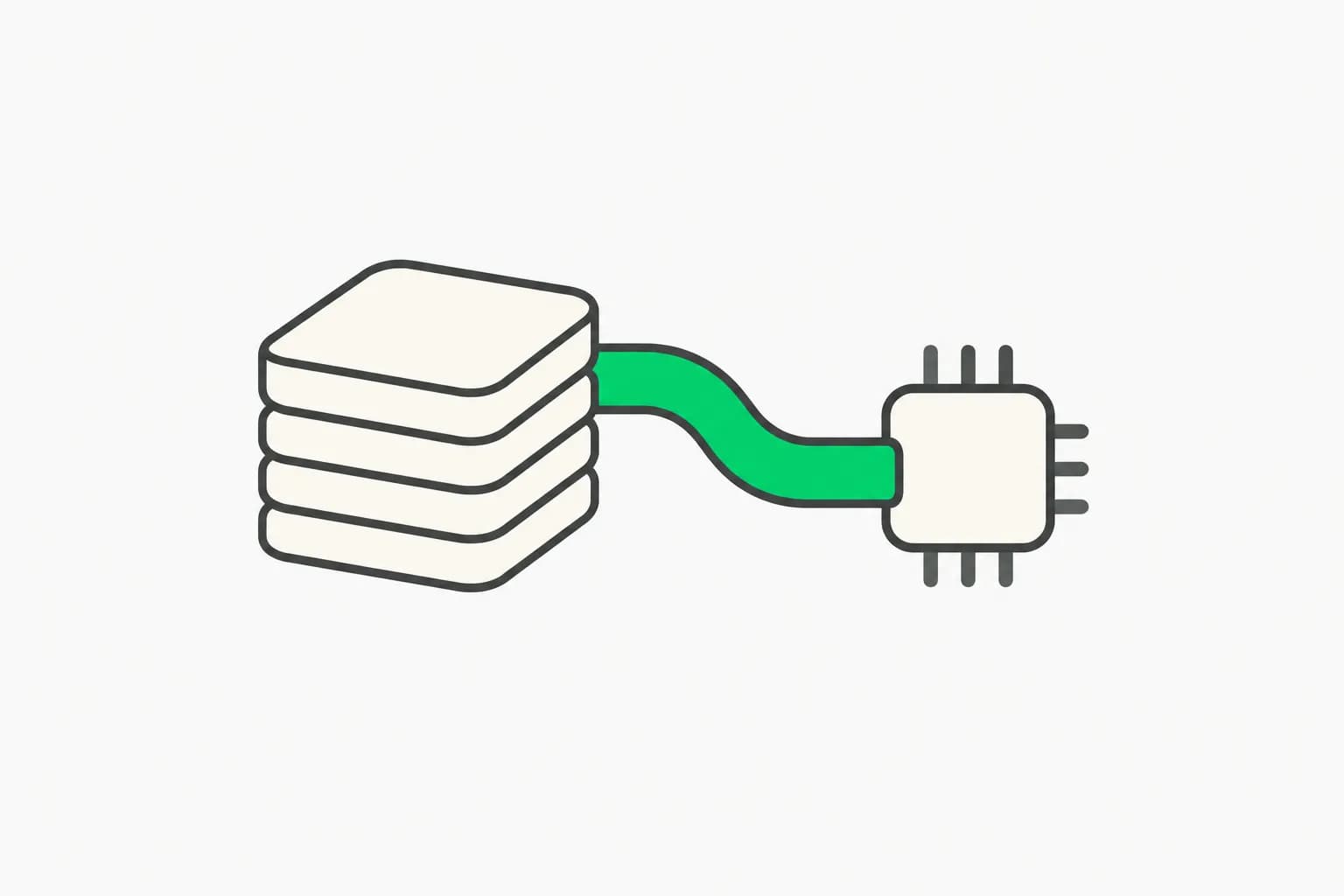
The Korea Times attributes the result to shipments of HBM4, a sharp rise in server memory sales, and higher enterprise SSD sales. HBM, high-bandwidth memory, is the stacked DRAM sitting next to the GPU or accelerator die that feeds it data. Training and serving large models are often limited by memory bandwidth and capacity rather than raw compute, which is why memory makers have become one of the tightest links in the AI supply chain.
SK hynix said it expects HBM4 to overtake the previous generation, HBM3E, in both shipments and revenue in the fourth quarter. It plans to raise its share of 1c-generation DRAM and bring its M15X plant to full capacity by year-end.
Why memory became the bottleneck: a short explainer
Plain DRAM sits on modules next to a CPU and is cheap per gigabyte. HBM is different: several DRAM dies are stacked vertically and connected with very wide interfaces, then packaged right beside the accelerator. That design delivers far more bandwidth per chip, which is what lets a GPU keep its compute units busy while a large model's weights stream through.
Each HBM generation raises bandwidth and capacity per stack, so a move from HBM3E to HBM4 matters to anyone buying accelerators built around the newer part. The catch is manufacturing. Stacking and packaging HBM is harder and lower-yielding than ordinary DRAM, and the wafers used for it are wafers not used for conventional memory. When a maker shifts capacity toward HBM, supply of other memory tightens, which is consistent with SK hynix reporting higher server memory and SSD sales alongside HBM4 shipments, and with DRAM prices rising in the high-20 percent range quarter on quarter.
That is the mechanism behind the 80 percent operating margin. It is not only that demand is high. It is that demand is high for a product few firms can make at volume, while buyers are signing multi-year contracts to secure it.
What people are asking
Is this just a stock story? The profit figure is, but the supply forecast is not. A stated shortage through 2030 and pre-booked capacity are statements about how much hardware will exist, and therefore what AI compute will cost.
Does a record quarter mean prices will fall as supply grows? SK hynix is saying the opposite, that it expects supply to stay short. Capacity additions such as the M15X plant ramp are meant to ease that, but the company itself does not forecast relief before 2030.
Does this affect open and local models? Indirectly. Memory prices touch every device with AI features, and a tight supply favors models that run in less memory.
Is there a risk this reverses? Memory is a cyclical industry, and past booms have ended when supply caught up. The company's long-term agreements are designed to dampen that, but they are the company's account of its own contracts, and we cannot see their terms.
The outlook: a shortage through 2030
The company's most consequential statement is its supply view: the global memory shortage is expected to last through 2030. The supporting fact from The Korea Times: long-term agreements with 14 major global cloud providers cover more than 50 percent of production capacity for 2027 and 2028.
Long-term agreements matter because they shift risk. Cloud providers are locking in supply years ahead, which leaves less memory for the open market and for smaller buyers. That is how a shortage becomes a pricing floor.
Shareholder returns and the profit miss
The company approved a Q3 cash dividend of 14 trillion won, 20,000 won per share including a 10,000 won special dividend tied to gains from its Kioxia investment, and a 20 trillion won share repurchase. Total fiscal 2026 returns come to about 100 trillion won, including at least 30 trillion won in dividends and more than 60 trillion won in buybacks and cancellations, a figure that includes a recently completed 40 trillion won buyback.
One detail the headline numbers hide: Investinglive reports that net profit, around 40 trillion won, came in well below the roughly 55 trillion won analysts expected. We have not seen the reconciliation between operating and net profit, so we do not explain the gap here.
How this fits the rest of the AI supply chain
SK hynix's quarter is one of several data points this month showing AI demand reshaping hardware. TSMC reported its own record quarter, which we broke down in TSMC Q3 2026: record NT$763 billion profit and 2nm already 8 percent of wafer revenue. A reported price rise at the packaging step is covered in TSMC CoWoS 20 percent price hike: claimed versus verified. Optical components tell the same story in Corning's Q3 2026 results. On the memory side specifically, Samsung and SK hynix are upgrading their China memory plants, which bears on how much supply the industry can add.
Demand is also visible on the customer side: NVIDIA and Meta expanded their collaboration, and local opposition to data centers shows the other constraint, siting and power, that limits how fast the buyers can absorb chips.
What this means for what you build or pay
Stripped of the stock angle, the SK hynix report carries four practical signals:
- Compute stays expensive. If memory is the constraint and the largest buyers have booked more than half of 2027 and 2028 capacity, expect GPU and server prices to hold up. Budget for inference costs that do not fall as fast as model quality rises.
- Efficiency is a real lever. When memory is scarce, techniques that cut memory use (quantization, smaller models, shorter contexts, caching) are worth more. Small and open models that fit on less hardware are a hedge.
- Availability, not just price. Teams that depend on on-demand access to the newest accelerators may face waits. Reserving capacity early, or designing for multiple providers, reduces the risk.
- Local hardware is exposed too. DRAM prices rising in the high-20 percent range quarter on quarter, per Investinglive, flow into consumer and workstation memory, so local-AI builds may cost more than last quarter's quotes.
A practical planning checklist
If you run AI workloads or plan to buy hardware over the next two years, a few concrete habits follow from a supply-constrained memory market:
- Measure memory per request. Know how much accelerator memory your model, its key-value cache and your batch size consume, so you can see which changes free the most capacity.
- Compare quantized and smaller models on your own task. If a smaller model passes your evaluation, it needs less memory and is less exposed to price swings.
- Negotiate capacity, not just rates. With the largest buyers locking up supply, a guaranteed allocation may be worth more than a small discount.
- Keep a second provider warm. Portability across clouds and regions limits the damage when one provider runs short.
- Revisit local builds before ordering. Price quotes for workstation memory may move quickly while DRAM costs climb.
What is not established
- The 2030 shortage is the company's own forecast; it is not an independent estimate.
- HBM-specific revenue and share figures were not in the sources we could read.
- The net profit shortfall rests on one outlet's report.
We will update this post if SK hynix's own earnings materials or the earnings call add detail on HBM revenue and capital spending.
Related reading
- TSMC Q3 2026 record profit and 2nm share
- TSMC CoWoS price hike: claimed vs verified
- Corning Q3 2026 and the AI data center supply chain
- Samsung and SK hynix China memory plant upgrades
- NVIDIA and Meta expand their collaboration
- Data center backlash and the midterms
Figures are as reported on October 28, 2026 and may be revised in the company's formal filings.