




Korea Financial News published Q&A notes on November 11, 2026 from Sam Altman October 31 meeting with Samsung executives, quoting him that AI memory and data-center demand has been double-counted and that only OpenAI and Anthropic are driving major growth, while he still urged more supply-chain investment.
That combination is unusual. Altman is simultaneously the loudest buyer of HBM and the person warning memory makers about counting the same buyer twice. This post separates Financial News quotes from OpenAI press-room silence, explains the neocloud stack math, and ties the visit to Stargate memory deals builders already track.
TL;DR: claimed vs verified
| Claim | Status | Source |
|---|---|---|
| Oct 31 Samsung meeting with ~50 affiliate presidents | Reported | Financial News, Nov 11 |
| Double-counting of AI and memory demand | Quoted in Q&A | Financial News |
| Only OpenAI and Anthropic drive major growth | Quoted in Q&A | Financial News |
| Short-term demand fluctuations | Quoted answer | Financial News |
| Long-term demand grows enormously | Quoted answer | Financial News |
| Top user token use 100k to 100B per month | Quoted statistic | Financial News; not independently audited |
| OpenAI republished quotes on openai.com | Not found Nov 12 | OpenAI newsroom |
| Immediate HBM order cancellations | Not reported | — |
What Financial News published
The newspaper says it obtained meeting Q&A materials exclusively and published them on November 11, 2026. The scene: October 31, 2026, Samsung Human Resources Development Center, Yongin, roughly 50 presidents from Samsung Group affiliates.
Altman reportedly fielded a question on whether AI, memory and data-center demand could saturate or slow over five to ten years. His quoted answer: "There are short-term fluctuations."
On the neocloud debate, Financial News quotes stronger language:
- "There has been double-counting of demand."
- "Only two companies, OpenAI and Anthropic, are actually driving major demand growth, so there could be a supply shock and an unsettled period."
The piece notes some infrastructure announcements appear in multiple industry tallies, linking Altman's warning to bubble discourse around neoclouds, GPU renters that sit between labs and silicon.
Despite the caution, Altman also framed long-term scarcity. Financial News quotes him predicting enormous AI demand, exploding token usage if AI writes software in real time and lands in robots and science, and naming chip supply chains and data centers as the biggest constraints for the next few years. He called for more investment in the supply chain.
The same article mentions Samsung and SK hynix joining OpenAI's Stargate Project in October 2025, and interprets Altman's short Korea trip as evidence of memory urgency. A photo caption shows Altman presenting a Codex Micro keyboard to Samsung DS AI Center head Song Yong-ho.
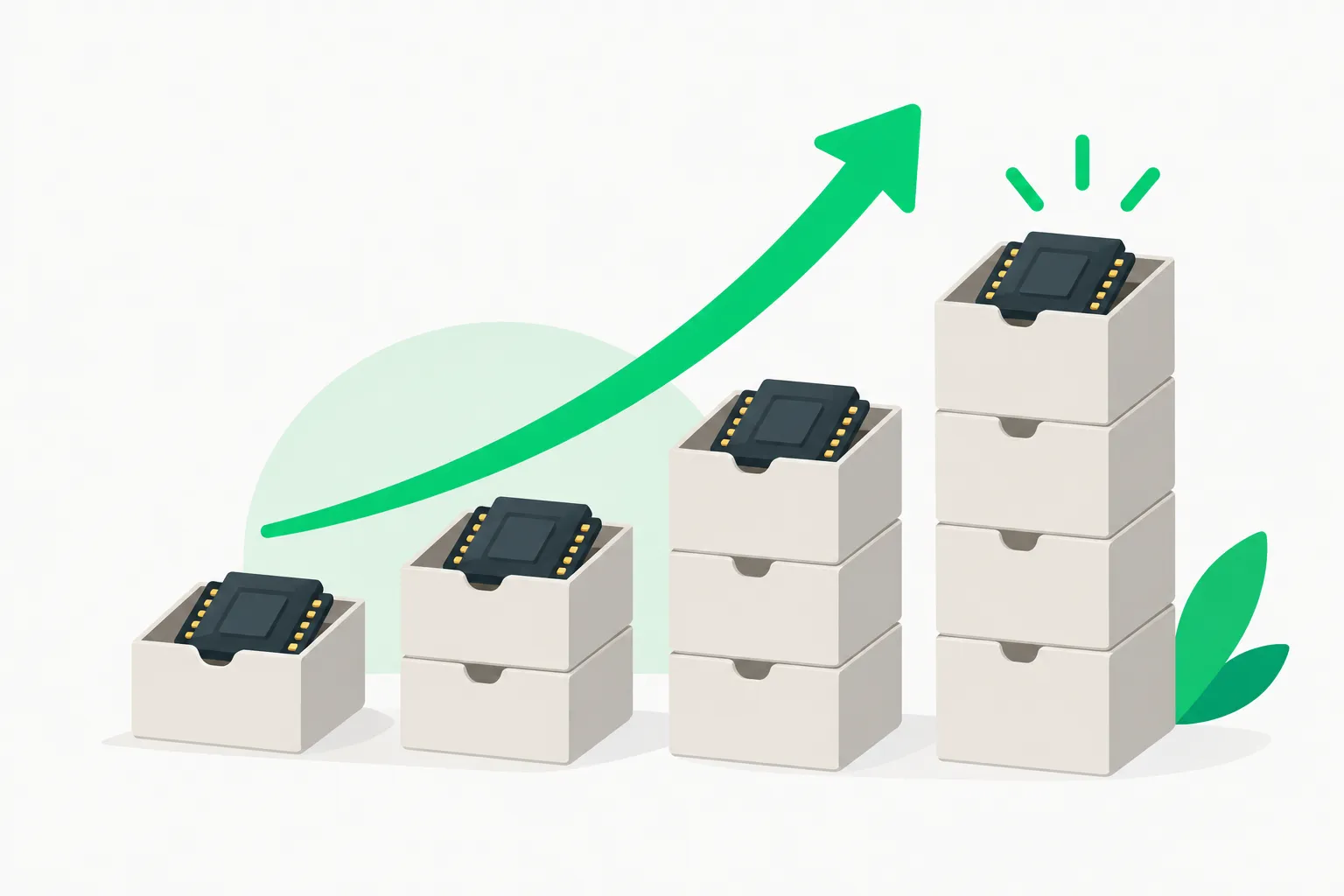 Sam Altman double-counted AI demand warning to Samsung maps layered GPU neocloud and memory forecasts across the supply chain
What double-counting means mechanically
Financial News does not print a spreadsheet, but the industry reading is straightforward and matches explainx.ai's earlier neocloud coverage.
Imagine one frontier lab signing a multi-year GPU reservation with a neocloud. The neocloud orders H100 or Blackwell racks from an integrator. The integrator orders HBM stacks from Samsung or SK hynix. Each layer's sales team may record full list value as demand.
If analysts sum every layer, the same end customer's appetite can appear two or three times. Memory executives deciding on new fab lines care because HBM capacity takes years and overshoot leads to price crashes, a pattern Samsung knows from prior DRAM cycles.
Altman's quote that only OpenAI and Anthropic drive major growth is more contentious. Microsoft, Google, Meta, xAI, ByteDance and sovereign clouds also buy enormous capacity. Financial News is relaying his words, not endorsing a duopoly. Treat the line as buyer concentration from the largest customer, not as a verified market share table.
We previously fact-checked neocloud stress in Has the AI bubble burst? and Microsoft neocloud oversight. Altman's Samsung remarks add a supplier-side caution to those finance narratives without confirming a crash.
Token math Altman cited
Financial News quotes a striking usage ladder: the top token consumer used about 100,000 tokens per month at the start of 2020 versus about 100 billion per month early in 2026. That is a million-fold increase in his telling.
We cannot verify the underlying telemetry from Financial News alone. OpenAI does not publish a monthly leaderboard of heaviest users. The number is still useful as rhetoric: it explains why Altman can warn about double-counting while demanding more fabs. In his frame, real usage curves justify long-term scarcity even if near-term order books inflate.
Pair that with Anthropic margin disclosures and OpenAI Q3 revenue briefings when you model whether API prices rise or fall.
Bottlenecks Altman listed
Financial News summarizes Altman naming four expansion bottlenecks: supply chain, financing, AI safety and social acceptance, and corporate transformation. He doubled down on chip supply chains and data-center infrastructure as the binding constraints.
That aligns with hardware news the same week: Foxconn guiding high double-digit Q4 AI rack growth, Nvidia recovery automation for GPU clusters, and ongoing export-control fights that shape where capacity can land.
For builders, bottlenecks matter as queue times and spot GPU prices, not as earnings headlines.
Vertical integration quote
Samsung executives reportedly asked whether massive investment hurts profits. Financial News quotes Altman: "That's the point," adding that vertically integrated infrastructure with lower unit costs plus high-volume low-margin token sales can beat competitors. He called the market so large that commodity-business rules do not apply.
That is strategy language consistent with Stargate and custom silicon investments, but it is not a pricing promise for ChatGPT tiers or API list rates. Do not read the Samsung meeting as an announcement of cheaper tokens.
 OpenAI CEO Sam Altman neocloud double-counting warning highlights how GPU cloud and memory orders can stack on the same frontier lab buyer
What is not verified
- Full Q&A PDF — We read Financial News English page, not a Samsung or OpenAI primary document.
- OpenAI repost — No matching language on openai.com/news when checked November 12.
- Anthropic comment — No confirmation that Anthropic agrees it is one of two growth engines.
- Quantified double-count percentage — Altman did not attach a number in the excerpts Financial News published.
- Policy changes — No new Stargate contract terms in this article.
This is classic claimed vs verified territory: credible newspaper with purported meeting notes, but builders should wait for earnings-call style primary sources before adjusting long-range GPU procurement models.
What developers should do this week
| Stakeholder | Practical takeaway |
|---|---|
| API-only teams | No change required; watch HBM lead times indirectly through cloud spot pricing |
| Neocloud operators | Stress-test financial models if your forecast assumes many independent hyperscaler buyers |
| Local GPU users | Unrelated to double-counting; continue evaluating native servers like TensorFold or llama.cpp for cost control |
| Memory stock traders | Outside explainx.ai core; if you cover supply chains, reconcile Altman caution with sold-out 2027 HBM reports |
If you rent GPUs, keep contract hedges that worked through prior cycles. Altman warns suppliers about overshooting, not customers about abundance tomorrow. Watch provider earnings calls for language about capacity utilization rather than headline GW announced; utilization is where double-counting unwinds first for renters.
How other outlets relayed the meeting
After Financial News broke the Q&A on November 11, trade press republished the double-counting line without adding primary documents. Digitimes summarized the meeting on November 12 with the same core warning about short-term volatility and duplicated demand signals in memory and data-center forecasts. Those pieces are useful for confirming headline reach, but they do not upgrade verification: they still trace back to Financial News meeting notes, not to an OpenAI filing or Samsung earnings slide.
That distinction matters for comment threads that treat Altman as predicting an imminent HBM glut. The quoted caution is about forecast hygiene and neocloud layering, paired with a long-term bullish token curve in the same Q&A. Suppliers could still ration 2027 output even if near-term order stacks contain duplicates, because each duplicate forecast can justify real purchase orders until cancellations appear.
Korea visit context
Altman's one-night, two-day Korea trip happened while Samsung and SK hynix remain central to HBM supply for Nvidia racks. Financial News ties the visit to Stargate cooperation agreed in October 2025. The same week, Digitimes and other outlets republished the double-counting headline, but the traceable primary for the exact quotes remains Financial News meeting notes.
Compare with China Singles Day agent shopping for consumer-side token burn, and with Trump 60 Minutes guardrails for geopolitical demand shocks that can move forecasts faster than fab timelines. Neither story confirms Altman's double-count percentage.
Related reading
- Has the AI bubble burst? fact-check
- Neocloud shakeout and Nvidia exposure
- Microsoft tightens neocloud oversight
- Foxconn Q3 and Q4 rack outlook
- OpenAI national compact and power costs
- Anthropic S-1 gross margin story
- AI chip supply chain October recap
Quotes attributed to Financial News English edition published November 11, 2026. OpenAI did not confirm the text on its newsroom as of November 12.