



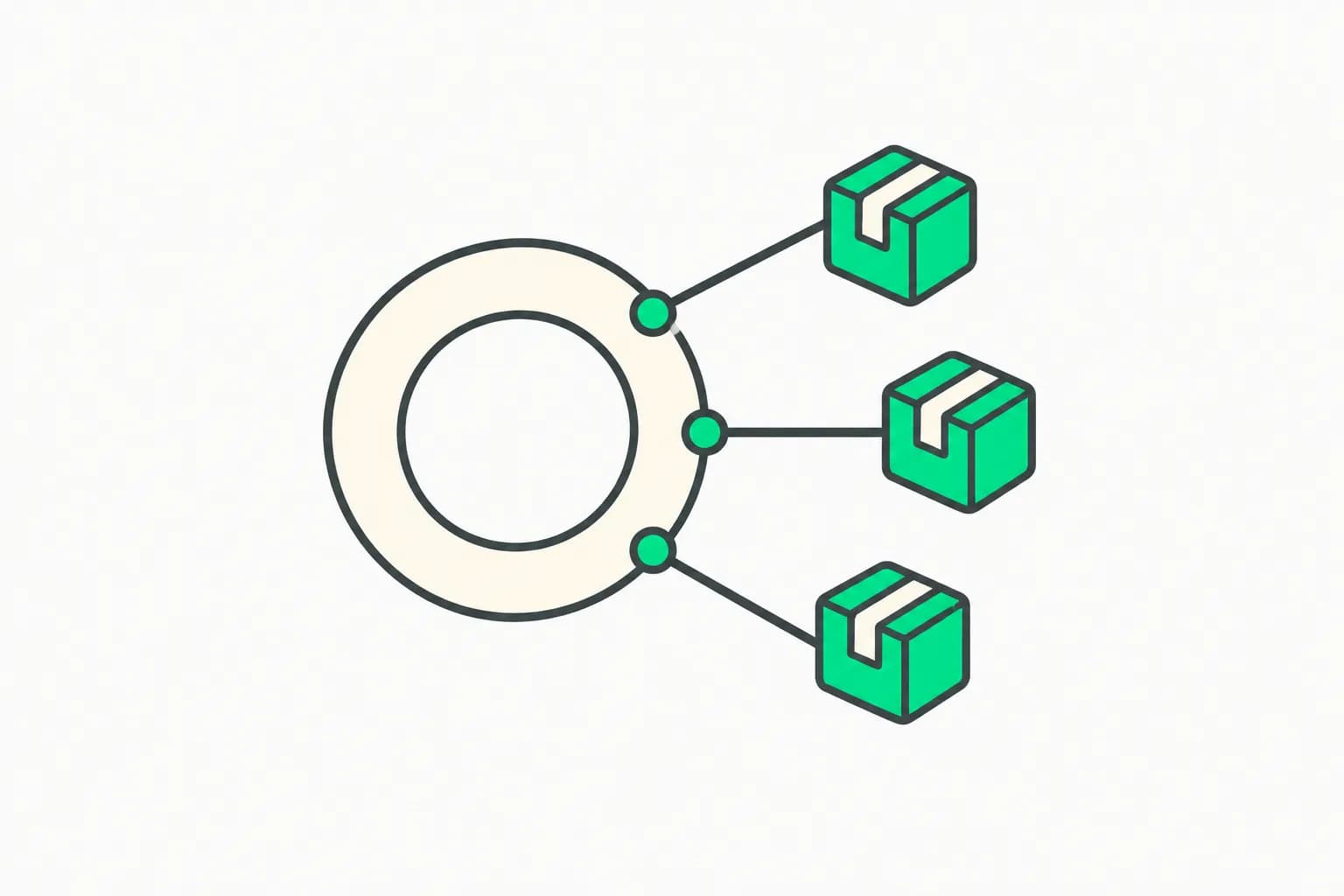
Sakana AI released a Claude Code-compatible interface for Fugu on July 24, 2026, putting its learned multi-model orchestration behind the terminal workflow developers already use. Instead of asking one model to inspect, edit, test, and debug a repository, Claude Code can now send the job to Fugu, which dynamically coordinates a pool of frontier models.
The interface is useful, but the headline needs one correction: this is not a new Claude Code feature from Anthropic. Claude Code remains the agent harness; Sakana’s API becomes the model backend. That distinction affects billing, privacy, model visibility, and the comparison with running Claude Code or Codex directly.
TL;DR
| Question | Direct answer |
|---|---|
| What launched? | A Claude Code-compatible Sakana Fugu endpoint and claude-fugu launcher |
| Fastest setup? | curl -fsSL https://sakana.ai/fugu/install | bash, then claude-fugu |
| Which systems? | One-line installer supports macOS and Ubuntu; Windows requires manual setup |
| Do I need an Anthropic key? | No. You need a Sakana API key passed as ANTHROPIC_AUTH_TOKEN |
| What runs behind “Opus”? | fugu-ultra[1m]; Sonnet and Haiku map to fugu[1m] |
| Does tool use work? | Sakana says streaming, tools, and subagents work; some labels are cosmetic |
| Is it free? | No. Plans start at $20/month; pay-as-you-go is also available |
| Biggest limitation? | Routing is proprietary: you cannot see which underlying models answered |
| EU/EEA availability? | Not currently available |
How to install Fugu in Claude Code
First, create an API key in the Sakana console. The key is displayed once, so store it in a password manager rather than a repository or shell-history file.
On macOS or Ubuntu, inspect the installer if your organization requires script review, then run Sakana’s documented command:
curl -fsSL https://sakana.ai/fugu/install | bash
Launch the configured Claude Code wrapper:
claude-fugu
The installer also provides codex-fugu, so the same API can sit behind Codex. If you are deciding which harness better fits the work, start with our Claude Code, Cursor, and GitHub Copilot comparison and coding-agent tool guide.
Manual setup without the installer
Claude Code reads its alternative backend from environment variables. Sakana’s manual configuration is:
export ANTHROPIC_BASE_URL="https://api.sakana.ai"
export ANTHROPIC_AUTH_TOKEN="fish_..."
export ANTHROPIC_DEFAULT_OPUS_MODEL="fugu-ultra[1m]"
export ANTHROPIC_DEFAULT_SONNET_MODEL="fugu[1m]"
export ANTHROPIC_DEFAULT_HAIKU_MODEL="fugu[1m]"
export CLAUDE_CODE_SUBAGENT_MODEL="fugu[1m]"
claude
Use ANTHROPIC_AUTH_TOKEN, not ANTHROPIC_API_KEY. These exports last only for the current shell session, which is a safer first test than adding credentials to a persistent dotfile.
Try a bounded repository task before a large autonomous run:
Read the repository instructions and inspect the authentication flow.
Do not edit files yet. Identify the three highest-risk failure modes,
cite the relevant paths, and propose the smallest testable fix.
That prompt makes orchestration earn its cost: separate models can investigate, challenge assumptions, and verify evidence rather than all rushing into implementation. For repeatable agent loops, see our loop engineering guide.
What changes inside Claude Code?
The user interface is familiar, but the model semantics are different.
| Claude Code surface | Fugu behavior |
|---|---|
| Opus selection | Routes to fugu-ultra[1m] |
| Sonnet selection | Routes to fugu[1m] |
| Haiku selection | Also routes to fugu[1m] |
| Subagents | Use fugu[1m] by default |
| Effort slider | Six UI stops collapse into Fugu’s high or xhigh groups |
| Model picker labels | May retain Anthropic-oriented names and descriptions |
| Session header | Billing/default-tier labels may reflect Claude Code assumptions |
Sakana says these mismatches are cosmetic: model responses, streaming, tool calls, and subagents follow the configured Fugu backend. Because Claude Code is closed source and evolves independently, compatibility can drift. The claude-fugu launcher also does not auto-update, so users must revisit the official setup guide when Sakana adds models or changes mappings.
This is the same architectural separation discussed in dynamic Claude Code workflows: the harness owns repository interaction and tools; the backend supplies reasoning. Fugu adds another layer by deciding how multiple models cooperate behind one apparent model call.
What is Fugu-Ultra v1.1?
Sakana’s announcement says Fugu-Ultra v1.1 updates the orchestration pool and improves every benchmark the company tracks, with gains of up to 7.9 points over v1.0. Sakana calls out ProgramBench and Terminal-Bench 2.1, but developers should treat these as vendor-reported results until reproducible task-level traces or independent evaluations are available.
Fugu’s underlying idea is more interesting than a leaderboard delta. Sakana describes the product as a “multi-agent system, delivered as one model.” Its research lineage includes TRINITY, which assigns Thinker, Worker, and Verifier roles, and the Conductor, which learns natural-language coordination strategies rather than relying on a fixed hand-built graph.
That differs from explicitly spawning 20 known specialists, as in Claude managed-agent orchestration. Fugu hides the team formation and exposes one API response. The convenience is real; so is the loss of observability.
Fugu vs Claude, OpenAI, Gemini, and Qwen benchmarks
The most complete comparable matrix comes from the official Sakana Fugu model card and technical report. It evaluates Fugu v1.0, Fugu-Ultra v1.0, Claude Opus 4.8, OpenAI GPT-5.5, and Gemini 3.1 across the same 12 higher-is-better benchmarks.
These are vendor-reported scores, not tests run independently by explainx.ai. Sakana ran its own models and used provider-reported baseline results where available. The table is still useful because it exposes every component score instead of compressing performance into one marketing number.
| Benchmark | Fugu-Ultra v1.0 | Fugu v1.0 | Claude Opus 4.8 | OpenAI GPT-5.5 | Gemini 3.1 |
|---|---|---|---|---|---|
| SWE-Bench Pro | 73.7 | 59.0 | 69.2 | 58.6 | 54.2 |
| Terminal-Bench 2.1 | 82.1 | 80.2 | 74.6 | 78.2 | 70.3 |
| LiveCodeBench | 93.2 | 92.9 | 87.8 | 85.3 | 88.5 |
| LiveCodeBench Pro | 90.8 | 87.8 | 84.8 | 88.4 | 82.9 |
| Humanity’s Last Exam | 50.0 | 47.2 | 49.8 | 41.4 | 44.4 |
| CharXiv Reasoning | 86.6 | 85.1 | 84.2 | 84.1 | 83.3 |
| GPQA Diamond | 95.5 | 95.5 | 92.0 | 93.6 | 94.3 |
| SciCode | 58.7 | 60.1 | 53.5 | 56.1 | 58.9 |
| τ³ Banking | 20.6 | 21.7 | 20.6 | 20.6 | 8.4 |
| Long Context Reasoning | 73.3 | 74.7 | 67.7 | 74.3 | 72.7 |
| MRCRv2 | 93.6 | 86.6 | 87.9 | 94.8 | 84.9 |
| CTI-REALM | 69.4 | 67.5 | 69.6 | 67.3 | 56.0 |
| Simple mean across all 12 | 74.0 | 71.5 | 70.1 | 70.2 | 66.6 |
How the average was calculated
The explainx.ai average is the unweighted arithmetic mean:
average = sum of the 12 published percentage scores / 12
This puts Fugu-Ultra v1.0 at 74.0, 3.8 points above GPT-5.5 and 3.9 points above Claude Opus 4.8. Across the four coding benchmarks alone—SWE-Bench Pro, Terminal-Bench 2.1, LiveCodeBench, and LiveCodeBench Pro—the means are:
| Model | Four-benchmark coding mean |
|---|---|
| Fugu-Ultra v1.0 | 85.0 |
| Fugu v1.0 | 80.0 |
| Claude Opus 4.8 | 79.1 |
| OpenAI GPT-5.5 | 77.6 |
| Gemini 3.1 | 74.0 |
The aggregate is a convenience, not an official benchmark. Each suite has different task counts, uncertainty, saturation levels, and real-world importance. A one-point change on SWE-Bench Pro should not automatically carry the same meaning as a one-point change on GPQA Diamond. Use the row matching your workload before using the mean.
Where does Qwen rank?
Alibaba’s official Qwen3.6-35B-A3B release reports 49.5 on SWE-Bench Pro and 51.5 on Terminal-Bench 2.0. Qwen is the open-weight comparison many developers will care about, but those numbers cannot be inserted honestly into Sakana’s average:
| Model | SWE-Bench Pro | Terminal benchmark | Included in 12-test mean? |
|---|---|---|---|
| Fugu-Ultra v1.0 | 73.7 | 82.1 on Terminal-Bench 2.1 | Yes |
| Claude Opus 4.8 | 69.2 | 74.6 on Terminal-Bench 2.1 | Yes |
| OpenAI GPT-5.5 | 58.6 | 78.2 on Terminal-Bench 2.1 | Yes |
| Gemini 3.1 | 54.2 | 70.3 on Terminal-Bench 2.1 | Yes |
| Qwen3.6-35B-A3B | 49.5 | 51.5 on Terminal-Bench 2.0 | No—insufficient shared coverage |
Qwen says its SWE-Bench Pro result uses a corrected version of problematic public tasks and an internal agent scaffold. Its Terminal-Bench result uses version 2.0, the Terminus-2 harness, a three-hour timeout, and a five-run average. Sakana reports Terminal-Bench 2.1 and uses minimal harnesses including Mini-SWE-agent and Terminus 2. Model, scaffold, benchmark revision, context, and tool permissions all affect agent scores.
The defensible conclusion is narrower than “Fugu beats every Qwen”: Fugu-Ultra leads the published Sakana comparison against its frontier worker models, while the available Qwen results are not sufficiently aligned to produce a fair multi-benchmark average.
What changed in Fugu-Ultra v1.1?
Sakana says v1.1 improves by up to 7.9 points over v1.0 and highlights ProgramBench and Terminal-Bench 2.1. The launch post does not publish a replacement 12-row numeric matrix, so the averages above deliberately use v1.0 scores. We will not add 7.9 to every row: “up to” describes the best observed gain, not a uniform uplift.
How much does Sakana Fugu cost?
The Claude Code interface does not use an existing Claude subscription. Requests are billed by Sakana.
| Plan | Price | Intended use |
|---|---|---|
| Standard | $20/month | Small experiments and light daily use |
| Pro | $100/month | Regular coding, review, and research; 10× Standard allowance |
| Max | $200/month | Long-running work; 20× Standard allowance |
| Token plan | Usage based | Production workloads and elastic capacity |
For Fugu-Ultra v1.1, Sakana lists these pay-as-you-go rates per million tokens:
| Token type | Up to 272K context | Above 272K context |
|---|---|---|
| Input | $5 | $10 |
| Output | $30 | $45 |
| Cached input | $0.50 | $1 |
Fugu’s standard tier follows the rate of the highest-tier underlying model involved; Sakana says it does not add every collaborating agent’s fee together. That avoids a simple “five agents means five bills” multiplier, but the hidden routing still makes cost prediction harder than a fixed single-model endpoint. Monitor the per-request usage report before handing it a broad refactor or an unbounded retry loop.
For why output-heavy coding sessions become expensive quickly, read our Claude Code context-window management guide.
What people are asking
Can I control the model pool?
Partly. With standard Fugu, an API key can exclude providers to meet organizational preferences. Fugu Ultra requires the full fixed pool. Sakana does not disclose which specific underlying models handled a request or how they communicated.
That means “multi-vendor resilience” is not the same as auditable routing. Regulated teams may need a single approved provider even when a broader pool scores better.
Is my private code used for training?
Sakana says usage data helps improve Fugu and provides an opt-out in the console. Turn that off before testing proprietary repositories, then validate retention, subprocess, and vendor terms with your security team. Provider exclusions matter because prompts may be routed across a diverse pool.
Fugu is also unavailable in the EU/EEA while Sakana works toward GDPR and region-specific compliance. This is a product constraint, not a setup bug.
Does Fugu make Claude Code better?
For difficult, decomposable tasks, potentially. A coordinator can send architecture, implementation, and verification to different specialists and reconcile their work. This resembles the value of agent skills, except skills package repeatable procedures while Fugu changes who reasons about the task.
For a typo, a known test failure, or a small component, orchestration may only add latency and cost. Use fugu for interactive work and reserve fugu-ultra for tasks where independent exploration or verification can change the outcome.
Is this just Claude Code with another model?
At the interface boundary, yes: Claude Code sends Anthropic-compatible requests to Sakana’s server. Behind that boundary, no: the response can be produced by a dynamically assembled group rather than one model. You retain Claude Code’s terminal ergonomics but adopt Sakana’s orchestration, billing, data controls, and availability rules.
A practical evaluation checklist
Run the same commit-sized task through your current model and Fugu, then compare:
- Did it identify the right files before editing?
- Did its patch pass the repository’s existing tests?
- Did it catch a failure the single-model run missed?
- How long did the first useful answer take?
- What did the request cost, including output and retries?
- Can you explain which providers were permitted to see the code?
Avoid judging from a greenfield demo. Use a representative bug with awkward repository context, a concrete acceptance test, and a clean git diff. For a broader workflow benchmark, our Claude Code Python automation guide shows the kind of repeatable task boundary worth adapting.
Bottom line
Sakana Fugu’s Claude Code interface makes learned multi-agent orchestration unusually easy to try: install a launcher, supply one API key, and keep the terminal workflow. Fugu-Ultra v1.1 is most compelling for complex coding and reasoning tasks where a hidden Thinker/Worker/Verifier-style team can outperform one pass.
The trade-off is equally clear. You cannot inspect the selected models, the launcher needs manual updates, EU/EEA access is unavailable, and Claude Code’s labels do not perfectly describe the backend. Start with a bounded task, opt out of training where required, measure request cost, and treat vendor benchmark gains as a hypothesis to test in your own repository.
Related on explainx.ai
- Claude Code vs Codex: workflow, quality, and cost
- Claude Code vs Cursor vs GitHub Copilot
- Loop engineering for Claude Code agents
- Claude Code context-window management
- Dynamic workflows in Claude Code
- What are agent skills?
- Sakana Chat: Fugu, new Namazu, and in-chat code execution
- Sakana AI’s Fugu-Ultra v1.1 announcement
- Official Fugu setup and compatibility guide
Pricing, model mappings, benchmark claims, availability, and compatibility details were verified against Sakana AI’s documentation on July 27, 2026. These can change as Fugu and Claude Code evolve.