



Amazon’s Ring unit launched Ring Robotics on November 10, 2026 with two mobile cameras: a $249.99 indoor Drone Cam for homes and a $999.99 Rover Cam for businesses. Both are steered by AI Pilot, a cloud-heavy navigation stack Ring describes as an agent that maps rooms, plans patrols and investigates sensor triggers.
For AI builders, the launch is a shipped example of embodied agents with consumer liability: vision models, fleet maps, and automatic responses tied to alarms — not a benchmark slide.
TL;DR
| Question | Answer | Source |
|---|---|---|
| Drone Cam price / ship | $249.99; U.S. ship Jan 27, 2027 | About Amazon |
| Rover Cam price / ship | $999.99; U.S. ship Dec 16, 2026 | Same |
| AI stack | AI Pilot = vision models + sensors + cloud processing | Same |
| Trigger behavior | Flies or drives to patrol points when Ring sensors or alarms fire | Same |
| FCC status (drone) | Not authorized for sale yet | Same |
| Encryption | Throw Away the Key (TAKE) default on video | Same |
AI Pilot: mapping, patrol points and obstacle handling
Ring’s description of AI Pilot hits familiar agent beats:
- Setup scan — Carry Drone Cam through rooms or let Rover explore to build a floor plan.
- Patrol point suggestions — Side doors, windows, registers, long corridors.
- Route planning — Efficient paths to each point when a patrol or flight starts.
- Reactive navigation — Avoid furniture and shelves in real time.
Founder Jamie Siminoff told outlets including The Verge the system is “like an AI agent controlling the robot.” The tradeoff: much of that intelligence sits in Ring’s cloud, not fully on-device.
That architecture echoes Wired’s reporting that the revived Drone Cam offloads planning to servers while keeping the hardware light.
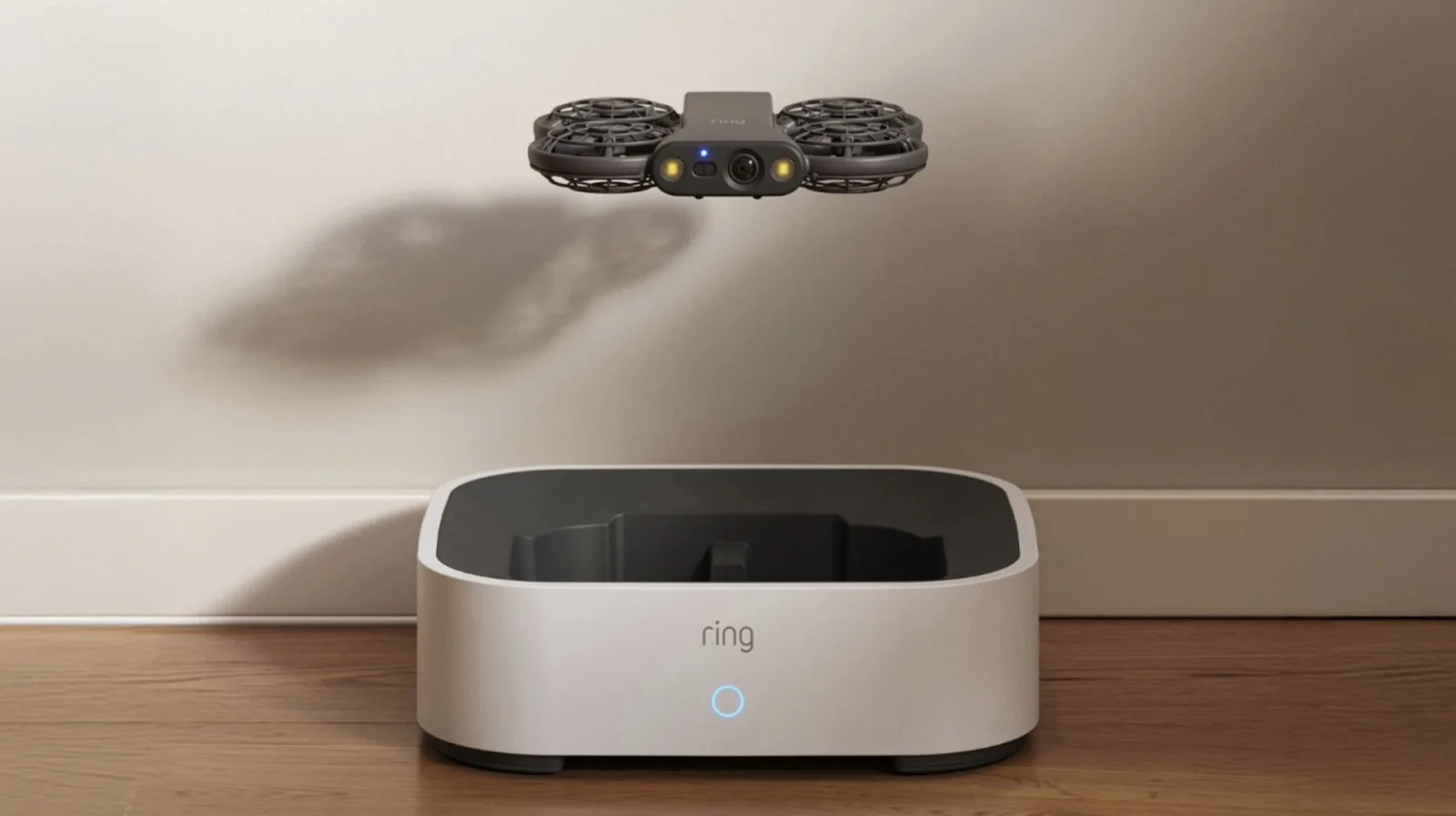 Ring Drone Cam indoor flying security camera on its dock powered by AI Pilot navigation
Image: Amazon Ring
Implications for builders copying the pattern
If you ship physical agents:
- Network loss must define safe defaults (here: land or dock).
- Maps are sensitive — floor plans plus camera feeds are high-value surveillance data.
- Human override needs sub-second UX when cloud latency spikes.
Compare with research-grade drone control in Anthropic Project Pilot — Ring is optimizing for homeowners, not airborne autonomy benchmarks.
Ring Drone Cam: features and constraints
Ring positions Drone Cam as whole-home visibility without mounting cameras in every room:
- Custom flight routes and schedules (Ring Protect plan required).
- Automatic response to Ring camera, sensor or alarm events.
- 2K video, 148° field of view, 360° rotation.
- LEDs for low light; Alexa Home Map control.
Amazon notes FCC authorization is pending — a gating item for U.S. sales.
Privacy defaults:
- Camera off in dock until a flight triggers recording.
- Visible LEDs when recording.
- Loud propellers as deterrence.
Outlets stress Wi-Fi dependence: if the connection drops, autonomous investigation largely stops — a design choice security reviewers will probe.
Ring Rover Cam: business patrol robot
Rover Cam targets retail, warehouses and other business floors:
- Tap-to-send patrols with 360° scans at destinations.
- Scheduled sweeps after close or before open.
- 4K streaming while moving, not only at stops.
- Periscope mast for sight lines over counters.
- Siren, light tower and two-way audio deterrence.
- Person motion detection even when docked.
Ring credits Amazon Astro customer feedback — users wanted security roving, not general-purpose home robotics — as the product seed.
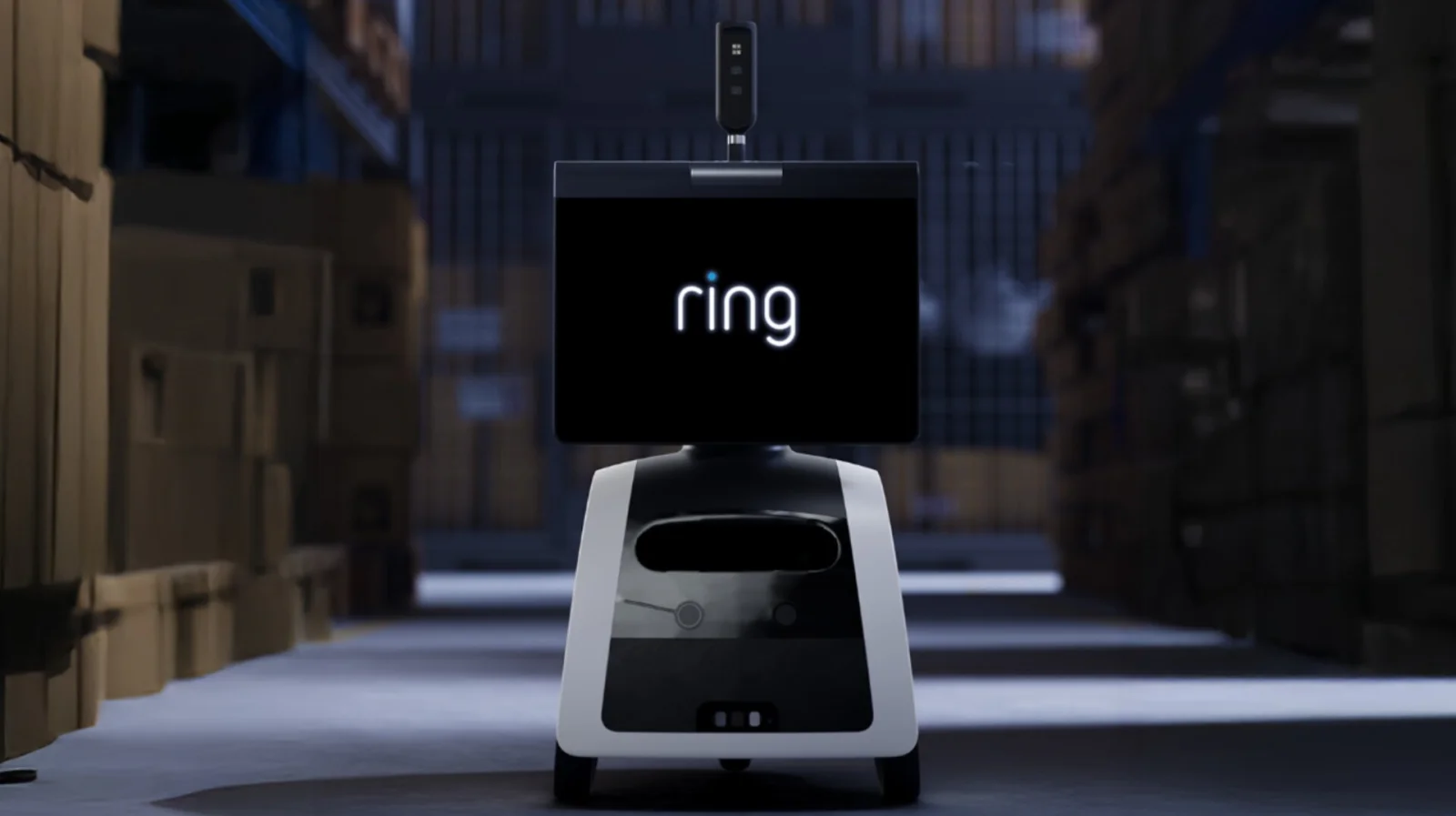 Ring Rover Cam autonomous business security robot with periscope camera and AI Pilot
Image: Amazon Ring
This is explainx.ai’s robotics story for the day under house rules: one embodied product launch with a clear model-in-the-loop navigation stack.
Privacy, encryption and landlord dynamics
Ring highlights Throw Away the Key (TAKE) encryption on stored video and visible recording indicators. Sleep Mode on Rover retracts the periscope and disables the mic.
Separately, explainx.ai has tracked landlord-facing Ring AI apps in Ring Appstore privacy tools. Mobile security robots may intensify tenant consent debates if landlords deploy Rover-class devices in shared commercial spaces.
Comparison to fixed cameras and competitors
| Approach | Pros | Cons |
|---|---|---|
| Fixed Ring cameras | Simple, cheap, local recording options | Blind spots, install labor |
| Drone Cam | Covers multiple rooms on demand | Noise, FCC, Wi-Fi, pet stress |
| Rover Cam | Patrols large floors, 4K on move | $1K hardware, business liability |
Google and Apple push home awareness through displays and speakers; Ring bets motion plus investigation reduces false alarm fatigue if AI Pilot routes correctly.
What developers are asking
Is this an open platform for third-party agents?
No announcement of an SDK for AI Pilot. Integrations run through Ring + Alexa ecosystems today.
Can I replicate AI Pilot on open models?
You would need SLAM-quality maps, reliable obstacle avoidance, and low-latency cloud orchestration — closer to robotics stacks in Skild Steel solver coverage than to a single VLM prompt.
Does cloud navigation violate edge-AI trends?
Consumer hardware cost constraints push intelligence cloudward. Edge-only advocates will cite outage and privacy risks; Ring counters with encryption and local land behavior.
Six years from Always Home Cam to a priced SKU
Ring first teased a flying indoor camera in 2020 with the Always Home Cam — a path that stalled amid FAA-adjacent concerns, privacy pushback and hardware cost. The 2026 Drone Cam announcement is Ring saying it finally hit an acceptable price ($249.99), weight and cloud stack.
Jamie Siminoff’s NYC event quotes, relayed by The Verge, stress agent-like control: routes, triggers, investigations. That narrative aligns with Amazon’s broader Alexa Home Map push — a 3D household view also highlighted in Amazon device news this fall.
Understanding that history matters for builders: embodied products slip years when compute moves between edge and cloud. Ring chose cloud planning with a land-on-Wi-Fi-loss failsafe, not full edge SLAM.
Amazon Astro DNA without the face
Rover Cam explicitly drops Astro’s friendly face for a security-first industrial look. Wired notes Astro owners loved roving security, not general companionship. Amazon is productizing that slice under Ring branding so it sells through security buyer personas, not smart-home novelty.
For enterprise robotics teams, the lesson is narrow purpose beats general humanoids in first shipments. Rover’s siren, light tower and 4K on-move video are security features, not social cues.
Subscription, legal and regulatory surface
Amazon states a compatible Ring Protect plan is required for several automations. Budget hardware plus recurring software when comparing against fixed cameras.
Legal teams should track:
- FCC authorization pending on Drone Cam before marketing claims go firm in enterprise procurement.
- Indoor-only positioning reduces FAA Part 107 talk but not state wiretap nuances when drones record audio.
- TAKE encryption marketing — verify whether keys are user-held or vendor-escrowed in your jurisdiction.
Landlords evaluating Rover in shared retail corridors should reconcile with tenant privacy tools Ring already markets.
What people are asking on forums
Will pets trigger endless flights? Ring has not published pet-classifier accuracy. Expect false investigations until maps learn household motion patterns.
Can AI Pilot be jailbroken via spoofed sensor events? Threat model is cloud API trust: compromised Ring accounts or rogue automations could dispatch patrols. Use MFA, separate admin roles and monitor unusual patrol frequency like any other agent audit trail.
Why not open-source the navigator? Ring treats AI Pilot as proprietary differentiator. Researchers comparing open stacks should still read this as a reference architecture for consumer agent robotics: map once, patrol many, investigate on alarm.
Failure modes to plan around
| Failure | Observed behavior | Mitigation |
|---|---|---|
| Wi-Fi drop | Drone lands; patrol logic largely stops | Redundant APs; local alarm still works |
| Cloud outage | No new routes; devices may idle | Do not assume drone replaces offline sensors |
| Map drift after remodel | Stale patrol points | Remap workflow after furniture changes |
| noisy propellers | Deterrence, not stealth | Set expectations with household members |
Physical agents sit at the intersection of agentic robotics research and home IoT. Your startup’s MVP does not need a drone — but it does need explicit safe states when the brain is unreachable.
Ship dates and buying guidance
- Rover Cam — Preorder now; ships December 16, 2026 (U.S.).
- Drone Cam — Email notify list; ships January 27, 2027 (U.S.).
International availability is not stated in Amazon’s post. Ring Protect subscription required for several features.
Early hands-on pieces note the drone’s propeller noise doubles as a deterrent: visitors hear the device before they see it. That design choice trades stealth for noticeability, which may reduce surprise privacy complaints even as it limits covert monitoring use cases some customers imagined in 2020 teasers.
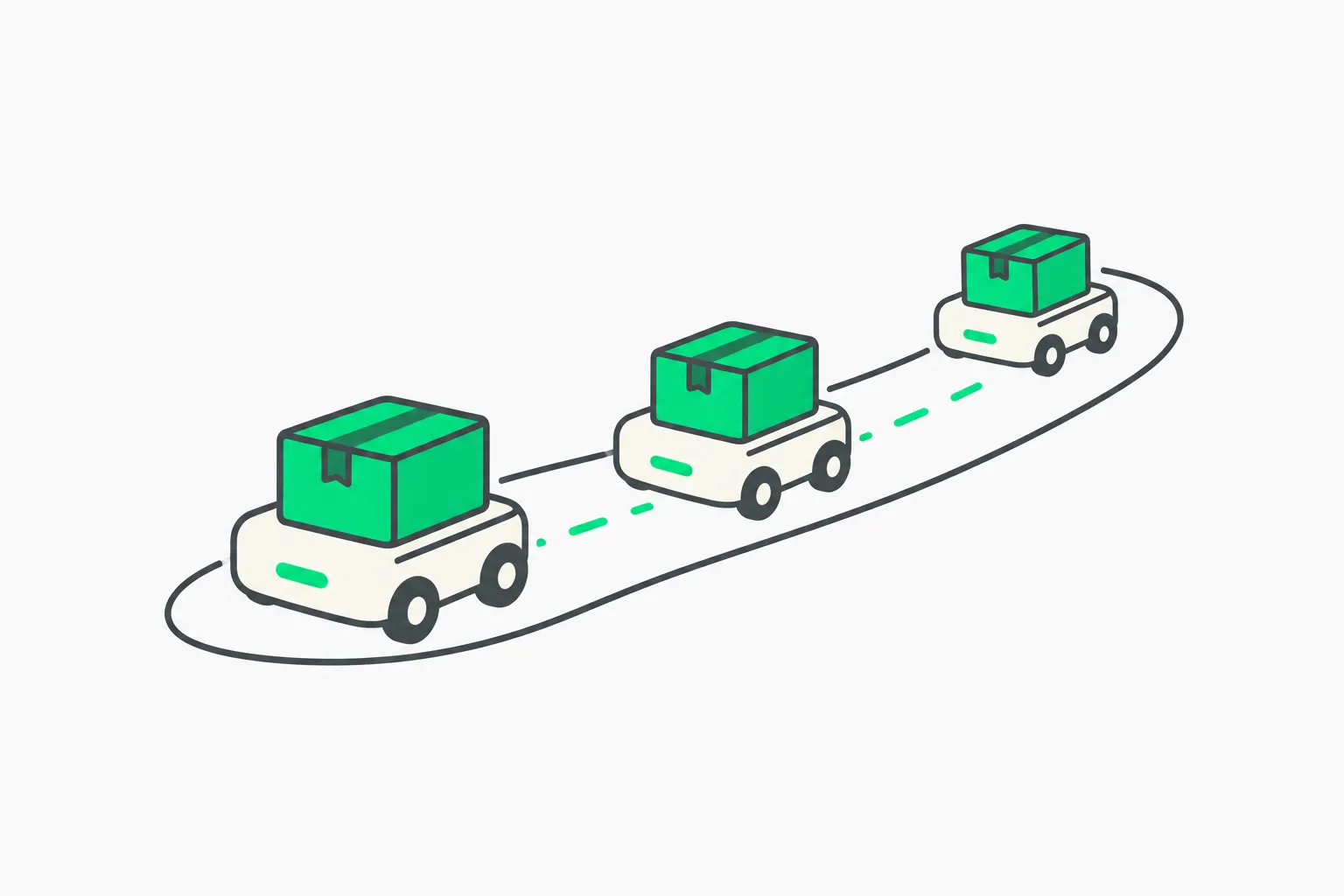 Warehouse robot fleet illustration for Ring AI Pilot autonomous patrol concept
Related reading
- Anthropic Project Pilot drone benchmark context
- Ring Appstore AI apps and landlord privacy
- Skild AI physics and embodied models
- Agentic robotics research at CORL
- OpenAI Control Room kill-switch architecture
- Crossnokaye physical AI on Bedrock AgentCore
- Home Assistant MCP for local automation
- Meta SAM 3 segmentation for vision pipelines
Prices, ship dates and feature lists are accurate as of November 10, 2026, per Amazon’s Ring announcement.