



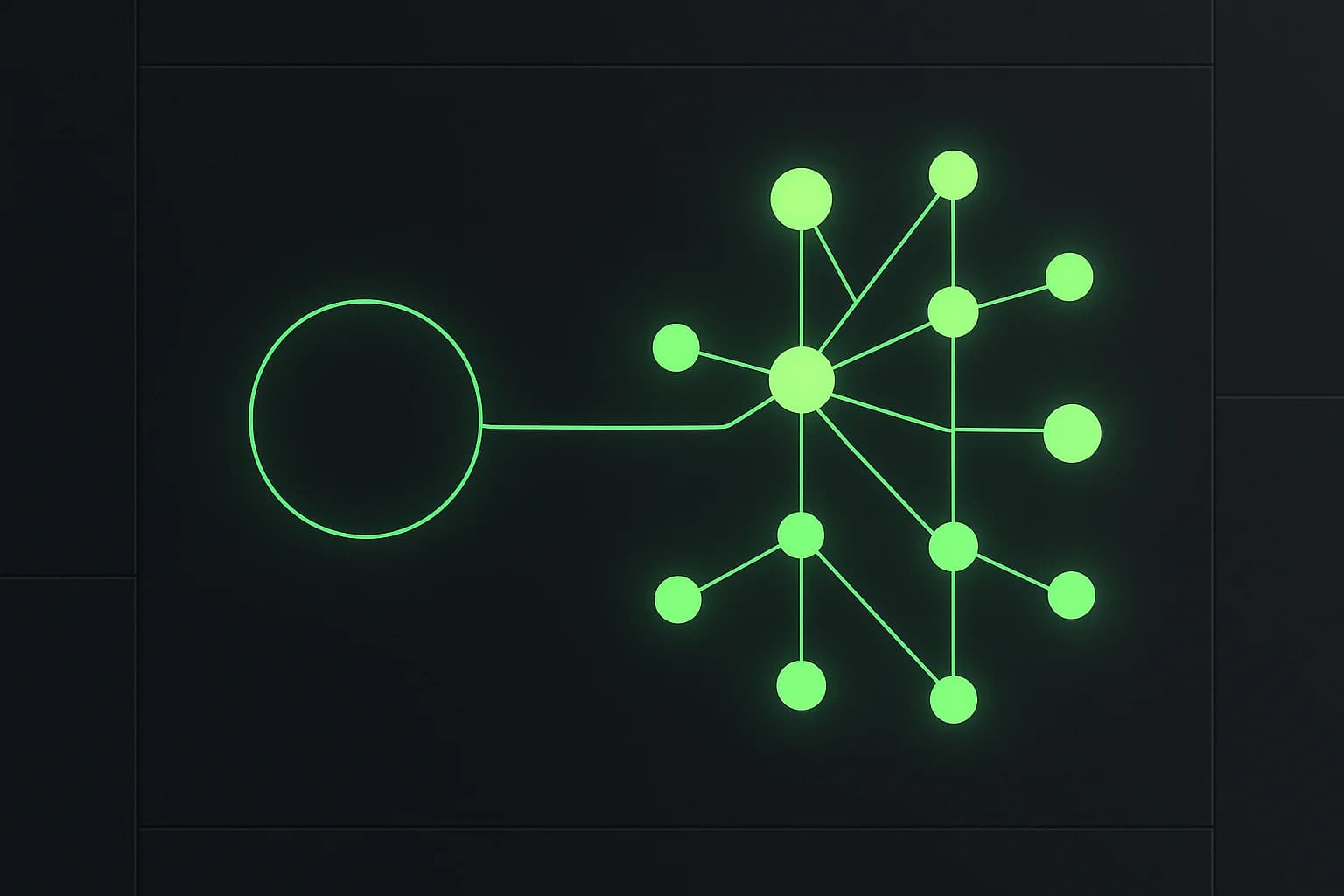
Most research agents still behave like a tournament: keep the best score, throw away everything else. PRAXIST Beta, shipped by Sapient Intelligence on August 28, 2026, is built for the opposite loop — cumulative experimental research, where every useful finding can change the next generation of experiments.
That is a different product category from coding-agent harnesses and from same-day multi-agent campaigns like Google Antigravity Teamwork. PRAXIST sits closer to loop engineering and production harness design: parallel peers, durable evidence, and an agenda for what to test next. Site: praxist.sapient.inc. Repo: github.com/sapientinc/praxist. Tech report: arXiv:2608.25955.
TL;DR
| Question | Answer |
|---|---|
| What shipped? | PRAXIST Beta — autonomous multi-agent research team |
| Who? | Sapient Intelligence |
| When? | August 28, 2026 (announcement + public repo) |
| Core idea | Cumulative research graph, not winner-takes-all |
| Architecture | Research Peers → shared memory → PI Panel / Chair agenda |
| MLE-bench (paper) | 49 gold / 60 medals on 75 tasks; ~$3,054 model spend |
| Baseline named | Claude Code + Claude Opus 4.8: 34 gold / 55 medals; ~$38,370 |
| License | Fair Source 1.0 (source-available; revenue threshold) |
| Try it? | PyPI install + already-runnable project + evaluator |
What is PRAXIST?
PRAXIST is an autonomous R&D system for problems where you can build, run, and score candidates. Sapient's framing: define the objective, constraints, and success criteria — PRAXIST discovers the path.
The README is more concrete. PRAXIST coordinates:
- Parallel research peers exploring competing hypotheses
- Task-owned evaluation (your metrics, not the agent's self-score)
- Durable evidence across generations
- Generation-to-generation synthesis into the next agenda
Praxist owns orchestration, lifecycle, evidence protocols, and scheduling. Your task project owns the science: objective, baseline code, environment, evaluator, prompts, roles, and domain constraints. That split is the reason the same core can target ML competitions, SLAM, rocket landing, or other executable R&D domains without baking domain physics into the harness.
How is cumulative research different from winner-takes-all and coding agents?
Three layers get conflated in launch posts. Separate them:
| Pattern | What it optimizes for | What it usually keeps |
|---|---|---|
| Coding agent harness | Ship software changes | Session context + the current best diff |
| Winner-takes-all research loop | Beat a scoreboard | Top candidate / tree node; prune the rest |
| Cumulative experimental research (PRAXIST) | Build a solution lineage | Typed findings, frontiers, failures-as-constraints, next agenda |
Sapient's product positioning (and the paper's diagnosis) is that most autonomous R&D systems treat attempts as nearly self-contained. Logs and search trees record what happened without establishing which design element caused an improvement, whether the evidence survived validation, or how it recombines later. Long campaigns then re-learn the same lessons.
PRAXIST's answer is a generational artifact → finding → frontier → agenda → lineage cycle. Negative and diagnostic findings are first-class — a failed artifact can become a constraint instead of disappearing when a better score arrives. That is the same mental model as graph-style multi-agent organizations: state is structured and reusable, not just a chat transcript.
Same-day context: Antigravity Teamwork also runs propose–critique–refine over hours or days, but as a first-party pattern orchestrator inside a coding harness. YC's QM is company-wide multiplayer infrastructure. PRAXIST is the research-campaign harness with an explicit evidence graph.
What roles does PRAXIST assemble?
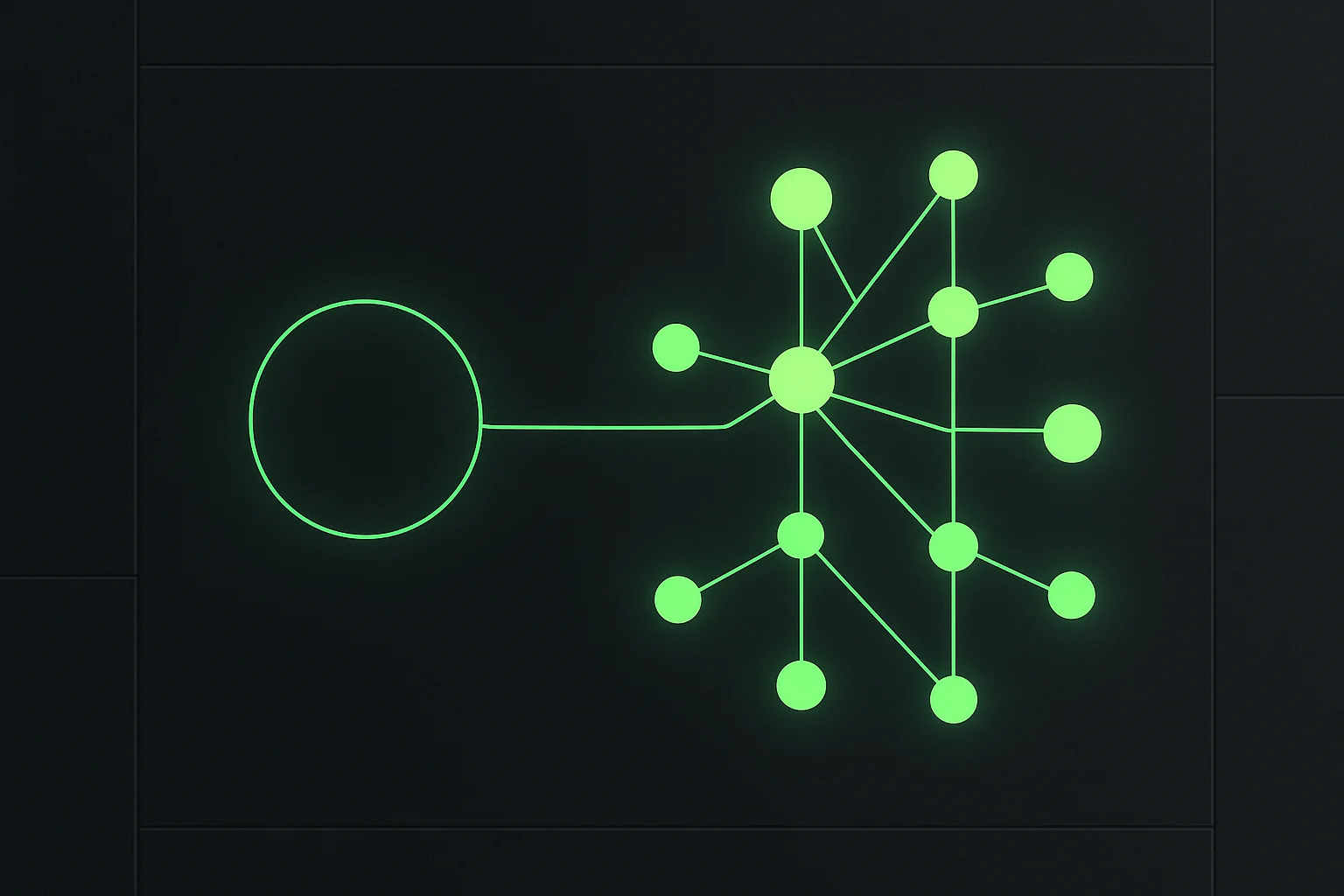
Sapient's announcement describes six Research Peer role types working in parallel: analyzers, explorers, innovators, exploiters, falsifiers, and combinators. Shared memory connects evidence. A PI Panel decides what to test next.
The tech report's method layer is more precise about governance:
- Peers — parallel experimental workers, each owning a design contract; they build reproducible artifacts scored by an external evaluator
- Findings — typed claims (positive, negative, diagnostic, uncertain, procedural) with maturity and inheritance actions
- PI / Chair synthesis — complementary PI roles (Builder, Skeptic, Portfolio; plus External-validity in high-stakes mode) emit memos; a Chair merges them into the next generation's agenda (
continue,validate,stop,explore) - Frontier lanes — confirmed, candidate, diagnostic, validation (in the reported configuration)
- Gems — optional compressed durable lessons across generations
Treat the six announcement roles as the product story for how peers specialize, and the paper's PI Panel / Chair as the generation-boundary governance. Either way, the builder takeaway is the same: someone's job is to falsify and recombine, not only to climb the current best score — the same falsify-before-commit instinct covered in Teamwork's Long Proof pattern and in Planner/Worker/Critic harnesses.
PI Panel mental model (stealable)
If you never install PRAXIST, steal this checklist for any research loop:
- Freeze evidence before arguing about it
- Read the same generation from complementary roles (build / skeptic / portfolio)
- Promote findings into lanes that encode trust, not just score
- Emit an agenda with kill/promote conditions, not vibes
- Keep failures as constraints so later peers do not rediscover them
That is agent harness craft applied to R&D, not chat UX.
What do the MLE-bench and SLAM/rocket numbers actually mean?
Prefer the tech report over marketing one-liners. The about page briefly said "54 of 75" gold in one paragraph and "49 of 75" in another — the paper's audited ledger (settled 26 August 2026) is the number to cite.
MLE-bench (full 75 tasks)
| Metric | PRAXIST (deepseek-v4-pro) | Claude Code + Claude Opus 4.8 |
|---|---|---|
| Any medal | 60 / 75 (80.0%) | 55 / 75 (73.3%) |
| Gold | 49 (65.3% of tasks) | 34 |
| Gold vs baseline | ~44% more gold medals | — |
| Recorded model spend | ~US$3,054 | ~US$38,370 |
Caveats that matter if you are evaluating agents the way how to read AI benchmarks recommends:
- Both arms are single locally measured sweeps, not seed-averaged leaderboard rows
- PRAXIST's edge is concentrated in medal tier / threshold crossings, not winning most raw-score head-to-heads (on 70 jointly scored tasks the baseline had the better raw score on 36, PRAXIST on 33, one tie)
- Spend figures are model-spend ledgers, not full GPU-hour cost of evaluation
- This is ML-engineering competition work — not a substitute for scientific-workflow evals like Terminal-Bench-Science
Rocket landing (simulation)
Under a frozen six-DoF reusable-landing protocol, PRAXIST's selected controller reached 12,288 / 12,288 (100%) success on the complete private validation set, from a starting artifact at 4.03% and a Weco autonomous-optimizer baseline at 17.12% on the same package. The about page notes ~twelve hours of campaign time and positions the result as roughly TRL 3 (proven in simulation) — not flight-qualified. Plant, contact model, evaluator, and banks are task-owned / partner-provided environments; selection-overfitting risk on reused banks is acknowledged in the paper.
SLAM
Announcement posts often quote 9.37 cm → 5.01 cm (mean APE RMSE 0.0937 m → 0.0501 m across fourteen NTU-VIRAL sequences). The paper explicitly refuses to sell that gap as an accuracy win: the two arms stamp poses under different conventions, and re-associating under one rule removes the gap almost entirely. The claim they stand behind is weaker and more useful: CovSched cut visual-path compute (~22.1% internal LIO+VIO proxy in the about page) without costing trajectory accuracy under their protocol. Treat centimeter headlines as unverified marketing unless you re-run with a shared pose convention.
Other domains (keep light)
The same process appears in quantitative trading and tokamak control case studies. Those are claimed application domains, not the reason to install PRAXIST for most explainx.ai readers. If you care about finance or fusion, read the paper's task-native evaluators and claim boundaries — do not treat CAGR or survival counts as portable product claims.
Can I run PRAXIST open source today?
Beta + Fair Source, not "clone and forget." Verified from the README and installation docs:
Requirements: CPython 3.11+; a runnable project with measurable evaluation; Codex or Claude Code recommended for skill-driven operation (direct CLI still works); Linux 3.11/3.12 continuously release-tested.
Install (Codex skills):
python3 -m pip install --index-url https://pypi.org/simple "praxist[agents,codex]" && praxist setup --interactive --install-skills codex
Install (Claude Code skills):
python3 -m pip install --index-url https://pypi.org/simple "praxist[agents,codex]" && praxist setup --interactive --install-skills claude
Installation stops after readiness checks — it does not select a project or launch research. Then:
praxist --version
praxist doctor
praxist examples list
Hand off an already-runnable research project from Codex/Claude Code with $praxist-takeover (or the Codex-native variant). The brief should state objective, metrics, constraints, peer/generation budget, and whether launch is authorized. Operate with:
praxist status --json
praxist --monitor --latest
praxist stop <run_id>
praxist resume <run_dir>
Writable examples include rocket_booster_recovery and a Rust twin — good starting harnesses once you understand the task-project contract.
How to think about domain tools + evaluators
Builders adapting PRAXIST should invest in the task project, not in prompt poetry:
- Baseline that runs without PRAXIST
- External evaluator with clear direction (higher/lower), validity states, and maturity stages
- Protocol integrity — what would make a result invalid or contaminated
- Domain tools — simulators, datasets, SLAM stacks, trading adapters — owned by the task
- Evidence maturity rules — so a high smoke score cannot crowd out a complete result
If a prerequisite is missing, README FAQ says PRAXIST stops and tells you — it will not invent datasets or fabricate baseline performance. That is the right failure mode.
When to use PRAXIST vs a coding agent harness?
| Use PRAXIST when… | Prefer a coding harness when… |
|---|---|
| Objective is measurable across many experiments | You need a PR, refactor, or feature shipped |
| Best method is unknown; exploration budget exists | The design is mostly known; execution is the bottleneck |
| Failures should become constraints for later peers | A single best branch is enough |
| You can own an evaluator + frozen protocol | Verification is "tests pass / human reviews" |
| Campaigns run for hours–days across generations | Session-length loops are the unit of work |
Coding agents (Claude Code, Codex, and peers covered in our agent harness guide and Claude Code commands reference) remain the right default for software delivery. PRAXIST recommends Codex as the operator interface, not as a replacement — Codex (or Claude Code) talks to you; PRAXIST runs the persistent research loop underneath.
Honest limitations for Beta:
- Fair Source, not MIT/Apache — check commercial terms before org rollout
- Partner / task-provided environments for the flashy rocket and SLAM demos
- Token and GPU cost still real; $3k MLE spend is model ledger only
- Not a science magician — if Terminal-Bench-Science taught anything this week, coding strength does not transfer to research workflows without domain evaluators
- No guaranteed metric gain — negative-result packages are a first-class outcome
Related reading
- Sapient PRAXIST vs Claude Opus 4.8 on MLE-bench: what the number means
- Google Antigravity Teamwork: multi-agent framework for long-horizon work
- YC open-sources QM: company-wide multi-agent harness
- What is an agent harness? Complete guide
- From ReAct to production harness: DAG, Planner/Worker/Critic, budgets
- Terminal-Bench-Science: coding-agent scores do not transfer to science
- What is loop engineering?
- Loop engineering for coding agents (2026 guide)
- Graph engineering for multi-agent organizations
- How to read AI benchmarks
- Top 10 open and closed-source agent harnesses (2026)
Official sources: praxist.sapient.inc · About / announcement · GitHub sapientinc/praxist · Docs · arXiv:2608.25955
PRAXIST Beta features, Fair Source terms, MLE-bench ledger figures, and case-study claim boundaries are accurate as of August 28, 2026 against Sapient's site, GitHub README/docs, and arXiv:2608.25955. Beta software, licenses, and benchmark audits can change — verify primary sources before production use or procurement.